
When your water heater quits, everything stops. No showers before work. No clean dishes. No laundry. You’re stuck waiting on a fix that can’t come fast enough.
We get it. That’s why our trucks carry the parts most water heaters need, and our techs know how Florida’s climate tears these systems apart faster than anywhere else. High humidity corrodes tanks and fittings. Hard water clogs lines and burns out heating elements. Summer garage heat pushes older units past their limit.
You’re not looking for a lecture on how water heaters work. You need yours working again, and you need someone who won’t drag it out or upsell you on stuff that doesn’t matter. We diagnose the actual problem, explain what it’ll take to fix it, and give you a straight answer on whether repair or replacement makes more sense for your situation. Then we handle it the same day whenever possible, because waiting around for hot water in Florida isn’t realistic.
Drain Wizard has been handling plumbing in Central Florida long enough to know exactly what breaks water heaters around here. It’s not the same as other states. The mineral content in June Park’s water supply is brutal on heating elements and tank linings. The humidity in your garage creates condensation that rusts out connections. The summer heat makes your unit work overtime.
We’re not a national franchise reading from a script. We’re local techs who’ve seen what happens when water heaters aren’t maintained properly in this climate, and we know how to make them last longer. Our service area covers June Park and the surrounding West Melbourne area, and we’re available for emergency calls when your water heater decides to quit at the worst possible time.
You’ll work with licensed, insured technicians who carry the right parts and actually explain what’s happening with your system. No runaround. No pressure. Just honest service from people who live and work in the same area you do.
First, we listen. You tell us what’s going on—no hot water, strange noises, leaking, whatever the issue is. We schedule a time that works for you, and for emergencies, we move fast to get someone out the same day.
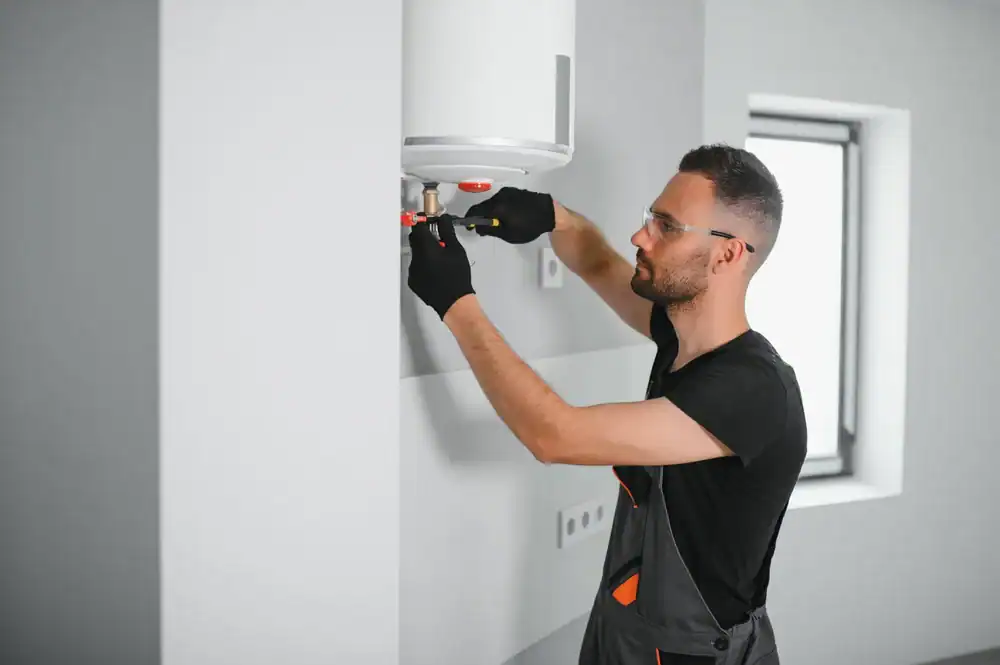
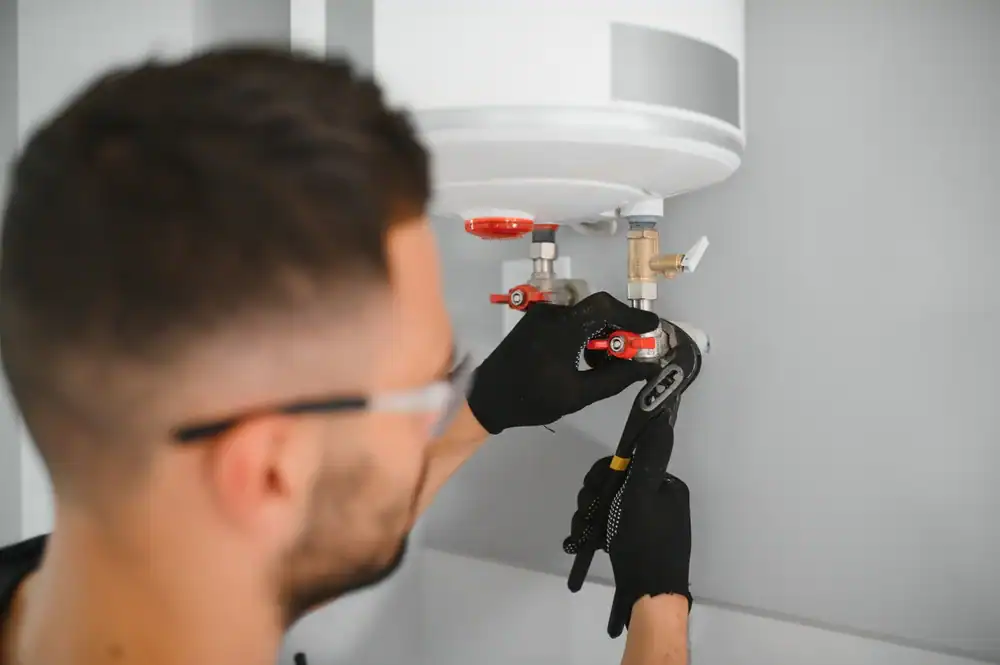
When we arrive, we inspect the entire system. Not just the obvious problem, but the age of your unit, the condition of the tank, the anode rod, the heating elements, the pressure relief valve, and how much sediment has built up inside. Florida’s hard water accelerates wear, so we check everything that could fail soon, not just what’s broken today.
Then we explain what we found in plain terms. If it’s a simple fix like a bad heating element or thermostat, we tell you that and handle it on the spot. If your tank is corroded or your unit is past the 8-10 year mark and struggling, we’ll walk through whether replacement makes more sense than throwing money at repairs. We give you options—standard tank, tankless, hybrid heat pump—and explain what works best for Florida’s climate and your home’s setup.
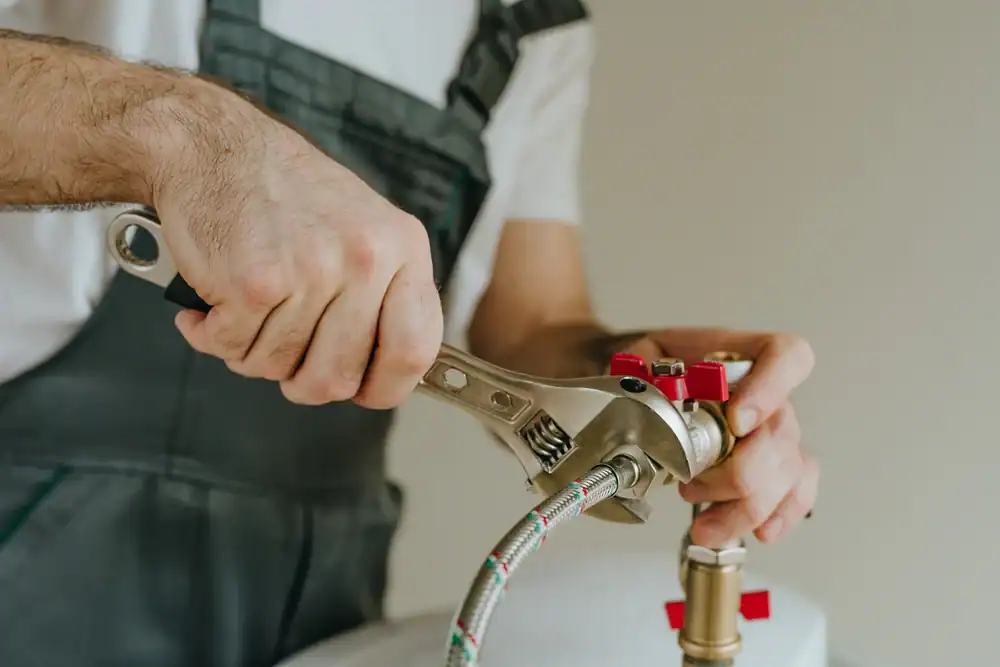
Once you decide, we get to work. Installations are done to code, with proper ventilation and moisture control for Florida humidity. We haul away your old unit, test the new system, and make sure everything’s dialed in before we leave. You get hot water back, and you know exactly what was done and why.
Ready to get started?
Every water heater job includes a full system inspection, not just a patch on the immediate problem. We check for corrosion, test the pressure relief valve, inspect electrical connections or gas lines, and measure sediment buildup. In June Park, hard water is a given, so we also look at how mineral deposits are affecting your heating elements and tank lining.
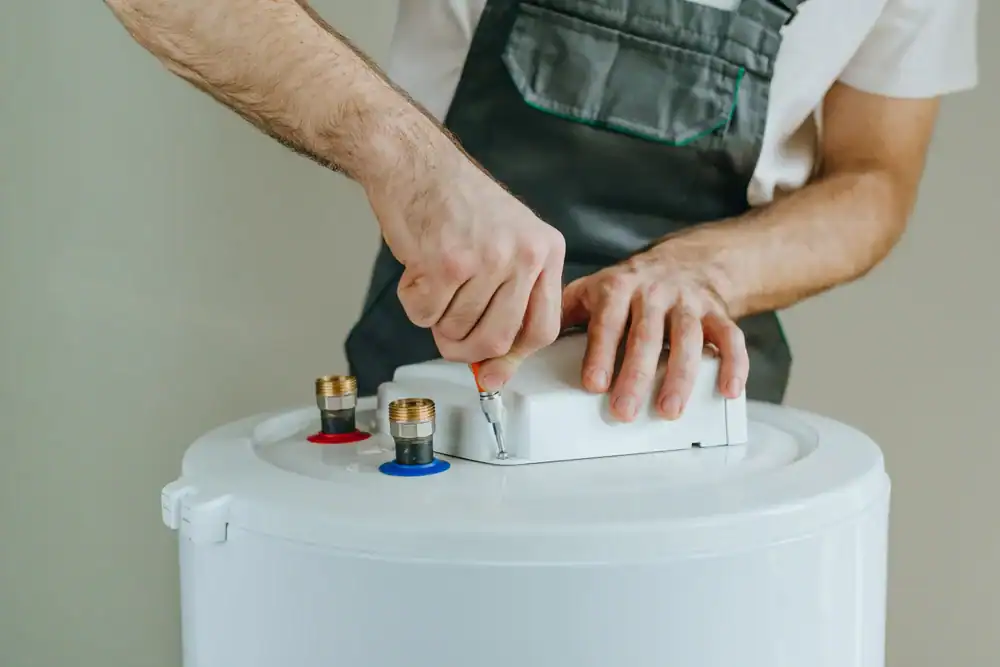
For repairs, we carry common parts on our trucks—thermostats, heating elements, pressure valves, anode rods. Most repairs get handled the same visit. For replacements, we help you choose between traditional tank systems, tankless units that work well in Florida’s heat, or hybrid heat pump models that are extremely efficient in warm climates like ours. We pull permits when required, install to Florida building code, and set up proper drainage and ventilation to prevent the humidity issues that plague poorly installed units around here.
You also get honest advice on maintenance. Florida’s climate is tough on water heaters. Annual tank flushing removes sediment that kills efficiency and shortens lifespan. Anode rod replacement every few years prevents tank corrosion. We’ll tell you what your system needs and when, but we’re not going to push services that don’t make sense for your situation. If your unit is old and failing, we’ll say so. If it’s got years left with basic maintenance, we’ll say that too.
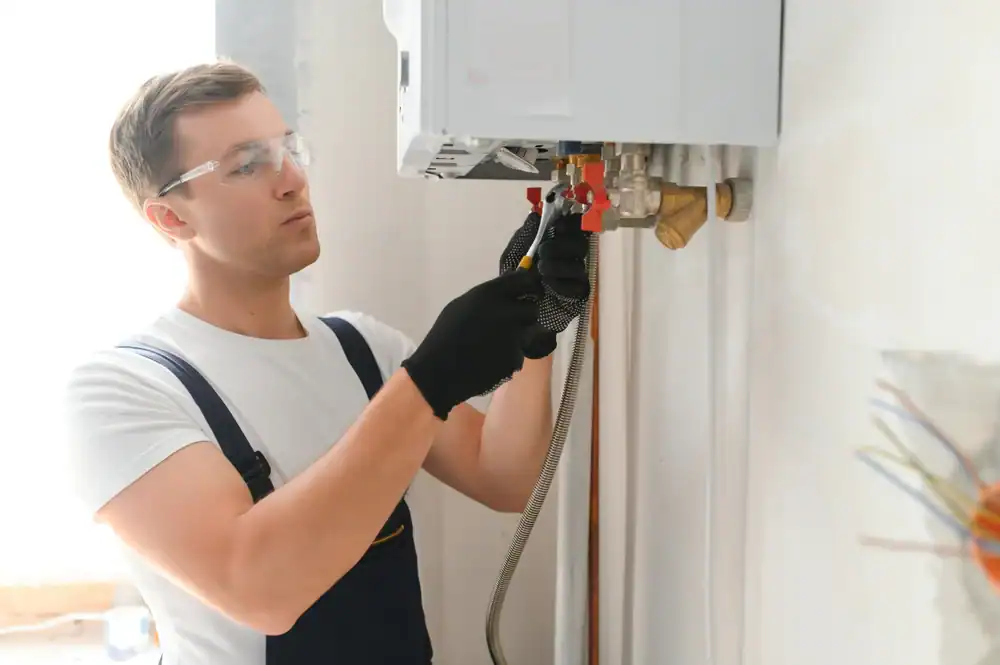
Most tank water heaters last 8-10 years in Florida, which is shorter than the national average. The reason is straightforward: humidity accelerates corrosion on metal tanks and fittings, hard water causes mineral buildup that damages heating elements and tank linings, and summer heat makes units work harder.
If your water heater is approaching 8 years old and you’re starting to see issues—inconsistent hot water, strange noises, small leaks, rusty water—it’s usually more cost-effective to replace than repair. Older tanks often develop multiple problems close together, and you end up paying for repairs on a system that fails completely a few months later.
Tankless systems and hybrid heat pump units tend to last longer, often 15-20 years with proper maintenance. They’re also more efficient in Florida’s climate. The upfront cost is higher, but the extended lifespan and lower energy bills often make up for it, especially if you’re planning to stay in your home long-term.
Hard water is the biggest culprit. June Park’s water supply has high mineral content, which means calcium and magnesium build up inside your tank and on your heating elements. This sediment layer forces your system to work harder to heat water, increases energy costs, and eventually causes heating elements to burn out or tanks to corrode from the inside.
Humidity is the second major factor. Most water heaters in this area sit in garages, and Florida garages get incredibly humid. That moisture causes rust on external fittings, connections, and the tank itself. Even small leaks turn into bigger problems fast because the humid environment accelerates corrosion.
Summer heat also plays a role. When your garage hits 120°F in July and August, your water heater’s working in an environment it wasn’t designed for. The insulation degrades faster, the system runs less efficiently, and components wear out sooner. If your unit is in a garage without climate control, expect a shorter lifespan than the manufacturer’s estimate.
It depends on three things: the age of your unit, the cost of the repair, and what’s actually broken. If your water heater is under 5 years old and the problem is a simple component failure—bad thermostat, worn heating element, faulty pressure valve—repair usually makes sense. These fixes are relatively inexpensive and can give you several more years of service.
If your unit is 8 years or older, replacement is often the smarter move, even if the current repair seems minor. Older tanks in Florida are typically dealing with internal corrosion and sediment damage you can’t see. Fixing one problem doesn’t stop the next failure from happening soon after. You end up paying for multiple repairs on a system that’s near the end of its lifespan anyway.
Tank leaks are almost always a replacement situation. Once the tank itself is compromised, there’s no reliable fix. Same goes for significant rust or corrosion on the tank body. If you’re seeing rusty water, hearing loud banging or popping noises from sediment buildup, or dealing with frequent temperature fluctuations, those are signs your system is failing and replacement will save you money and hassle in the long run.
Tankless systems heat water on demand instead of keeping a large tank hot 24/7, which means lower energy bills—especially important when Florida’s heat already makes your system work harder. They also last longer than traditional tanks, typically 15-20 years compared to 8-10, because there’s no tank to corrode from the inside out.
In Florida’s climate, tankless units don’t have to fight against garage heat the same way tank systems do. They’re more compact, easier to install in conditioned spaces, and they’re not constantly reheating 40-50 gallons of water that sits unused. For families that use a lot of hot water—multiple showers, laundry, dishwasher running simultaneously—tankless means you won’t run out.
The downsides are higher upfront cost and the need for proper sizing. If your home has high simultaneous hot water demand, you might need multiple units or a larger model. Gas tankless systems also require adequate ventilation and may need gas line upgrades. But for many June Park homes, especially newer builds or homes with updated electrical systems, tankless makes sense both for efficiency and longevity in Florida’s tough climate.
Annual maintenance is essential in Florida, not optional. The hard water and humidity here destroy water heaters faster than almost anywhere else in the country, and regular maintenance is what keeps your system running past the 5-year mark.
The most important task is flushing the tank to remove sediment buildup. This should happen once a year minimum, more often if you have particularly hard water. Sediment sits at the bottom of your tank, insulates the water from the heating element, forces your system to work harder, and eventually causes the tank to fail. Flushing takes 30-45 minutes and significantly extends your unit’s lifespan.
Anode rod inspection and replacement is the other critical maintenance item. The anode rod is designed to corrode instead of your tank—it’s a sacrificial component that protects the tank lining. In Florida’s conditions, anode rods typically need replacement every 3-5 years. If the rod is completely corroded and no one replaces it, your tank starts corroding instead, and that’s when leaks develop. Checking the pressure relief valve, inspecting electrical connections or gas lines, and testing thermostat accuracy should also happen during annual service. It’s not glamorous, but it’s the difference between an 8-year water heater and a 5-year emergency replacement.
Yes. We know water heater failures don’t happen on a convenient schedule, and going without hot water in Florida isn’t realistic for most families. We prioritize emergency calls and do everything possible to get a technician to your June Park home the same day you call.
Emergency service covers situations like complete loss of hot water, active leaks that are damaging your home, gas odors near your water heater, or electrical issues causing safety concerns. When you call, we assess the urgency and dispatch accordingly. For true emergencies—leaks, gas issues, electrical problems—we move immediately.
Our trucks stock the most common repair parts, so many emergency calls get resolved the same visit. If your system needs replacement and you can’t wait, we can often install a new unit within 24-48 hours depending on the model you choose and current inventory. We’re not going to leave you without hot water for a week while we order specialty parts or wait for a convenient installation window. Florida summers are brutal enough without adding cold showers to the mix.