
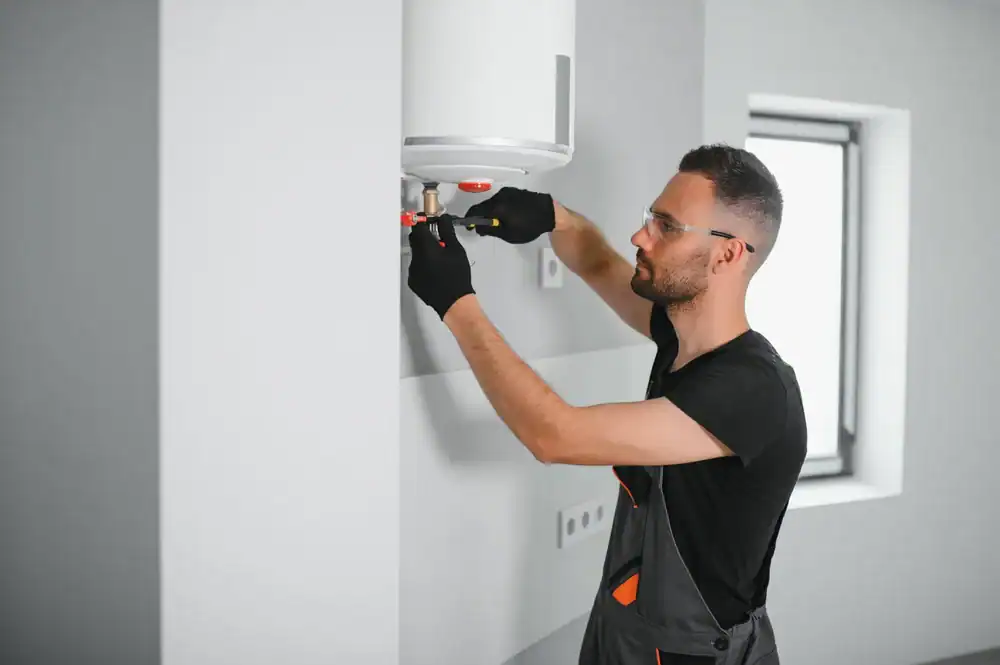
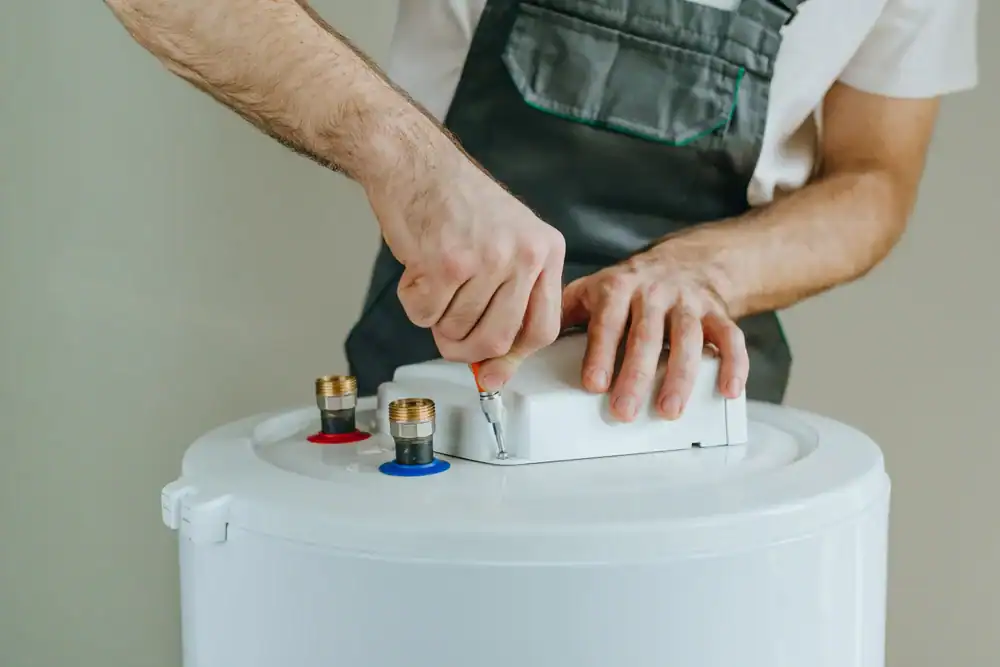
You shouldn’t have to guess when your water heater’s about to quit. And when it does, you shouldn’t be stuck waiting days for someone to show up, only to get hit with a bill that’s double what they quoted.
Here’s what actually matters: your water heater works when you need it. Your energy bills don’t creep up because sediment’s choking your tank. And when something goes wrong, you get a straight answer about what’s broken, what it costs, and how long it takes.
Florida’s climate is brutal on water heaters. The humidity accelerates corrosion. The hard water leaves mineral deposits that make your system work twice as hard. Garage units sit in 110-degree heat all summer. That’s why most failures happen in July and August when the heat stress finally wins.
We’ve seen it hundreds of times. The warning signs are usually there: water that takes longer to heat up, strange noises from the tank, rusty water, or puddles forming around the base. Catch those early and you’re looking at a repair. Ignore them and you’re replacing drywall after the tank lets go.
We’ve served Brevard County and the Space Coast since 2007. Carl, our owner and master plumber, brings 40 years of plumbing experience and 20 years of military service to every job. That background means something when you’re working with military families at Patrick AFB.
We’re not the biggest plumbing company in the area. We’re the one where the owner still shows up to make sure the work’s done right. Every installation gets personally overseen. Every repair gets checked before we leave.
You’re dealing with people who understand what it’s like to move every few years, manage a tight budget, and need things fixed correctly the first time. We’ve worked on base housing, off-base rentals, and everything in between. The water heater issues are the same, but how we handle them matters to families who value straight talk and fair pricing.
First, we actually answer the phone. You’ll talk to a real person who can usually get someone out the same day for emergencies.
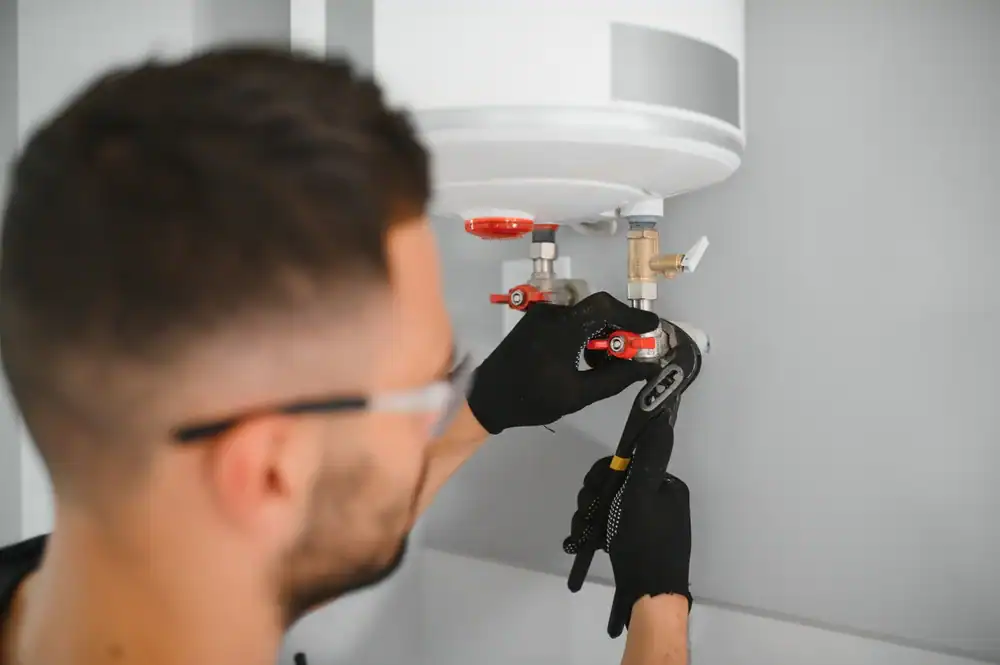
When we arrive, we diagnose the problem before we talk price. That means checking the heating elements, testing the thermostat, inspecting for leaks, looking at the anode rod, and checking sediment buildup. Most companies skip half of that. We don’t, because a wrong diagnosis means you’re paying for a fix that doesn’t solve the actual problem.
Then we explain what we found in plain language. If it’s a $200 repair, we’ll tell you. If your tank’s rusted through and you need a replacement, we’ll tell you that too. We’ll also tell you if your current unit is oversized or undersized for your household, because that affects both your comfort and your energy bill.
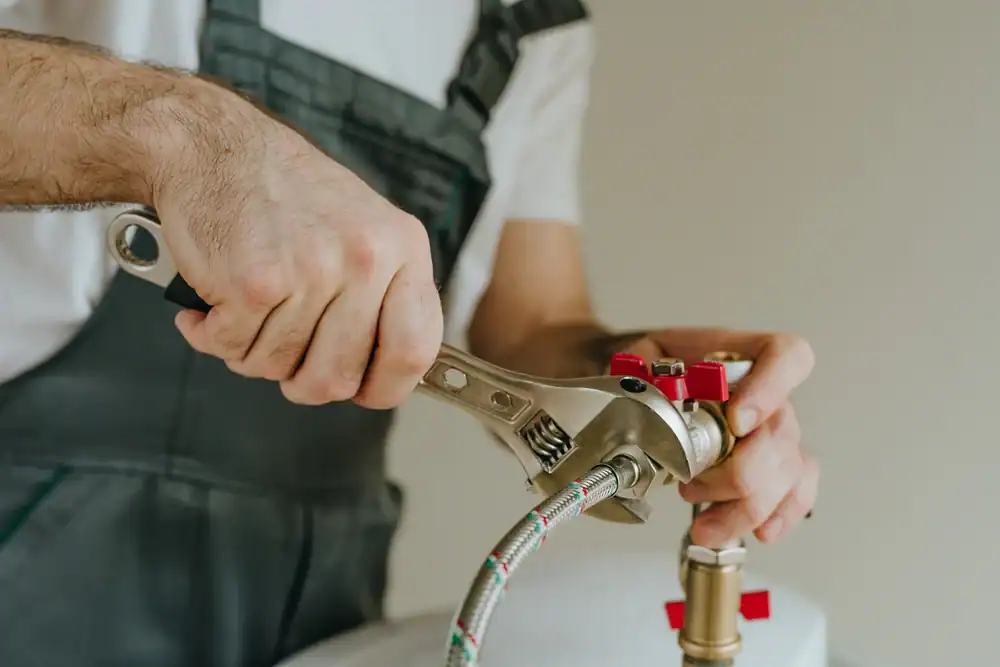
For replacements, we handle the permit with Brevard County. Most homeowners don’t know you need one, and most contractors don’t mention it. We pull it, we schedule the inspection, and we make sure everything’s up to code. Gas or electric, tankless or traditional, heat pump or standard—we’ve installed them all.
The job’s done when your hot water’s running at the right temperature and pressure, the area’s cleaned up, and you understand how to maintain what we just installed.
Ready to get started?
Every service call includes a full system inspection, not just a quick look at whatever’s leaking. We check your pressure relief valve, test your thermostat accuracy, inspect electrical connections or gas lines, measure sediment levels, and look for early signs of tank corrosion.
For Patrick AFB residents, that inspection matters more than most places. The salt air from the coast speeds up corrosion on any metal components. The hard water in Brevard County creates scale buildup faster than most of the country. Your water heater’s working year-round in heat that would give most systems a break in winter. All of that adds up to shorter lifespans if you’re not staying ahead of maintenance.
When we replace a unit, you’re getting proper sizing based on your household’s actual usage, not just swapping in whatever matches the old one. You’re getting energy-efficient options explained in terms of real monthly savings, not marketing hype. And you’re getting a system that’s permitted and inspected, which matters when you sell or if you ever have an insurance claim.
We also set your temperature to 120 degrees unless you ask otherwise. That’s the sweet spot for energy efficiency and safety. Most units come set higher from the factory, which just costs you money and increases scalding risk.
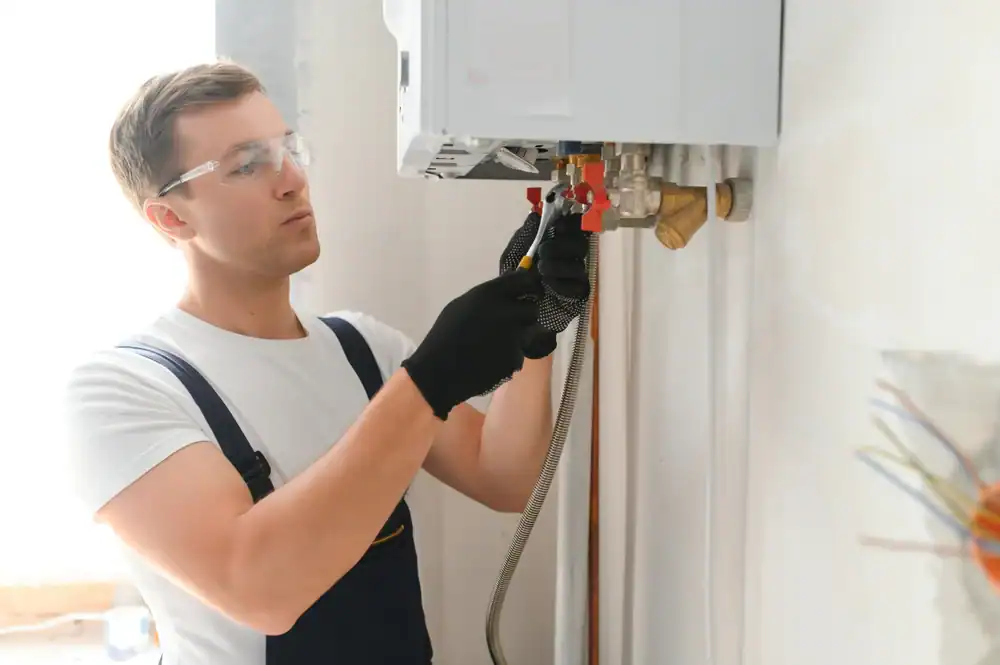
Most water heaters last 8-12 years in Florida, which is shorter than the national average of 10-15 years. The heat, humidity, and hard water all work against you.
If your unit’s in a garage, it’s working in 110-degree temperatures all summer. That constant heat stress wears out components faster. The humidity accelerates exterior corrosion on the tank and connections. And Brevard County’s hard water leaves mineral deposits inside the tank that act like insulation, forcing your heating elements to work harder and fail sooner.
You can extend that lifespan with annual maintenance. Flushing the tank to remove sediment, checking the anode rod, and testing the pressure relief valve can add 2-3 years. But once you start seeing rusty water, hearing banging noises, or finding moisture around the base, you’re usually within a year of failure. At that point, repairs are just buying time.
Yes. Brevard County requires a permit for water heater replacements, and the work needs to pass inspection. Most homeowners don’t know this, and plenty of contractors don’t mention it.
The permit ensures your installation meets current building codes, which have changed over the years. That includes proper venting for gas units, correct electrical connections for electric models, proper clearances, earthquake straps in some cases, and expansion tanks where required. These aren’t just bureaucratic boxes to check—they’re safety requirements that prevent carbon monoxide poisoning, electrical fires, and flood damage.
If you sell your house later and the buyer’s inspector finds an unpermitted water heater, you’re either redoing the work or negotiating a credit. If you have a water heater failure that causes damage and your insurance finds out it was installed without a permit, you might be fighting for coverage. We handle the permit and inspection as part of every installation, so you don’t have to think about it.
If your water heater is under 7 years old and the repair costs less than half of a new unit, repair it. If it’s over 10 years old or the repair costs more than 50% of replacement, replace it.
The math changes based on what’s broken. A failed heating element or thermostat on a 5-year-old tank? That’s a straightforward repair. A leaking tank on an 11-year-old unit? You’re replacing it, because tank leaks don’t get fixed—they get worse.
Here’s what most people don’t consider: efficiency loss. A water heater that’s limping along with sediment buildup might still make hot water, but it’s costing you $20-40 extra per month in energy. Over two years, that’s $500-1,000. Sometimes replacement pays for itself faster than you think, especially if you’re moving from a standard electric to a heat pump model or upgrading to a high-efficiency unit. We’ll run those numbers with you so you can make the call based on actual costs, not guesses.
For a typical household, figure 10-15 gallons of capacity per person. A family of four usually needs a 40-50 gallon tank, but that changes based on your actual usage patterns.
If you have teenagers who take long showers, you’re on the higher end. If you run a dishwasher and washing machine during peak times, add capacity. If you have a large soaking tub, you need more. The goal is to avoid running out of hot water during normal use, but not to oversize so much that you’re heating water you’ll never use.
Tankless water heaters change the calculation completely. They’re sized by flow rate, measured in gallons per minute. You need enough capacity to handle simultaneous uses—like a shower running while the dishwasher’s going. For most homes, that’s 7-10 GPM. Tankless units cost more upfront but never run out of hot water and typically last 20+ years instead of 10. They also take up way less space, which matters in Florida homes where every square foot counts. We’ll measure your actual needs before recommending a size, not just match whatever you had before.
That’s sediment buildup at the bottom of your tank. As water heats up, it has to bubble through the layer of minerals, which creates those popping and banging sounds.
Brevard County has hard water, which means high mineral content. Over time, those minerals settle at the bottom of your tank. That layer acts as insulation between your heating element and the water, forcing the element to get hotter to do its job. The overheating shortens the element’s life and wastes energy. The noise is just the most obvious symptom.
Flushing the tank can help if you catch it early. If the sediment’s been building for years, it might be hardened to the point where flushing doesn’t clear it. At that point, you’re looking at reduced efficiency, higher energy bills, and a shorter remaining lifespan for the unit. If your water heater’s making noise and it’s over 7-8 years old, have us inspect it. The sediment issue usually comes with other age-related wear that might make replacement smarter than repair.
A standard 40-50 gallon electric water heater replacement typically runs $1,200-2,000 installed, including the permit and materials. Gas units run slightly higher. Tankless installations start around $2,500-3,500 depending on the model and whether we’re running new gas lines or upgrading electrical.
Those prices include hauling away your old unit, installing the new one to code, pulling the permit, and passing inspection. They don’t include repairs to surrounding areas if your old tank leaked and damaged drywall or flooring. They also don’t include upgrades like water softeners or expansion tanks unless your system requires them for code compliance.
The price changes based on what you’re replacing and where it’s located. A straightforward swap in an accessible garage is cheaper than replacing a unit in a cramped attic or closet. Upgrading from a 40-gallon to a 50-gallon tank costs more. Switching from electric to gas (or vice versa) adds costs for new connections. We’ll give you an exact price after seeing your setup, not a range that doubles once we start working. And we’ll explain what you’re paying for, so you understand the difference between a basic replacement and one that includes efficiency upgrades or code-required additions.