
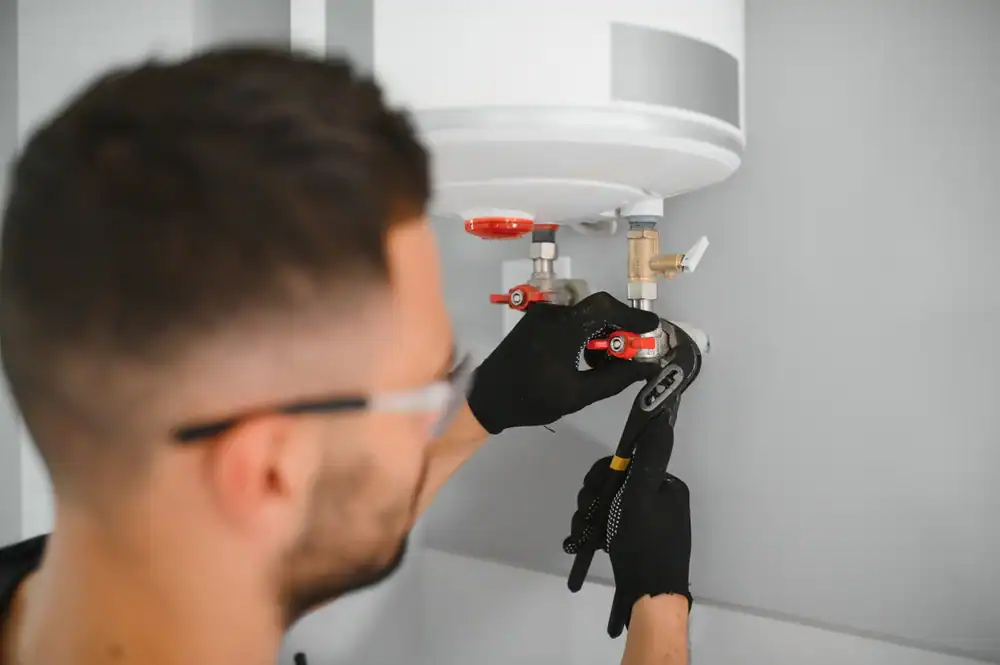
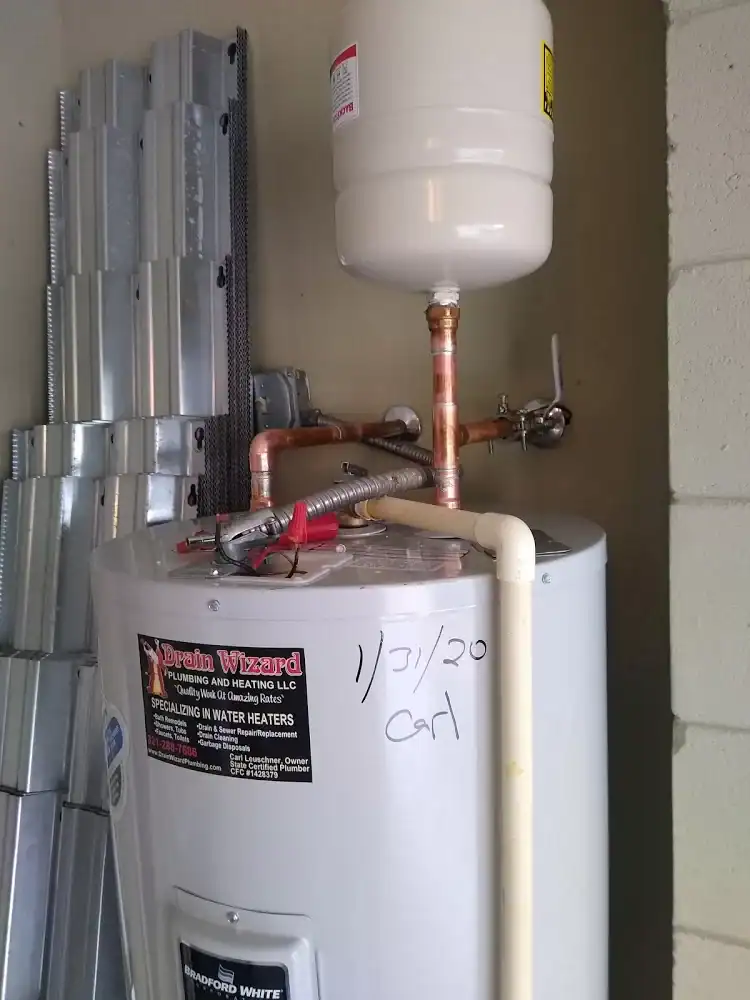
You’re dealing with lukewarm showers, strange banging noises, or water pooling around your tank. Maybe your energy bill crept up and you can’t figure out why. These aren’t minor annoyances—they’re signs your water heater is on its way out.
A new water heater means reliable hot water when you need it. It means lower energy costs because modern units don’t waste power heating water all day. It means one less thing breaking down at the worst possible time.
You get a system sized right for your home, installed to code, and built to handle Florida’s hard water and humidity. No more running out of hot water halfway through a shower. No more wondering if today’s the day it finally leaks all over your floor.
We’ve been handling plumbing services across Brevard County since 2007. We’re not a franchise or a call center—we’re a family-owned business based right here in Cocoa, and we’ve been serving Frontenac, Merritt Island, Rockledge, and Titusville for over 17 years.
Our team brings 40 years of combined plumbing experience and over 20 years of military service. That background shows up in how we work: on time, no excuses, and the job done right the first time. Carl oversees every project personally, so you’re not getting a different crew every visit or a guy who just started last week.
We’re state-certified, fully licensed and insured. We know the local codes, the permit requirements, and what it takes to install a water heater that’ll last in Florida’s climate. You’re not our next number—you’re our neighbor.
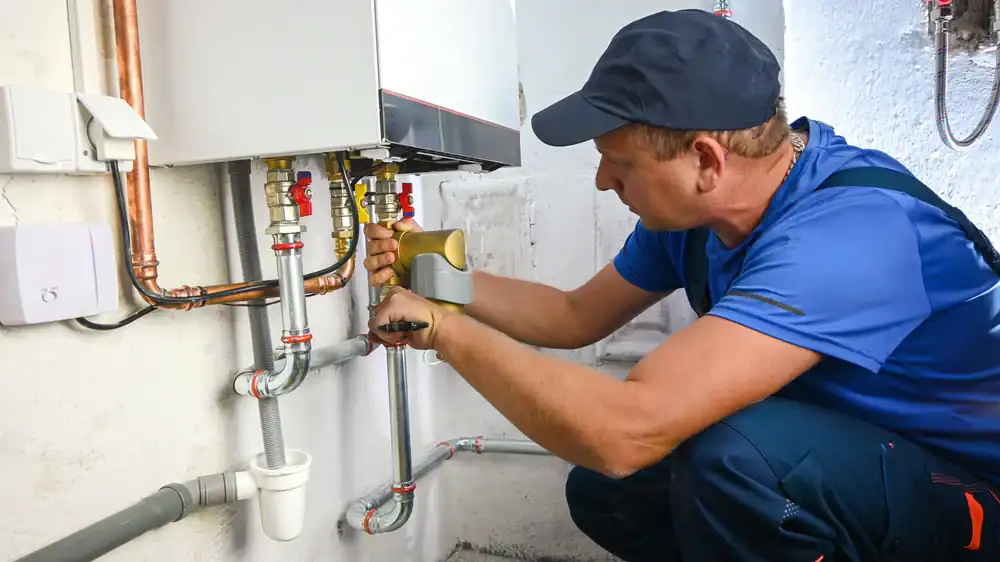
First, we come out and assess what’s going on. We’ll look at your current water heater, check for leaks, corrosion, or sediment buildup, and figure out if you need a repair or a full replacement. If it’s time for a new unit, we’ll walk you through your options—tank vs. tankless, gas vs. electric, and what capacity makes sense for your household.
Once you decide, we handle the permits. Yes, you need a permit for water heater replacement in Brevard County, and we take care of that so you don’t have to deal with the county office. We’ll schedule the installation at a time that works for you, usually within a day or two if it’s urgent.
On installation day, we remove your old unit, dispose of it properly, and install the new water heater to code. We test everything, make sure there are no leaks, and walk you through how to maintain it. The whole process typically takes a few hours, and you’ll have hot water by the end of the day.
You get a free estimate up front. No surprises, no hidden fees.
Ready to get started?
Every water heater replacement includes removal and proper disposal of your old unit. We don’t leave that sitting in your garage for you to figure out. We also handle all permit applications and inspections required by Brevard County, so the job’s done legally and up to code.
You get a system that’s sized correctly for your home. A 50-gallon tank might be standard, but if you’ve got a bigger household or you’re switching to tankless, we’ll make sure it’s right for your actual usage. In Frontenac and across the Space Coast, hard water is a real issue—it causes sediment buildup that kills efficiency and shortens lifespan. We’ll talk through options like water softeners or regular flushing schedules to protect your investment.
We install energy-efficient models that can cut your utility bills significantly compared to units from 10 or 15 years ago. If you’re dealing with Florida’s humidity and heat, a heat pump water heater might make sense. If you need something fast and affordable, a standard electric or gas tank works just fine.
Same-day emergency service is available when your water heater decides to quit at the worst time. We’ve had customers call on a Monday and have a brand-new unit running by Tuesday. That’s how we operate.
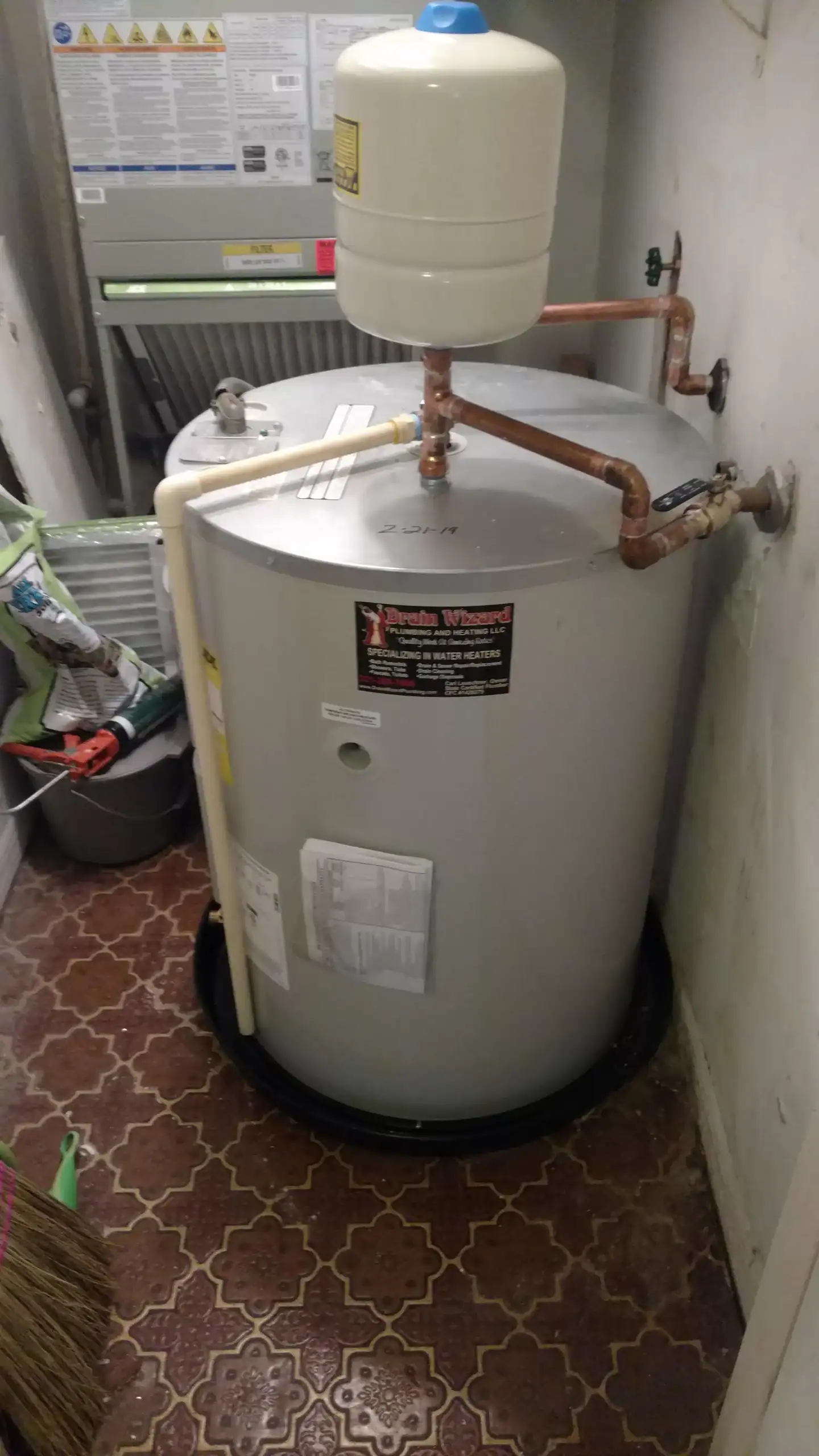
If your water heater is over 10 years old and showing signs of trouble, replacement usually makes more sense than repair. Once sediment hardens inside the tank or the heating element starts failing, you’re looking at a unit that’s on borrowed time. Repairs might buy you a few months, but you’ll likely be calling again soon.
Look for these signs: you’re running out of hot water faster than you used to, there’s visible rust or corrosion on the tank, you hear banging or popping noises, or there’s water pooling around the base. Leaks are a big one—if the tank itself is leaking, it’s done. You can’t patch a compromised tank.
If the unit’s newer and it’s a simple fix like a faulty thermostat or heating element, repair might be worth it. But in Florida’s climate, hard water accelerates wear. Most water heaters here don’t make it past 10 to 12 years before efficiency drops and problems start stacking up. We’ll give you an honest assessment when we come out—no upselling, just the reality of what you’re dealing with.
A traditional tank water heater stores 40 to 80 gallons of hot water and keeps it heated all day. When you turn on the tap, hot water’s ready to go. The downside is you can run out if multiple people shower back-to-back, and the unit uses energy constantly to keep that water hot even when you’re not using it.
A tankless water heater heats water on demand. When you turn on the hot water, the unit fires up and heats water as it flows through. You never run out of hot water, and you’re not paying to keep a tank hot 24/7. Tankless units last longer—usually 15 to 20 years—and take up way less space.
The tradeoff is cost. Tankless units are more expensive up front, and installation can be more complex depending on your home’s setup. If you’ve got a larger household and everyone showers in the morning, you might need multiple units or a high-capacity model. For most homes in Frontenac, a standard 50-gallon tank does the job and costs less to install. We’ll walk through what makes sense for your situation and your budget.
Most water heater replacements take three to five hours from start to finish. That includes removing the old unit, installing the new one, connecting it to your existing plumbing and power or gas line, testing for leaks, and making sure everything’s working properly.
If we’re swapping a tank for a tank and the setup is straightforward, it’s on the shorter end. If you’re switching from electric to gas, or going from a tank to a tankless system, it takes longer because we’re modifying connections and possibly rerouting lines. Permit inspections can add time depending on the county’s schedule, but we handle that coordination.
In emergency situations, we’ve had customers back up and running the same day they called. If it’s a planned replacement, we’ll schedule it at a time that works for you and make sure we’re in and out without dragging it into a multi-day project. You’ll have hot water by the time we leave.
Yes. Brevard County requires a permit for water heater replacement, and that includes Frontenac. It’s not optional, and skipping it can cause problems down the road—especially if you sell your home and the buyer’s inspector notices unpermitted work.
The permit process involves submitting plans, getting approval, doing the installation, and then having an inspector come out to verify everything’s up to code. Most homeowners don’t want to deal with that, and honestly, it’s easier to let a licensed plumber handle it. We pull permits as part of the job, so you don’t have to visit the county office or figure out what paperwork they need.
Inspections usually happen within a few days of installation. The inspector checks that the unit’s installed correctly, vented properly if it’s gas, and that all connections meet code. Once it passes, you’re done. If you hire someone who doesn’t pull a permit, you’re on the hook if something goes wrong or if the county finds out later. It’s not worth the risk.
For a standard 50-gallon electric water heater, you’re typically looking at $1,400 to $1,900 installed. A 50-gallon gas unit runs $1,400 to $2,000. That includes the unit itself, labor, removal of the old water heater, disposal, and permit fees.
Tankless systems cost more—usually $2,500 to $4,500 depending on capacity and whether it’s gas or electric. Heat pump water heaters fall somewhere in between. If your installation requires additional work like upgrading electrical panels, rerouting gas lines, or modifying venting, that adds to the cost.
We give free estimates, and we’ll tell you exactly what you’re paying for before we start. No surprise charges, no “oh, we found this other issue” halfway through unless it’s a legitimate safety concern. Brevard County’s hard water and humidity mean water heaters don’t last as long here as they do in other parts of the country, so investing in a quality unit and proper installation saves you money long-term. Cheaper installs often mean shortcuts, and you’ll pay for that later in repairs or early replacement.
For most households, a 50-gallon tank covers daily use—showers, dishes, laundry. If you’ve got a larger family or you run multiple appliances at once, a 75 or 80-gallon tank makes more sense. If it’s just one or two people, a 40-gallon unit might be enough.
Tankless sizing works differently. It’s based on flow rate—how many gallons per minute your household uses at peak times. If you’ve got two showers running plus a dishwasher, you need a unit that can handle that simultaneous demand. We calculate that based on your fixtures and usage patterns.
Undersizing means you run out of hot water. Oversizing means you’re paying to heat water you don’t use, and the unit cycles on and off more than it should, which shortens its lifespan. We’ll ask about your household size, your routines, and what’s frustrating you about your current setup. Then we’ll recommend what actually fits. You’re not getting a one-size-fits-all answer—you’re getting a system that works for how you live.