
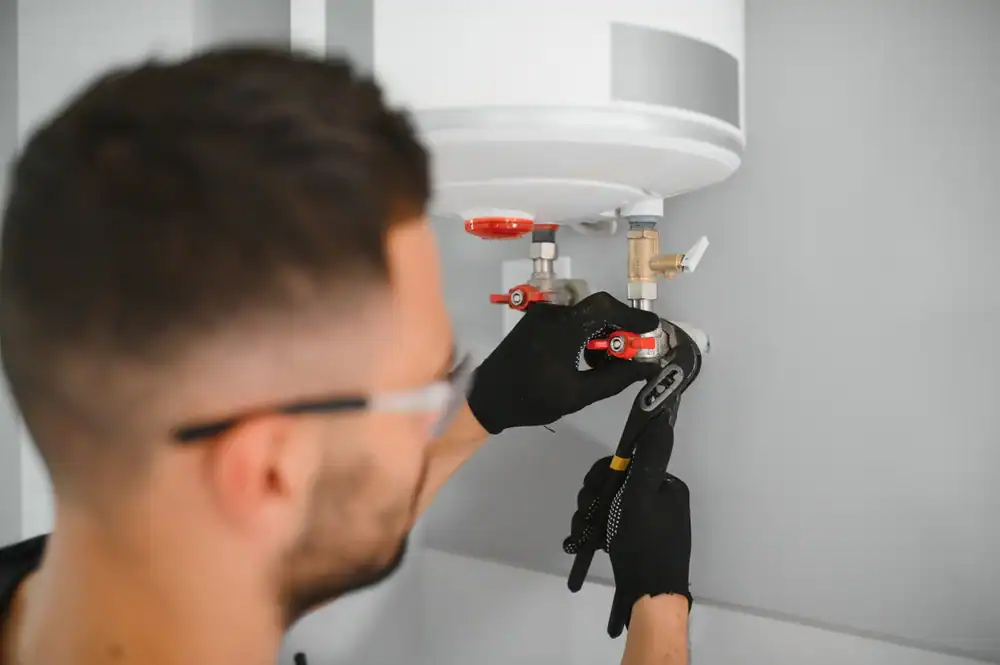
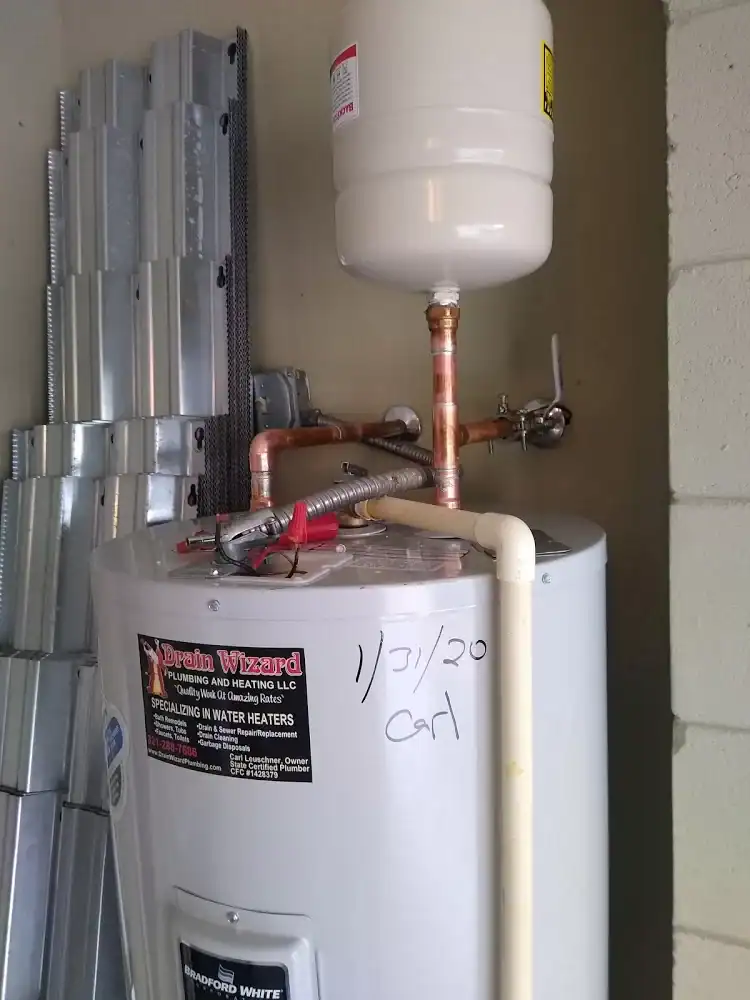
You’re not just getting a new tank installed. You’re getting consistent hot water when you need it, lower energy bills from a system that actually works efficiently, and zero worry about leaks damaging your floors or walls.
In Brevard County, where our mineral-rich water eats through older units faster than most places, a proper installation means your system lasts longer and performs better. You won’t deal with temperature swings, rusty water, or that sinking feeling when someone flushes a toilet mid-shower.
Most importantly, you get transparency. No hidden fees. No pressure tactics. Just an honest assessment of what your home needs, what it’ll cost, and how long it’ll take. That’s how we’ve operated since 2007, and it’s why homeowners across Port St. John keep our number saved.
We’re not a national franchise with a rotating crew of subcontractors. We’re a family-owned plumbing company based right here in Cocoa, serving Port St. John and the Space Coast since 2007.
Our team brings over 40 years of combined plumbing experience and 20 years of military service. That background shows up in how we work—disciplined, reliable, and straight with you from the first phone call. We don’t oversell. We don’t disappear after the install. We show up when we say we will, and we do the job right the first time.
Port St. John homeowners deal with unique challenges—hard water that corrodes tanks faster, humidity that accelerates rust, and older housing stock that wasn’t built with modern efficiency standards in mind. We’ve seen it all, and we know how to handle it without making a bigger mess of your day.
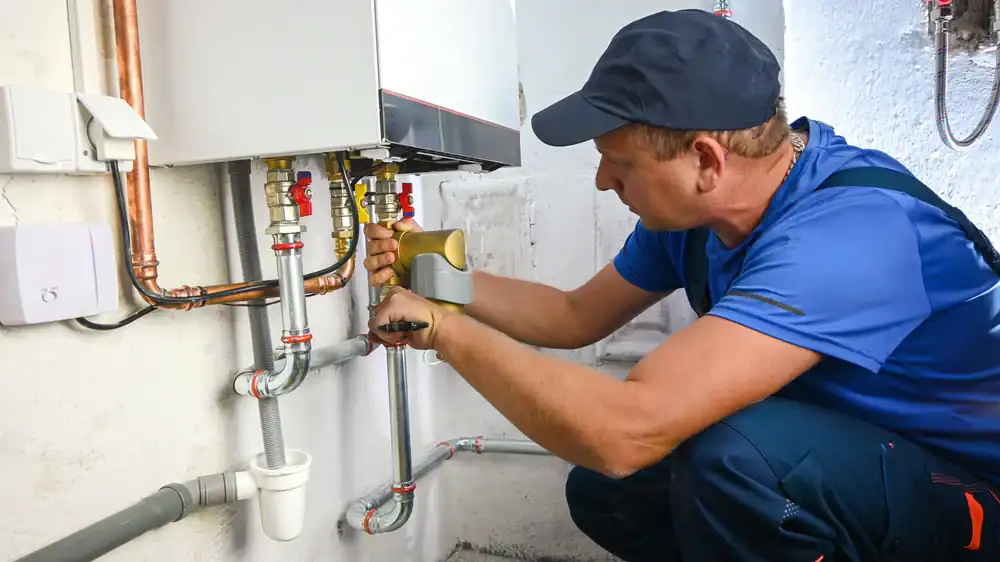
First, we assess your current system and your home’s needs. Not every house needs the same type of water heater, and we’re not going to push a tankless system on you if a standard electric unit makes more sense for your space and budget.
Once we’ve walked through your options and you’ve decided what works, we handle the removal of your old unit, any necessary code updates, and the full installation of your new water heater. If permits are required, we take care of that too. In Florida, codes can be tricky, and cutting corners now means problems later.
After installation, we test the system, check for leaks, and make sure everything’s running at the right temperature and pressure. You’ll know how to maintain it, what to watch for, and how to reach us if something feels off down the road. Most installs are done in a few hours, and you’re back to normal by the end of the day.
Ready to get started?
You’re getting a full-service replacement, not just a swap. That means removal and disposal of your old unit, installation of the new water heater with proper venting and connections, and compliance with Florida plumbing codes.
We work with both traditional tank systems and tankless models, electric and gas. If your home’s setup requires upgrades to electrical panels, gas lines, or drainage, we’ll let you know upfront—not halfway through the job. Brevard County’s water quality means we also recommend considering anode rod upgrades or water softening options if you’re dealing with heavy mineral buildup.
Every installation comes with manufacturer warranties, and we stand behind our work. If something’s not right, we come back and fix it. Port St. John homes built in the ’80s and ’90s often have outdated plumbing configurations, and we’ve handled enough of them to know what works and what doesn’t. You’re not a test case. You’re getting the benefit of years of local experience, applied to your specific situation.
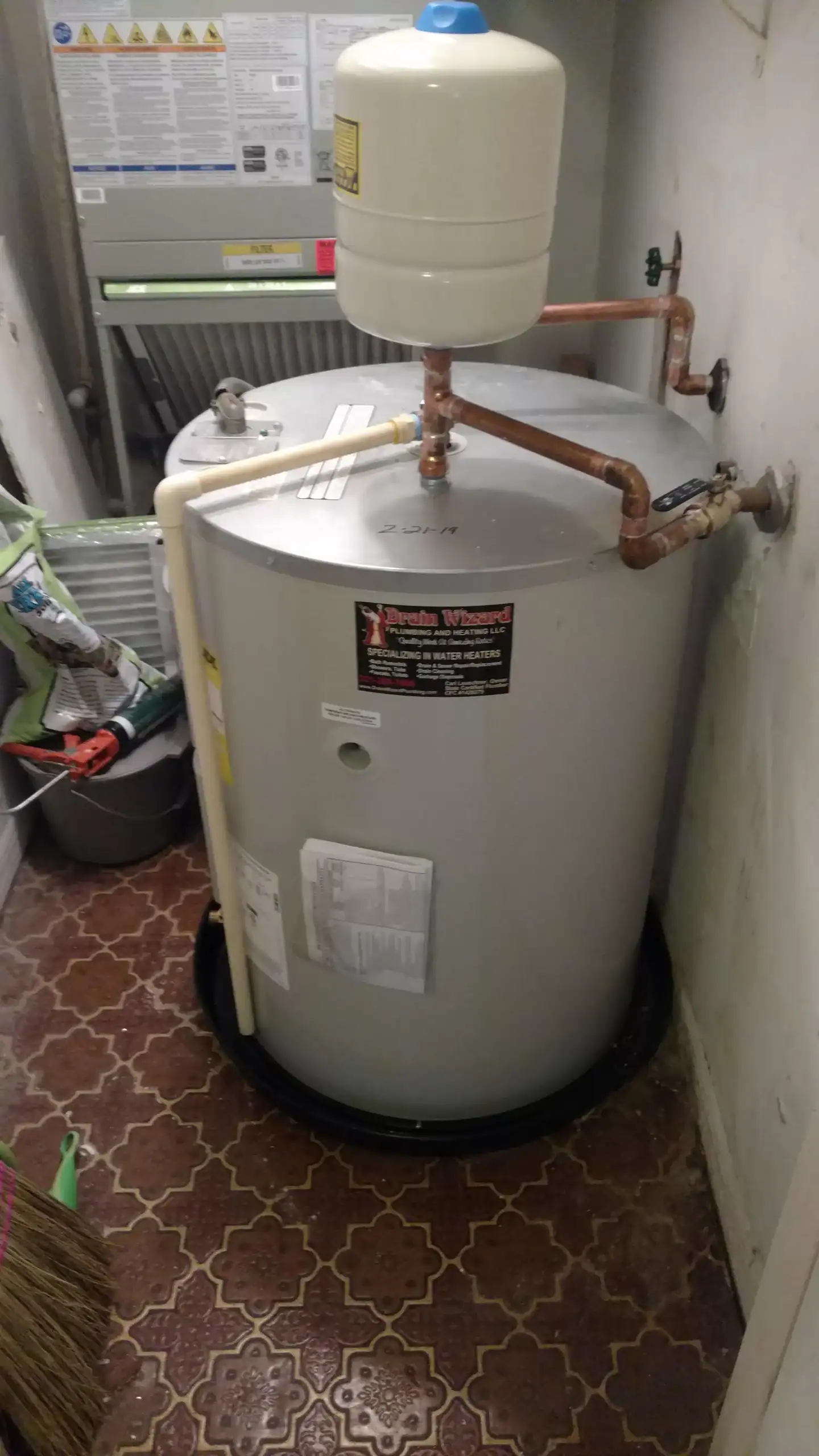
If your unit is over 10 years old and you’re seeing rust-colored water, hearing loud popping or banging noises, or noticing puddles around the base, replacement usually makes more sense than repair. Older tanks lose efficiency, and parts start failing in clusters—fixing one thing now often means another breaks in a few months.
Leaks are the biggest red flag. Even a small leak can cause serious water damage in Florida’s humid climate, where mold grows fast. If the tank itself is leaking, there’s no repair option—it needs to be replaced.
Temperature issues are trickier. If your water’s not getting hot enough or you’re running out of hot water faster than usual, that could be a failing heating element, thermostat, or sediment buildup. In Brevard County, our mineral-heavy water accelerates sediment problems. Sometimes a flush and element replacement can buy you a couple more years. Sometimes the damage is already done. An honest assessment will tell you which situation you’re in.
Most water heater replacements in Port St. John run between $1,200 and $2,500, depending on the type of unit, your home’s existing setup, and whether any code updates are required. A standard 40- or 50-gallon electric water heater is on the lower end, while tankless or larger-capacity systems cost more.
Labor, permits, and disposal fees are part of that total. If your home needs electrical work, gas line adjustments, or updated venting to meet current Florida codes, that adds to the cost. Older homes in Port St. John sometimes need these upgrades, especially if the last water heater was installed before code changes.
Tankless units cost more upfront—usually $2,500 to $4,000 installed—but they last longer and can cut your energy bills if you’re a good fit for one. They’re not right for every home, though. If you have high simultaneous hot water demand or limited electrical capacity, a traditional tank might be the better move. We’ll walk through what makes sense for your situation, not just what costs the most.
Most water heater replacements take three to five hours from start to finish. That includes removing the old unit, installing the new one, making all the connections, and testing the system to make sure it’s working properly.
If your home needs additional work—like upgrading electrical panels, rerouting gas lines, or modifying venting—it can take longer. Tankless installations are usually more involved than traditional tank swaps because they often require different venting and power configurations.
We don’t rush the job to squeeze in another appointment. A proper installation means checking for leaks, setting the right temperature and pressure, and making sure everything meets Florida code. Cutting corners to save 30 minutes isn’t worth the callbacks and problems later. You’ll have hot water by the end of the day, and it’ll work the way it’s supposed to.
In most cases, yes—Florida requires permits for water heater replacement to ensure the work meets state and local plumbing codes. That said, enforcement varies, and not every homeowner or contractor bothers with it. We handle permits when they’re required because unpermitted work can cause problems if you ever sell your home or file an insurance claim.
Permits aren’t just red tape. They ensure your installation is safe, properly vented, and up to code. Florida’s building codes exist for good reasons—our climate, water quality, and hurricane risks create specific challenges that generic installations don’t account for.
The permit process adds a little time and cost, but it’s not a huge burden, and it protects you. If an inspector flags something during the process, it’s better to fix it now than deal with a failed inspection during a home sale or, worse, a system failure that your insurance won’t cover because the work wasn’t permitted.
The most obvious sign is water pooling around the base of the tank. Even a small leak means the tank is compromised, and it’s only going to get worse. In Florida’s humidity, that water can quickly lead to mold and structural damage, so don’t wait on it.
Rusty or discolored water coming from your hot taps usually means the inside of the tank is corroding. Once that starts, there’s no stopping it. You might also hear loud banging, popping, or rumbling noises—that’s sediment buildup on the bottom of the tank, which makes the system work harder and fail faster.
If your water isn’t getting as hot as it used to, or you’re running out of hot water much faster than normal, that’s another warning sign. Temperature fluctuations and inconsistent performance mean internal components are wearing out. Brevard County’s mineral-rich water accelerates these issues, so if your unit is over eight years old and showing any of these symptoms, start planning for replacement before you’re stuck with cold showers and an emergency bill.
It depends on your household’s hot water usage, your home’s infrastructure, and your budget. Tankless water heaters provide endless hot water and take up less space, but they cost more upfront and require adequate electrical or gas capacity to run properly. If you have a larger family with overlapping showers, dishwashing, and laundry, you might need multiple tankless units—which gets expensive.
Traditional tank water heaters are more affordable, easier to install, and work well for most Port St. John homes. A 40- or 50-gallon tank handles typical family demand without issue. They do run out of hot water eventually, but recovery time is usually quick if the unit is sized correctly.
Tankless systems save energy over time because they’re not keeping 40 gallons of water hot all day. But if your home’s electrical panel can’t support the load, or if your water has high mineral content that’ll clog the heat exchanger, a tankless system might cause more problems than it solves. We’ll look at your specific setup and usage patterns and recommend what actually makes sense—not what’s trendy or most profitable for us.