
Your morning routine goes back to normal. No more cold showers, no more waiting around for lukewarm water that never gets hot enough. You stop worrying about whether that leak is getting worse while you’re at work.
The banging sounds stop. Your utility bill stops climbing from an inefficient system working overtime. And if there was water pooling around the base, you’re not lying awake wondering if mold is growing behind your walls.
When your water heater works the way it should, you forget it’s even there. That’s what we’re after—getting you back to that point where hot water is just something you have, not something you’re constantly thinking about.
We’re a family-owned plumbing company based in Cocoa, serving Malabar and the rest of Brevard County for over 15 years. Our owner Carl started in this trade at 16, learning everything from gas piping to water heater installations before most people get their first real job.
We bring over 40 years of combined plumbing experience and 20 years of military service to every call. That background shows up in how we work—no runaround, no inflated quotes, just straight answers about what’s wrong and what it takes to fix it.
Malabar’s coastal humidity and hard water create specific problems for hot water heaters. Corrosion happens faster here. Sediment builds up quicker. We’ve seen it hundreds of times, and we know exactly how to handle it without wasting your time or money.
You call or contact us, and we get details about what’s happening with your water heater. Is it leaking? Making noise? Not heating at all? We ask the right questions so we know what to bring.
We schedule a time that works for you—often same-day if it’s an emergency. When we arrive, we inspect the entire system, not just the obvious problem. We check the tank for corrosion, test the heating elements, look at the pressure relief valve, and examine all connections for leaks.
Once we know what’s wrong, we explain it in plain terms. No technical jargon meant to confuse you into a bigger repair. We tell you what needs to be fixed now, what can wait, and what a replacement would cost if that makes more sense than repairing an old unit.
Then we fix it. Most repairs happen the same day. We test everything before we leave to make sure your hot water is actually hot and your system isn’t going to fail again next week.
Ready to get started?
Every water heater repair includes a full system inspection. We’re looking at your anode rod, checking for sediment buildup, testing your thermostat accuracy, and making sure your pressure relief valve actually works. These are the things that fail quietly until they become expensive problems.
In Malabar, your water heater faces challenges most other places don’t deal with. The mineral content in Florida water is high—calcium and magnesium create scale that coats your heating elements and makes your system work harder. Our coastal humidity accelerates rust and corrosion on tanks and fittings. We flush sediment, replace corroded parts, and address the root cause, not just the symptom.
You also get transparent pricing before any work starts. We’re licensed, insured, and we’ve been doing this long enough to give you an accurate estimate without surprise charges later. If your water heater is beyond repair, we’ll tell you that too—and explain why replacement makes more financial sense than dumping money into an old system.
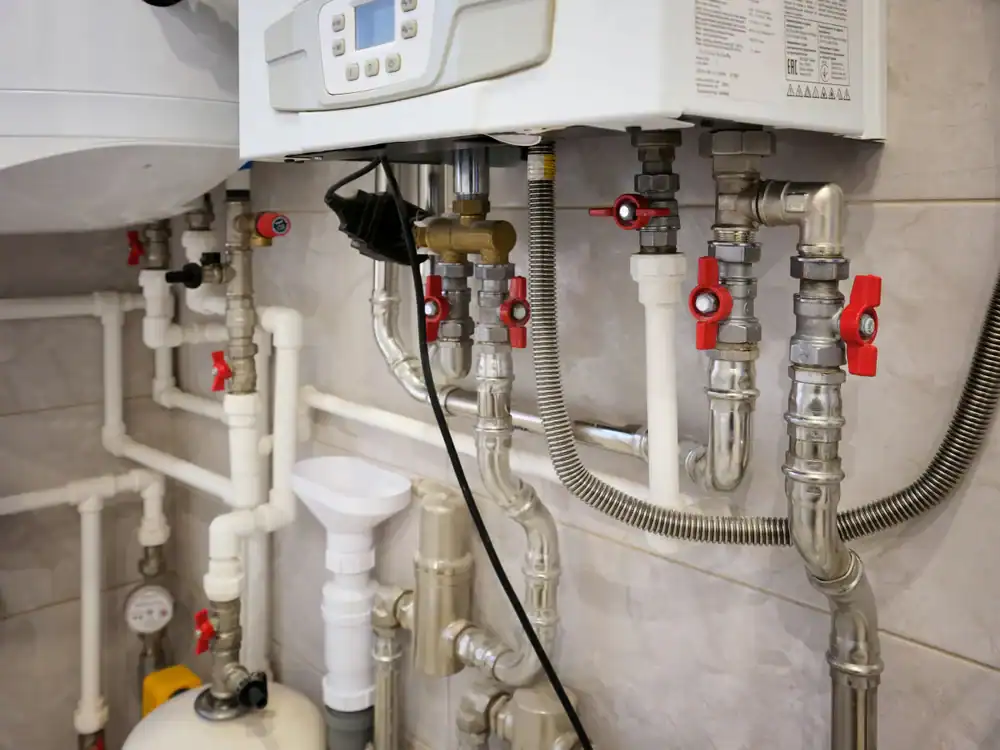
Age is the first thing to look at. Most tank water heaters last 8 to 12 years in Florida—sometimes less because of our hard water and humidity. If yours is over 10 years old and having problems, replacement usually makes more sense than repair.
But age isn’t everything. If your unit is newer and the issue is something like a faulty thermostat, a worn heating element, or a bad pressure relief valve, repair is straightforward and cost-effective. We can replace those parts and get you back to normal for a fraction of what a new water heater costs.
The decision gets harder when you’re looking at a rusted tank or a major leak. Once the tank itself is compromised, there’s no fixing it. We’ll walk you through the math—what the repair costs versus what you’d pay for a new, more efficient system that won’t need another repair in six months.
That noise is sediment. Over time, minerals in your water settle at the bottom of the tank. When the heating element kicks on, it heats that layer of sediment, and the trapped water underneath boils and pops through it. That’s the banging sound you’re hearing.
It’s more than just annoying. That sediment layer insulates the heating element from the water, which means your system has to work harder and longer to heat the same amount of water. You’re paying more on your utility bill, and you’re putting extra wear on the tank.
Flushing the tank removes the sediment and stops the noise. It also extends the life of your water heater and improves efficiency. If the buildup is severe or the tank is old, flushing might not be enough—but we’ll know once we take a look and let you know what makes sense.
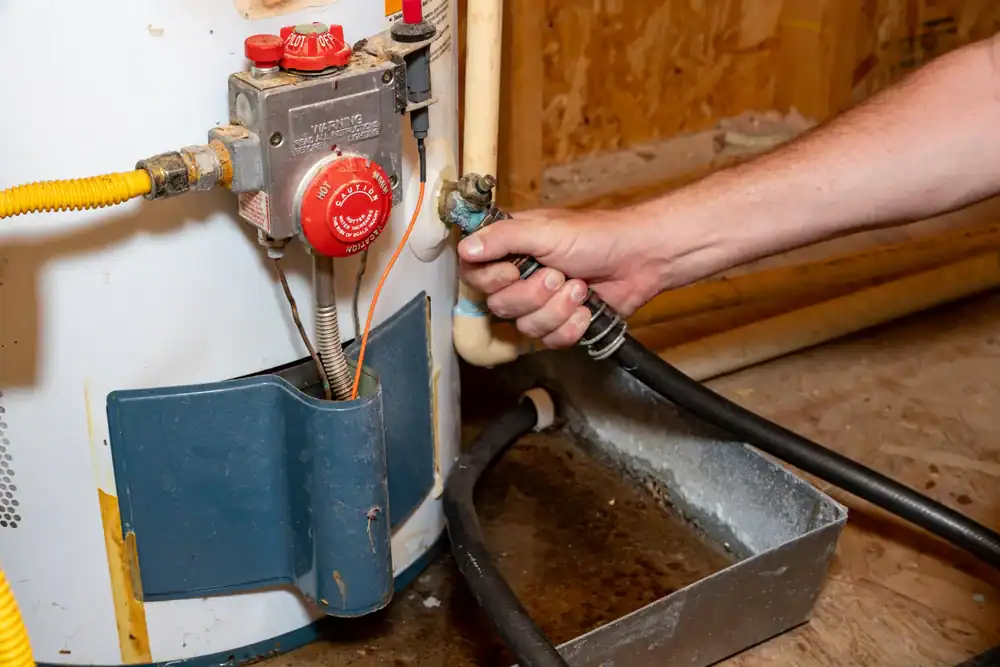
Where the leak is coming from determines how serious it is. If water is dripping from the temperature and pressure relief valve on the side of the tank, that’s often a simple fix—the valve might need replacing or the pressure in the tank might need adjusting.
If water is pooling around the base of the tank, that’s a bigger problem. It usually means the tank itself is corroded and leaking from the bottom. Once the tank starts leaking, it won’t stop. That’s a replacement situation, not a repair.
Even a small leak matters in Malabar. Our humidity means water damage turns into mold fast. If you’re seeing any water around your water heater, get it checked now. Waiting turns a manageable repair into water damage, ruined flooring, and a much bigger bill.
Most repairs take between one and three hours, depending on what’s wrong. Replacing a heating element or thermostat is usually on the shorter end. Flushing a tank with heavy sediment buildup or replacing a pressure relief valve and testing the system takes a bit longer.
If we need to order a part that’s not on the truck, that can add a day or two—but that’s rare. We stock the most common parts for standard residential water heaters, so we can usually finish the job the same day we diagnose it.
Emergency repairs get priority. If your water heater is leaking or completely out, we move fast. The goal is to get your hot water back as quickly as possible without cutting corners or leaving you with a half-fixed problem.
Some things you can handle—like adjusting the temperature setting or resetting a tripped breaker. But most water heater repairs involve either high-voltage electricity or gas lines, and both are dangerous if you don’t know what you’re doing.
Replacing a heating element means draining the tank, disconnecting electrical wiring, and making sure everything is sealed and safe when you’re done. Installing a new pressure relief valve requires knowing the right torque and testing it properly. Get it wrong and you’re looking at a flood, a fire risk, or a tank that fails under pressure.
Florida also requires licensed plumbers for most water heater work. If something goes wrong with a DIY repair and you file an insurance claim, they can deny it if the work wasn’t done by a licensed professional. It’s not worth the risk when a pro can do it right the first time.
Yes. We respond to emergency calls throughout Malabar and Brevard County, including nights and weekends. If your water heater is leaking, completely out, or causing a safety issue, that’s an emergency—and we treat it like one.
Same-day service is standard for us, even for non-emergencies. We know you’re not interested in waiting three days for hot water. When you call, we give you a realistic timeframe and show up when we say we will.
Emergency repairs cost more than scheduled service, but we’re upfront about pricing before we start. You’ll know what you’re paying and why. No hidden fees, no surprises when the job is done. Just fast, reliable water heater repair when you need it most.