
You stop rationing showers. You stop boiling water on the stove just to wash dishes. You stop worrying about whether that puddle under the tank is getting bigger.
When your water heater works the way it should, mornings run smoother. Laundry gets done without cold rinse cycles. Your family stops complaining.
That’s what a proper water heater repair gets you—not just a fixed appliance, but your routine back. Whether it’s a leaking tank, a pilot light that won’t stay lit, or a unit that’s making sounds it shouldn’t, the right fix means you’re not dealing with the same problem again in two weeks. Especially here in Satellite Beach, where salt air eats through components faster than most homeowners realize, you need repairs that account for coastal conditions—not just generic parts swapped in by someone who doesn’t know the difference.
We work with homeowners in Satellite Beach who’ve learned the hard way that coastal living means different plumbing challenges. Your water heater isn’t just dealing with normal wear—it’s fighting humidity, salt air, and corrosion that speeds up failure.
We’ve seen it all in Brevard County homes. Tanks that rust out years early because they’re in garages with no ventilation. Anode rods that dissolve faster than they should. Connections that corrode and start leaking without warning.
When you call us, you’re getting a licensed plumber who knows what to look for in barrier island homes and what actually holds up in this environment. Not someone reading a manual while standing in your garage.
You call or text, and we ask a few quick questions about what’s going on. No hot water at all? Leaking? Strange noises? That helps us know what to bring and how fast to get there.
We show up when we say we will. Our plumber takes a look at your water heater, figures out what’s wrong, and explains it in plain terms—not plumber jargon. If it’s a straightforward fix, we handle it right then. If you need a part or a full replacement, we walk through your options and what each one costs before doing anything.
Once the work’s done, we test everything to make sure you’ve got hot water and no leaks. We clean up. And we make sure you know what to watch for going forward, especially if your unit’s getting older or you’ve got coastal corrosion starting to show up. If you need emergency water heater repair, we move fast—because we know you can’t wait around when your tank’s leaking or your family has no hot water.
Ready to get started?
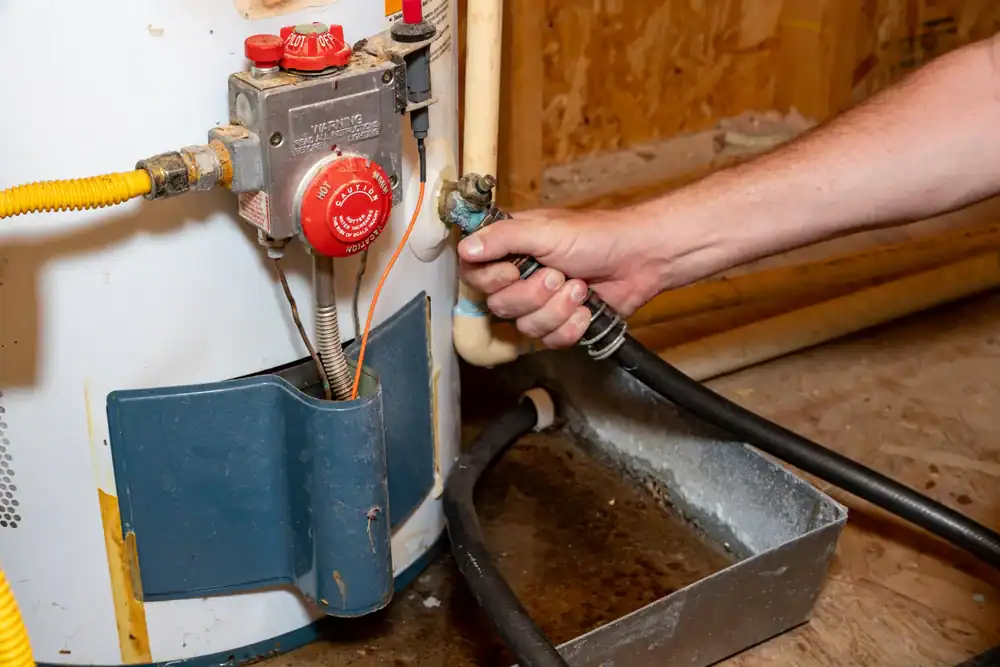
Most water heater problems fall into a few categories. Leaking tanks, usually from corrosion or a failing pressure relief valve. No hot water, which could be a busted heating element, a tripped breaker, or a pilot light issue. Weird noises—rumbling, popping, hissing—that mean sediment buildup or a component starting to fail.
We handle all of it. Heating element replacements. Thermostat adjustments. Anode rod swaps that buy your tank a few more years. Pressure relief valve repairs. Flushing out sediment that’s built up from hard water or coastal minerals.
In Satellite Beach, we also see a lot of corrosion damage that other plumbers miss. Salt air gets into garages and outdoor closets where hot water heaters sit, and it eats through metal faster than you’d think. We check for that specifically, because catching it early means a repair instead of a full replacement. If your water heater is leaking or you’re dealing with rusty water, that’s usually a sign corrosion’s already started—and waiting just makes it worse.
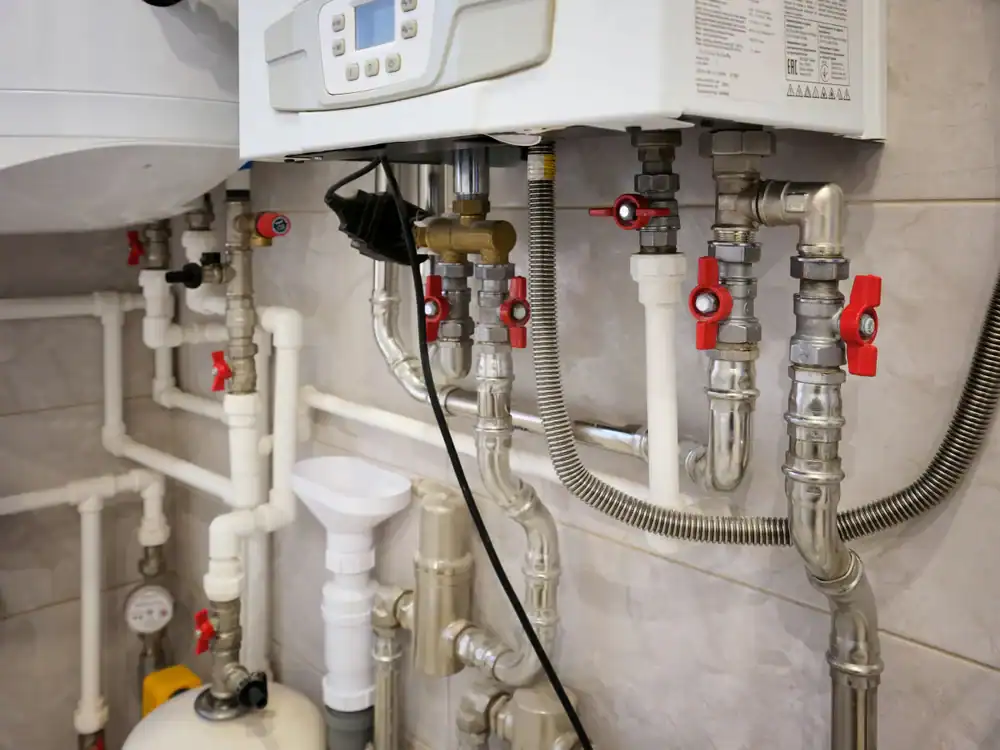
Most repairs take one to three hours, depending on what’s broken. If it’s something straightforward—like a heating element or thermostat—we’re usually in and out in under two hours.
If we need to drain the tank, flush out sediment, or replace a pressure relief valve, it might take closer to three hours. That includes testing everything afterward to make sure you’ve got consistent hot water and no leaks.
The wildcard is parts. If your water heater needs something we don’t carry on the truck, we’ll let you know right away and get it ordered. Most parts come in same-day or next-day in Brevard County, so you’re not waiting long. But if you’ve got an older or unusual model, it could take a bit longer to track down the right component.
Salt air is the biggest culprit. It accelerates corrosion on any metal components—tanks, pipes, valves, burner assemblies. Even if your water heater is inside a garage, the humid, salty air gets in and starts breaking things down.
Anode rods, which are designed to corrode instead of your tank, wear out faster here. When they’re gone, the tank itself starts rusting. That’s why regular maintenance matters more in Satellite Beach than it does inland—you’re working against a harsher environment.
Sediment buildup also happens faster in Florida because of minerals in the water. That sediment sits at the bottom of the tank, causes overheating, and eventually cracks the tank lining. If you hear rumbling or popping sounds, that’s usually what’s going on. Flushing the tank every year or two helps, but most homeowners don’t think about it until something breaks.
It depends where the leak is coming from. If it’s a valve, a loose connection, or the pressure relief valve, that’s repairable. Those fixes are straightforward and a lot cheaper than replacing the whole unit.
If the tank itself is leaking—meaning water’s coming from the tank body, not a component—you need a replacement. Once a tank starts leaking, it’s done. There’s no patching it or sealing it. That’s a safety issue, and it’s only going to get worse.
Age matters too. If your water heater is over ten years old and it’s leaking, replacement usually makes more sense. You’ll spend money on a repair, then deal with another failure six months later. We’ll walk you through the math and show you what makes sense for your situation. But if it’s a newer unit and the leak is fixable, repairing it buys you several more years without the cost of a new water heater installation.
Yes, if you call early enough in the day and we’ve got availability. Most emergency water heater repairs happen same-day because we know you can’t go long without hot water.
If your water heater is leaking, we treat that as an emergency. Leaks can cause water damage fast, and shutting off your water heater doesn’t always stop the problem. We’ll get there as quickly as we can to assess it and either fix it or help you shut things down safely until we can replace the unit.
For non-emergency repairs—like if your water’s not getting as hot as it used to, or you’re hearing strange noises—we can usually get to you within a day or two. But if you’re completely out of hot water or you’ve got water pooling around the tank, call us right away. We’ll move you to the front of the line.
Simple repairs—like replacing a heating element or thermostat—usually run between $150 and $400, depending on the part and how long the job takes. Pressure relief valve replacements are in that same range.
More involved work, like flushing a heavily clogged tank or replacing an anode rod, can run $200 to $500. If there’s corrosion damage or multiple components need attention, costs go up from there.
We give you an upfront price before we start any work. No surprises, no “we’ll figure it out as we go” pricing. If we find something else wrong while we’re in there, we’ll tell you what it is and what it’ll cost to fix before touching it. And if your water heater is old enough that repairs don’t make financial sense, we’ll tell you that too. You’re better off knowing the truth than spending $400 on a repair for a unit that’s going to fail again in three months.
First, shut off the power. If it’s electric, flip the breaker. If it’s gas, turn the gas valve to the off position. Don’t skip this—water and electricity don’t mix, and gas leaks are dangerous.
Next, shut off the water supply to the water heater. There’s usually a valve on the cold water line going into the top of the tank. Turn it clockwise until it stops. That’ll stop more water from filling the tank and leaking out.
If water’s pooling, try to contain it with towels or a bucket. If it’s a lot of water or it’s spreading fast, you might need to shut off your home’s main water supply until we get there. Then call us. We’ll walk you through anything else you need to do and get someone out as fast as possible. Leaking water heaters don’t fix themselves, and the longer you wait, the more damage you’re looking at—floors, drywall, baseboards, all of it.
Other Services we provide in Satellite Beach