

You’re not just fixing a pipe. You’re eliminating the constant worry that your plumbing could fail at any moment.
When we replace your failing cast iron pipes, you get a system built to last 50+ years with modern materials that won’t corrode, crack, or collapse. No more sewage backups in your yard. No more foul smells creeping through your home. No more wondering if today’s the day everything goes wrong.
Most homes in Georgiana built before 1975 are sitting on cast iron that’s already past its lifespan. Florida’s humidity and sandy soil accelerate the deterioration faster than almost anywhere else in the country. That’s not a scare tactic—it’s just the reality of living here.
The outcome you’re after is simple: a plumbing system you don’t have to think about anymore. One that works quietly in the background while you focus on everything else. That’s what a proper residential sewer line replacement gives you.
Drain Wizard is a family-owned plumbing company serving Georgiana and the rest of Brevard County. Carl, the owner, started working in plumbing at 16 and earned his master plumber license after years in the field. He’s backed by over 20 years of military service, which means the work ethic here isn’t negotiable.
Every job gets personal oversight. You’re not handed off to a rotating crew or left wondering who’s actually running the show. We’ve been in this community long enough to know what Florida homes deal with—and how to fix it right the first time.
You’ll get transparent pricing, no surprises, and straight answers. If trenchless sewer repair makes more sense for your property, we’ll tell you. If full replacement is the better move, we’ll explain why.

First, we run a camera inspection through your sewer line to see exactly what we’re dealing with. That tells us where the damage is, how far it’s spread, and whether trenchless repair is an option or if full replacement is necessary.
If your pipes are too far gone, we’ll replace them. Depending on your property, that might mean traditional excavation or trenchless methods like pipe bursting or hydro-excavation tunneling. Trenchless options let us replace the line without tearing up your entire yard or breaking through your floors—just a couple of small access points.
We remove the old cast iron and install new PVC or similar materials rated to last decades. Once it’s in, we test the system to make sure everything flows properly and there are no weak points. Then we restore any access points and clean up the site.
The timeline depends on the scope, but most residential sewer line replacements take a few days, not weeks. You’ll know the plan before we start, and we’ll keep you updated as we go.

Ready to get started?
When we handle cast iron pipe replacement in Georgiana, you’re getting a full system evaluation, not just a patch job. That includes camera inspection, a detailed assessment of your current sewer line, and a clear recommendation on whether trenchless repair or full replacement makes the most sense for your situation and budget.
We also handle pipe descaling if your cast iron pipes have heavy buildup but aren’t completely shot yet. That can buy you time if you’re not ready for a full replacement, though it’s not a permanent fix if the pipes are already corroding from the inside out.
Georgiana’s older neighborhoods—especially homes built in the post-war boom—are prime candidates for this work. Cast iron was the standard back then, and most of those systems are now 50 to 70 years old. In Florida’s climate, that’s well past the point where failure becomes likely. You’re not overreacting by looking into this. You’re being smart.
We’re licensed, insured, and local. That means if something comes up a year from now, we’re still here. You’re not calling a 1-800 number hoping someone shows up.
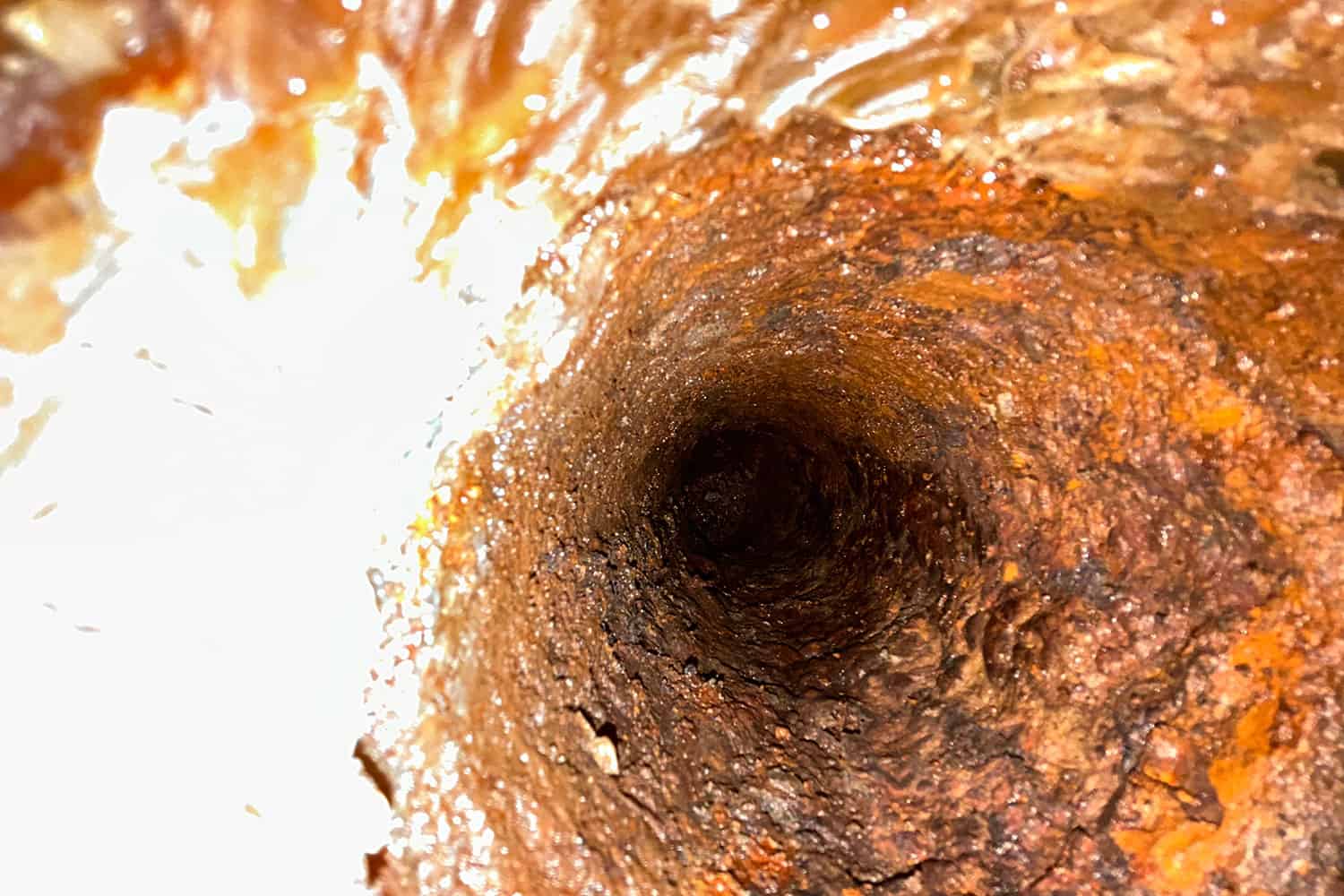
You’ll usually see signs before total failure, but not always. The most common warning is slow drains throughout the house—not just one sink, but multiple fixtures backing up or draining slower than they used to.
Foul smells are another red flag, especially if they’re coming from drains or your yard near the sewer line. That’s often a sign the pipe has cracked and sewage is leaking into the surrounding soil. You might also notice patches of your lawn that are greener or more lush than the rest—that’s because sewage acts like fertilizer.
If you’re seeing water pooling in your yard for no clear reason, or if you’ve had repeated backups even after snaking the line, the pipe itself is likely compromised. Homes in Georgiana built before 1980 are especially vulnerable. The only way to know for sure is a camera inspection, which shows us the inside of the pipe and exactly where the damage is.
Traditional replacement means digging a trench along the entire length of the sewer line, removing the old pipe, and installing a new one. It works, but it tears up your landscaping, driveway, or even parts of your home depending on where the line runs.
Trenchless sewer repair avoids most of that. We create one or two small access points, then either line the existing pipe with a new interior coating or use pipe bursting to break apart the old pipe while pulling a new one through. You get a brand-new sewer line without ripping up your property.
Trenchless isn’t always an option. If the pipe has completely collapsed or the line is too damaged, traditional excavation might be the only way to do it right. But when trenchless works, it’s faster, less invasive, and often costs less once you factor in the landscaping repairs you’d otherwise need. We’ll tell you upfront which method makes sense for your situation.
Most residential sewer line replacements in this area run between $8,000 and $20,000, depending on the length of the line, how deep it’s buried, and whether we can use trenchless methods or need to excavate.
Trenchless repairs tend to cost less overall because you’re not paying to restore your yard, driveway, or landscaping afterward. Traditional excavation can push costs higher, especially if the line runs under a patio or through a finished area of your home.
The biggest variable is access. If your sewer line is easy to reach and the damage is localized, the job’s simpler and cheaper. If it runs under a concrete slab or through a heavily landscaped area, that adds time and complexity. We’ll give you a clear, upfront price after the inspection so there are no surprises. You’ll know exactly what you’re paying for and why.
Most jobs take two to four days from start to finish, depending on the length of the line and the method we’re using. Trenchless repairs are usually faster because there’s less digging and cleanup involved.
Traditional excavation can take longer, especially if we’re working around obstacles like tree roots, driveways, or existing utilities. Weather can also slow things down—Florida’s afternoon storms don’t stop the clock, but they do pause the work.
You’ll have limited or no access to your plumbing during the replacement, so plan accordingly. We’ll walk you through what to expect before we start so you’re not caught off guard. Once the new line is in and tested, you’re back to normal. The system will work better than it has in years, and you won’t have to think about it again for decades.
Sometimes, yes. If the damage is isolated to one section and the rest of the pipe is still in decent shape, a partial replacement or trenchless lining might be enough.
But here’s the problem: cast iron doesn’t fail in just one spot. If one section has corroded or cracked, the rest of the pipe is likely deteriorating too—it just hasn’t broken yet. Fixing one section now might buy you a year or two, but you’ll probably be back to square one when another section fails.
We’ll tell you honestly whether a partial fix makes sense or if you’re better off replacing the whole line. If the pipe is 40+ years old and showing multiple signs of wear, full replacement is usually the smarter investment. You’re paying once to solve the problem for good, rather than paying repeatedly to patch a system that’s already past its useful life.
Probably not. Most homeowners insurance policies don’t cover pipe replacement due to age or normal wear and tear. They’ll cover sudden, accidental damage—like a tree root that punches through the line—but not deterioration that happens over time.
If a failing pipe causes secondary damage, like flooding or foundation issues, your insurance might cover some of that damage. But the pipe replacement itself usually falls on you. Insurance companies consider it a maintenance issue, not a covered loss.
That’s frustrating, but it’s also why catching the problem early matters. Replacing a failing pipe before it collapses costs a lot less than dealing with a flooded basement, ruined floors, and foundation repairs on top of the pipe work. If you’re in a home built before 1980 in Georgiana and you haven’t had the sewer line inspected, now’s the time to do it—before it becomes an emergency.