

You’re done calling a plumber every few months. Done worrying about sewage backups during family gatherings. Done watching discolored water come out of your faucets while wondering what’s actually in there.
Cast iron pipe replacement gives you a plumbing system that won’t corrode, crack, or leak for decades. The new PVC lines resist everything Florida throws at them—humid air, salty soil, root intrusion, all of it. Your water pressure stabilizes. The foul odors disappear. Your foundation stops taking on water damage.
Most importantly, you stop hemorrhaging money on temporary fixes that only buy you another six months. A full replacement costs less than years of emergency repairs, ruined flooring, and the mold remediation that follows a major backup. You’re looking at one project that solves the problem for good, protects your home’s value, and lets you stop thinking about your pipes entirely.
We’ve been serving Brevard County since 2007. We’re not a franchise with rotating technicians—we’re a family-owned operation with over 40 years of combined plumbing experience and a work ethic built on 20 years of military service.
We understand Palm Bay’s specific challenges. The humid coastal climate and acidic soil here accelerate cast iron corrosion faster than almost anywhere else in the country. Homes built before 1975 are especially vulnerable, and nearly every pre-1972 property in Brevard County has cast iron drain pipes under the slab.
We’ve replaced hundreds of these systems across Palm Bay, Melbourne, and the surrounding areas. We know the local codes, the soil conditions, and exactly how to route new lines from your home to the street without tearing up your entire yard.

We start with a camera inspection to see exactly what’s happening inside your pipes. You’ll see the same footage we do—the cracks, corrosion, root intrusion, whatever’s causing the problem. No guessing, no upselling.
From there, we map out the best replacement route. In many cases, we can use trenchless methods or strategic tunneling to avoid ripping up your floors entirely. If excavation is necessary, we’re surgical about it—accessing only what we need to access, preserving as much of your property as possible.
The old cast iron comes out. New PVC goes in, properly sloped and secured. We handle permits, inspections, and code compliance. Once the new system is tested and approved, we restore your property—whether that’s patching concrete, re-laying sod, or coordinating with your flooring contractor.
Most residential sewer line replacements take between three days and two weeks, depending on the scope. Trenchless repairs can be done in as little as one day. You’ll know the timeline upfront, and we’ll keep you updated as we go.

Ready to get started?
This isn’t just swapping out a section of pipe. You’re getting a complete system overhaul designed to last 50+ years—longer than most people stay in their homes.
We remove all the failing cast iron from your house to the street. That includes the main sewer line, drain lines under the slab, and any sections running through walls or ceilings if needed. Everything gets replaced with Schedule 40 PVC, which won’t rust, corrode, or degrade in Florida’s climate.
In Palm Bay specifically, we also account for the high water table and sandy soil conditions common in coastal Brevard County. Proper bedding, backfill, and compaction matter here—not just for code compliance, but to prevent settling or shifting that could stress your new pipes down the line.
You’ll also get documentation of the work, including permits and final inspection approvals. That’s critical if you ever sell the property. Buyers and inspectors want to see that the plumbing was done right, and having that paper trail adds real value during a sale.
Most full replacements in Palm Bay run between $8,000 and $25,000, depending on the size of your home, how much pipe needs replacing, and whether we can use trenchless methods. A typical 2,000-square-foot home with standard access usually falls in the $12,000 to $18,000 range.
Trenchless repairs cost significantly less than traditional excavation because there’s less labor, less restoration, and less time involved. If we have to dig under a slab or through landscaping, costs go up—but we’ll walk the property with you and give you an exact quote before any work starts.
The real cost comparison isn’t replacement versus doing nothing. It’s replacement now versus replacement later after a catastrophic failure that also destroys your flooring, cabinetry, and drywall. We’ve seen homeowners spend $40,000+ on emergency repairs and restoration when a pipe bursts under their kitchen. Planned replacement is always cheaper than crisis management.
Not always. In many cases, we can use trenchless pipelining, hydro-excavation, or strategic tunneling to replace your sewer line without tearing up tile, hardwood, or carpet. It depends on where your pipes run and how accessible they are from the outside.
If your main sewer line runs under your driveway or yard, we can often replace it with minimal disruption. If the failing pipes are directly under your living room slab with no exterior access, we may need to cut a small access trench—but we’re talking about a controlled opening, not demolishing your entire floor.
We’ll tell you upfront what’s required after the camera inspection. If floor removal is necessary, we’ll show you exactly where and why. Our goal is always to preserve as much of your property as possible while still doing the job right. We’re not in the business of creating more work than the project actually requires.
Trenchless repairs can be done in one to two days. Full system replacements with excavation typically take three days to two weeks, depending on the scope of the project and how much pipe we’re replacing.
Weather can affect timelines, especially if we’re working outdoors in Florida’s rainy season. Permit approvals and inspection scheduling also play a role. We’ll give you a realistic timeline during the estimate and keep you updated if anything changes.
The work itself moves quickly once we’re on site. The longest part is usually restoration—waiting for concrete to cure, coordinating with flooring contractors, or letting sod take root. But your plumbing will be functional well before all the cosmetic work is finished. You won’t be without working drains and toilets for weeks on end.
Frequent backups are the biggest red flag. If you’re snaking your drains every few months, that’s not normal—it means your pipes are deteriorating from the inside and catching debris that should flow right through.
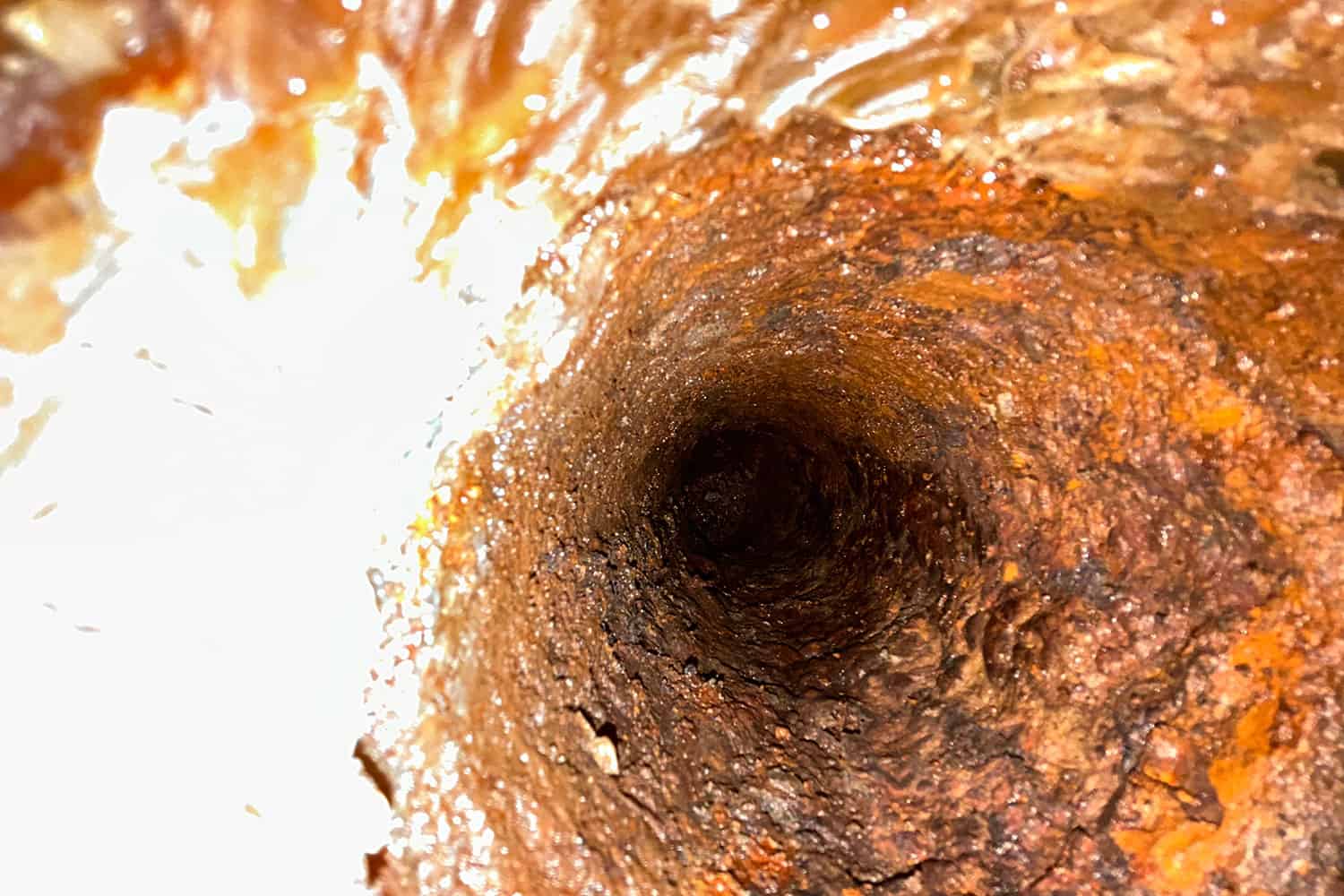
Foul sewage odors, even when drains aren’t clogged, indicate cracks or holes that are letting sewer gas escape. Discolored water—especially rust-colored or brownish water—means the interior of your pipes is corroding and flaking off into your supply. Low water pressure throughout the house can also point to buildup or collapse inside the lines.
You might also notice soft spots in your yard, cracks in your foundation, or unexplained moisture around your home’s perimeter. Those are signs of leaks underground. If your house was built before 1975 in Palm Bay, and you’re experiencing any of these issues, it’s worth getting a camera inspection. Most cast iron systems in Florida start failing around the 30-year mark.
Sometimes, but it depends on why the pipe failed and how your policy is written. If a pipe suddenly bursts and causes water damage, many policies will cover the damage to your home—but not necessarily the cost of replacing the pipe itself.
Insurance companies often argue that corroded cast iron is “gradual wear and tear,” which most policies exclude. But if the failure was sudden and unexpected, you may have coverage for at least part of the loss. The key is how you file the claim and what documentation you provide.
We’ve worked with homeowners and adjusters on dozens of these claims in Brevard County. We can provide the inspection footage, document the failure, and explain what happened in terms that support your case. Even if insurance doesn’t cover the full replacement, they may cover secondary damage like flooring, drywall, or mold remediation—which can offset a significant portion of your total cost.
Florida’s climate is brutal on cast iron. The combination of high humidity, salty coastal air, and acidic soil accelerates corrosion from both the inside and outside of the pipe. In Palm Bay specifically, the proximity to the ocean and the sandy, moisture-rich soil create the perfect conditions for rust and deterioration.
Most cast iron pipes are rated to last 50 to 75 years under ideal conditions. In Brevard County, we regularly see them fail at 25 to 35 years. The interior corrodes from wastewater and chemical reactions. The exterior corrodes from ground moisture and soil acidity. Eventually, the pipe walls get so thin they crack, collapse, or develop pinholes.
Homes built in the 1960s and 1970s are hitting that failure point right now. If your house falls into that era and you haven’t replaced your cast iron yet, you’re on borrowed time. The good news is that modern PVC doesn’t have any of these vulnerabilities—it won’t rust, corrode, or break down in Florida’s environment.