

Here’s what most Palm Shores homeowners don’t realize: if your house was built before 1990, there’s a good chance you’re sitting on cast iron pipes that are already corroding. Florida’s humid climate and salt-rich soil eat through cast iron faster than almost anywhere else in the country. Pipes that should last 50 years are failing after 25.
You stop waking up to slow drains that get worse every month. You stop worrying about that smell coming from under the house. Most importantly, you avoid the nightmare scenario where a pipe collapses under your foundation and you’re suddenly dealing with raw sewage, structural damage, and a five-figure emergency bill.
When you replace cast iron before it fails completely, you’re choosing the timing. You’re getting quotes, comparing options, maybe even going with trenchless methods that save you 30-40% compared to tearing up your yard. You’re not scrambling to find someone who can come out today because your bathroom is flooding.
That’s the difference between a planned replacement and an emergency disaster.
Drain Wizard is a family-owned plumbing contractor that’s been serving Palm Shores and the wider Space Coast area for over 15 years. We’re not a franchise or a call center routing you to the lowest bidder. We’re state-certified, locally based, and we’ve built our reputation on doing exactly what we say we’re going to do.
Our team brings over 40 years of combined plumbing experience and 20 years of military service. That military background isn’t just for show—it means we show up on time, we communicate clearly, and we don’t leave a job half-finished.
We’ve seen what happens when cast iron pipes fail in Brevard County homes. We’ve pulled out pipes that looked fine on the outside but were completely eaten through on the inside. We know how Florida’s climate accelerates corrosion, and we know how to replace your system the right way so you don’t have to think about it again for decades.

First, we run a camera through your existing pipes. This isn’t optional—we need to see what’s actually happening inside your lines before we recommend anything. You’ll see the footage too. We’ll show you the corrosion, the buildup, the cracks, whatever’s going on down there.
Once we know what we’re dealing with, we’ll give you options. Sometimes trenchless repair makes sense—we can reline sections of pipe without digging up your whole yard. Other times, especially if the damage is extensive, a full replacement is the smarter move. We’ll walk you through the costs, the timeline, and what each option actually gets you.
During the replacement itself, we remove the old cast iron and install new PVC or ABS piping from your house to the street connection. We handle all the permits and inspections because this work has to be up to code. Depending on your property and the extent of the damage, the job typically takes anywhere from a few days to a week.
We charge by the project, not by the hour, so you know the cost upfront. And when we’re done, your new system comes with a guarantee. No surprises, no upselling once we’re halfway through the job.

Ready to get started?
Nearly 40% of Florida homes were built before 1975, which means they’re sitting on cast iron plumbing that’s already past its safe lifespan. In Palm Shores specifically, you’re dealing with coastal humidity, salty air, and acidic soil—all of which speed up corrosion.
Cast iron corrodes from the inside out. Hydrogen sulfide gas from waste creates sulfuric acid inside the pipe. That acid eats away at the metal until the pipe cracks, leaks, or collapses entirely. By the time you notice rust stains or smell something foul, the damage is already serious.
Here’s what happens if you wait too long: sewage backs up into your home. Your foundation starts to crack because water is leaking underneath it. You’re dealing with mold, structural damage, and health hazards. Insurance usually won’t cover the pipe replacement itself—they consider that maintenance you should’ve handled. They might cover the water damage, but even then, you’re fighting for a payout that rarely covers the full cost.
Replacing your cast iron before it fails means you avoid all of that. You’re making a planned investment instead of paying for an emergency. And in a market like Palm Shores where homeownership rates are near 90%, protecting your property value isn’t optional—it’s essential.
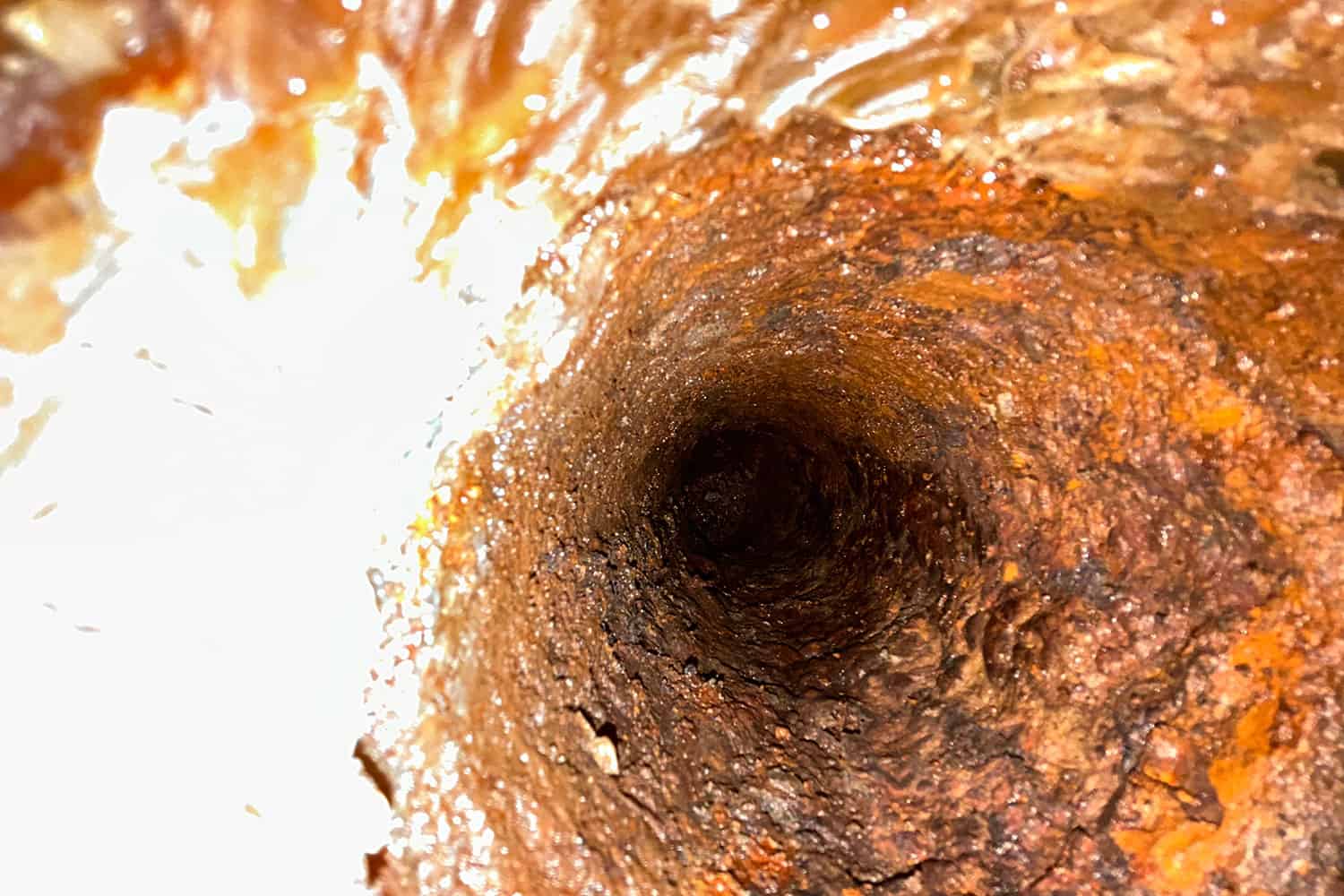
Slow drains are usually the first sign, especially if multiple fixtures are draining slower than they used to. You might notice gurgling sounds when you flush the toilet or run water. Foul odors coming from drains or from under the house are another red flag—that’s often hydrogen sulfide gas escaping through small cracks.
Rust-colored water or stains around your drains mean corrosion is already happening. If you see wet spots in your yard, cracks in your foundation, or notice your water bill creeping up without explanation, you likely have a leak underground.
The most reliable way to know for sure is a camera inspection. We run a waterproof camera through your sewer line and show you exactly what’s happening inside the pipes. You’ll see the corrosion, any cracks or holes, and how much buildup is restricting flow. That footage tells us whether you need a full replacement, a targeted repair, or if you’ve got a few more years before things get critical.
Trenchless repair means we reline the inside of your existing pipes without digging up your entire yard. We insert a new pipe liner through an access point, inflate it, and cure it in place. It’s faster, less invasive, and typically costs 30-40% less than traditional replacement. Your landscaping stays intact and you can usually keep using your plumbing while we work.
Full replacement means we excavate, remove the old cast iron completely, and install new PVC or ABS piping. This is necessary when the pipes are too far gone—when they’re collapsing, severely corroded, or when the layout needs to be reconfigured to meet current code.
Trenchless works well for pipes that still have structural integrity but are corroding or have minor damage. It doesn’t work if the pipe has already collapsed or if there are major bellies and misalignments. After we run the camera inspection, we’ll tell you which option makes sense for your situation. Sometimes it’s a combination—trenchless for some sections, full replacement for others.
Most residential sewer line replacements in Brevard County run between $4,000 and $15,000, depending on how much pipe needs replacing, how deep it’s buried, and whether we’re dealing with foundation access issues. A straightforward replacement from the house to the street on an accessible property sits on the lower end. Complex jobs with multiple bathrooms, deep pipes, or difficult terrain cost more.
Trenchless options typically save you 30-40% compared to full excavation, so if you’re looking at a $10,000 traditional replacement, trenchless might come in around $6,000 to $7,000. But again, trenchless only works if the existing pipe structure can support it.
We charge by the project, not by the hour, so you’ll get a fixed price before we start. That price includes permits, inspections, materials, labor, and cleanup. No surprises halfway through the job. And while that number might feel steep, compare it to what happens if you wait—emergency repairs after a catastrophic failure can easily hit $30,000 once you factor in water damage, foundation repair, and mold remediation.
Probably not the replacement itself. Most insurance policies treat aging pipes as a maintenance issue, not a covered event. They expect you to replace old plumbing before it fails. That said, if your pipes do fail and cause water damage to your home, insurance might cover the damage—the flooded floors, the ruined drywall, the mold remediation. But they won’t pay to replace the pipes that caused the problem.
Some policies will cover “sudden and accidental” damage, which could include a pipe that bursts without warning. But if there’s evidence you knew the pipes were deteriorating—slow drains, previous leaks, anything documented—they can deny the claim.
Your best bet is to get a written report from a licensed plumber after a camera inspection. That documentation shows the condition of your pipes and gives you leverage if you do need to file a claim later. It also helps if you’re selling your home—buyers and their inspectors will want to know the condition of the sewer line, and having recent footage showing a new system is a strong selling point.
A typical residential replacement takes anywhere from three to seven days, depending on the scope of work. If we’re replacing the main sewer line from your house to the street and the access is straightforward, we can often finish in three to four days. More complex jobs—multiple lines, difficult access, deeper excavation, or coordination with the city for street connections—can take a full week.
Trenchless repairs are faster. In many cases, we can complete the relining in one to two days because there’s minimal excavation. You’ll have limited access to your plumbing during the work, but it’s not like you’re without a bathroom for a week.
We’ll give you a timeline before we start so you can plan accordingly. We also coordinate inspections with the county, which can add a day or two depending on their schedule. The goal is to get your plumbing system fully functional as quickly as possible without cutting corners. Rushing a sewer line replacement is how you end up with leaks, failed inspections, and problems down the road.
You can, but it’s usually not the smartest move. If one section of your cast iron is corroded enough to fail, the rest of the system is likely in similar condition. Patching one spot might buy you a year or two, but you’ll be back in the same situation soon—except now you’ve spent money on a temporary fix instead of putting it toward a permanent solution.
Pipe descaling is another option some homeowners consider. We can clean out the buildup inside the pipes to improve flow, but that doesn’t fix corrosion or cracks. It’s a band-aid, not a repair.
There are situations where a targeted repair makes sense—if you have a localized issue caused by tree roots or a specific impact, and the rest of the system is in good shape, we can address just that section. But if the camera inspection shows widespread corrosion, multiple weak points, or significant thinning of the pipe walls, replacing the whole system is the only way to actually solve the problem. Otherwise, you’re just waiting for the next section to fail.