

You’re not imagining things. That slow drain, the smell near your foundation, the wet spot in your yard—those are early warnings your cast iron sewer pipes are corroding from the inside out.
In Satellite Beach’s coastal environment, cast iron pipes don’t last the 50-75 years they’re supposed to. The salt air and humidity cut that lifespan to 25-30 years, sometimes less. If your home was built before 1995, there’s a strong chance your pipes are already compromised.
Here’s what happens when you replace failing cast iron pipes before they catastrophically fail: no more sewage backups through your shower drain at 2 AM. No more foundation damage from underground leaks you can’t see. No more wondering if that gurgling sound means you’re about to deal with raw sewage in your bathroom. You get a modern PVC system that can last 100 years, doesn’t corrode in coastal conditions, and won’t cost you $100,000 in water damage repairs when it finally gives out.
The difference between replacing cast iron pipes on your timeline versus the pipe’s timeline is the difference between a planned $12,000 investment and an emergency $30,000 disaster cleanup.
Drain Wizard is a family-owned plumbing company that’s been serving Satellite Beach and Brevard County for over 17 years. We’re not a national chain that sends out whoever’s available—we’re local plumbers who understand what coastal Florida does to cast iron pipes.
Our lead plumber is a state-certified Master Plumber and military veteran with over 40 years of combined team experience. We’ve seen what happens when cast iron pipes fail in Satellite Beach homes, and we’ve helped hundreds of homeowners make the switch to PVC before disaster strikes.
We know the local building codes, we know how to work with Florida homeowners insurance (which is increasingly difficult when it comes to cast iron claims), and we know how to replace your sewer line without destroying your floors. That last part matters more than you might think.

First, we run a camera through your existing line to see exactly what we’re dealing with. This isn’t guesswork—we show you the footage so you can see the corrosion, cracks, or root intrusion yourself.
Next, we map out the replacement plan. In most Satellite Beach homes, we can use hydro-excavation or trenchless methods that don’t require tearing up your tile floors or destroying your landscaping. We dig strategic access points, usually outside, and route the new PVC pipe through the existing pathway. If your cast iron is too far gone or the layout requires it, we’ll talk through what traditional excavation looks like and why it might be necessary.
During installation, we’re pulling permits and making sure everything meets current Florida building codes. The new PVC pipe is joined with proper fittings, pressure-tested to confirm there are no leaks, and connected to your existing plumbing system. We handle the inspection scheduling with Brevard County so you don’t have to.
After the new line is in and tested, we backfill, compact, and restore your property. Most residential sewer line replacements in Satellite Beach take 1-3 days depending on length and access. You’ll have working plumbing the same day we finish—no waiting, no temporary fixes.

Ready to get started?
You get a full sewer camera inspection with recorded footage you can keep. This is how we document the condition of your pipes for insurance purposes if you’re filing a claim—and in Florida, that documentation matters because insurers are denying more cast iron claims every year.
We handle all permits and inspections required by Brevard County. You’re not calling the building department or trying to figure out what’s needed—we do that. The replacement includes removing your old cast iron pipe, installing new Schedule 40 PVC pipe (the standard for residential sewer lines), pressure testing the system, and restoring your property to its original condition.
If we’re using trenchless methods, that means minimal disruption to your floors, driveway, or landscaping. If traditional excavation is required, we’re clear about why and what restoration will look like before we start. You’ll also get a detailed estimate that breaks down costs—no surprise charges when the job is done.
Nearly 40% of Florida homes were built before 1975, which means a huge percentage of Satellite Beach properties are dealing with aging cast iron right now. The homes near the beach are especially vulnerable because of salt air exposure. We’ve replaced cast iron pipes in neighborhoods all over Satellite Beach, and we know which areas tend to have the worst corrosion based on soil conditions and proximity to the coast.
Full cast iron sewer pipe replacement typically runs between $10,000 and $30,000 depending on the length of the line, access difficulty, and whether we can use trenchless methods. Most Satellite Beach homes fall in the $12,000-$18,000 range for a standard residential sewer line replacement.
Here’s what affects the price: if your pipe runs under your house and we need to excavate through your foundation or floors, that costs more. If the line is accessible from outside and we can use hydro-excavation, that costs less. Longer runs cost more. Complicated routing around obstacles costs more.
We give you an upfront estimate after the camera inspection so you know exactly what you’re paying before we start. We also offer financing options with $0 down, because we know $15,000 isn’t something most people have sitting around. If you’re trying to file an insurance claim, we can provide documentation and work with your adjuster, but be prepared—Florida insurers are increasingly restrictive about covering cast iron pipe failures, especially if they classify it as “normal wear and tear.”
In many cases, yes—but it depends on where your pipes are and how they’re routed. If your cast iron sewer line runs under your slab foundation but we can access it from outside your home, we can often use trenchless or hydro-excavation methods that don’t touch your interior floors.
Hydro-excavation uses pressurized water to break up soil around the pipe, which means we’re digging strategically rather than jackhammering through concrete. Trenchless pipe bursting involves breaking the old pipe underground while simultaneously pulling new pipe through—no trenching required. Both methods minimize property damage significantly.
However, if your cast iron pipe is directly under your bathroom or kitchen with no exterior access, we may need to cut through flooring to reach it. We’ll know after the camera inspection and we’ll tell you honestly what’s required. The goal is always to minimize disruption, but we won’t sugarcoat it if interior work is necessary. Most Satellite Beach homes have enough exterior access that we can avoid tearing up tile or hardwood, but older homes with complex layouts sometimes require interior access points.
Slow drains throughout your house—not just one sink, but multiple drains—are often the first sign. Gurgling sounds when you flush the toilet or run water. Sewage odors near your foundation or in your yard. Patches of extra-green grass or wet spots in your lawn where the sewer line runs.
Inside your home, you might notice water backing up in your shower or tub when you run the washing machine. That’s a sign your main sewer line isn’t draining properly. Fruit flies or drain flies that won’t go away can indicate organic buildup in corroding pipes. If you’ve had repeated clogs that keep coming back even after snaking, that’s your cast iron pipe telling you it’s deteriorating.
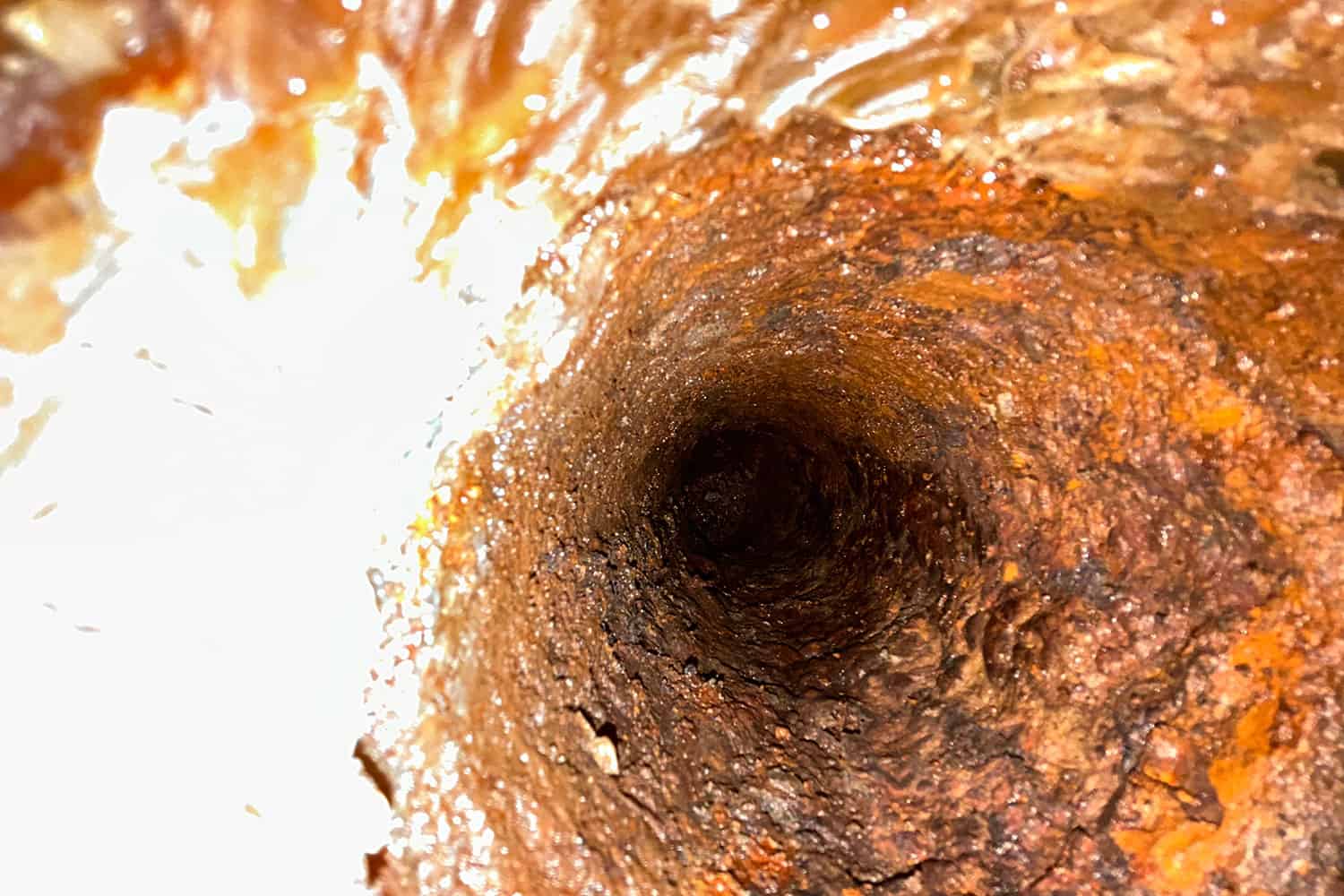
The most definitive way to know is a sewer camera inspection. We run a camera through your cleanout and you can see the inside of your pipes on a monitor in real time. Corrosion looks like rough, flaking metal. Cracks show up as visible gaps. Root intrusion looks like hair growing through the joints. If your home was built before 1990 in Satellite Beach and you’ve never had your sewer line inspected, it’s worth doing even if you don’t have symptoms yet. Coastal homes age faster because of salt air and humidity.
Maybe, but Florida homeowners insurance has become extremely restrictive about cast iron claims in recent years. Most policies will cover sudden, catastrophic failures—like a pipe that bursts and floods your home—but they typically won’t cover gradual deterioration or “normal wear and tear.”
If your cast iron pipe cracks and causes water damage to your foundation or interior, you might have coverage for the damage itself, but not necessarily for replacing the entire sewer line. Some insurers are now excluding cast iron pipe coverage entirely or offering lower settlements than the actual replacement cost.
Here’s what helps if you’re filing a claim: documentation from a camera inspection showing the failure, photos of any water damage, and a detailed estimate from a licensed plumber. We can provide all of that. You’ll also want to review your policy carefully and talk to your insurance agent before assuming you’re covered. Some homeowners choose to replace failing cast iron pipes proactively rather than waiting for a catastrophic failure, because the out-of-pocket cost of planned replacement is often less than the deductible plus uncovered expenses after an emergency. It’s not the answer anyone wants to hear, but it’s the reality of Florida homeowners insurance in 2024.
Most residential sewer line replacements take 1-3 days from start to finish. A straightforward replacement with good exterior access might be done in a day. More complex jobs with difficult access, longer runs, or required interior work can take 2-3 days.
Day one usually involves excavation and removing the old cast iron pipe. Day two is installing the new PVC line, making connections, and pressure testing everything. Day three (if needed) is backfilling, compacting soil, and restoring your property. You’ll have working plumbing by the end of each day—we don’t leave you without a functioning sewer line overnight.
Weather can affect the timeline since most of the work happens outside. Heavy rain can delay excavation. We also need to coordinate inspections with Brevard County, which can sometimes add a day if inspectors are backed up. We’ll give you a realistic timeline after we assess your specific situation during the camera inspection. The good news is that once we start, we work straight through until it’s done—we’re not the kind of company that starts your job and then disappears for a week to work on someone else’s project.
If your cast iron pipes are showing signs of failure and your home was built before 1990, replacement almost always makes more sense than repair. Here’s why: cast iron doesn’t fail in just one spot. When you’re seeing problems, it means the entire pipe is corroding from the inside out.
You can patch a cracked section or clear a root intrusion, and that might buy you 6-12 months. But the rest of the pipe is still deteriorating, and you’ll be calling a plumber again soon. Pipe descaling can temporarily restore flow in corroded cast iron, but it doesn’t stop the corrosion process—it just removes the buildup. You’re spending money on repairs that don’t solve the underlying problem.
Replacement gives you a 100-year solution. New PVC doesn’t corrode, doesn’t attract roots the way cast iron joints do, and holds up in Satellite Beach’s coastal environment without degrading. The upfront cost is higher than a repair, but you’re done—no more emergency calls, no more sewage backups, no more wondering when the next failure is coming. Most homeowners who try to limp along with repairs end up replacing the whole line eventually anyway, and by then they’ve spent thousands on temporary fixes plus dealt with the stress of repeated problems. If the camera inspection shows widespread corrosion or multiple problem areas, replacement is the right call.