

You’re not paying for a patch job that buys you six months. You’re getting a complete residential sewer line replacement that solves the problem for the next 50 years.
When we finish, your drains work like they should. No more slow drainage, no sewage smell creeping through your house, no wondering when the next backup is coming. You get modern PVC piping that won’t corrode in Florida’s humidity and salt air.
Most homes in Scottsmoor were built when cast iron was standard. That means if your house is 30+ years old, you’re already past the point where those pipes start failing. The question isn’t if they’ll go—it’s when. Replacing them now, on your schedule, costs a fraction of what emergency repairs and water damage restoration will run you later.
You also get peace of mind knowing the work is code-compliant, inspected, and done by a State Certified Master Plumber. That matters when you file for permits, when you sell, and when your insurance company asks questions.
Drain Wizard is a family-owned plumbing company serving Scottsmoor and all of Brevard County. We’re not a franchise with rotating techs. You’re working with the same crew that’s been handling cast iron replacements across the Space Coast for over 15 years.
Our owner started plumbing at 16, spent 20 years in the military, and built this business on the idea that you fix it right the first time. We’re licensed (CFC#1428379), insured, and we don’t leave until the job’s done correctly.
Scottsmoor’s a small community, and most of the homes here are dealing with the same issue: aging infrastructure that wasn’t built to handle Florida’s climate long-term. We’ve seen what happens when cast iron sits in humid, salty air for decades. We know how to replace it without tearing your house apart.

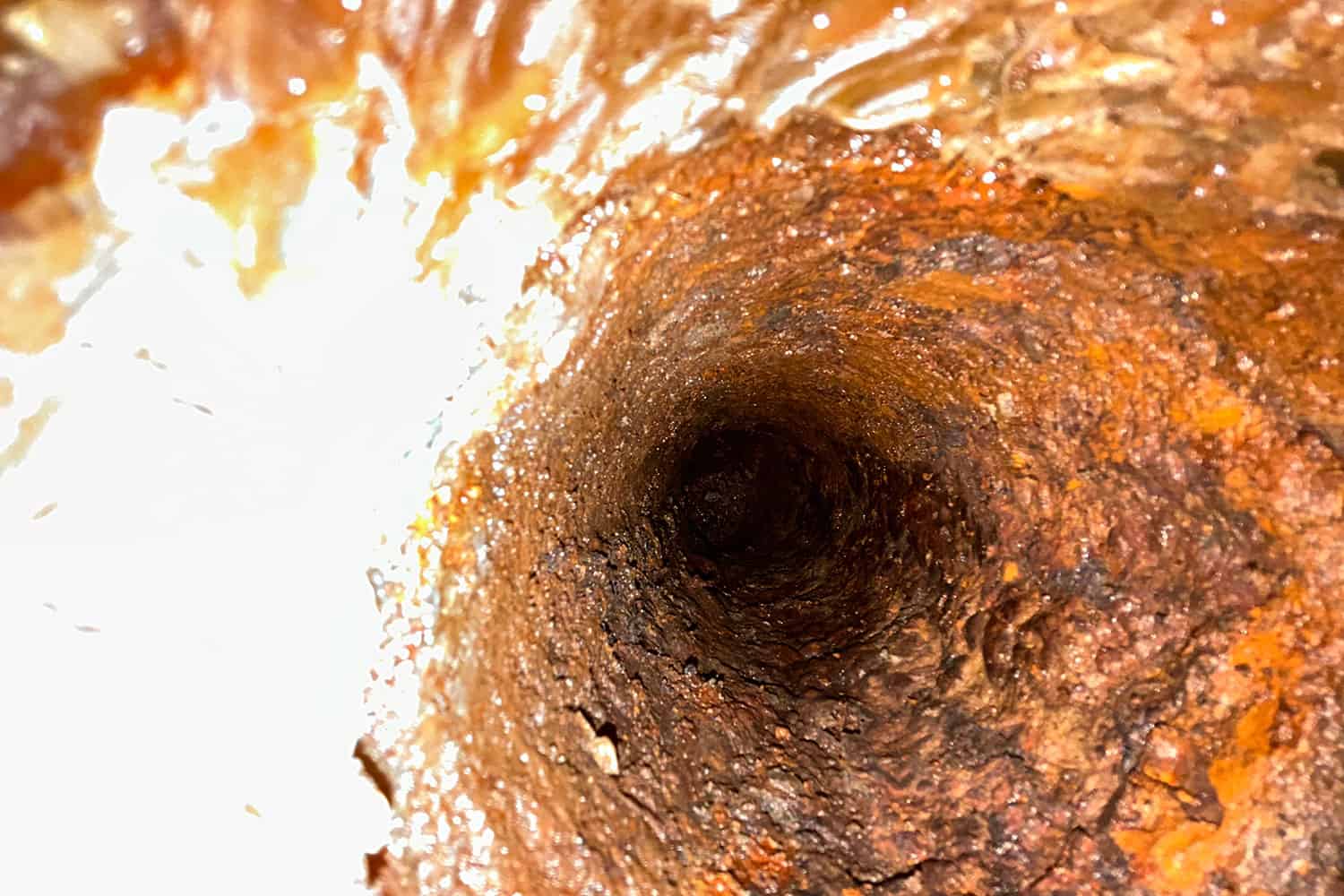
We start with a camera inspection. A small waterproof camera goes into your drain line so we can see exactly what’s happening inside the pipes. You’ll see it too—the corrosion, the buildup, the cracks. No guessing.
Once we know what we’re dealing with, we map out the replacement. Most jobs involve running new PVC pipe through your walls, attic, or crawlspace, then connecting it to the main sewer line at the street. If we need to go under the slab, we’ll tell you upfront.
The actual replacement depends on your home’s layout, but the process is the same: remove the old cast iron, install new PVC, pressure test everything, and make sure it’s up to code. We handle the permits, the inspections, and the cleanup.
In some cases, trenchless sewer repair is an option. That means we can reline or replace sections of pipe without digging up your yard. It’s not always possible, but when it is, it saves time and money. We’ll walk you through what makes sense for your property.
Most residential sewer line replacement jobs take two to four days, depending on the size of your home and how much pipe needs replacing. You’ll have working plumbing the entire time—we don’t leave you without a functioning bathroom.

Ready to get started?
Cast iron was the standard for sewer lines in homes built before 1975. It’s strong, but it wasn’t designed to last forever—especially not in Florida. The combination of humidity, salt air, and the natural corrosion process means most cast iron pipes start breaking down after 25 to 30 years.
Here’s what happens: the inside of the pipe corrodes and builds up scale. That narrows the opening, slows your drains, and eventually leads to blockages. At the same time, the pipe itself weakens. Cracks form. Tree roots find their way in. Sewage starts leaking into the soil around your foundation.
In Scottsmoor, where the water table is high and the soil shifts, that leaking sewage washes away the dirt supporting your pipes. That’s when you get collapses, sinkholes, and foundation issues. It’s not dramatic until it is.
Pipe descaling can help in the short term—we use specialized equipment to scrape away buildup and restore some flow. But if the pipe is already cracked or corroded through, descaling just buys you time. It doesn’t fix the underlying problem.
The real solution is replacement. Swap out the cast iron for PVC, and you’re done worrying about it. PVC doesn’t corrode, doesn’t attract roots the same way, and lasts 50+ years in Florida’s climate. It’s what we install in every new home now, and it’s what we recommend for every cast iron replacement we do.
Most cast iron pipe replacements in Scottsmoor run between $8,000 and $15,000, depending on how much pipe needs replacing and how accessible it is. If we’re running new lines through your attic or crawlspace, that’s usually on the lower end. If we’re going under a slab or dealing with a complex layout, it costs more.
That might sound like a lot, but compare it to the alternative. A major sewage backup can cause $100,000+ in water damage, mold remediation, and structural repairs. Insurance companies fight hard not to cover cast iron failures, especially if they can argue it was a maintenance issue you ignored.
We give you a flat-rate quote after the camera inspection. No hourly billing, no surprise charges. You’ll know exactly what it costs before we start, and that price includes permits, materials, labor, and cleanup.
Most jobs take two to four days from start to finish. Smaller homes with straightforward layouts can be done in two days. Larger homes or jobs that require going under the slab take closer to four.
You’ll have working plumbing the whole time. We don’t shut off your water and leave—we work in sections so you can still use your bathroom and kitchen. There will be some noise and disruption, but we’re not tearing your house apart.
The timeline also depends on inspections. Brevard County requires a permit and a final inspection for this type of work, and we build that into the schedule. We handle all the paperwork and coordinate with the inspector so you don’t have to.
Sometimes, yes. If the damage is isolated to one section and the rest of the system is still in good shape, we can replace just that section. But here’s the thing: if one part of your cast iron is corroded, the rest is usually in similar condition. It’s all the same age, exposed to the same conditions.
Repairing one section now means you’ll likely be calling us back in a year or two to fix another section. And another. At some point, you’ve spent just as much on multiple repairs as you would have on a full replacement—and you’ve dealt with the stress and disruption multiple times.
We’ll always give you the honest assessment after the camera inspection. If a repair makes sense, we’ll tell you. But if the whole system is compromised, replacement is the smarter move. You do it once, and you’re done.
Trenchless sewer repair means we fix or replace your sewer line without digging up your yard. There are two main methods: pipe lining (where we insert a new liner inside the old pipe) and pipe bursting (where we break apart the old pipe and pull new pipe through the same path).
It works for some cast iron situations, but not all. If your pipes have already collapsed or if there are major offsets, trenchless usually isn’t an option. The existing pipe has to be stable enough to work with.
When it does work, it’s faster and less invasive. No trenches across your lawn, no tearing up driveways or landscaping. But it’s not always cheaper—the equipment and process can cost just as much as traditional replacement. We evaluate your specific situation and let you know if trenchless makes sense for your property.
Probably not. Most homeowners insurance policies in Florida specifically exclude coverage for pipe replacement due to wear and tear, corrosion, or age-related deterioration. They’ll cover sudden, accidental damage—like a pipe that bursts and floods your house—but even then, they’ll often only cover the water damage, not the cost of replacing the pipe itself.
Some policies offer optional endorsements for sewer line coverage, but they come with limits and deductibles. And if the insurance company can argue that you knew the pipes were failing and didn’t act, they’ll deny the claim entirely.
The best approach is to replace failing cast iron pipes before they cause a catastrophic failure. That way, you’re controlling the cost and the timeline, and you’re not fighting with an insurance adjuster while your house is flooded. If you’re not sure about your coverage, read your policy or call your agent and ask specifically about sewer line coverage.
Slow drains are usually the first sign. If your sinks, tubs, or toilets are draining slower than they used to—and it’s happening throughout the house, not just one fixture—that’s a red flag. It means buildup or corrosion is narrowing the pipes.
Sewage smell is another big one. If you’re smelling sewer gas inside your home, especially near drains or in your crawlspace, it means there’s a crack or gap somewhere letting that gas escape. That’s not just unpleasant—it’s a health hazard.
Other signs: frequent backups, water pooling in your yard for no reason, patches of extra-green grass (from sewage leaking underground), or visible rust and corrosion on any exposed cast iron. If your home was built before 1975 and you’ve never had the sewer line inspected, it’s worth getting a camera inspection done. You’ll see exactly what’s going on inside those pipes, and you can make a decision based on facts instead of guessing.