

Your drains clear fast. Water flows where it should. The smell disappears.
You stop worrying about sewage backing up into your shower or toilets overflowing when guests are over. Your home insurance company stops sending letters about your plumbing. You can sell your house without a failed inspection killing the deal.
Cast iron pipes in Shiloh don’t last as long as they should. Florida’s humidity and salt air from the Space Coast eat through them faster than anywhere else in the country. What should last 50 years fails in 25 to 30. If your home was built before 1975, the pipes are already on borrowed time.
Replacing them now means you control the timeline. You avoid the emergency call, the flooded bathroom, the cleanup crew, and the insurance claim that may not even get approved anymore. You get modern PVC that handles Florida’s climate, moves water efficiently, and doesn’t corrode from the inside out.
Drain Wizard is a family-owned plumbing company based in Cocoa, serving Shiloh and the surrounding Brevard County area for nearly two decades. Carl, our owner, started learning this trade at 16 and spent over 40 years in the field before opening this business.
He’s a retired military veteran with 21 years of service. That background shows up in how we work: on time, no runaround, and we do what we say we’ll do.
We’ve seen what happens when cast iron pipes fail in Florida homes. We know the signs before most homeowners do. And we know how to replace them without tearing up your entire house, which matters when you’re living in a slab-built home in Shiloh where the pipes run under your foundation.

We start with a camera inspection. That shows us exactly where the damage is, how bad it’s gotten, and whether the whole system needs replacing or just a section. Most of the time in older Shiloh homes, if one section is corroded, the rest isn’t far behind.
Next, we map out the replacement plan. In Florida, most homes are built on slabs, so the sewer lines run underneath. Traditional companies dig trenches through your living room or bathroom floor. We use hydro-excavation and tunneling methods that let us access the pipes without destroying your tile, hardwood, or carpet.
Once we’ve accessed the old cast iron, we remove it and install new PVC. PVC doesn’t rust, doesn’t corrode from Florida’s humidity, and handles modern water flow better than cast iron ever did. We pressure test everything before we close it up, so you know it works before we’re done.
The whole process typically takes a few days depending on the scope. You’ll have working plumbing the entire time in most cases. When we’re finished, your floors look the same as they did before we started.

Ready to get started?
You get a full camera inspection that documents the condition of your entire system. That matters for insurance claims, which are getting harder to file in Florida as more companies exclude cast iron pipe coverage.
You get the replacement itself, done with methods that protect your property. No jackhammering through your bathroom floor unless there’s absolutely no other option. We use hydro-excavation to tunnel under slabs when possible, which keeps your home intact.
You get modern PVC pipe that’s rated to outlast you. It doesn’t corrode. It handles higher flow rates. It meets current health and environmental standards, which cast iron installed in the 1960s doesn’t.
And you get documentation. If you’re selling your home in Shiloh, updated plumbing is one of the first things buyers and inspectors look for. Homes built before 1975 get flagged immediately. Having proof that the cast iron has been replaced removes that obstacle and protects your property value.
This isn’t a patch job. We’re not descaling your pipes or lining them with epoxy to buy you another five years. We’re removing the problem and installing a system that works.
Slow drains are the first sign most people notice. If more than one drain in your house is sluggish, that’s not a clog—it’s your pipes narrowing from corrosion.
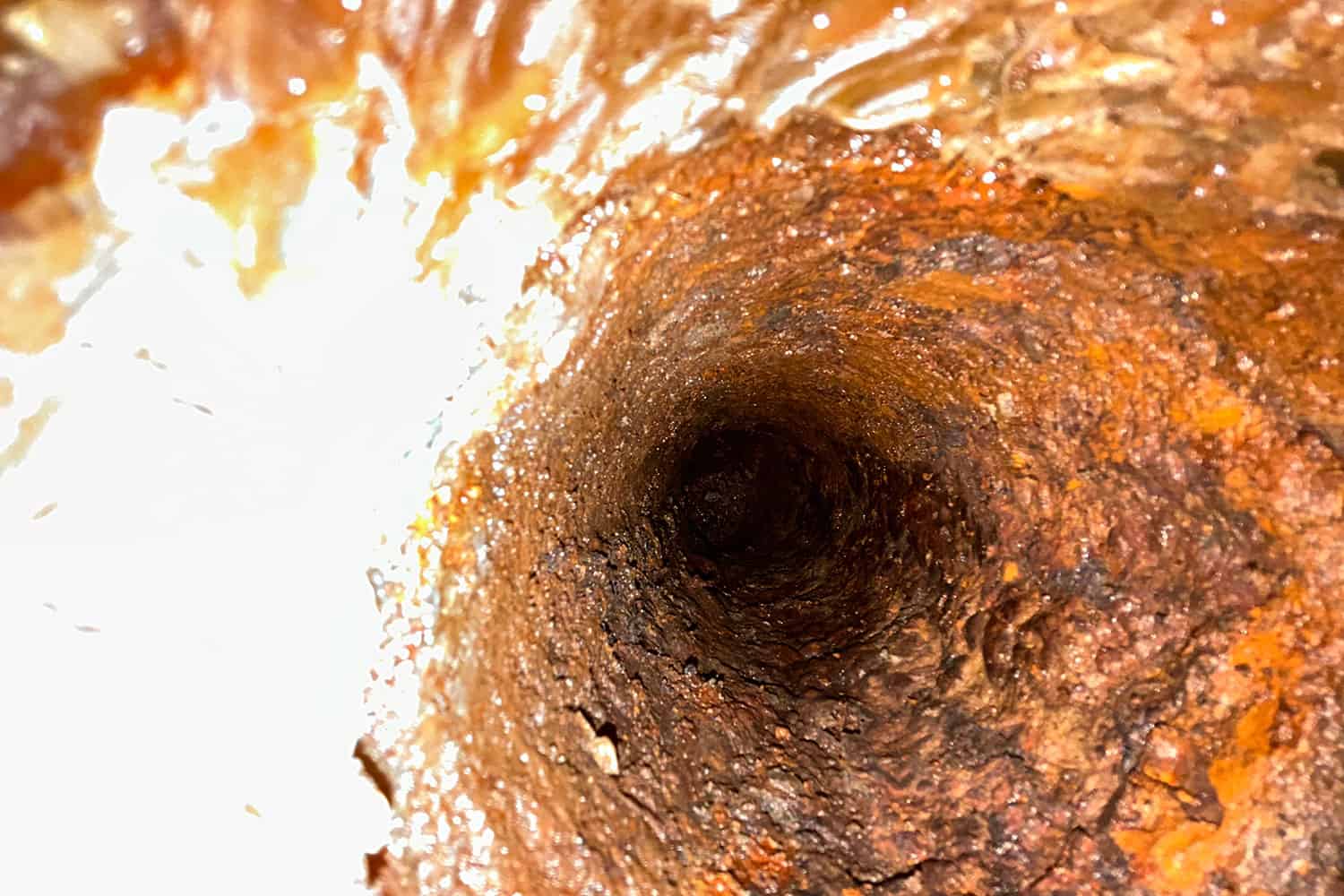
Sewage smells are next. Cast iron rusts from the inside out, and once it starts leaking, you’ll smell it before you see it. The odor usually shows up near bathrooms or under sinks.
Sewage backups are the final stage. If waste is coming back up through your drains, the pipe has either collapsed or corroded to the point where nothing can pass through. That’s an emergency, and it means the system is done.
In Shiloh and the rest of Brevard County, cast iron fails faster because of the humidity and salt air. If your home was built before 1975 and you’re seeing any of these signs, the pipes are likely at the end of their lifespan. A camera inspection will show you exactly what’s happening inside.
Not in most cases. We use hydro-excavation and tunneling techniques that let us access pipes under your slab without destroying your floors.
Traditional methods involve jackhammering through tile or concrete to reach the sewer line. That works, but it also means you’re paying for demolition, plumbing, and then floor replacement. It’s expensive and disruptive.
Hydro-excavation uses pressurized water to create tunnels under your foundation. We can reach the pipes, remove the old cast iron, and install new PVC without touching your living room or bathroom floors. It’s cleaner, faster, and protects your property.
There are situations where we can’t avoid cutting into a floor—if the damage is directly under a fixture or if the layout doesn’t allow for tunneling. But that’s rare. In most Shiloh homes, we can do the job without any floor destruction.
Most residential replacements take two to four days, depending on the size of your home and how much of the system needs replacing.
Day one is usually inspection and access. We run the camera, map out the damage, and start creating access points using hydro-excavation. Day two and three are removal and installation. We pull out the old cast iron and install the new PVC, section by section.
Day four is testing and cleanup. We pressure test the entire system to make sure there are no leaks, then backfill any tunnels and restore your property to how it looked before we started.
You’ll have working plumbing during most of the process. We don’t leave you without a functioning bathroom or kitchen. If we need to shut off water for a specific task, we’ll let you know ahead of time and keep it as short as possible.
Sometimes, but it’s getting harder. Florida insurers have started adding exclusions for cast iron pipes, especially in homes built before 1975.
If the failure is sudden and accidental—like a pipe bursts and floods your home—there’s a better chance of coverage. But if it’s gradual deterioration, which is what usually happens with cast iron corrosion, many policies won’t cover it.
You need to report problems immediately. Florida law requires prompt reporting, and if the insurance company thinks you waited too long, they can deny the claim. That’s why documentation matters. A camera inspection gives you proof of when the damage started and how severe it is.
We can help with the documentation process. We’ve worked with enough homeowners in Shiloh and Brevard County to know what insurers want to see. We’ll provide detailed reports and photos that support your claim. Just don’t wait until the pipes have completely failed—by then, it’s often too late to file.
Descaling cleans out the buildup inside your pipes. Replacement removes the pipes entirely and installs new ones.
Descaling works if your cast iron is still structurally sound but has scale, rust, or mineral buildup narrowing the pipe. We use high-pressure water or mechanical tools to scrape the interior clean. It’s less expensive than replacement and can buy you a few more years.
But if the pipe itself is corroded, cracked, or collapsing, descaling won’t help. You’re just cleaning a pipe that’s falling apart. In Florida, cast iron pipes from the 1960s and 70s are usually past the point where descaling makes sense. The humidity has already done too much damage.
A camera inspection will tell you which option makes sense. If we look inside and see solid pipe with buildup, descaling might work. If we see rust holes, cracks, or sections that are paper-thin, replacement is the only real fix. We’ll show you the footage and explain what you’re looking at so you can make the call.
Humidity and salt air. Florida’s climate accelerates corrosion in ways that don’t happen in drier states.
Cast iron rusts when it’s exposed to moisture and oxygen. In Florida, the air is humid year-round, and if you’re near the coast in Brevard County, there’s salt in that air. That combination eats through cast iron from the outside in, while waste and water corrode it from the inside out.
Pipes that last 50 years in other parts of the country fail in 25 to 30 years here. If your Shiloh home was built in the 1970s, your cast iron is already past its expected lifespan for this climate.
The other issue is that Florida homes are mostly built on slabs. The pipes are buried under your foundation, where moisture and heat stay trapped. There’s no airflow, no way for the pipes to dry out, and no way for you to see the damage until it’s severe. By the time you notice a problem, the corrosion has usually spread through the entire system.