A slow kitchen sink is one of those problems that’s easy to put off. You pour in some drain cleaner, it works for a week, and then it’s slow again. You try a plunger. Same story. At some point, you start wondering if the drain itself is the problem — and whether replacing it is actually the answer.
The short version: sometimes it is. But in a lot of Brevard County homes, what looks like a drain problem is actually a plumbing system problem wearing a drain problem’s clothes. Understanding the difference is what saves you from fixing the same thing twice.
What Is a Kitchen Sink Drain — and What Does Replacement Actually Mean?
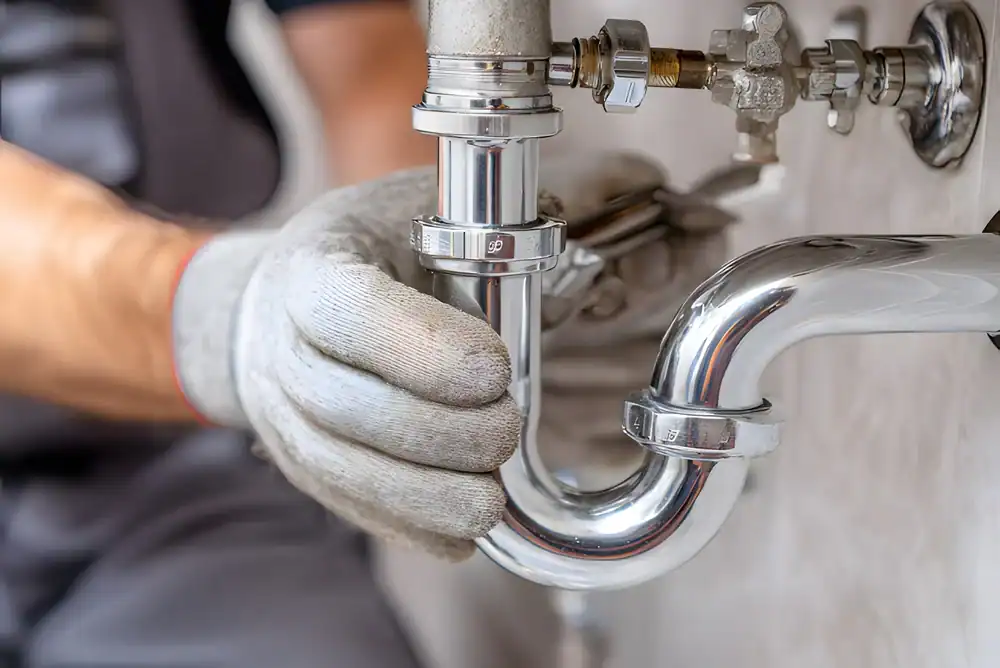
The kitchen sink drain is more than the metal circle you see at the bottom of the basin. The full drain assembly includes the strainer basket and flange at the top, a tailpiece that drops down from the sink, a P-trap that holds a small amount of water to block sewer gases, and the drain pipe that carries everything away through the wall or floor.
Any one of those components can fail on its own. The flange corrodes and stops sealing. The P-trap cracks or develops a slow leak. The tailpiece warps or pulls loose. When people say “kitchen sink drain replacement,” they might mean replacing just the strainer assembly — a relatively simple job — or they might mean replacing the entire drain line from the sink to the wall. Those are very different scopes, and getting clear on which one you actually need matters before anyone picks up a wrench.
How Do You Know If Your Kitchen Sink Drain Needs to Be Replaced?
There’s a meaningful difference between a drain that’s clogged and a drain that’s failing. A clogged drain is a blockage — grease, food debris, soap buildup. You clean it out and it drains normally again, at least for a while. A failing drain has a structural problem: corrosion, cracked fittings, a flange that won’t seat properly, or a drain pipe that’s lost enough material to the inside that it can’t move water the way it used to.
The clearest sign that you’re dealing with failure rather than a clog is recurrence. If you’ve cleaned the drain multiple times and the slow drainage keeps coming back within days or weeks, the drain isn’t getting clean — it’s getting temporarily better before the underlying problem reasserts itself.
Other signals include a persistent odor coming from under the sink even when the drain looks clear, visible rust or corrosion on the flange or tailpiece, or water pooling under the cabinet that points to a slow leak at one of the connections.
A drain assembly made from economy-grade materials typically lasts somewhere between 10 and 15 years. Premium brass or stainless steel assemblies can last 25 years or more. If your home was built in the 1970s or ’80s and the drain has never been replaced, the components may simply be past their service life — regardless of whether there’s an obvious visible failure.
In some cases, the drain assembly itself is fine but the drain pipe behind the wall is the problem. That’s a different repair, and it usually requires a licensed plumber to assess properly. Replacing the strainer basket won’t fix a partially collapsed drain line.
Is a Slow Kitchen Drain Connected to a Slow Bathroom Drain?
This is one of the most common questions we hear, and the answer is: often, yes — and it matters more than most homeowners expect.
In homes built before 1980, the kitchen drain and the bathroom drains typically share the same vertical drain stack. This is the main pipe that runs up through the interior of the house and vents through the roof. When that stack starts to fail — from corrosion, partial blockage, or structural deterioration — multiple drains in the home start showing symptoms at the same time. Your kitchen backs up. Your bathroom sink drains slowly. The tub takes forever to empty. It feels like separate problems, but they’re often one system-level problem showing up in multiple places.
If you’re dealing with a bathroom drain clogged situation alongside a slow kitchen drain, that pattern is worth paying attention to. It’s a signal that the issue may not be at the fixture level at all — it may be in the drain stack or the main line.
In Brevard County, this is especially relevant because of the area’s housing stock. A significant portion of homes in Cocoa, Merritt Island, Rockledge, Titusville, Melbourne, and older neighborhoods throughout the county were built during the 1960s and early 1970s — the height of the Space Coast’s Apollo-era growth. Those homes were built with cast iron drain lines, which were standard at the time. Cast iron is durable, but it doesn’t last forever.
In Florida’s humid, salt-air climate, cast iron corrodes from the inside out over decades. The pipe thins, develops rough interior surfaces that catch debris, and eventually cracks or collapses. By the time a homeowner notices multiple slow drains, the cast iron may already be significantly compromised. We offer camera inspection specifically for this kind of assessment. It’s the only way to know what’s actually happening inside a 50-year-old cast iron drain stack without tearing into walls.
Kitchen Sink Replacement vs. Drain Replacement: When Does One Require the Other?
People sometimes use “sink replacement” and “drain replacement” interchangeably, but they’re not the same job — and confusing them can lead to either overspending or underfixing.
Replacing the drain assembly doesn’t require replacing the sink. If the basin itself is in good shape — no cracks, no warping, no damage to the drain opening — you can swap out the strainer, tailpiece, P-trap, and drain pipe without touching the sink at all. On the other hand, if you’re replacing the sink, you almost always need to replace the drain assembly too. The new basin needs to be fitted with a new drain from scratch.
Where it gets more complicated is when the sink itself is part of the problem. A damaged or ovalized drain opening in the basin can prevent a new flange from seating and sealing properly. If the drain hole can’t be sealed, the sink may need to go — not just the drain.
When Does a Kitchen Sink Drain Problem Become a Full Sink Replacement?
The drain assembly is usually the right place to start. It’s the less expensive repair, it addresses the most common failure points, and it can be done without disturbing the rest of the kitchen. Most of the time, a basin that looks fine from the surface is fine — and a new drain assembly resolves the problem.
But there are situations where the sink itself needs to go. If the drain opening in the basin has become misshapen or enlarged — from years of stress, improper installation, or physical damage — a new flange won’t form a watertight seal no matter how carefully it’s installed. If the sink bottom has warped enough to affect drainage, water will pool rather than flow toward the drain. And if the sink is old enough that the basin material has deteriorated (hairline cracks in porcelain, pitting in stainless steel that’s past the point of cleaning), a new drain assembly in an old failing sink is a short-term fix at best.
The cost difference is real. Replacing a drain assembly is a fraction of the cost of replacing the entire sink, especially when you factor in countertop modifications that undermount sinks often require. Getting a professional assessment before committing to either path is the practical move — not because it’s a sales step, but because the wrong diagnosis leads to the wrong repair.
If you’re already planning a kitchen upgrade and considering a new sink, that’s actually the ideal time to address any drain line issues at the same time. The drain is exposed, the plumber is already there, and you’re not paying for a second service call six months later when the drain line fails.
What Brevard County Homeowners Should Know Before Attempting a DIY Drain Replacement
The national SERP for “kitchen sink drain replacement” is full of step-by-step DIY guides, and for a newer home with PVC drain lines and accessible connections, those guides are reasonably accurate. A drain strainer replacement in a 2005 construction home with clean PVC fittings is a manageable DIY project for someone comfortable with basic plumbing. The materials cost around $20 to $60 for the strainer assembly, and the job takes a couple of hours.
In Brevard County, though, a meaningful share of homes aren’t 2005 construction. They’re 1968 construction. Or 1972. And the moment you start working on a drain connection in a home with 50-year-old cast iron, the risk profile changes significantly.
Here’s why: cast iron drain connections don’t behave like PVC. Over decades of corrosion, the metal becomes brittle. Slip joints that haven’t been moved in 30 years may not move cleanly — and applying too much torque to a corroded fitting can crack the cast iron itself, turning a drain assembly replacement into an emergency pipe repair. The corroded surfaces also don’t reseal the way new PVC does, which means even a careful DIY replacement may result in a slow leak that you won’t notice until there’s water damage inside the cabinet or under the floor.
Florida’s plumbing code adds another layer. Work that doesn’t meet state code requirements can create liability issues when you sell the home, and homeowner’s insurance may not cover damage from unpermitted or non-code-compliant plumbing work. That’s not a hypothetical — it’s a real consideration in a state where the DBPR actively oversees plumbing contractor licensing.
If your home was built after the mid-1970s and you have PVC drain lines, a strainer replacement is a reasonable DIY project. If your home is older and you’re not sure what the drain lines are made of, a quick professional assessment before you start can save you from a much more expensive problem.
Getting Kitchen Sink Drain Replacement Right in Brevard County
A slow or failing kitchen drain is worth taking seriously — not because it’s automatically a big problem, but because the right diagnosis determines whether you spend $60 or considerably more. In a newer home with accessible PVC plumbing, a drain assembly replacement is often straightforward. In an older Brevard County home with cast iron drain lines and decades of coastal humidity behind it, the same symptom can point to something that needs a more careful look.
The most important thing is knowing which situation you’re in before you start pulling fittings. If multiple drains in your home are slow, if the smell keeps coming back, or if you’ve already tried cleaning the drain more than once without lasting results, those are signs worth investigating rather than working around.
Drain Wizard Plumbing & Rooter Service serves all of Brevard County — Cocoa, Merritt Island, Rockledge, Titusville, Melbourne, Cocoa Beach, Cape Canaveral, and Palm Bay. If you’re dealing with a kitchen drain that isn’t behaving the way it should, reach out. We’ll give you a straight answer about what’s actually going on — and what it will take to fix it properly.