Most homeowners don’t think about their sewer line until something goes wrong — and by then, it’s usually very wrong. Every drain in the house is backing up, there’s a smell you can’t place, and the timing couldn’t be worse because a storm just came through. If that sounds familiar, you’re not imagining the connection.
Florida storms don’t just flood your yard. They stress underground infrastructure that was already weakened long before the rain started. And in Brevard County, where a significant portion of the housing stock dates back to the Space Race era, that infrastructure is often cast iron pipe that’s now 40 to 60 years old.
Why Older Homes in Brevard County Are at Higher Risk for Sewer Line Clogs
Brevard County’s residential building boom followed the growth of Kennedy Space Center. Neighborhoods across Cocoa, Merritt Island, and Cocoa Beach filled in quickly during the 1960s, 1970s, and 1980s to house the engineers, contractors, and families tied to the space program. Those homes were built with cast iron sewer pipes — the standard of the time — and many of them are still in the ground today.
Cast iron has a documented lifespan of roughly 50 to 75 years under normal conditions. In coastal Florida, with salt air, high humidity, and a water table that sits close to the surface, that timeline shortens. Pipes that were installed when Apollo missions were launching from down the road are now at or past the end of their expected service life.
And they don’t fail all at once — they fail slowly, quietly, in ways that are easy to miss until a storm accelerates the process.
What Happens Inside a Cast Iron Sewer Line as It Ages
Here’s what most people don’t realize: a cast iron sewer pipe doesn’t just rust on the outside. It accumulates scaling on the inside — layers of mineral deposits, rust flakes, and debris that build up on the pipe walls over decades. That scaling gradually reduces the internal diameter of the pipe. What started as a four-inch pipe may effectively be functioning like a two-inch pipe by the time you’re dealing with recurring slow drains or a full blockage.
This matters enormously when storm season arrives. A pipe that’s already partially blocked has very little room to handle any additional volume or pressure. When heavy rainfall saturates the soil around Merritt Island or flooding pushes water into the system near the Indian River Lagoon, that narrowed pipe becomes the weakest point in your entire plumbing system.
There’s also the matter of the interior surface. As cast iron corrodes, the pipe walls become rougher. Smooth pipes let waste and water pass through cleanly. Rough, corroded walls catch debris, slow flow, and create the conditions for a main sewer line clog to form faster than it would in a newer pipe.
This is why two identical storms can hit two different neighborhoods in Brevard County and only one homeowner ends up with sewage backing up into their shower — the difference is often the condition of the pipe underground, not the severity of the rain.
How Root Intrusion Makes a Clogged Sewer Line Worse Over Time
The older neighborhoods of Cocoa and Merritt Island aren’t just known for their mid-century homes — they also have mature tree canopies. Oak trees, palms, and ornamental plantings that were young when those homes were built are now large, established, and actively searching for water. Tree roots naturally seek moisture, and they find it in the small cracks and deteriorating joints of aging sewer lines.
Once a root enters a pipe, it doesn’t stop. It grows, branches out, and eventually creates a dense mass that catches toilet paper, grease, and debris passing through the line. Over time, what started as a hairline crack becomes a significant obstruction.
Because root intrusion happens underground and develops gradually, most homeowners have no idea it’s occurring until they’re dealing with a full main sewer line clog. A basic drain snake often isn’t enough — a snake can punch through a blockage and restore flow temporarily, but if the underlying cause is root intrusion in a scaled cast iron pipe, that clog is coming back.
A camera inspection changes that equation entirely. Running a camera through the line shows exactly what’s happening — where the roots are, how far they’ve spread, whether the pipe has collapsed sections or significant scaling — and gives you documentation of the actual condition before any repair work is recommended.
Clogged Drain Repair After a Storm: What You’re Actually Dealing With
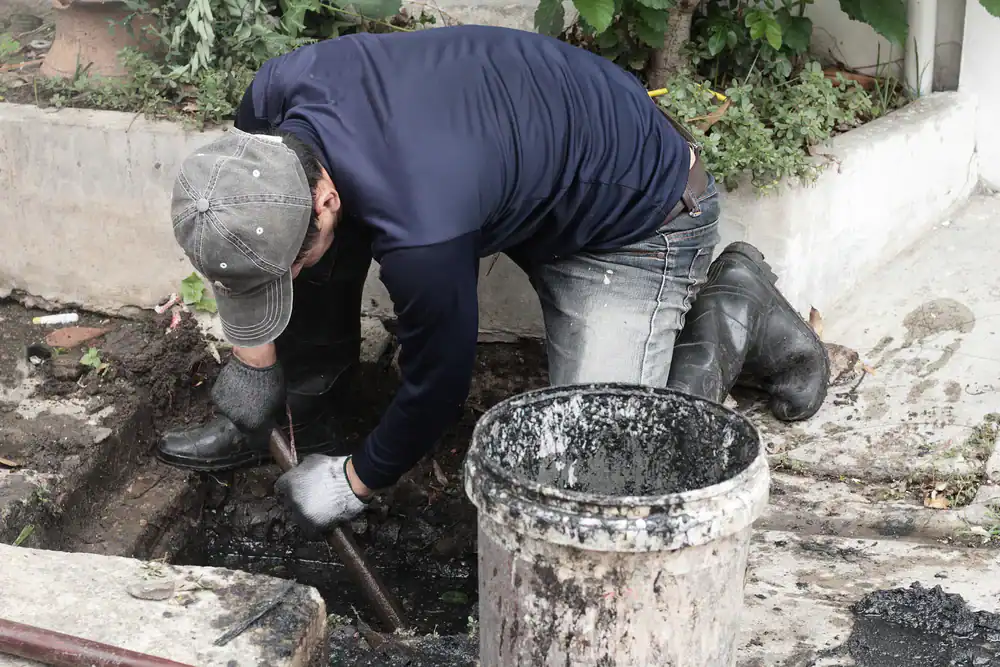
After a tropical system moves through Brevard County, the calls start coming in. Homeowners notice that multiple drains are slow, toilets are gurgling when the washing machine runs, or there’s a sewage smell coming from floor drains. These aren’t isolated drain issues — they’re symptoms of a problem at the main sewer line level.
The important thing to understand is that storm damage to sewer lines often happens in two phases. The first is during the storm itself, when flooding and storm surge push debris, soil, and water into the system under pressure. The second — and this one catches people off guard — happens in the days after the storm, when normal household water use resumes and puts stress on pipes that were weakened but didn’t fully fail during the event.
A pipe that held up through the surge can still crack or collapse when you’re doing laundry on a Tuesday morning a week later.
What Flooding Does to Underground Sewer Pipes During a Storm
When heavy rainfall saturates the soil around your home, it doesn’t just sit there. It shifts. Soil that becomes waterlogged can move and settle in ways that stress underground pipes, creating what we call a “belly” — a sagging section of pipe where water and debris pool instead of flowing toward the main line. Bellies don’t flush themselves out. They become collection points for everything passing through the pipe, and they’re a common cause of recurring clogs that seem to come back no matter how many times the drain gets snaked.
Beyond soil movement, storm surge and flooding can push solid debris — dirt, twigs, and sediment — directly into sewer lines through cleanouts, floor drains, or cracked pipe sections. In a pipe that’s already scaled and narrowed from decades of use, that debris doesn’t need much room to create a blockage. The combination of pre-existing scaling and storm-introduced debris is what turns a manageable slow drain into a complete main sewer line clog.
Brevard County’s geography makes this especially relevant. The county’s low-lying terrain, proximity to the Indian River Lagoon and Banana River, and the naturally high water table in coastal communities mean that soil saturation during a storm happens faster and more completely than in inland areas. Homes on Merritt Island, in particular, sit between two bodies of water — conditions that amplify every one of these risk factors.
There’s also the issue of backflow. When the municipal sewer system becomes overwhelmed during heavy rainfall, wastewater can reverse direction and flow back toward homes rather than away from them. In older homes without backflow protection, that means sewage entering floor drains, tubs, and toilets — a situation that’s both a health concern and a significant cleanup problem.
Emergency Drain Service After a Storm: When to Call and What to Expect
There’s a common instinct after a storm passes to wait and see. The water receded, the power came back on, and everything seems okay. But if your drains were slow before the storm, or if you’ve had any gurgling, odor, or backup issues in the past year, the storm may have accelerated a problem that was already developing underground.
The clearest signs that you’re dealing with a main sewer line issue — not just a single slow drain — are when multiple fixtures are affected at the same time. If flushing the toilet causes the shower to gurgle, or running the kitchen sink makes water back up in the bathroom, the problem isn’t at the fixture level. It’s in the main line, and it’s not going to resolve on its own.
When you call for emergency drain service, what should happen is a proper diagnosis before any repair work is recommended. That means a camera inspection to see what’s actually going on inside the pipe — not just a snake run and a bill. We carry camera inspection equipment and hydro jetting systems on our trucks because a main sewer line clog in an older cast iron pipe almost always requires more than a basic snake to clear properly.
Hydro jetting uses high-pressure water to cut through scaling, flush out storm debris, and restore full flow — it addresses the cause, not just the symptom.
It’s also worth knowing how responsibility works in Brevard County. According to the county’s own utility guidelines, most sewer line problems — including blockages — are the homeowner’s responsibility, not the county’s. The county will only reimburse a plumber’s bill if the blockage is confirmed to be in the county-maintained portion of the line. That means the pipe running from your home to the county connection is yours to maintain and repair.
Understanding that boundary before a problem occurs is far better than finding out in the middle of an emergency.
One more thing: don’t assume that because the storm passed without visible disaster, you’re in the clear. Post-storm pipe failure is real, and it often shows up days later when normal household use resumes. If anything felt off during or after the storm, a camera inspection is the fastest way to know for certain whether your sewer line came through intact — or whether it’s quietly waiting to fail.
What Brevard County Homeowners Should Do Before the Next Storm
If your home was built in the 1960s, 1970s, or 1980s — anywhere from Cocoa Beach to Rockledge to Merritt Island — there’s a reasonable chance your sewer line has never been inspected. That’s not a criticism; it’s just how these things work. Sewer lines are out of sight, and they tend to stay out of mind until something forces the issue.
The problem is that Florida’s storm season doesn’t give you much warning. The statistical peak of Atlantic hurricane activity runs from mid-August through mid-October, and by the time a system is in the forecast, it’s too late to schedule a routine inspection. The time to know what’s under your yard is before the rain starts — not after the drains stop working.
If you’re dealing with a main sewer line clog right now, or you want to know the actual condition of your sewer line before storm season peaks, we’re here to help. We’ve been serving Brevard County since 2007, we specialize in cast iron pipe assessment and replacement, and every job is personally overseen by our owner. Reach out and we’ll tell you exactly what you’re working with.