You’re standing in your utility closet, water pooling at your feet, and you have no idea where to turn off your electric water heater. It’s not a scenario anyone wants to face, but it happens more often than you’d think in Brevard County homes, especially during hurricane season or when older units finally give out. The good news is that finding your shut-off valve isn’t complicated once you know where to look. In the next few minutes, you’ll know exactly where your electric water heater shut-off is located, how to find your main water shut-off valve, and what to do when something goes wrong. Let’s start with the basics.
Understanding Your Electric Water Heater System
Your electric water heater has two critical shut-off points you need to know about. The first is the water supply valve that controls water flowing into the unit. The second is the electrical power source that heats the water. Both matter when you’re dealing with maintenance or an emergency.
Electric water heaters are common in Brevard County homes because they’re simpler to install than gas units and don’t require venting. They use heating elements inside the tank to warm water, which means they rely entirely on your home’s electrical system. When something goes wrong, knowing how to cut both the water and power can prevent a minor issue from becoming a major disaster. In Florida’s coastal climate, where humidity and salt air can accelerate wear on plumbing components, being prepared makes even more sense.
Where Is the Water Shut-Off on Your Electric Water Heater
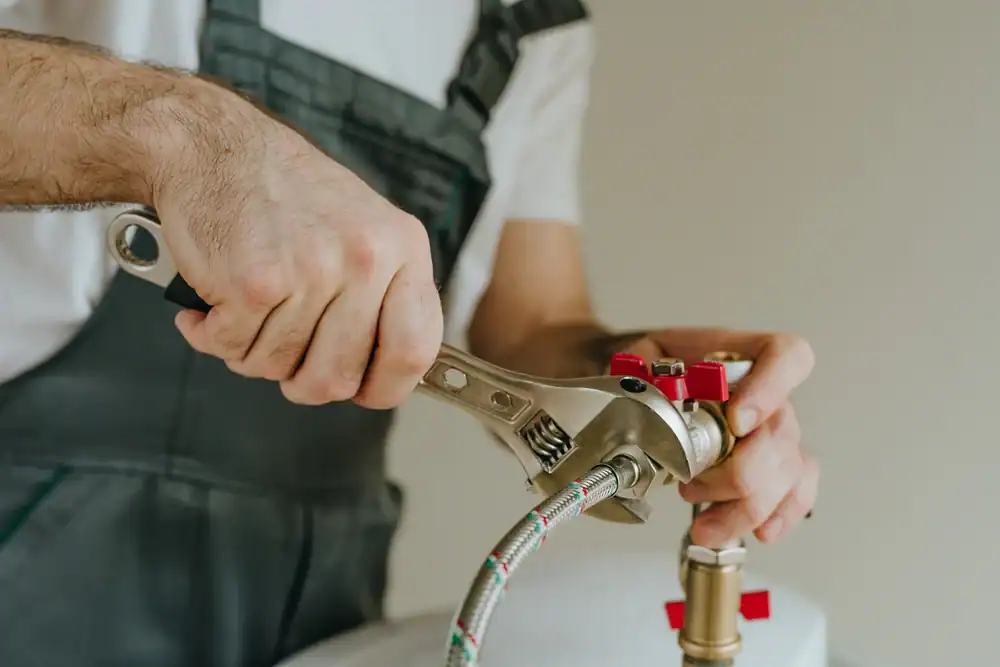
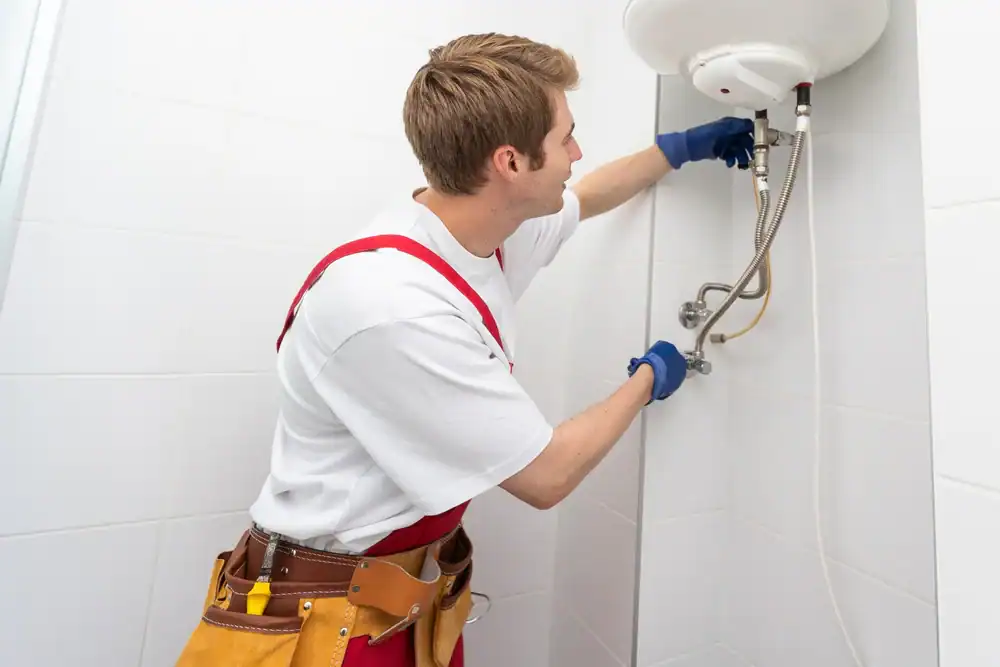
The water shut-off valve for your electric water heater sits on the cold water supply line. This is the pipe that brings fresh water into your tank. You’ll typically find it at the top of your water heater, attached to the pipe entering the unit.
Look for a valve with either a lever handle or a round wheel. The lever-style is called a ball valve, and it only takes a quarter turn to shut off. If the handle runs parallel to the pipe, water is flowing. Turn it perpendicular to stop the flow. The wheel-style is a gate valve, and you’ll need to turn it clockwise until it stops.
In most Brevard County homes built on a slab, your water heater is in a utility closet, garage, or dedicated space. The shut-off valve should be visible and accessible right where the cold water line connects. If your home has a crawl space or was built with a basement (less common in Florida), check near the water heater or along the main water line.
Sometimes the valve is behind an access panel or tucked in a tight spot. If you can’t locate it easily, trace the cold water pipe from the top of your water heater backward toward your main water line. The shut-off should be somewhere along that path. Make sure you can reach it without tools or obstacles in the way, because when you need it, you’ll need it fast.
Testing your shut-off valve once or twice a year is smart. Turn it off, then back on. If it’s stiff or won’t budge, that’s a sign it might fail when you actually need it. Old valves can corrode or seize up, especially in Florida’s humid coastal climate where salt air accelerates deterioration. This is particularly true in Cocoa, Rockledge, and Merritt Island where proximity to the water means your plumbing components face more aggressive conditions. Replacing a faulty valve before an emergency is always cheaper than dealing with water damage after one.
Shutting Off Power to Your Electric Water Heater
Before you do anything with your electric water heater during a leak or maintenance, you need to cut the power. Water and electricity don’t mix, and you don’t want to risk a shock or damage to the heating elements.
Head to your circuit breaker box. Look for the breaker labeled for your water heater and flip it to the off position. If your breakers aren’t labeled, you might need to flip a few until you find the right one, or just shut off the main breaker to be safe. Some electric water heaters have two breakers because they use a 240-volt supply. Make sure both are off.
In some newer Brevard County homes, there’s a disconnect switch mounted on the wall near the water heater. If yours has one, you can flip that switch instead of going to the breaker box. Either way, the goal is the same: no power running to the unit.
Once the power is off, you can safely work on the water heater or address a leak without worrying about electrical hazards. Never skip this step. Even if you’re just draining the tank for maintenance, running a heating element without water in the tank can burn it out and leave you without hot water until it’s replaced. That’s an expensive mistake that happens more often than you’d think, especially when homeowners try to rush through emergency repairs.
If you’re not comfortable working with your electrical panel or you’re unsure which breaker controls your water heater, don’t guess. Call a professional. It’s not worth the risk, and a quick service call can save you from a dangerous mistake. We handle these situations regularly and can walk you through the process or send someone out the same day if needed.
How to Find the Main Water Shut-Off in Your House
Your electric water heater shut-off controls water to that one appliance. Your main water shut-off controls water to your entire house. Both are important, but the main shut-off is what you’ll need if the water heater valve fails or if you’re dealing with a bigger plumbing emergency like a burst pipe.
In Florida homes, especially those built on a slab like most in Brevard County, the main shut-off valve is usually inside near your water heater or under the kitchen sink. Some older homes have it in a garage or utility room. The valve is typically located where the main water line enters your house, and it’s often within a few feet of your water meter. Finding it now, before you need it, is one of the smartest things you can do as a homeowner.
Locating the Main Shut-Off Valve in Slab Homes
If your Brevard County home is built on a concrete slab, your main water shut-off valve is most likely near your water heater. Start there. Look for a valve on the wall or floor where the main water line comes in. It might be a ball valve with a lever or a gate valve with a wheel.
Check the area around your water heater first. If you don’t see it there, try under the kitchen sink. That’s another common location in slab homes. The valve might be tucked in the back corner of the cabinet, so you may need a flashlight to spot it. In homes built in the 1970s through the 1990s, builders in Brevard County often placed the main shut-off in the garage near where the water line enters from the street.
If you still can’t find it inside, head outside. Many Brevard County homes have an exterior shut-off valve near the front of the property, usually close to the street. Look for a small rectangular or round cover in the ground, often marked “water” or “meter.” Lift the cover and you’ll see your water meter and one or two valves. The valve closest to your house is the one you’ll turn to shut off your water supply.
You might need a water meter key or a pair of pliers to turn the valve, especially if it hasn’t been used in years. These tools are inexpensive and available at any hardware store. Keep one on hand so you’re ready if you ever need it. In coastal areas like Merritt Island and Cocoa Beach, these outdoor valves can corrode faster due to salt exposure, so checking them periodically is worth your time.
Some homes have the main shut-off in a valve box or pit near the property line. If you’re not sure where yours is, check your property inspection report if you have one, or contact your water utility. They can tell you where your meter and shut-off are located. Once you find it, make a mental note or even mark it with a flag or stake so you don’t have to search during an emergency. When water is gushing from a failed water heater or burst pipe, every second counts.
What to Do If You Can’t Find Your Main Water Shut-Off Valve
Not being able to locate your main water shut-off valve is more common than you’d think, especially if you’re new to your home or it’s an older property. If you’ve checked near the water heater, under the kitchen sink, in the garage, and outside near the meter and still can’t find it, don’t panic.
Start by walking the perimeter of your home on the inside. Look for where plumbing enters the house. The main water line usually comes in through an exterior wall, and the shut-off valve should be nearby. Check utility closets, laundry rooms, and any spaces where pipes are visible. In some Brevard County homes, especially those built in the 1960s and 1970s, the shut-off might be in a hall closet or even behind a removable panel.
If you have a crawl space, the valve might be down there. Grab a flashlight and take a look. In older Brevard County homes, especially those built before the 1970s, the shut-off might be in an unusual spot or even missing altogether. Some homes were built without an interior shut-off, leaving only the exterior valve at the meter. This was more common before building codes tightened up, and it’s something you’ll want to address if that’s your situation.
When all else fails, call a local plumber. A professional can locate your main shut-off quickly and, if needed, install a new one in a more accessible location. This is especially important if you’re dealing with an active leak or emergency. We’ve seen every configuration and can usually find the valve in minutes based on your home’s age and construction type.
You can also contact your water utility company. They can shut off water at the meter for you in an emergency, though this usually requires a service call and might take some time depending on their availability. Having us install a clearly marked interior shut-off valve gives you control and peace of mind for the future. We regularly handle these installations and can add a valve in a convenient location that’s easy to access when you need it most.
Being Prepared for Electric Water Heater Emergencies
Knowing where your electric water heater shut-off and main water shut-off valves are located isn’t just about being prepared. It’s about protecting your home, your belongings, and your family from preventable water damage. A small leak can turn into thousands of dollars in repairs if you can’t stop the water flow quickly. In Brevard County, where many homes sit on slabs and have cast iron pipes from the 1970s or earlier, the risk is even higher.
Take a few minutes today to locate both shut-off valves. Test them to make sure they work. Mark them or take a photo so you remember where they are. If you’re in a Brevard County home built before 1975, consider having a professional inspect your plumbing system, especially if you have cast iron pipes that are more vulnerable in Florida’s coastal climate where salt air and humidity accelerate corrosion.
If you run into any issues or need help locating your shut-offs, we’re here to help. With over 45 years of plumbing experience serving Brevard County including Cocoa, Rockledge, and Merritt Island, we understand the unique challenges Florida homeowners face and can make sure you’re ready for whatever comes next.