Cast Iron Replacements Brevard County, FL

Stop Patching Failing Pipes—Replace Them Once

If your Brevard County home was built before 1975, your cast iron sewer pipes are corroding from the inside out. We’ll show you exactly what’s happening with a detailed camera inspection.

Our Services

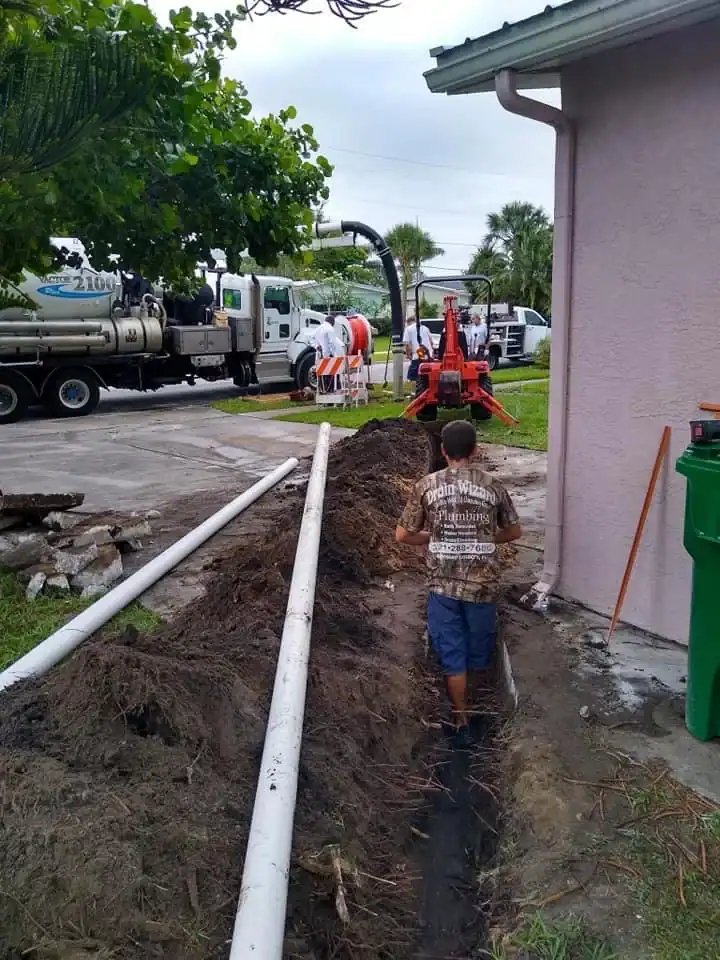
A young boy stands in a trench beside a house in FL while workers and utility trucks, led by a plumber Brevard County team, conduct sewer or pipe work nearby. White pipes lie parallel to the trench, with equipment in the background.

Cast Iron Pipe Replacement Services in Brevard County, FL

We Replace Failing Cast Iron with Modern Solutions

Cast iron sewer pipes were the standard for homes built before 1975, but in Brevard County’s humid, salt-rich environment, they corrode faster than anywhere else. What should last 75 years often fails in 25 to 40. When hydrogen sulfide from waste creates sulfuric acid inside your pipes, they rust from the inside out—and you won’t know until sewage backs up into your home. We specialize in replacing deteriorating cast iron with durable PVC pipe that resists corrosion and lasts 50-plus years. Whether it’s a section under your slab or your entire sewer line from the house to the street, we’ll walk you through repair versus replacement, trenchless options, and what the job actually involves. You’ll know the cost upfront, the timeline, and what to expect at every step.

Benefits of Replacing Cast Iron Pipes

What You Get When We Replace Your Pipes

This isn't just about new pipes. It's about ending the cycle of backups, protecting your home from water damage, and finally having plumbing you don't worry about.

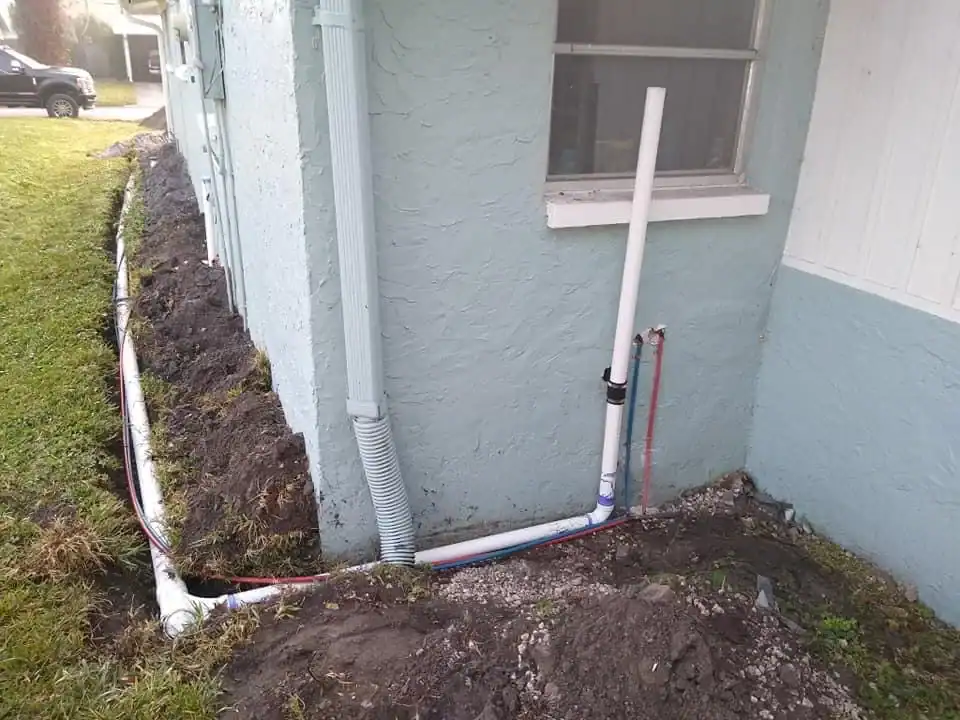
White PVC and flexible pipes run along the base of a light blue FL house, partially buried in soil with fresh dirt visible, near a window and the corner—work typical of a skilled plumber Brevard County residents trust.

Why Cast Iron Fails in Florida

Brevard County's Environment Destroys Cast Iron Faster

Cast iron was built to last, but it wasn’t built for Florida. Coastal salt air, high humidity, acidic groundwater, and constantly shifting sandy soil create the perfect storm for corrosion. What happens nationally in 75 years happens here in 25 to 40. Inside your pipes, waste creates hydrogen sulfide gas. That gas oxidizes into sulfuric acid, which eats away at the iron from the inside. Rust builds up, then cracks form, then full collapse. Outside, moisture and salt attack the exterior. Tree roots find weak spots and infiltrate, causing even more damage. Most homeowners don’t realize there’s a problem until they’re dealing with a backup. By then, the damage is done. The pipe’s been deteriorating for years—behind walls, under slabs, buried in yards. That’s why camera inspections matter. We show you what’s happening before it becomes an emergency, and you can decide on your timeline instead of ours.
Trenchless Sewer Repair and Pipe Bursting

You Don't Always Have to Dig Up Your Yard

Traditional cast iron replacement means excavation. We dig a trench, remove old pipe, install new PVC, backfill, and restore landscaping or driveways. It works. It’s permanent. Sometimes it’s the only option—but it’s disruptive and takes time. Trenchless methods like pipe bursting and CIPP lining let us replace or reline pipes without tearing up your property. With pipe bursting, we break apart old cast iron underground while simultaneously pulling in new seamless pipe. With CIPP, we insert an epoxy-lined tube into existing pipe and cure it in place, creating a smooth, corrosion-resistant pipe within a pipe. Both methods are faster, less invasive, and often more affordable when you factor in restoration costs. Not every situation qualifies for trenchless repair. If pipes have completely collapsed or you’ve got major bellies and offsets, we may need to dig. We’ll camera your line first, show you what we’re dealing with, and explain which approach makes sense for your situation. No pressure, no gimmicks—just honest guidance based on what we see.

Frequently Asked Questions

How do I know if I need to replace my cast iron pipes or just repair them?
It depends on how much of your system is compromised. If you’ve got one localized crack or leak, a spot repair might buy you some time. But if your pipes are 40-plus years old and you’re seeing multiple issues—slow drains, recurring backups, foul odors—you’re likely dealing with widespread corrosion. At that point, patching one section doesn’t solve the problem. The rest of the pipe is deteriorating too, and you’ll be calling us back in six months for another leak. A camera inspection shows us the full picture. We’ll show you the footage, explain what’s repairable and what’s not, and let you make the call. If replacing now saves you from three emergency repairs over the next two years, that’s usually the smarter move.
It varies based on how much pipe needs replacing and how accessible it is. A spot repair or small section replacement might run $3,000 to $8,000. A full sewer line replacement from your house to the street typically ranges from $10,000 to $30,000, depending on length, depth, and whether we’re using trenchless methods or traditional excavation. Trenchless options like pipe bursting or CIPP lining often cost $125 to $175 per linear foot, which can actually save money when you factor in the cost of tearing up and restoring your driveway, landscaping, or flooring. We give you an upfront estimate after the camera inspection so there are no surprises. You’ll know exactly what it costs before we start any work.
Both are trenchless methods, but they work differently. Pipe bursting involves breaking apart your old cast iron pipe underground while simultaneously pulling a new seamless pipe into place. We dig two small access pits at either end of the run, insert a bursting head, and pull it through with hydraulic force. The old pipe gets fractured and pushed into the surrounding soil, and the new pipe takes its place. It’s fast, minimally invasive, and gives you a brand-new line. CIPP lining, on the other hand, doesn’t remove the old pipe. We insert a flexible, epoxy-saturated liner into your existing pipe, inflate it, and cure it in place with heat or UV light. Once cured, you’ve got a smooth, jointless pipe within your old pipe that seals cracks and resists corrosion. CIPP works well if your pipe still has structural integrity. Bursting is better for pipes that are collapsing or severely damaged. We’ll recommend the right method based on what your camera inspection shows.
Most jobs take one to three days, depending on the scope. A trenchless repair or small section replacement can often be done in a day. A full sewer line replacement with traditional excavation might take two to three days, especially if we’re working under a slab or dealing with difficult access. Weather, permitting, and unexpected complications can add time, but we’ll give you a realistic timeline upfront and keep you updated throughout the process. We’re not the kind of crew that starts a job and disappears for a week. Carl personally oversees every project, so if something changes, you’ll know immediately. We also clean up at the end of each day so your property isn’t a disaster zone while we’re working.
It depends on the method we use and where your pipes are located. Traditional excavation requires digging a trench to access the pipe, which means we’ll need to cut through your yard, driveway, or even your slab if the pipe runs underneath your home. We restore everything afterward—backfill the trench, compact the soil, and repair any concrete or landscaping we disturbed—but there will be some disruption. Trenchless methods like pipe bursting or CIPP lining minimize that impact significantly. We only need small access pits at either end of the pipe run, so your property stays mostly intact. If you’ve got expensive landscaping, a recently paved driveway, or tile flooring you don’t want torn up, trenchless is usually the better option. We’ll walk your property during the estimate and show you exactly what’s involved so you know what to expect before we start.
We understand that replacing your sewer line isn’t a small expense, and most people don’t have $10,000 to $30,000 sitting around. We work with you to find a solution that fits your budget. Some homeowners use home equity lines of credit, others go through their insurance if the damage qualifies, and we can also point you toward financing options that make sense for your situation. The worst thing you can do is wait until your pipes fail completely and you’re dealing with an emergency. That’s when costs skyrocket—you’re paying for water damage restoration, mold remediation, and emergency plumbing rates all at once. If you address it now, you’re in control of the timeline and the budget. Reach out to us, and we’ll talk through your options honestly. No pressure, no sales pitch—just straight answers.