

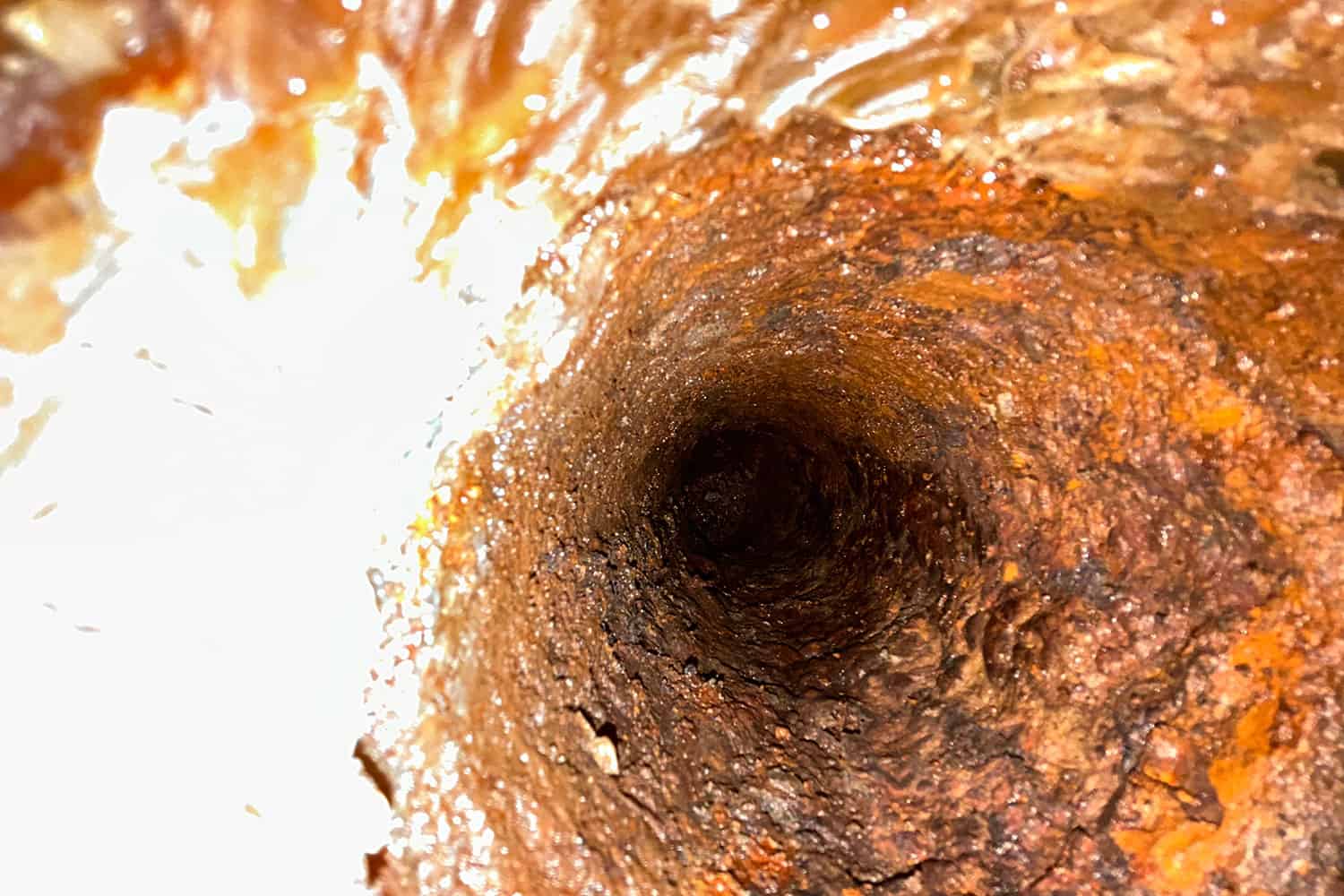
You’ve probably already dealt with slow drains, bad smells, or a backup that made you call someone out on a Sunday. Those aren’t random problems. They’re symptoms of pipes that are corroding from the inside out.
Cast iron was the standard for decades, but it wasn’t built for Florida. The humidity here speeds up rust. Salt in the air eats through the exterior. And once those pipes start to go, they don’t give you much warning before they collapse entirely.
Replacing them now means you avoid the nightmare scenario: a sewer backup that floods your floors, ruins your foundation, and costs five figures to fix. It also means you’re not throwing money at temporary repairs every six months. You get decades of reliability with modern materials that actually hold up in this climate. And when it’s time to sell, buyers see updated plumbing as a green light, not a red flag.
Drain Wizard is a local operation. We’re not a franchise with a call center three states away. We’re licensed, insured, and we’ve worked on enough older homes in Floridana Beach and the surrounding Brevard County area to know exactly what you’re dealing with.
Carl, who runs the company, got his start doing cast iron replacements and full-system overhauls in New Jersey before bringing that experience to Florida. He knows the difference between a quick fix and a real solution. Every job gets his direct oversight, so nothing leaves here half-done.
We’re not the cheapest option, and we’re fine with that. You’re not paying for speed. You’re paying for work that actually lasts and doesn’t come back to haunt you two years later.

We start with a camera inspection. A high-definition line goes into your pipes so you can see exactly what’s happening inside: cracks, corrosion, blockages, root intrusion. No guessing. You’ll know whether you need a full replacement or if there’s another option that makes sense.
If replacement is the right call, we map out the scope. That includes figuring out how much pipe needs to go, what access points we’ll use, and whether trenchless methods can minimize the disruption to your property. Trenchless sewer repair means we’re not tearing up your entire yard or driveway. We work through small access points when the conditions allow it.
Once we pull the old cast iron, we install PVC or another modern material that won’t rust, corrode, or break down in Florida’s environment. Everything gets pressure-tested and inspected to make sure it’s sealed, graded correctly, and code-compliant. Then we restore whatever we had to move, and you’re done. The whole process usually takes a few days, depending on the size of the job, but you’re not displaced for weeks.

Ready to get started?
A full cast iron pipe replacement means we’re swapping out the old system with materials designed to last 50+ years in Florida. PVC doesn’t rust. It doesn’t corrode in salt air. And it handles the ground movement and moisture levels that Brevard County homes deal with year-round.
You also get peace of mind that your insurance company won’t deny a claim because you ignored a known issue. Most policies won’t cover cast iron failure if the pipes were already deteriorating. Replacing them before they break keeps you covered and keeps your property value intact.
Homes built before 1975 in Floridana Beach typically have 80 to 100 linear feet of cast iron running under the slab or through the walls. That’s a lot of pipe that’s been sitting in Florida’s climate for 40, 50, sometimes 60 years. If one section is failing, the rest isn’t far behind. Replacing it all at once saves you from doing this twice. We also handle pipe descaling if that’s a better fit for your situation, but in most cases with older Florida homes, replacement is the smarter long-term move.
For a typical 2,000-square-foot home in Floridana Beach, you’re looking at somewhere between $8,000 and $15,000 for a full residential sewer line replacement, depending on how much pipe needs to go and how accessible it is. If we can use trenchless methods, that brings the cost down because there’s less excavation and less restoration work afterward.
If your pipes are under a concrete slab, that adds complexity. We may need to cut through the slab, pull the old cast iron, install new PVC, and then patch everything back up. That’s more labor-intensive than a crawl space job, so it costs more.
The real cost, though, is what happens if you wait. A sewer backup or pipe collapse can easily run $20,000 to $30,000 once you factor in water damage, mold remediation, and foundation repairs. Replacing the pipes before they fail is the cheaper move in the long run.
Slow drains are usually the first sign. If more than one fixture is draining slowly, that’s a red flag. You might also notice bad smells coming from your drains, even after you’ve cleaned them. That’s often sewer gas leaking through cracks in the pipe.
Frequent backups are another giveaway. If you’re calling a plumber every few months to clear a clog, the problem isn’t the clog. It’s the pipe. Cast iron corrodes from the inside, and as it does, the interior gets rough and narrow. That catches debris and creates blockages that wouldn’t happen in a smooth, modern pipe.
The only way to know for sure is a camera inspection. We run a line through your system and show you exactly what’s happening. You’ll see the cracks, the rust, the buildup. Then you can make a decision based on what’s actually there, not what someone thinks might be wrong.
In a lot of cases, yes. Trenchless sewer repair methods let us replace pipes with minimal digging. We create small access points at either end of the line, then pull the new pipe through without excavating the entire run. It’s faster, less disruptive, and it doesn’t destroy your landscaping or driveway.
That said, trenchless isn’t always an option. If your pipes are severely collapsed or if there’s not enough room to maneuver the equipment, we may need to do traditional excavation in some areas. We’ll know after the camera inspection and we’ll walk you through what makes sense for your property.
Even with traditional methods, we’re not tearing up more than we have to. We map out the most efficient access points, do the work, and restore everything as close to original condition as possible. Most jobs are done in a few days, and you’re not living in a construction zone for weeks.
Absolutely. Updated plumbing is one of the first things buyers and inspectors look for, especially in older Florida homes. If your house still has cast iron and the one next door has PVC, buyers are going to favor the updated system every time.
A home inspection that flags aging cast iron pipes can kill a deal or force you to drop your price by thousands. Replacing the pipes before you list eliminates that negotiating point entirely. You’re also not dealing with last-minute repair requests or buyers walking away because they don’t want to inherit a plumbing problem.
Even if you’re not selling anytime soon, the investment protects your property value. Homes with failing infrastructure lose value fast. Homes with modern, reliable systems hold their value and attract better offers when the time comes.
Most residential jobs take two to five days, depending on the scope. If we’re replacing 80 feet of pipe under a slab, that’s going to take longer than a crawl space job with easy access. Trenchless methods are usually faster because there’s less digging and less cleanup.
You’ll have limited water and sewer access during the work, but we do everything we can to minimize downtime. We’re not dragging the job out. We show up, do the work, test everything, and get out of your way.
The timeline also depends on inspections and permits. Brevard County requires permits for sewer line work, and we handle all of that. Once the permits are pulled and the inspection is scheduled, we move fast. You’re not waiting around for weeks while nothing happens.
Pipe relining is when we insert a new liner inside the old cast iron pipe to seal cracks and smooth out the interior. It’s less invasive and usually cheaper upfront. The problem is that it doesn’t fix the underlying issue. The cast iron is still there, still corroding, and still deteriorating. You’re just covering it up.
In Florida, where cast iron breaks down faster because of the climate, relining is usually a short-term fix. You might get a few more years out of it, but you’re going to be back in the same spot eventually. And if the pipe collapses, the liner goes with it.
Full replacement means you’re pulling out the old cast iron and installing new PVC that’s built to last decades. It costs more upfront, but it’s a permanent solution. You’re not putting a band-aid on a crumbling system. You’re replacing it with something that actually works in Florida’s environment. For most Floridana Beach homes built before 1975, replacement is the smarter call.