

You stop worrying about sewage backups in the middle of the night. No more slow drains, foul odors seeping through your home, or raw sewage pooling in your yard.
Your new PVC system handles everything your household throws at it without the corrosion problems that plagued your old cast iron pipes. Modern materials don’t rust, crack from root invasion, or deteriorate from Florida’s humidity and soil chemistry.
You’re done with the cycle of temporary fixes that cost you money every few months. One proper replacement handles the problem for decades. Your home’s plumbing becomes something you don’t think about anymore, and if you ever sell, buyers see updated systems instead of red flags on the inspection report.
The work gets done without ripping up your tile, hardwood, or concrete throughout the house. We use hydro-excavation and trenchless methods that access your pipes through strategic points, not by demolishing your floors.
We handle cast iron sewer pipe replacement across Brevard County, and we’ve seen what Florida’s climate does to aging pipe systems. Micco homes built in the 1980s are hitting that critical age where cast iron starts failing faster than it would up north.
We’re licensed, insured, and we own our hydro-excavation equipment. That means we control the timeline, the quality, and the cost. No waiting on subcontractors or renting equipment that drives up your bill.
Most of our clients are homeowners who’ve lived in their houses for years and want the problem fixed once, correctly, without unnecessary destruction. We get that. Our crews show up when scheduled, explain what’s happening as we work, and clean up properly when we’re done.

We start with a sewer camera inspection to see exactly what’s happening inside your pipes. That video shows us where the corrosion, cracks, or root damage is worst, and whether you need a full replacement or if targeted sections can solve it.
Once we map out the problem, we explain your options. For most residential sewer line replacement jobs, we’re either using trenchless pipe bursting to pull new PVC through the old line, or we’re using hydro-excavation to access under-slab pipes without demolishing your foundation.
The actual work depends on your home’s layout. If your cast iron runs under the slab, we dig precision access points using water excavation that doesn’t crack concrete. If it’s accessible through crawl spaces or exterior trenches, we go that route. Either way, we’re not tearing through your kitchen or bathroom floors unless there’s absolutely no other option.
We install new PVC pipe that’s rated to last 50 to 100 years. It’s joined with proper fittings, sloped correctly for drainage, and tested before we close everything up. You’ll have documentation of the work for insurance purposes and future buyers.

Ready to get started?
You get a full sewer scope inspection with video documentation showing the current condition of your pipes. That footage stays with you as a record of what needed fixing and what we replaced.
The replacement itself includes removing the old cast iron sections and installing new PVC pipe with proper connections to your home’s plumbing and the municipal sewer line or septic system. We handle permits, inspections, and code compliance so the work is documented correctly with Brevard County.
If we’re working under your slab, you get hydro-excavation that removes soil without damaging your foundation or utilities. If we’re going trenchless, you get pipe bursting or pipe lining depending on what your system can handle. Both methods minimize disruption compared to traditional dig-and-replace.
In Micco specifically, we account for the high water table and sandy soil conditions that affect how we access and replace pipes. Homes near the Indian River or canals need extra attention to groundwater management during excavation. We’ve handled enough jobs in this area to know what works and what causes problems down the line.
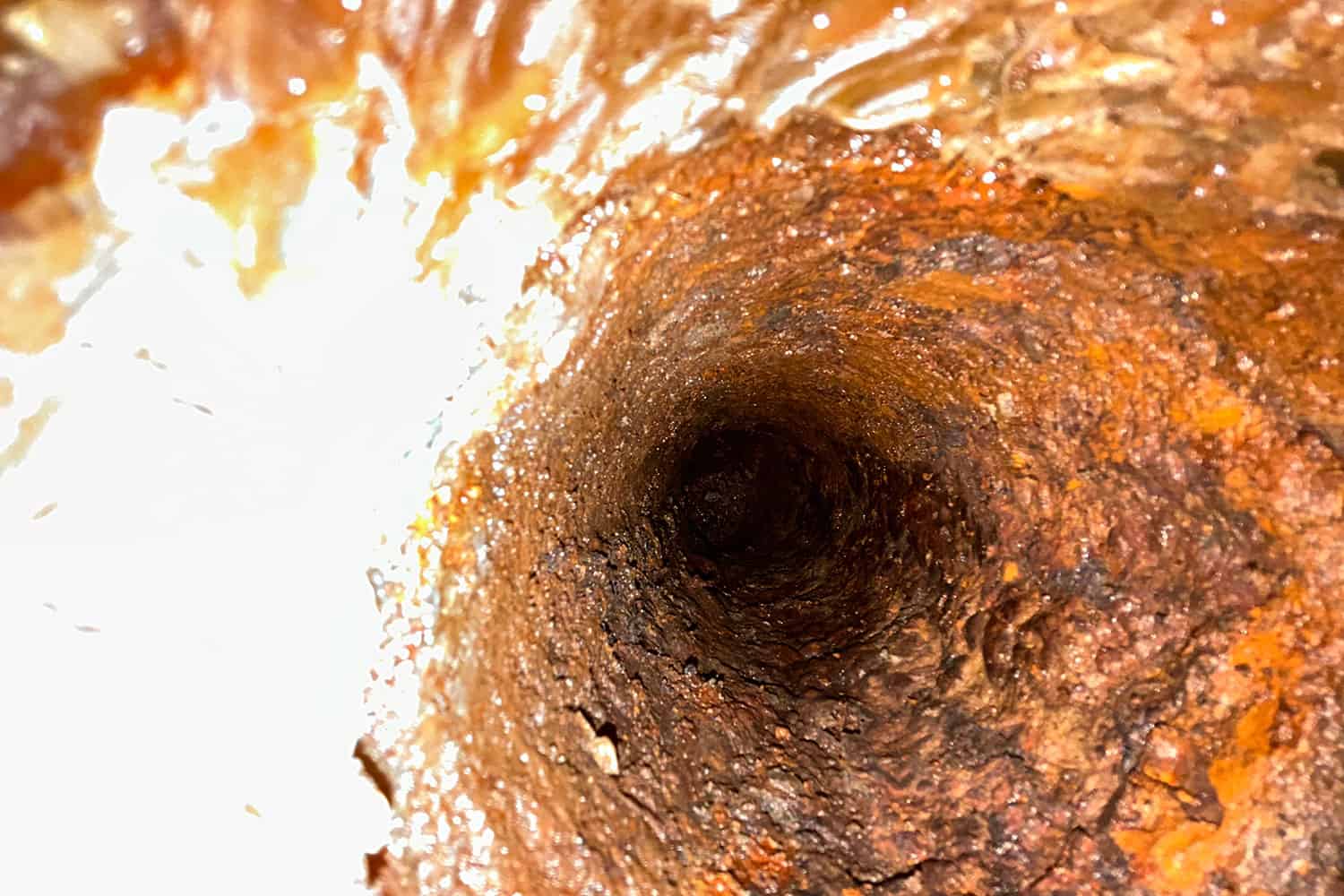
If your home was built before 1990 and you’re seeing multiple drain problems, slow drainage in several fixtures, or recurring backups, you’re likely looking at systemic failure rather than isolated clogs. Cast iron pipes don’t fail in just one spot—once corrosion or cracking starts, it spreads along the entire line.
A sewer camera inspection shows us the interior condition of your pipes. We’re looking for rust buildup, visible cracks, sections where the pipe has collapsed partially, and root intrusion through deteriorated joints. If more than 30-40% of your line shows significant damage, replacement makes more financial sense than patching individual sections.
Spot repairs might buy you a year or two, but they create weak points in an already failing system. The pipe sections adjacent to a repair often fail next because they’re the same age and condition. If you’re past the 30-year mark on cast iron pipes in Florida, replacement is usually the smarter move.
Most residential sewer line replacement projects in Micco run between $8,000 and $25,000 depending on access, length of pipe, and how much is under your foundation. Under-slab work costs more because of the excavation precision required.
The biggest price factors are how much pipe needs replacing, whether we can use trenchless methods, and what we encounter once we start digging. If your cast iron runs 100 feet from your house to the street and it’s all under concrete, that’s a different job than 40 feet of pipe in an open yard.
Trenchless options like pipe bursting can reduce costs compared to full excavation, but they’re not always possible depending on your pipe’s condition and layout. Homes built in the 1980s in Micco often have configurations that allow for trenchless work, but we won’t know for certain until after the camera inspection. We give you a detailed estimate before any work starts, and we don’t hit you with surprise charges for normal complications.
Most residential jobs take two to five days depending on the scope. A straightforward replacement with good access might be done in two days. Under-slab work with hydro-excavation and multiple access points can stretch to four or five days.
We stage the work to minimize how long your water is shut off. You’ll have periods where you can’t use drains or toilets, but we coordinate those shutoffs so you’re not without plumbing for days straight. If we’re working under your slab, the excavation and pipe installation happen in phases so we’re not leaving your foundation open longer than necessary.
Weather can affect the timeline, especially in Florida during summer storms. We don’t pour concrete or backfill trenches in heavy rain because it compromises the work quality. Most delays are a day or less, and we communicate any changes as soon as we know about them.
Not if we can avoid it, and in most cases we can. Hydro-excavation lets us tunnel under slabs and foundations by removing soil with pressurized water instead of jackhammers. We create small access points rather than trenching through your entire house.
If your pipes run under tile, hardwood, or expensive flooring, we access them from the perimeter or through closets and utility areas where the impact is minimal. Trenchless pipe bursting doesn’t require us to expose the entire pipe length—we work from access points at either end.
Landscaping takes some hit if your sewer line runs through your yard, but we’re not strip-mining your property. We dig targeted trenches, replace the pipe sections, and backfill properly so grass and plants can recover. Most homeowners see their yards back to normal within a few months after the soil settles and vegetation regrows.
Trenchless sewer repair methods like CIPP pipe lining can work if your cast iron pipes are structurally intact but corroded on the inside. The process involves inserting a resin-coated liner that hardens into a new pipe within your old pipe. It’s faster and less invasive than full replacement.
The catch is your existing pipes need to be in decent shape structurally. If they’re collapsed, severely cracked, or misaligned from ground shifting, lining won’t fix those problems. The camera inspection tells us whether your pipes are candidates for lining or if they need full replacement.
Pipe bursting is another trenchless option where we break apart the old cast iron pipe while simultaneously pulling new PVC through the same path. It works well for straight runs without too many bends or connections. We use it when possible because it’s faster and cheaper than traditional excavation, but your home’s specific pipe layout determines if it’s viable.
Sometimes, but it depends on your policy and what caused the failure. If a sudden pipe burst floods your home, insurance typically covers the water damage and sometimes the pipe repair. If your pipes failed gradually from age and corrosion, most policies won’t cover it because that’s considered maintenance.
Florida insurers have gotten stricter about cast iron pipe claims in recent years. Some policies now specifically exclude coverage for homes with plumbing over a certain age. You need to check your policy details and talk to your insurance agent before assuming coverage.
We document everything with video inspection and detailed reports that help with insurance claims when coverage applies. If you’re filing a claim, report the problem immediately and get documentation before starting repairs. Insurance companies can deny claims if they think you delayed reporting or did unauthorized work before their adjuster assessed the damage.