

Your drains work. Your water pressure comes back. You stop worrying every time someone flushes a toilet or runs the washing machine.
That’s what happens when you replace cast iron pipes that have been corroding for decades. In Pineda, FL, humidity and salt air speed up the process. Most cast iron installed before 1975 is already compromised, even if it hasn’t fully failed yet.
The rust, the buildup, the hydrogen sulfide eating through the metal from the inside—it doesn’t reverse. Descaling buys you time, maybe. But if one section is shot, the rest isn’t far behind. Replacing the whole system means you’re done guessing when the next leak will happen.
You get modern PVC or PEX that won’t corrode. You get code-compliant installation. You get your home’s value protected and your insurance company off your back. Most importantly, you stop living on borrowed time with plumbing that’s already past its expiration date.
We’re a family-owned plumbing company based in Cocoa, serving Brevard County and the Space Coast for over 15 years. Carl, our owner and State Certified Master Plumber, started in this trade at 16 and has been doing cast iron replacements, sewer line work, and full remodels ever since.
We’re not the biggest name you’ll see. We’re the ones who show up, do the work right, and don’t disappear when something needs fixing. We’re licensed, insured, A+ rated with the BBB, and we’ve built our reputation on getting residential sewer line replacement jobs done correctly the first time.
Pineda homeowners deal with the same issues we see across Brevard—older homes, corroded pipes, and a climate that accelerates the problem. We know what failing cast iron looks like, and we know how to replace it without tearing up your entire yard.

First, we inspect your system. Camera inspection shows us exactly where the damage is and how far it’s spread. If you’ve got one bad section, we check the rest because cast iron doesn’t fail in isolation.
Next, we map out the replacement. Depending on your property, that might mean trenchless sewer repair methods or traditional excavation. Trenchless works when the pipe path is clear and the damage isn’t catastrophic. Otherwise, we dig, remove the old cast iron, and install new lines that meet Florida code.
We remove the failing pipe safely—cast iron is heavy and often embedded in your foundation or yard. Then we install modern materials that won’t rust, crack, or corrode. PVC for sewer lines. PEX for water lines. Everything is pressure-tested before we backfill.
Once it’s in, we restore your property. That means filling trenches, reseeding grass, and making sure your yard doesn’t look like a construction zone. The whole process typically takes a few days, depending on the scope. You’ll know the timeline upfront, and we’ll walk you through what to expect at each stage.

Ready to get started?
You get full removal of the old cast iron—from your home’s foundation to the street connection. We handle sewer lines, drain lines, and water lines depending on what’s failing. Everything gets replaced with materials built to last in Florida’s climate.
We pull permits. We coordinate inspections. We make sure the new system is fully compliant with local plumbing codes in Brevard County. That matters when you sell your home or file an insurance claim.
In Pineda, many homes were built in the 60s and 70s when cast iron was standard. Those systems are now 50+ years old, and Florida’s environment hasn’t been kind to them. High humidity creates condensation. Salt air accelerates corrosion. Waste flowing through the pipes produces hydrogen sulfide gas, which turns into sulfuric acid and eats the metal from the inside.
If your insurer has started asking questions about your plumbing, it’s because they know the risk. Many Florida insurers now exclude cast iron pipe claims or won’t renew policies until the system is replaced. Getting ahead of that protects your coverage and your property value.
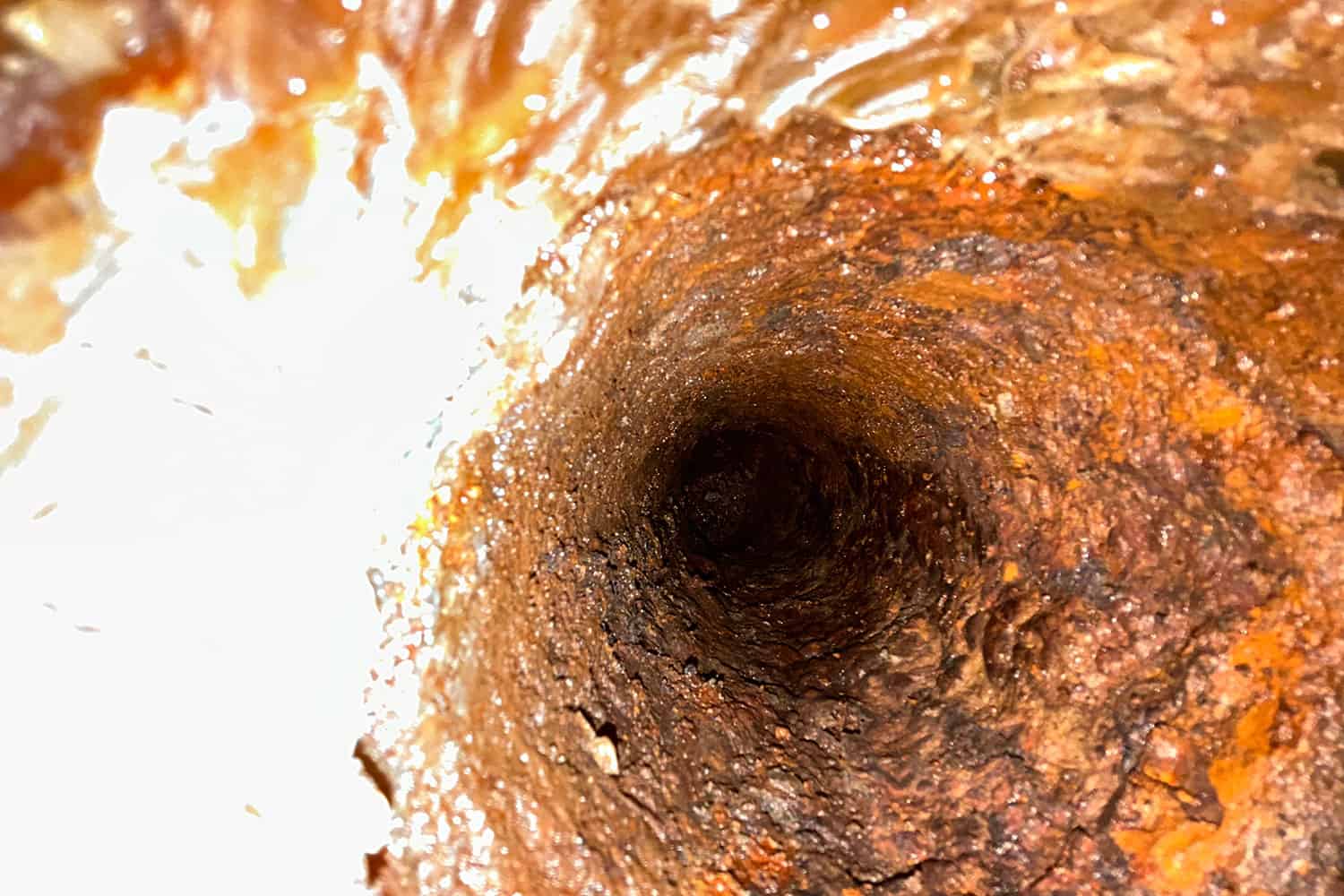
You’ll see signs. Slow drains that don’t respond to snaking. Sewage smells coming from drains or your yard. Water backing up in multiple fixtures at once. Discolored water with a metallic taste or rust particles.
If your home was built before 1975, your cast iron is likely at or past its expected lifespan—especially in Florida where pipes corrode faster. Recurring clogs are a red flag. So are wet spots in your yard, foundation cracks, or patches of grass that are greener than the rest.
A camera inspection will show you exactly what’s happening inside the pipes. You’ll see the rust buildup, the cracks, the sections that are paper-thin. If the damage is isolated to one spot, you might get away with a partial replacement. But if the corrosion is widespread, patching one section just means you’ll be calling us back in six months for the next failure.
Descaling clears out the rust and buildup inside your cast iron pipes. It improves flow temporarily and can buy you a year or two if the pipe walls are still structurally sound. It’s a good option if you’re not ready for a full replacement and the pipes aren’t actively leaking.
But descaling doesn’t fix the underlying problem. The metal is still corroded. The pipe walls are still thin. And in Florida’s humid, salty environment, the deterioration continues. Think of it like sanding down a rusty car frame—it looks better for a while, but the rust comes back.
Full replacement means you’re done with cast iron. You get modern materials that won’t corrode, and you stop worrying about when the next section will fail. If your pipes are already leaking or cracked, descaling won’t help. You need new lines. If you’re just seeing slow drains and the structure is still intact, descaling might extend the timeline. We’ll tell you which makes sense after we inspect your system.
Most residential sewer line replacement jobs take two to five days, depending on the scope. If we’re replacing the main sewer line from your house to the street, that’s usually a three-day job. If we’re also replacing interior drain lines or water lines, it takes longer.
Trenchless sewer repair methods can speed things up because we’re not excavating your entire yard. But trenchless only works if the pipe path is accessible and the damage isn’t too severe. If we need to dig, we’re looking at traditional excavation, which adds time but ensures we can remove all the failing cast iron and install new lines correctly.
Weather can affect the timeline—heavy rain in Pineda means we’re not digging. Permit inspections add a day or two, but they’re required and non-negotiable. We’ll give you a clear timeline before we start, and we’ll keep you updated if anything changes. The goal is to get your plumbing functional again without dragging the job out longer than necessary.
Yes. Updated plumbing is a selling point, especially in areas like Pineda where older homes are common. Buyers and inspectors look for cast iron because they know it’s a liability. If your system is already replaced, that’s one less negotiating point and one less reason for a buyer to walk away.
It also affects your insurance. Many Florida insurers won’t renew policies on homes with cast iron plumbing, or they’ll exclude pipe damage from coverage. Replacing the system keeps your insurance intact and eliminates a major risk factor that could tank a sale.
Beyond resale value, you’re protecting your home’s structure. Leaking sewer lines cause foundation damage, mold, and contamination. Fixing that after the fact costs exponentially more than replacing the pipes before they fail. You’re not just upgrading your plumbing—you’re protecting your investment.
You can, but it’s usually not the best move. Cast iron corrodes uniformly. If one section has failed, the rest of your system is in similar condition because it’s all the same age and exposed to the same environmental factors.
Replacing one section might solve the immediate problem, but you’ll likely be dealing with another failure within a year or two. Then you’re paying for mobilization, excavation, and labor multiple times instead of handling it all at once.
That said, if the damage is truly isolated—say, one section got crushed by tree roots while the rest of the system is still solid—a partial replacement makes sense. We’ll inspect the entire line and give you an honest assessment. If we think you can get away with a patch, we’ll tell you. If we think you’re throwing money at a temporary fix, we’ll tell you that too.
Sewage backs up into your home. That’s the immediate risk. When cast iron pipes crack or collapse, wastewater has nowhere to go but back through your drains—toilets, sinks, showers. It’s a health hazard, it smells, and it damages everything it touches.
Long-term, you’re looking at foundation damage. Leaking sewer lines saturate the soil under your home, causing settling and cracks. You’re also risking contamination of your yard and potentially your water supply if you’re on a well.
Your insurance likely won’t cover it. Most Florida policies exclude damage from old or failing plumbing, especially cast iron. And if your insurer finds out you’ve been ignoring a known issue, they can deny your claim entirely or drop your coverage. Replacing failing cast iron pipes isn’t optional if you want to protect your home and avoid a catastrophic mess. It’s a matter of when, not if.