

The smell goes away. That’s usually the first thing people notice after cast iron sewer pipe replacement—no more sewage odor creeping through the house or yard.
Water pressure improves across every fixture. Showers run stronger, toilets flush cleaner, and you’re not dealing with slow drains anymore. Corroded cast iron restricts flow more than most people realize until it’s gone.
Your home becomes easier to sell when the time comes. Buyers and inspectors flag failing cast iron pipes immediately, and it kills deals or drops your price fast. Updated plumbing removes that red flag entirely and adds value you’ll actually see at closing.
You stop gambling with your foundation. Leaking pipes erode soil, shift slabs, and crack walls. Replacing them before that happens saves you from five-figure foundation repairs that insurance won’t cover.
And if you’re financing or refinancing, lenders care about this. Some won’t approve loans on homes with known cast iron issues. Getting ahead of it keeps your options open.
Drain Wizard is a family-owned plumbing company based in Cocoa, serving Rockledge and the rest of Brevard County for nearly two decades. We’re a small operation—no call centers, no franchises, just licensed plumbers who’ve worked in this area long enough to know what Florida’s climate does to cast iron.
Our lead plumber is a State Certified Master Plumber (CFC#1428379) with over 34 years of combined experience. Before plumbing, he spent 20 years in the military, and that background shows up in how we run jobs: on time, transparent pricing, no surprises.
Rockledge has thousands of homes built before 1975, and most of them still have original cast iron. We’ve replaced and repaired enough of it to know what fails first, what your insurance will actually cover, and how to keep costs down without cutting corners. If your home is in that age range, chances are we’ve worked on one just like it.

First, we inspect your system with a camera. That means running a line through your drains to see exactly where the damage is, how far it extends, and whether you need a full replacement or targeted repair. You’ll see the footage yourself—no guessing, no upselling.
If trenchless sewer repair is an option, we’ll tell you. Pipe lining or bursting can handle certain types of damage without tearing up your yard, and it costs significantly less than full replacement. But if the pipes are too far gone—cracked, collapsed, or corroded through—we’ll explain why a full residential sewer line replacement is the better move.
Once we agree on scope and price, we pull permits and schedule the work. For full replacements, that usually means excavation, removing the old cast iron, and installing PVC or PEX. Most jobs take a few days, not months, and we coordinate with you to minimize disruption.
After installation, we pressure test everything, backfill, and restore your property as close to original condition as possible. Then we walk you through the work, hand over warranty paperwork, and make sure your water’s running clean before we leave.

Ready to get started?
Every cast iron pipe replacement in Rockledge starts with a camera inspection and written estimate. That inspection shows you the condition of your pipes in real time, so there’s no confusion about what needs to be done.
The replacement itself includes removing old cast iron, installing new PVC or PEX piping, reconnecting to your main sewer line, and pressure testing the system to confirm it’s sealed and flowing correctly. We handle permits, coordinate inspections with the county, and make sure everything meets Florida building codes.
If we have to dig, we also handle excavation and backfill. That means removing sod or landscaping, digging access trenches, laying new pipe, and restoring the surface afterward. We’re not landscapers, but we’ll get your yard back to level ground and reseed or replace sod where we worked.
Rockledge sits right on the Indian River, and the water table here is high. That affects how we dig, how deep we go, and what materials we use. Homes near the river or in low-lying areas often need additional drainage considerations during replacement, and we account for that in the scope and cost. It’s not something every plumber thinks about, but it matters if you want pipes that last.
Most full replacements for a typical Rockledge home run between $8,000 and $15,000, depending on how much pipe needs to be replaced and how accessible it is. If your pipes run under a driveway, patio, or landscaping, expect costs on the higher end because of the extra labor and restoration work.
Trenchless sewer repair costs less—usually $3,000 to $7,000—but it only works if your pipes aren’t fully collapsed or offset. We’ll know after the camera inspection whether trenchless is viable for your situation.
Some insurance policies in Florida cover sudden pipe failures, but most won’t cover gradual deterioration or maintenance issues. If a pipe bursts and floods your home, you might get a partial payout, but don’t count on full coverage for a planned replacement. We can help document damage for claims, but it’s worth calling your insurer early to understand what they’ll actually pay for.
Slow drains that don’t clear with normal cleaning are usually the first sign. If multiple drains in your home are sluggish at the same time, that points to a mainline issue, not just a clogged trap.
Sewage smells inside or outside your house mean gas or wastewater is escaping through cracks. Cast iron corrodes from the inside out, so by the time you smell it, the damage is already significant.
You might also notice soft spots in your yard, especially near your sewer line path. That’s a sign of leaking pipes saturating the soil. In Rockledge’s sandy soil, that can escalate quickly into sinkholes or foundation settling.
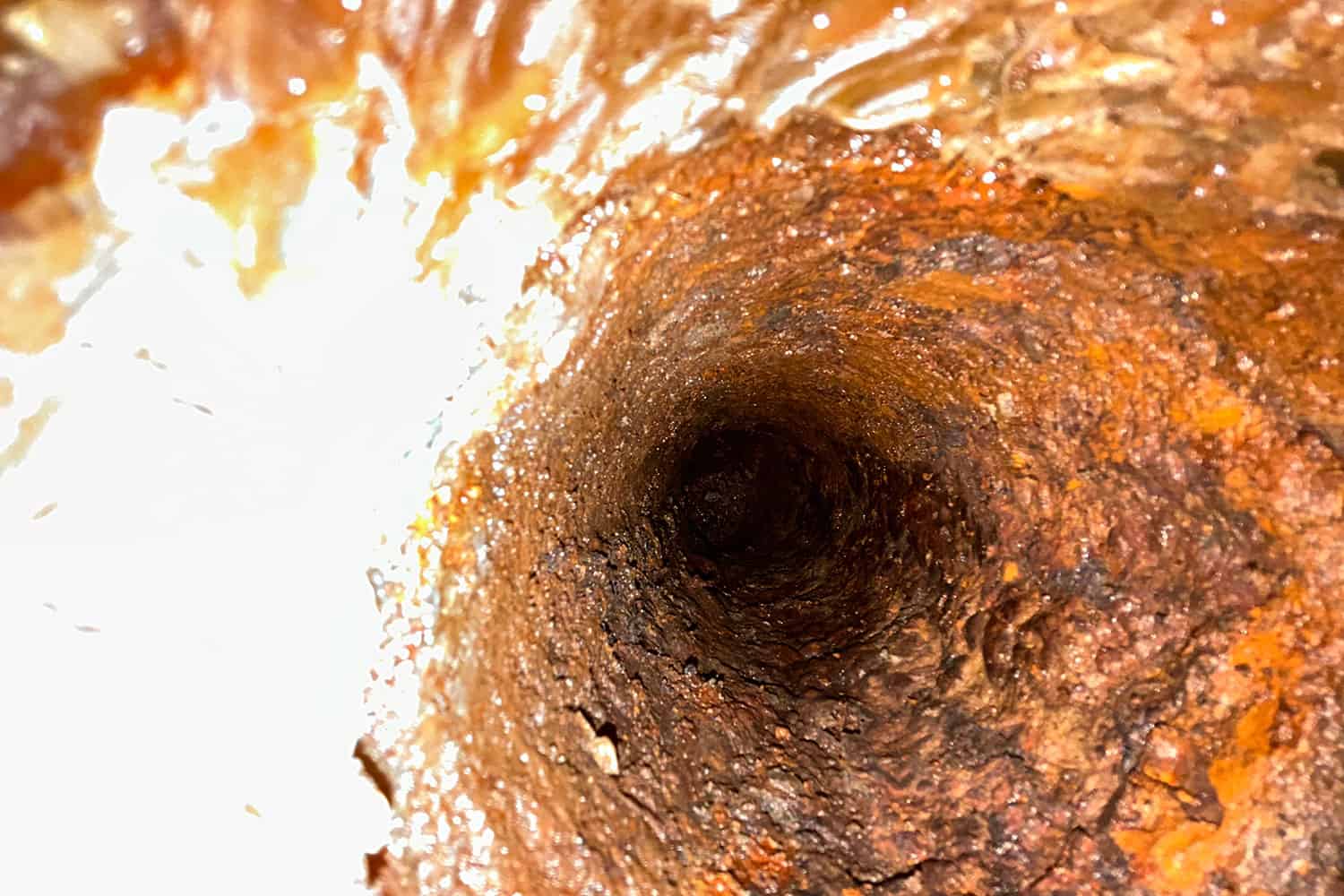
Rust-colored water or frequent backups are other red flags. If your home was built before 1975 and you’re seeing any of these symptoms, it’s time for a camera inspection. Waiting just makes the repair more expensive and increases your risk of a full pipe collapse, which usually happens at the worst possible time.
Pipe lining is a trenchless method where we insert a resin-coated liner into your existing cast iron pipe, inflate it, and let it cure. It essentially creates a new pipe inside the old one without digging. It’s faster, less disruptive, and cheaper than full replacement.
But it only works if your pipes are still structurally intact—meaning no collapses, major offsets, or bellied sections. If the pipe has shifted or broken apart, lining won’t fix it. The camera inspection tells us whether your pipes are candidates for lining or if they need full replacement.
Full replacement means excavating, removing the old cast iron, and installing new PVC or PEX. It takes longer and costs more, but it’s a complete reset. You’re not working around old damage—you’re starting fresh with materials that’ll last 50+ years.
In Rockledge, we see a lot of homes where the main sewer line is too far gone for lining, but smaller branch lines can be lined successfully. We’ll walk through both options with you and explain what makes sense for your specific situation and budget.
Most residential sewer line replacements take three to five days from start to finish. That includes excavation, pipe removal, installation, inspection, backfill, and basic site cleanup.
Trenchless repairs are faster—usually one to two days—because there’s no digging involved. We access the pipe through existing cleanouts, do the work, and you’re back to normal quickly.
Complications add time. If your pipes run under a concrete driveway or patio, we have to cut, remove, and later repatch that surface. If we hit unexpected obstacles like tree roots, old septic tanks, or utility lines, that can extend the timeline by a day or two.
Weather also matters in Florida. Heavy rain can delay excavation work because we can’t safely dig or backfill in saturated soil. We’ll give you a realistic timeline upfront and keep you updated if anything changes. Most people are surprised by how fast it actually goes once we’re on site.
Probably not fully, and maybe not at all. Florida insurers have tightened coverage on older plumbing over the last few years, and many policies now exclude cast iron pipe issues entirely or only cover sudden, accidental failures—not gradual corrosion.
If a pipe bursts and causes water damage to your home, you might get coverage for the water damage itself and a small portion of the pipe repair. But if you’re replacing pipes proactively because they’re old and corroding, that’s considered maintenance, and insurance won’t touch it.
Average insurance payouts for pipe-related claims in Florida run under $10,000, and that’s only when they approve the claim. Some homeowners have fought their insurers and settled for around $28,000 after legal action, but that’s a long, expensive process.
Your best move is to call your insurance company before you schedule any work. Ask specifically what’s covered under your policy for cast iron sewer pipe replacement and get it in writing. We can provide documentation, photos, and camera footage to support your claim, but managing expectations early saves a lot of frustration later.
Florida’s climate accelerates cast iron corrosion significantly. High humidity, salty air near the coast, and acidic groundwater all eat away at cast iron from the outside in. Meanwhile, wastewater corrodes it from the inside out. That combination shortens the typical 50-year lifespan down to 25 or 30 years in many Florida homes.
Rockledge’s proximity to the Indian River adds another factor—saltwater intrusion into the groundwater. Even if your home isn’t directly on the water, the water table here has higher salinity than inland areas, and that speeds up exterior pipe corrosion.
Tree roots are also more aggressive in Florida’s warm, wet climate. They seek out moisture, and any small crack in a cast iron pipe becomes an entry point. Once roots get in, they expand, crack the pipe further, and create blockages that lead to backups.
Homes built in the ’60s and ’70s in Rockledge are hitting that critical age where cast iron starts failing in clusters. If your neighbors are replacing their pipes, yours are likely in similar condition. It’s not a matter of if—it’s when. Getting a camera inspection now, before a collapse or major leak, gives you control over timing and cost instead of dealing with an emergency.