

You’ve probably noticed the signs. Slow drains that keep coming back no matter how many times you clear them. Sewage smells you can’t track down. Maybe you’ve already had one backup and you’re wondering when the next one hits.
Cast iron drain lines don’t get better with age. In Florida’s climate, the combination of humidity and ground moisture accelerates corrosion from the outside while waste eats away at the interior. Most cast iron pipes installed in Brevard County homes during the 60s and 70s are already compromised.
When these pipes finally give out, you’re not just looking at a plumbing bill. You’re dealing with foundation damage from leaking sewage, contaminated soil around your home, and potentially tens of thousands in water damage if a pipe bursts inside your slab. Replacing your cast iron sewer pipe before it fails means you control the timeline, the cost, and the scope of work.
We operate throughout Brevard County, and we’ve seen what happens when homeowners in Southmere wait too long on failing cast iron pipes. Carl personally oversees every residential sewer line replacement we do because this isn’t the kind of work you hand off to whoever shows up that day.
We’re not a franchise running service calls. We’re a local plumbing company that specializes in cast iron pipe replacement, trenchless sewer repair, and full system upgrades for older homes. Most of our work comes from homeowners who’ve already tried the temporary fixes and realized they need a permanent solution.
If your home was built in the 70s or earlier, your drain lines are already operating on borrowed time. We’ll tell you exactly what condition they’re in and what it’ll take to replace them before you’re dealing with an emergency.

First step is a camera inspection. We run a line through your existing pipes to see exactly where the damage is, how extensive it is, and whether you’re looking at a partial repair or full replacement. You’ll see the same footage we do, so there’s no guessing about what’s actually wrong.
If your pipes are too far gone for pipe descaling or epoxy lining, we’re replacing them. For homes with accessible lines, we excavate and replace the cast iron with PVC. For pipes under your slab or in difficult locations, we use trenchless methods to minimize disruption. That means fewer holes in your yard and less time tearing up your property.
The replacement process typically takes two to four days depending on how much of your system needs work. We’re running new lines from your home to the street connection, making sure everything slopes correctly and meets current code. Once the new pipes are in, we pressure test the system, backfill, and restore your property.
You’ll have a plumbing system that lasts 50+ years instead of wondering when the next section of cast iron is going to collapse.

Ready to get started?
Most homes in Southmere built before 1975 have cast iron drain lines. These pipes were standard for decades, but they weren’t designed to last forever. In Florida, they deteriorate faster than in drier climates because moisture accelerates corrosion and tree roots exploit any weakness in the joints.
The pipes fail from the inside and outside simultaneously. Interior buildup from decades of waste creates rough surfaces that catch debris and slow drainage. Exterior corrosion from ground moisture and Florida’s humidity eats through the metal until you’re left with paper-thin walls that crack under normal pressure.
Nearly 40% of Florida homes face this exact issue. In Brevard County specifically, we’re seeing widespread failures in neighborhoods built during the 60s and 70s construction boom. If you’re experiencing repeated backups, multiple slow drains, or sewage odors, your cast iron is telling you it’s done.
Replacing cast iron pipe systems in Southmere typically runs between $8,000 and $18,000 depending on accessibility and how much of your system needs work. That’s significantly less than dealing with emergency repairs, water damage restoration, and foundation problems after a catastrophic failure.
If your home was built before 1975, your cast iron pipes are already past their expected 40-50 year lifespan. But you don’t have to guess about their condition.
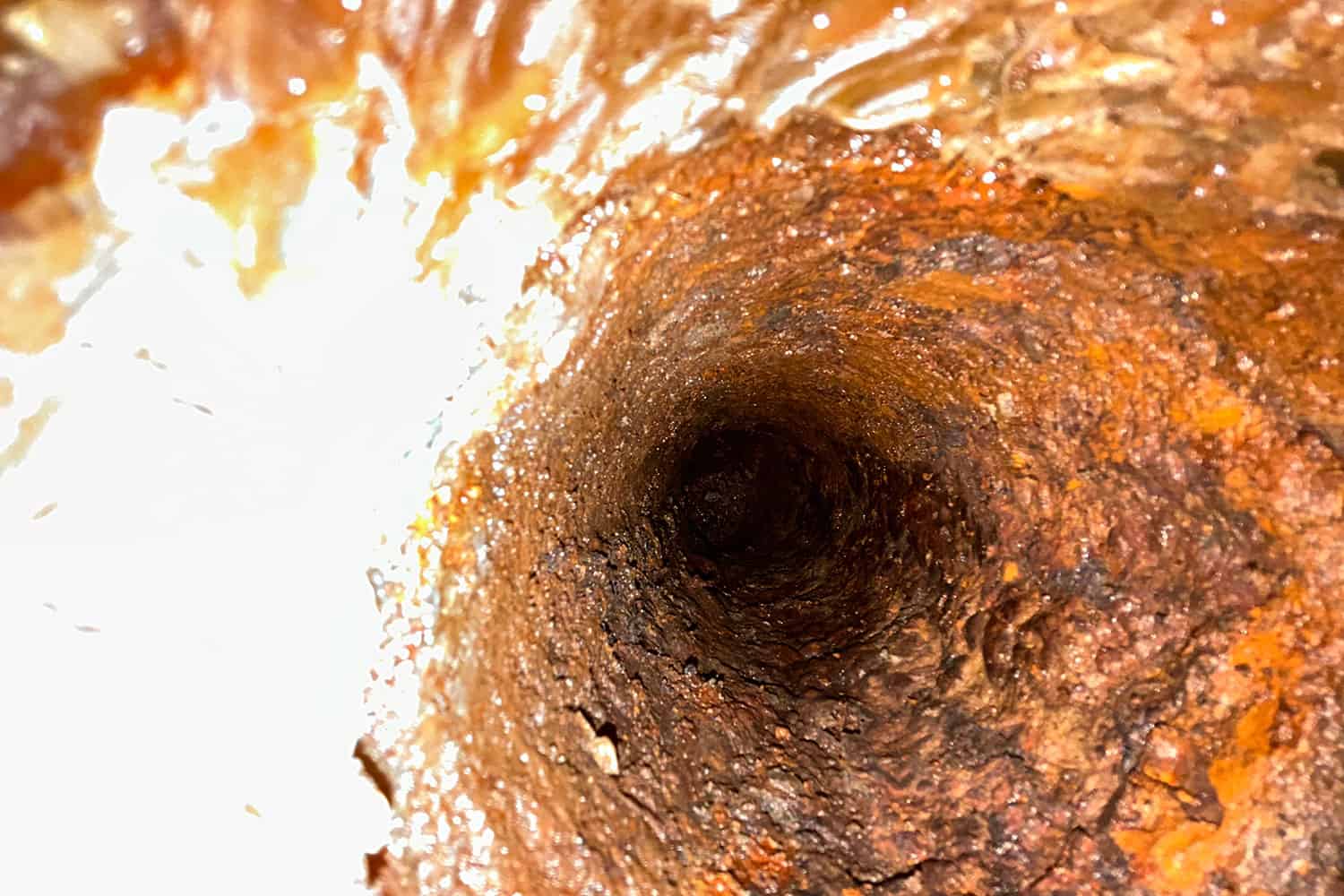
The most reliable way to assess your pipes is with a camera inspection. We run a specialized camera through your drain lines to show you exactly what’s happening inside. You’ll see corrosion, cracks, root intrusion, and buildup in real time. If the pipe walls are thin, if there are visible holes, or if sections have already started collapsing, you’re looking at replacement rather than repair.
Warning signs include recurring backups even after professional cleaning, multiple slow drains throughout your home, sewage smells you can’t locate, and wet spots in your yard where sewer lines run. If you’ve had one major backup already, the rest of your system is likely in similar condition. Cast iron doesn’t fail in just one spot – when one section goes, others are close behind.
Trenchless sewer repair works when your existing pipes are still structurally intact but deteriorating. We use methods like epoxy pipe lining to create a new pipe inside your old cast iron without excavating your entire yard. This approach takes less time, causes less disruption, and costs less than full replacement.
Full pipe replacement means we’re removing your old cast iron and installing new PVC pipes. This is necessary when pipes have collapsed, when corrosion has eaten through the walls, or when the existing system is too damaged for lining to work. For accessible pipes, we excavate and replace them. For pipes under your foundation slab, we use trenchless methods like pipe bursting to minimize how much we have to dig up.
The decision comes down to what your camera inspection reveals. If your pipes still have structural integrity, trenchless repair can extend their life by 50+ years. If they’re already failing, replacement is the only permanent solution. We’ll show you exactly what we’re seeing and explain which approach makes sense for your specific situation.
Most cast iron pipe replacement projects in Southmere run between $8,000 and $18,000. The range depends on how much of your system needs replacement, how accessible your pipes are, and whether we’re working with lines under a slab or in open ground.
A straightforward replacement where your sewer line runs through your yard to the street will be on the lower end. If your pipes run under your foundation, through landscaping, or require coordination with the county for street connections, costs increase. Trenchless methods cost more per foot than traditional excavation, but they save you money on property restoration since we’re not tearing up your entire yard.
Here’s what most people don’t factor in: the cost of not replacing failing cast iron pipes. Emergency repairs when a pipe bursts can run $3,000-$5,000 just to get your plumbing functional again – and that doesn’t fix the underlying problem. Water damage from sewage backups averages $7,000-$10,000 to remediate. Foundation repairs from long-term leaking can exceed $20,000. When you compare proactive replacement to emergency repairs plus property damage, the math makes sense.
Most homeowners insurance policies don’t cover cast iron pipe replacement because insurers consider it preventative maintenance, not sudden damage. Your policy typically covers the water damage that results from a pipe failure, but not the cost of replacing the pipes themselves.
There are exceptions. If a pipe bursts suddenly and causes immediate damage, insurance may cover the emergency repair and water damage restoration. But if your pipes have been slowly deteriorating and you’re looking at planned replacement, you’re paying out of pocket.
Some insurance companies in Florida are now requiring cast iron pipe inspections before they’ll renew policies on older homes. If your inspection shows failing pipes, they may exclude coverage for water damage related to plumbing failures until you replace the system. This is becoming more common in Brevard County for homes built in the 60s and 70s. The best approach is to replace your cast iron before it fails rather than hoping insurance will cover the aftermath.
Most residential sewer line replacements take two to four days from start to finish. The timeline depends on how much pipe we’re replacing, how accessible your lines are, and whether we’re using traditional excavation or trenchless methods.
Day one typically involves final camera inspection, marking utility lines, and beginning excavation or trenchless setup. Days two and three are when we’re removing old cast iron and installing new PVC pipes. We make sure everything slopes correctly, all connections are solid, and the system is ready for testing. Final day involves pressure testing, backfilling, and restoring your property.
If we’re only replacing the main sewer line from your home to the street, we’re usually done in two to three days. If we’re replacing multiple drain lines, working under a slab, or dealing with complicated access issues, it might take four to five days. You’ll have limited plumbing use during the work – we’ll set up temporary solutions so you’re not completely without facilities, but you won’t have full access to all drains and toilets until the new system is operational.
We can repair isolated sections if the rest of your system is still in good condition. But here’s the reality: cast iron pipes age uniformly. If one section has corroded enough to fail, the rest of your system is likely in similar condition even if it hasn’t failed yet.
Spot repairs make sense in specific situations. If you have a localized break from ground shifting or root intrusion and your camera inspection shows the surrounding pipes are still solid, we can replace just that section. If one joint has separated but the pipe itself is intact, we can repair the connection.
What doesn’t make sense is repeatedly repairing different sections as they fail one after another. We see this pattern constantly with cast iron systems in Southmere homes. A homeowner repairs one section, then six months later another section fails, then another. Each repair costs $1,500-$3,000, and after three or four repairs, they’ve spent more than replacement would have cost – and they still don’t have a reliable system.
The camera inspection tells us whether you’re looking at isolated damage or system-wide deterioration. If multiple sections show thinning, corrosion, or cracks, replacement is the smarter investment. You’re done in one project instead of dealing with recurring failures for years.