
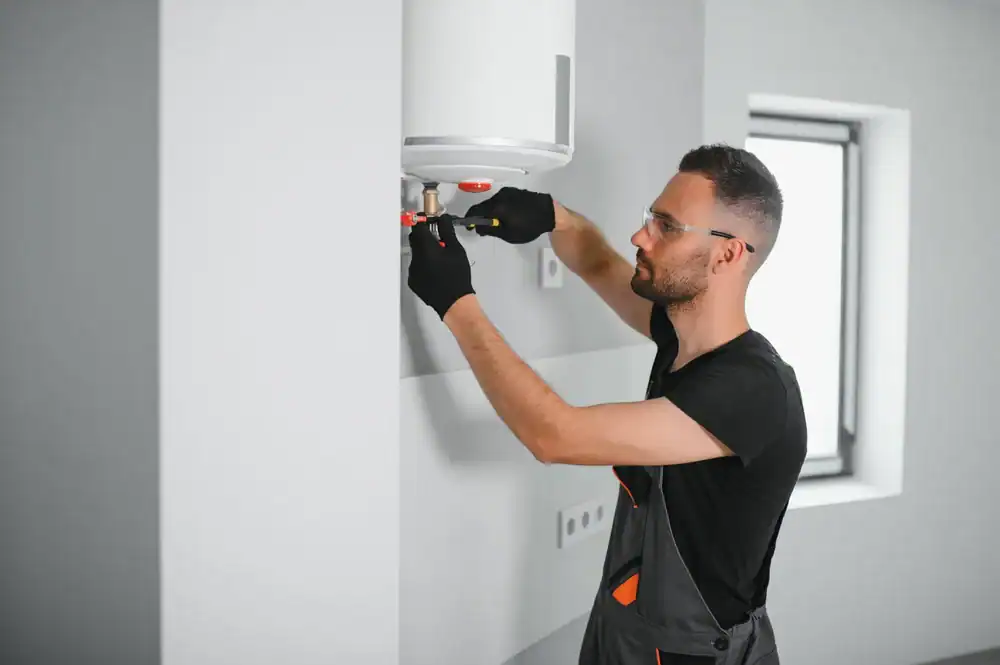
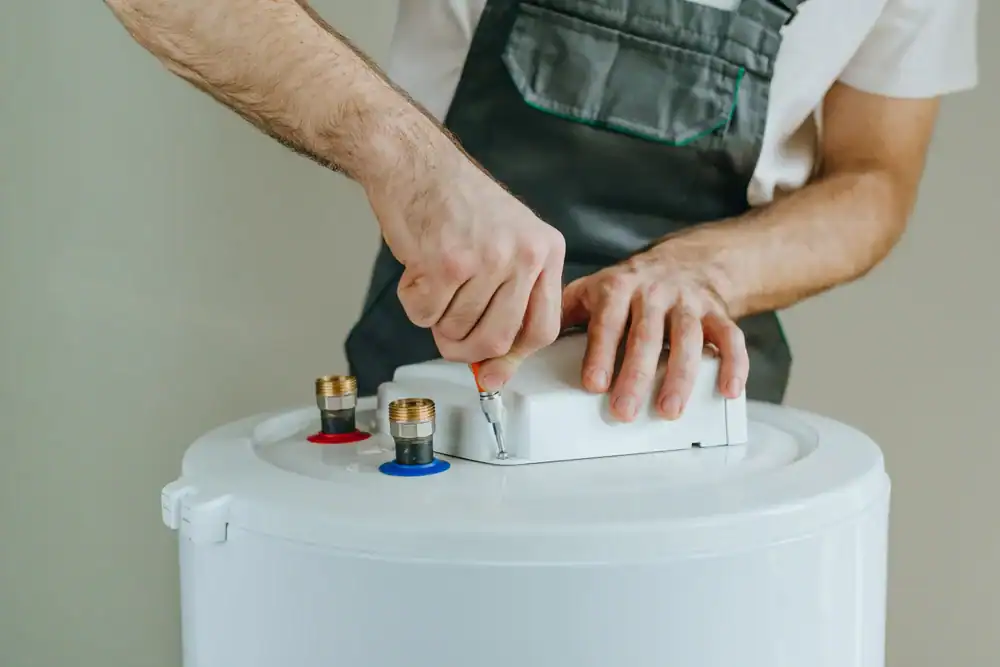
Your water heater quits at the worst possible time. Morning showers turn ice cold. Laundry piles up. Dishes sit in the sink.
You’re not just dealing with an inconvenience. You’re looking at potential water damage if that tank decides to leak. You’re watching your utility bills climb because an inefficient system is working overtime just to give you lukewarm water.
Here’s what changes when your hot water heater actually works the way it should. Your mornings run smoothly. Your family has consistent hot water for showers, dishes, and laundry. Your energy bills drop because the system isn’t struggling. And you’re not lying awake wondering if that aging tank is going to flood your utility room.
The difference between a failing water heater and a properly functioning one isn’t subtle. It affects your daily routine, your budget, and your peace of mind. When you handle it right the first time with the right equipment and proper installation, you stop thinking about your water heater entirely. That’s exactly how it should be.
We’ve served Brevard County since 2007 as a family-owned plumbing company. We’re state certified, locally operated, and we’ve built our reputation on showing up when we say we will and doing the job right.
Our team brings over 40 years of combined plumbing experience and 20 years of military service background. That military foundation means something here: we value honesty, hard work, and following through on what we promise.
We know Turnbull and the surrounding Brevard County area. We understand the mineral-rich water that causes sediment buildup in tanks. We know which systems hold up in coastal humidity and which ones fail early. Every job gets personal oversight because we’re small enough to care and experienced enough to handle whatever we find.
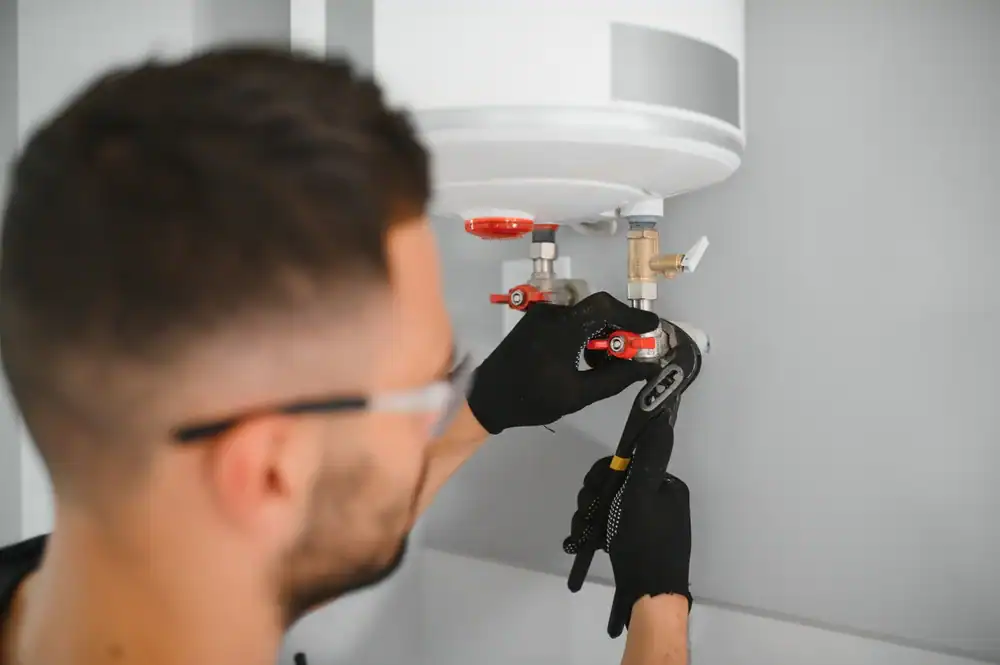
You call us and describe what’s happening. No hot water, strange noises, leaking, whatever the issue is. We schedule a time that works for you, and we show up when we say we will.
When we arrive, we assess your current system. We check the age, the condition, the type of fuel it uses, and whether it’s worth repairing or if replacement makes more sense. We’re transparent about what we find and what your options are, including costs.
If you need a new water heater, we help you choose the right size and type for your household. We handle the removal of your old unit, install the new system according to code, test everything to make sure it’s working properly, and walk you through what to expect. If it’s a repair, we fix the problem, explain what went wrong, and let you know if there are other issues you should watch for.
The whole process is straightforward. We don’t upsell you on equipment you don’t need. We don’t leave a mess. We make sure you have hot water before we leave.
Ready to get started?
Every water heater job we handle includes a full assessment of your current system and your home’s specific needs. Turnbull homes deal with Brevard County’s hard, mineral-rich water that accelerates wear on heating elements and causes sediment buildup faster than in other parts of the country. We factor that in when recommending equipment.
You get honest guidance on whether repair or replacement makes more sense. A ten-year-old tank that’s leaking usually isn’t worth fixing. A three-year-old unit with a faulty thermostat probably is. We’ll tell you which situation you’re in.
Our installations include proper permitting, code-compliant work, and systems sized correctly for your household. A family of five needs different capacity than a couple. We don’t install undersized units that can’t keep up or oversized ones that waste energy. We match the equipment to your actual usage.
For Turnbull residents, we also consider coastal climate factors. Corrosion-resistant materials matter here. Humidity affects certain components differently. We’ve seen what fails early in this area and what holds up, and we use that knowledge to set you up with a system that lasts.
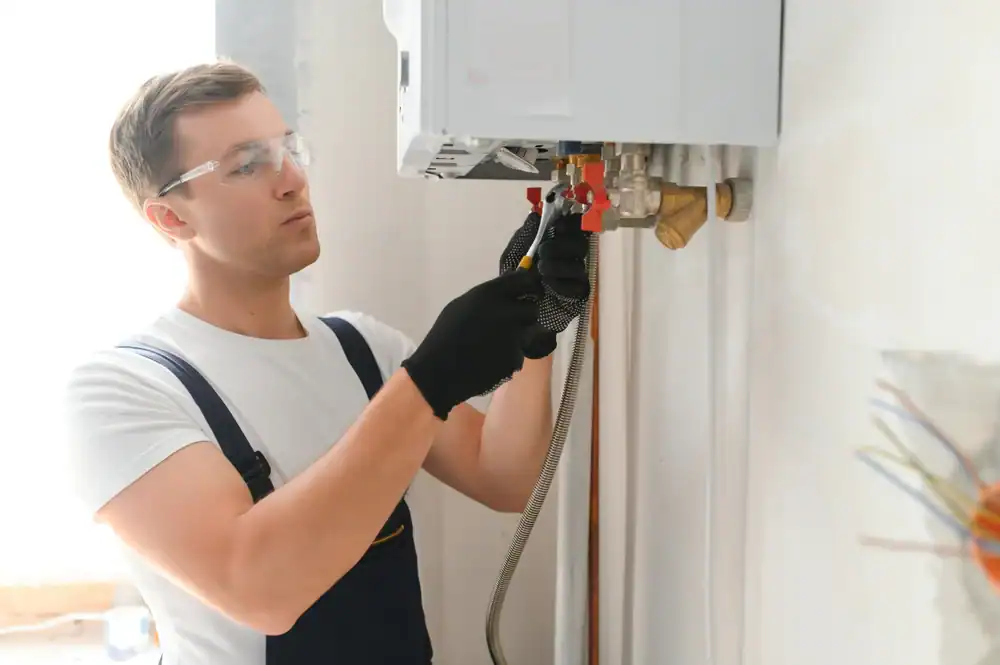
Most traditional tank water heaters last between 8 and 12 years in Florida, which is slightly shorter than the national average. The reason comes down to water quality and climate.
Brevard County has mineral-rich water that causes sediment to build up inside the tank faster than it would in areas with softer water. That sediment sits at the bottom of the tank, causes the heating element to work harder, and eventually leads to corrosion and leaks. Coastal humidity also accelerates rust on external components.
If your water heater is approaching the 10-year mark and you’re starting to see issues like inconsistent temperature, discolored water, or small leaks, replacement usually makes more sense than repair. Tankless systems tend to last longer, often 15 to 20 years, because they don’t have a tank that can corrode. But they cost more upfront and require different maintenance.
It depends on three things: the age of your unit, the cost of the repair, and what’s actually broken.
If your water heater is less than six years old and the repair is something straightforward like a faulty thermostat, heating element, or pressure relief valve, repair usually makes sense. Those fixes are relatively inexpensive and can give you several more years of service.
If your unit is over eight years old and you’re looking at a major repair, or if you’ve had multiple repairs in the past year, replacement is usually the smarter financial decision. You’re already close to the end of the unit’s lifespan, and you’ll likely face another breakdown soon. Putting money into an aging system often means throwing good money after bad.
Leaking tanks almost always need replacement. Once the tank itself corrodes and starts leaking, there’s no reliable fix. The leak will get worse, and you’re risking water damage to your home.
Size depends on how many people live in your home and your peak hot water usage, not just your square footage.
For traditional tank water heaters, a household of one or two people typically needs a 30 to 40-gallon tank. Three to four people usually need 40 to 50 gallons. Five or more people generally need 50 to 80 gallons. But those are just starting points.
If you have teenagers who take long showers, if you run the dishwasher and washing machine at the same time, or if you have a large soaking tub, you might need more capacity than the standard recommendation. On the other hand, if you’re empty nesters with efficient appliances, you might get by with less.
Tankless water heaters are sized differently. They’re rated by flow rate (gallons per minute) rather than tank capacity. You need to calculate how many fixtures might run simultaneously and choose a unit that can handle that flow. A whole-house tankless system for a family typically needs to deliver 7 to 10 gallons per minute. We measure your actual usage patterns and recommend accordingly.
Installation costs vary based on the type of system, the fuel source, and whether you’re replacing an existing unit or installing in a new location.
A standard 40 to 50-gallon electric tank water heater replacement typically runs between $1,200 and $2,000 including the unit and labor. Gas water heaters cost slightly more, usually $1,500 to $2,500, because gas line work requires additional expertise and permitting.
Tankless water heaters cost more upfront. A whole-house electric tankless system typically runs $2,500 to $4,500 installed. Gas tankless systems run $3,000 to $5,500. The higher cost reflects the equipment itself and the more complex installation, which often requires electrical upgrades or gas line modifications.
If you’re switching fuel types (going from electric to gas or vice versa) or installing in a new location, expect additional costs for running new lines and making structural modifications. We provide exact pricing after we assess your specific situation. No surprise charges, no hidden fees.
Several warning signs tell you your water heater is on its way out, and catching them early can prevent a complete failure and potential water damage.
Inconsistent water temperature is one of the first signs. If your showers start hot then turn cold, or if you’re running out of hot water faster than you used to, your heating element or burner is likely failing. Sediment buildup can also cause this by taking up space in the tank and insulating the water from the heat source.
Strange noises like popping, banging, or rumbling mean sediment has hardened at the bottom of the tank. As water heats, it bubbles up through that sediment layer and makes noise. This isn’t just annoying; it’s a sign that the tank is corroding from the inside.
Discolored or rusty water coming from your hot taps indicates corrosion inside the tank. Once rust starts, it spreads. A leaking tank, even a small leak, means the tank has corroded through and needs immediate replacement. Water pooling around the base of your water heater is an emergency that can cause serious damage to your floors, walls, and belongings.
Yes, you need a permit for water heater replacement in Brevard County, and any licensed plumber should handle that for you as part of the installation.
The permit ensures the work meets Florida building codes and safety standards. This matters for several reasons. First, it protects you. Code requirements exist because they prevent dangerous situations like gas leaks, electrical fires, improper venting, and pressure buildup. Second, it protects your home’s value. If you sell your house and the buyer’s inspector finds unpermitted plumbing work, it can kill your sale or force you to redo the work.
The permit process involves an inspection after installation. The inspector checks that the unit is properly sized, correctly vented (for gas units), securely mounted, and connected according to code. They verify the temperature and pressure relief valve is installed and draining to an appropriate location. They make sure electrical connections are safe and gas lines are properly sealed and tested.
We handle all permitting and inspections as part of our service. You don’t have to deal with the county or schedule inspectors. We take care of it, and we make sure the work passes inspection the first time.
Other Services we provide in Turnbull