
No cold showers tomorrow morning. No waiting around for days while your routine falls apart. When your water heater stops working in La Grange, you’re dealing with more than an inconvenience—you’re scrambling to reschedule your day, worrying about what it’ll cost, and wondering if you’re about to get talked into buying a whole new system.
Here’s what actually happens when you call us. We show up the same day in most cases, figure out what’s wrong without the theatrics, and tell you straight whether it’s a quick fix or something bigger. If your unit can be repaired, we repair it. If it can’t, we’ll explain why and give you options that make sense for your home and your budget.
You’re not getting a sales pitch. You’re getting a plumber who’s been doing this for over 40 years and knows the difference between a $200 fix and a $2,000 replacement. Most of the time, it’s the former.
Drain Wizard is a family-owned plumbing company based in Cocoa, serving La Grange and the surrounding Brevard County area. We’re fully licensed (CFC#1428379), insured, and backed by more than 40 years of combined plumbing experience. Carl, the owner, started in the trade at 16 and spent over 20 years in the military before opening Drain Wizard—so you’re working with someone who values discipline, honesty, and doing the job right the first time.
We’re not a call center or a franchise. When you call, you’re talking to us. When we show up, it’s our name on the truck. That matters when you’re letting someone into your home to work on something as essential as your hot water.
La Grange homeowners deal with the same challenges the rest of Brevard County does—hard water that eats away at heating elements, humidity that accelerates rust, and water heaters that run year-round because Florida doesn’t take winters off. We’ve seen it all, and we know how to fix it.
First, we listen. You tell us what’s going on—no hot water, strange noises, leaking, whatever it is. We ask a few questions to get a sense of the issue and schedule a time that works for you, usually same-day or next-day depending on how urgent it is.
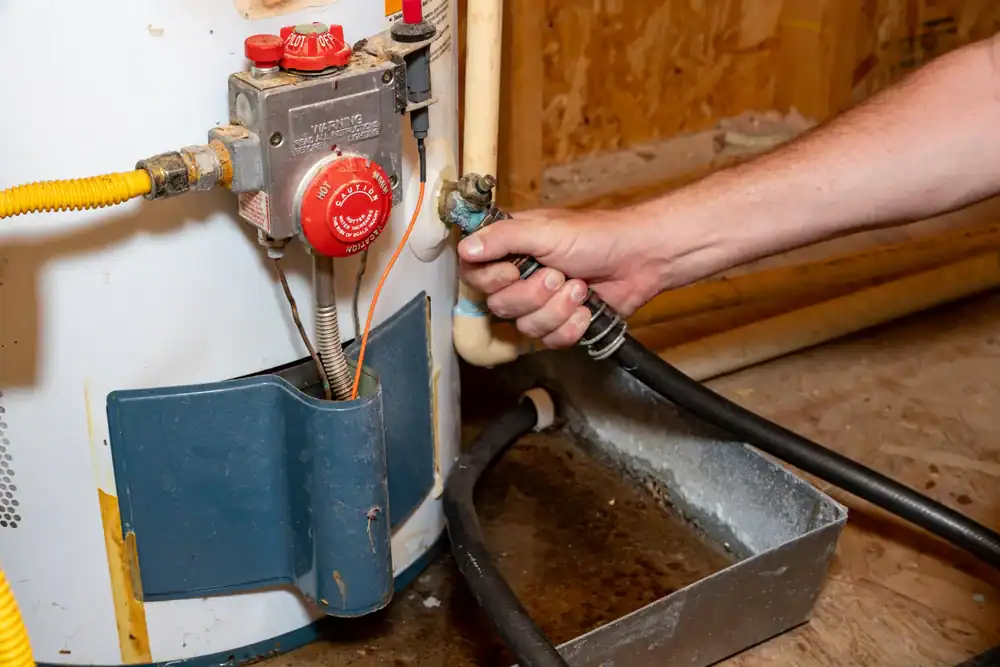
When we arrive, we inspect the water heater from top to bottom. We’re checking the thermostat, heating elements, pressure relief valve, anode rod, and looking for leaks or sediment buildup. Florida’s hard water causes a lot of problems people don’t see until it’s too late, so we’re thorough.
Once we know what’s wrong, we explain it in plain terms. No jargon. No scare tactics. Just the facts: what broke, why it broke, what it’ll take to fix it, and what it costs. If it’s a part that needs replacing—like a heating element or thermostat—we usually have it on the truck. If it’s something more serious, like a rusted-out tank, we’ll talk through your options for repair versus replacement.
After the repair, we test everything to make sure it’s working right. We clean up. And we make sure you know what to watch for going forward so you’re not caught off guard again.
Ready to get started?
When we come out for a water heater repair in La Grange, you’re getting a full diagnostic, not a guess. We don’t charge you to figure out what’s wrong and then charge you again to fix it. The service call gets you an honest assessment and a clear price before any work starts.
If the fix is straightforward—a faulty thermostat, a tripped breaker, a blown heating element—we handle it on the spot. If your water heater is leaking from the tank itself, that’s usually a sign the unit’s done, and we’ll walk you through what replacement looks like. We install Bradford White water heaters because they hold up well in Florida’s climate and don’t nickel-and-dime you on parts down the road.
We also handle the stuff most people don’t think about until it’s a problem: flushing sediment out of the tank, replacing anode rods before they corrode through, adjusting water pressure to keep your system from overworking. A lot of emergency calls we get could’ve been avoided with basic maintenance, and we’re happy to show you what that looks like.
You’re also working with a licensed Master Plumber who’s seen thousands of water heaters in every condition imaginable. That experience means we’re faster, more accurate, and less likely to misdiagnose the problem or recommend something you don’t need. It’s not just about fixing what’s broken today—it’s about making sure it doesn’t break the same way next month.
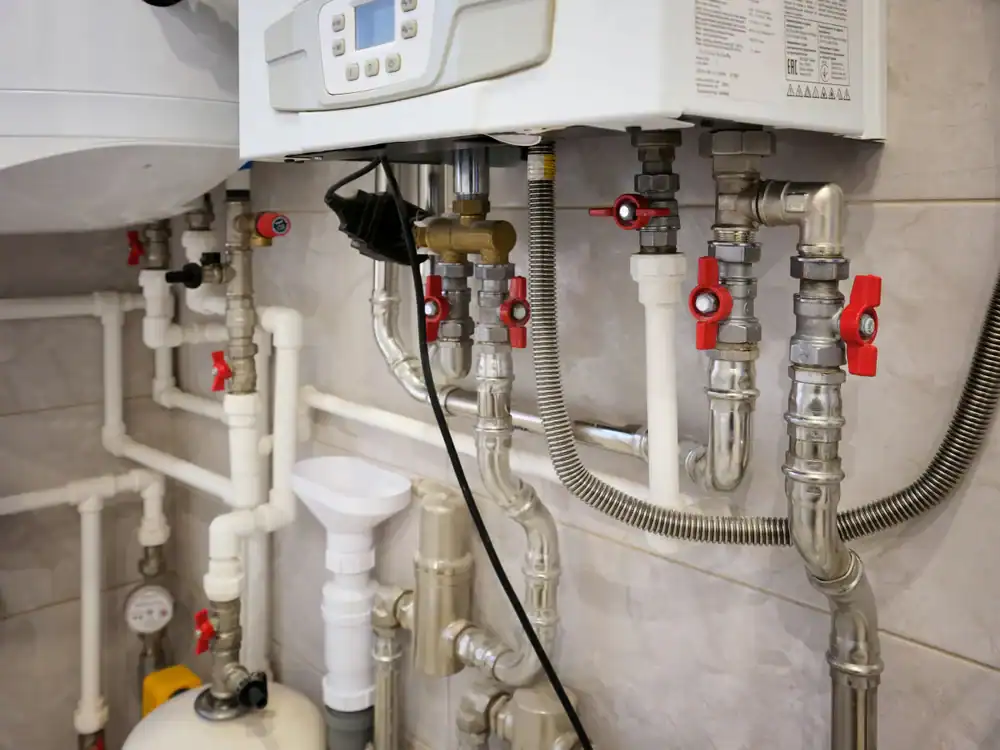
If your water heater is leaking from the tank itself, it’s done. Tanks don’t get patched—they get replaced. But if the leak is coming from a valve, a fitting, or a pipe connection, that’s repairable.
If you’re not getting hot water, the issue is usually the heating element, thermostat, or breaker. Those are all fixable and relatively inexpensive. If your water heater is over 10 years old and you’re starting to see rust in the water or hear banging noises, it might be on its way out—but that doesn’t mean it needs replacing today.
Here’s the real answer: it depends on what’s broken and how old the unit is. We’ll tell you honestly whether a repair makes sense or if you’re throwing money at something that’s going to fail again in six months. Most of the time, if the tank isn’t leaking and the unit is under 10 years old, it’s worth repairing.
That’s sediment buildup at the bottom of the tank. Florida’s water is loaded with minerals—calcium, magnesium, lime—and over time, those minerals settle at the bottom and harden into a crusty layer. When the heating element tries to heat the water, it has to burn through that sediment first, and that’s what causes the popping or banging sound.
It’s not an emergency, but it’s a warning. The more sediment that builds up, the harder your water heater has to work, and the faster it wears out. It also makes your water heater less efficient, which means higher energy bills.
The fix is flushing the tank. We drain it, clear out the sediment, and check the anode rod while we’re at it. If you’ve never had your water heater flushed and it’s more than a few years old, this is probably overdue. It’s one of those maintenance tasks that saves you from bigger problems later.
Most repairs take one to two hours, start to finish. If it’s something simple like replacing a heating element or thermostat, we’re usually done in under an hour. If we’re flushing the tank, replacing an anode rod, or dealing with a tricky valve, it might take a little longer.
If we need a part we don’t have on the truck—which is rare—we’ll let you know up front and schedule a follow-up. But nine times out of ten, we’re carrying what we need and you’ve got hot water back the same day.
The bigger variable is how long it takes to diagnose the problem. Some issues are obvious. Others take a little more digging, especially if you’ve got an older unit or something that’s been patched together over the years. Either way, we’re not dragging it out. We know you’ve got other things to do.
If you’ve got an electric water heater, the most common culprits are a blown heating element, a faulty thermostat, or a tripped breaker. Sometimes it’s as simple as resetting the breaker or the high-temperature cutoff switch on the unit itself. Other times, the heating element has burned out and needs replacing.
If you’ve got a gas water heater, it could be the pilot light, the thermocouple, or the gas control valve. Sometimes the pilot won’t stay lit because the thermocouple is dirty or worn out. Other times, the burner isn’t getting gas because of a valve issue.
Sediment buildup can also cause problems. If there’s too much sediment at the bottom of the tank, it creates a barrier between the heat source and the water, so even though the heater is working, the water isn’t getting hot. That’s more common in Florida than most places because of how hard the water is. We see it all the time in La Grange and throughout Brevard County.
If it’s something like resetting a tripped breaker or relighting a pilot light, sure—you can handle that. Most water heaters have instructions on the unit itself for basic troubleshooting. But if you’re dealing with anything involving electrical components, gas lines, or water pressure, call someone who knows what they’re doing.
Water heaters run on either 240-volt electricity or natural gas, both of which can be dangerous if you don’t know what you’re working with. A bad repair can cause leaks, electrical shorts, gas leaks, or even tank failure. And if you’re not licensed, your homeowner’s insurance might not cover damage caused by DIY work.
The other issue is misdiagnosis. A lot of people replace the wrong part because they’re guessing, and then they’re out the money and still don’t have hot water. We’ve been called out more than once to fix someone’s fix. It’s almost always cheaper and faster to get it done right the first time.
It depends on what’s broken. A service call and diagnostic usually runs around $100 to $150. If it’s a simple fix—like replacing a thermostat or heating element—you’re looking at $150 to $300 total, parts and labor. If we’re flushing the tank, replacing an anode rod, or fixing a valve, it might be $200 to $400 depending on the part and how long it takes.
If your water heater is leaking from the tank and needs replacing, that’s a different conversation. A standard 40- or 50-gallon water heater installation typically runs between $1,200 and $2,500 depending on the unit, the location, and whether we need to upgrade venting or bring anything up to code.
We give you a clear price before we start any work. No surprises. No hidden fees. And if you’re a senior, we offer a 5% discount. If the repair doesn’t make financial sense compared to replacement, we’ll tell you that too. We’re not here to sell you something you don’t need—we’re here to get your hot water working again in the most practical way possible.
Other Services we provide in La Grange