Florida's brutal summers and unpredictable winters put serious stress on your water heater. These five maintenance strategies help you avoid costly failures and extend your unit's lifespan.
Share:
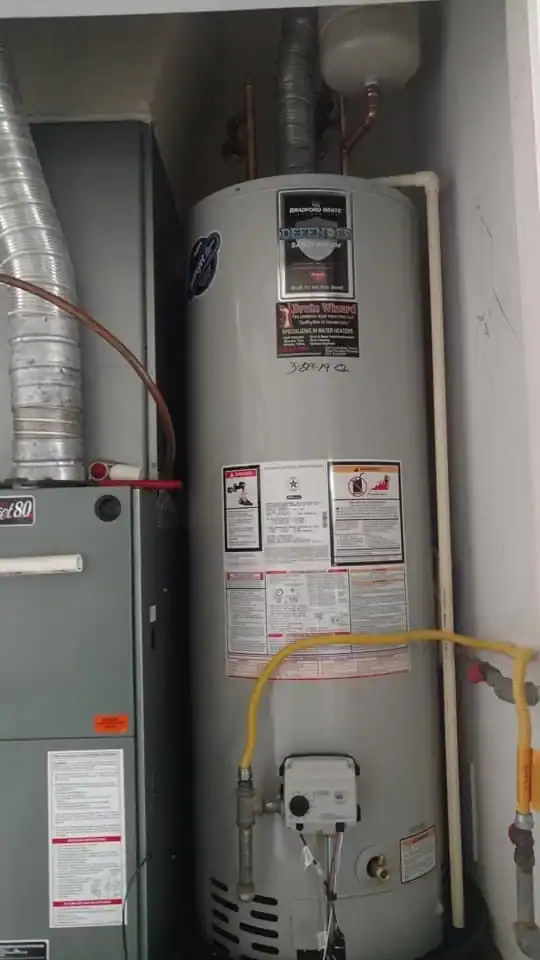
Florida’s humid subtropical climate creates a perfect storm for water heater problems. Your unit faces challenges that homeowners in other regions never deal with.
The air averages 72°F year-round with 48 inches of rain annually. That constant moisture accelerates rust and corrosion, especially if your water heater sits in a garage or utility room without climate control. Add in the hard water that’s loaded with calcium and magnesium, and you’ve got mineral deposits building up inside your tank every single day.
Unlike northern climates where water heaters get a break during warm months, yours runs continuously. Summer garage temperatures can hit 120°F, forcing your unit to work overtime just to maintain set temperatures. Winter brings its own issues—when groundwater temperatures drop, your heater strains to bring that cold water up to temperature, wearing out heating elements faster than normal.
Florida’s mineral-rich water is your water heater’s biggest enemy. Every gallon that flows through your system deposits tiny amounts of calcium and magnesium at the bottom of the tank. Over time, that sediment layer acts like a thick blanket between your heating element and the water it’s trying to heat.
You’ll notice the effects before you see the sediment. Strange popping or rumbling sounds mean water is boiling beneath that mineral layer, creating steam bubbles that force their way through. Your hot water won’t last as long because sediment takes up space in the tank. Energy bills climb because your heater works harder to do the same job. Eventually, that constant strain causes heating elements to fail or tanks to crack.
Most manufacturers recommend annual flushing. In Brevard County, that’s not enough. The mineral content here is high enough that you should flush every six months to stay ahead of buildup. This is especially true if you’ve noticed your water leaving white residue on faucets and showerheads—that’s the same stuff accumulating inside your tank.
The flushing process is straightforward but easy to mess up if you’ve never done it. You’re draining several gallons from the bottom of the tank where sediment settles, then running cold water through to clear out what remains. The trick is doing it without clogging your drain valve or leaving enough sediment behind that you’re right back where you started in three months.
Professional flushing uses equipment that pulls sediment more effectively than a garden hose. We can also spot early warning signs during the process—like a drain valve that’s starting to fail or an anode rod that’s overdue for replacement. Those catches prevent bigger problems down the road.
If you’re hearing noises from your tank or noticing your hot water doesn’t last as long as it used to, sediment is likely the culprit. Addressing it now prevents the kind of damage that forces premature replacement.
Inside your water heater is a metal rod designed to corrode so your tank doesn’t. It’s called a sacrificial anode rod, and it’s usually made from magnesium, aluminum, or zinc. Through a process called electrolysis, the rod attracts corrosive elements in your water—iron, minerals, and other compounds that would otherwise eat through your tank’s steel lining.
The rod gradually deteriorates as it does its job. Once it’s consumed, corrosion starts attacking your tank instead. That’s when you get rust-colored water, metallic tastes, and eventually leaks that can’t be repaired. Most homeowners never check their anode rod until it’s too late.
Florida’s water chemistry accelerates this process. Between the mineral content and the humidity that promotes rust, anode rods here don’t last as long as they do in other regions. The standard recommendation is inspection every 3-5 years, but in coastal areas of Brevard County where salt air is a factor, checking every 2-3 years makes more sense.
You’ll know it’s time for replacement when the rod is heavily corroded down to its core wire or covered in thick calcium deposits that cleaning can’t remove. Some homeowners notice a rotten egg smell in their hot water—that’s hydrogen sulfide gas from a failing anode rod.
Replacement isn’t complicated, but it requires the right tools and enough clearance above your water heater to pull the rod out. Some tanks have the anode built into the hot water outlet, which makes the job more involved. Either way, replacing a $20-40 rod beats replacing a $1,200 water heater.
If your water heater is approaching 10 years old and you’ve never replaced the anode rod, there’s a good chance it’s already gone. Checking it now could reveal whether you need a replacement rod or whether corrosion has already started damaging your tank. That information helps you plan for a replacement on your timeline rather than during an emergency.
The anode rod is one of those components that works silently until it doesn’t. Staying ahead of its replacement schedule is one of the most cost-effective ways to extend your water heater’s life.
Want live answers?
Connect with a Drain Wizard Plumbing expert for fast, friendly support.
Water expands when it heats up. That’s basic physics, but it creates real problems in your plumbing system. A 50-gallon tank of cold water becomes about 52 gallons when heated to 120°F. In a closed plumbing system—which most homes have due to backflow prevention requirements—that extra volume has nowhere to go.
The pressure builds inside your tank, stressing seams, valves, and connections. Over time, this constant expansion and contraction wears out components faster than normal. You might notice your pressure relief valve dripping, which means it’s releasing water to prevent dangerous pressure buildup. Or you might hear dripping faucets and running toilets that seem to fix themselves, which happens when pressure forces water past seals.
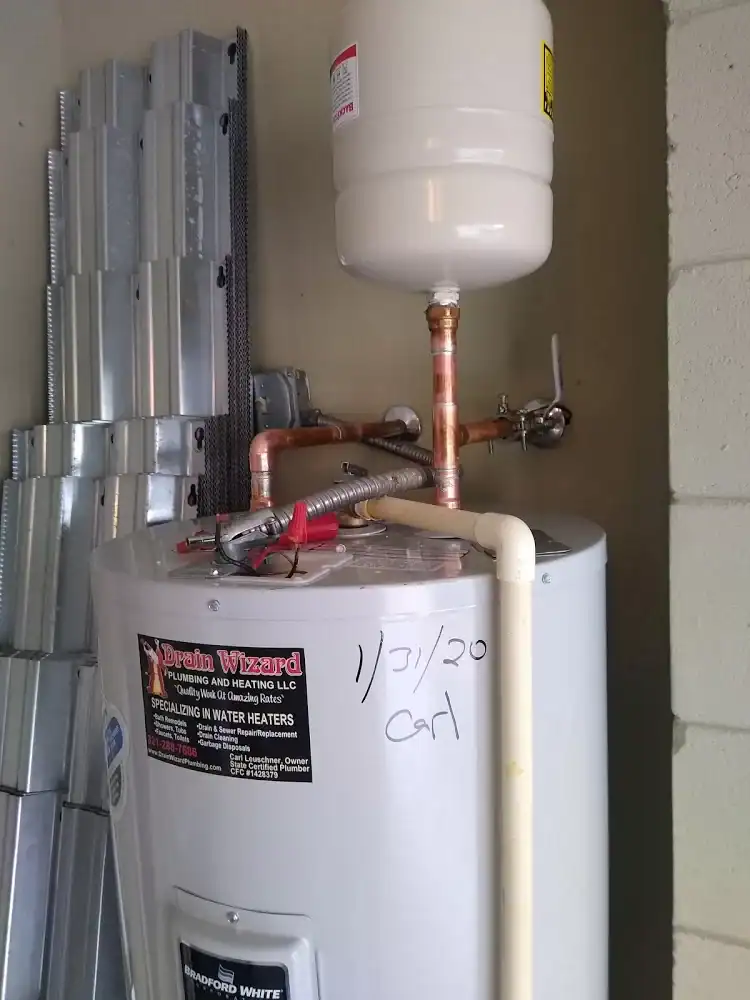
A thermal expansion tank solves this by giving that extra water somewhere to go. It’s a small tank—usually 2-5 gallons—that connects to your cold water line before the water heater. Inside is a rubber bladder that compresses as water expands, absorbing the pressure increase and keeping your system at safe levels.
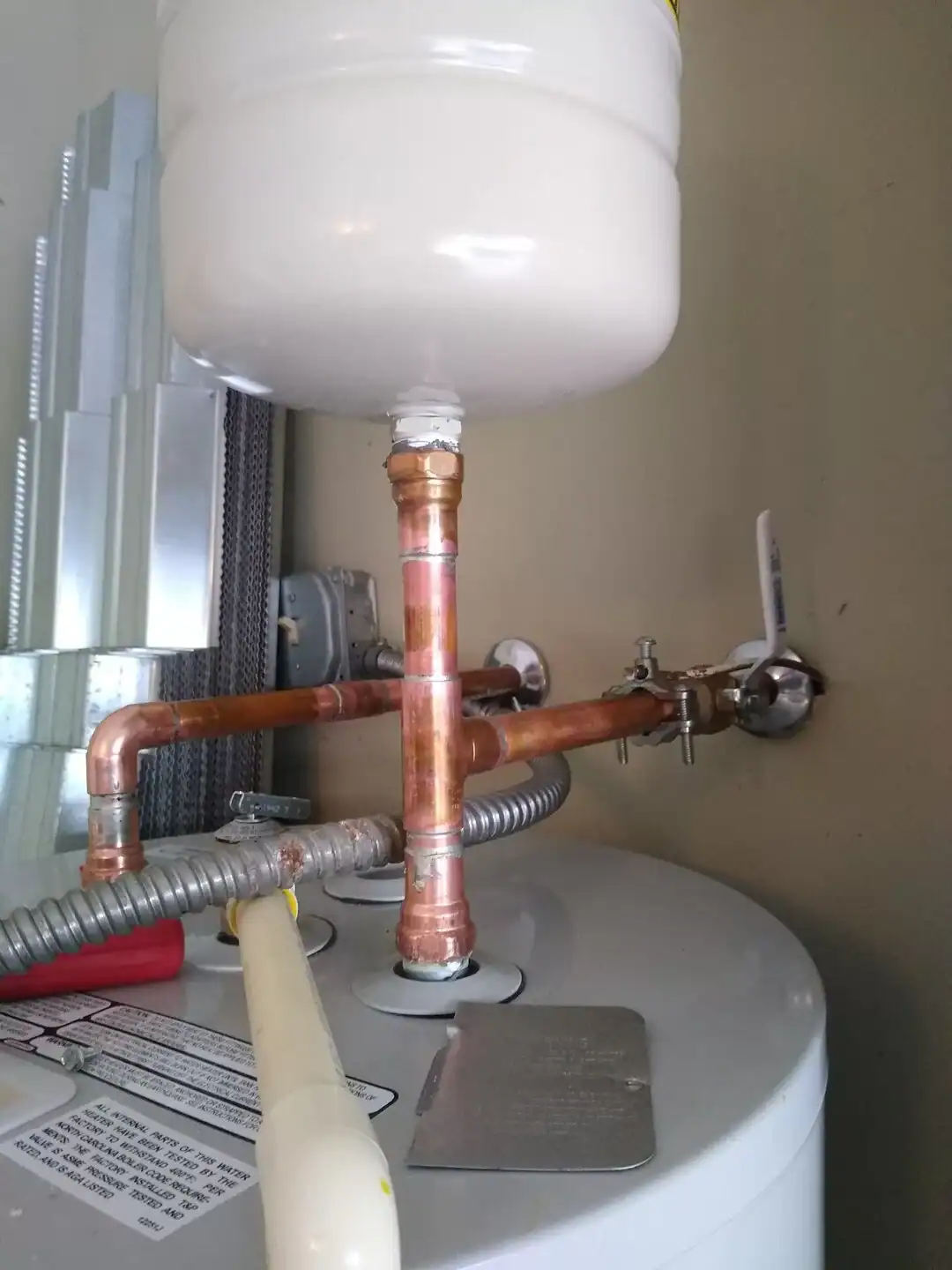
The damage from thermal expansion is gradual but relentless. Every time your water heater cycles on, pressure spikes inside the tank. Your tank’s seams and welds take the brunt of that stress. The pressure relief valve—which is designed for emergency use, not daily cycling—gets worn out from constant activation.
Fixtures throughout your home suffer too. Washing machine solenoid valves, dishwasher connections, and toilet fill valves all take hits from pressure fluctuations. These components aren’t built to handle the constant stress, and they fail earlier than they should.
In extreme cases, excessive pressure can cause the flue inside a gas water heater to collapse, creating a carbon monoxide leak. That’s rare, but it illustrates how serious unchecked thermal expansion can become.
Florida’s year-round hot water demand makes this worse. In colder climates, water heaters get periods of lower usage when thermal expansion isn’t as aggressive. Here, your system cycles constantly, compounding the wear on every component.
Installing an expansion tank isn’t just about protecting your water heater—it’s about protecting your entire plumbing system. The tank costs $40-70 if you install it yourself, or $200-400 with professional installation. Compare that to water damage from a burst tank or the cost of replacing multiple fixtures throughout your home, and the math is straightforward.
Building codes in many areas now require expansion tanks on new water heater installations. Even if yours was installed before that requirement, adding one protects your investment and gives you peace of mind.
Most water heaters ship from the factory set to 140°F. That’s hotter than you need and harder on your system than necessary. Dropping your temperature to 120°F reduces stress on your heating elements, slows mineral buildup, and cuts your energy costs—all without affecting your comfort.
The difference might seem small, but it adds up. Lower temperatures mean less thermal expansion, which reduces pressure stress on your tank. Minerals precipitate out of water more slowly at lower temperatures, so you get less sediment buildup between flushings. And because your heater doesn’t have to work as hard to maintain temperature, components last longer.
There’s a safety consideration too. Water at 140°F can cause serious burns in seconds, especially for children and elderly family members. At 120°F, you still get plenty hot water for showers and dishwashing, but the risk of scalding drops significantly.
Florida’s warm climate makes this adjustment even more practical. Your incoming water temperature is already higher than in northern states, so your heater doesn’t have to work as hard to reach 120°F. During summer when garage temperatures soar, that lower setting prevents your unit from overheating in an already hot environment.
One caution: don’t go below 120°F. Temperatures under that threshold allow bacteria to grow in your tank, including the bacteria that causes Legionnaires’ disease. The 120°F setting hits the sweet spot between efficiency and safety.
Adjusting your temperature is simple—there’s a dial or digital control on your water heater. Make the change, wait a few hours, then test your hot water. If it’s not hot enough for your needs, you can adjust up slightly. Most homeowners find 120°F works perfectly for their household.
This one change won’t magically extend your water heater’s life by years, but combined with proper flushing and anode rod maintenance, it’s another factor working in your favor. Every bit of stress you remove from your system adds time to its lifespan.
Your water heater faces challenges in Florida that most manufacturers don’t account for in their lifespan estimates. Hard water, constant use, extreme temperatures, and coastal humidity all work against you. But the five strategies covered here—regular sediment flushing, anode rod replacement, thermal expansion management, proper temperature settings, and seasonal preparation—give you control over those factors.
Most water heaters in Brevard County fail at 8-10 years. With consistent maintenance, you can push that to 12 years or beyond. That’s thousands of dollars in avoided replacement costs, not to mention the water damage you prevent by catching problems early.
The key is staying ahead of issues rather than reacting to failures. Strange noises, rust-colored water, inconsistent temperatures—these are warnings, not problems you can ignore and hope they go away. Each one signals that your water heater needs attention now, before a small issue becomes an expensive emergency.
If you’re not sure where your water heater stands or you’ve never had it professionally maintained, now’s the time to find out. We serve homeowners throughout Brevard County with honest assessments and transparent pricing. Whether you need a full maintenance service or just want us to check your anode rod and flush your tank, we’ll make sure your system is protected against Florida’s extreme weather.
Article details:
Share:
Continue learning: