If your hot water barely trickles while cold water flows fine, you're dealing with a fixable problem. Discover the real reasons behind pressure loss and what you can do about it.
Share:
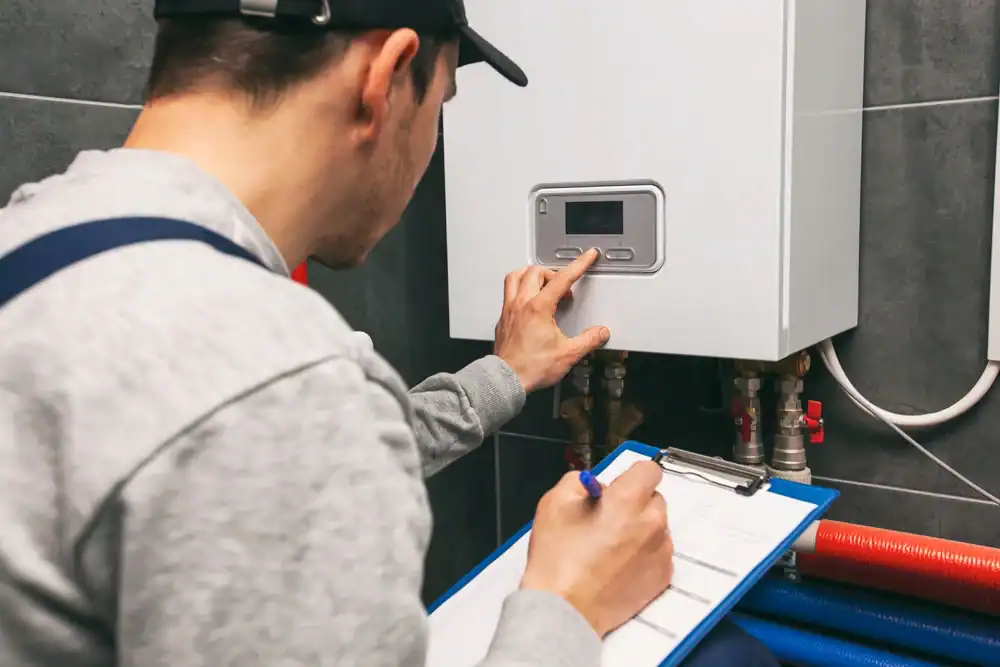
When hot water pressure drops but cold water flows normally, the issue is isolated to your hot water system. That narrows things down significantly. Your cold and hot water lines split at the water heater, so anything affecting only hot water points to a problem somewhere between the heater and your fixtures.
This is actually helpful for diagnosis. You’re not dealing with a whole-house pressure issue, municipal supply problems, or main line leaks. The culprit is either inside your water heater tank, in the lines leading from it, or at a valve controlling hot water flow.
Understanding this distinction saves you time and money. Instead of chasing problems throughout your entire plumbing system, you can focus on the hot water heaters and their immediate connections.
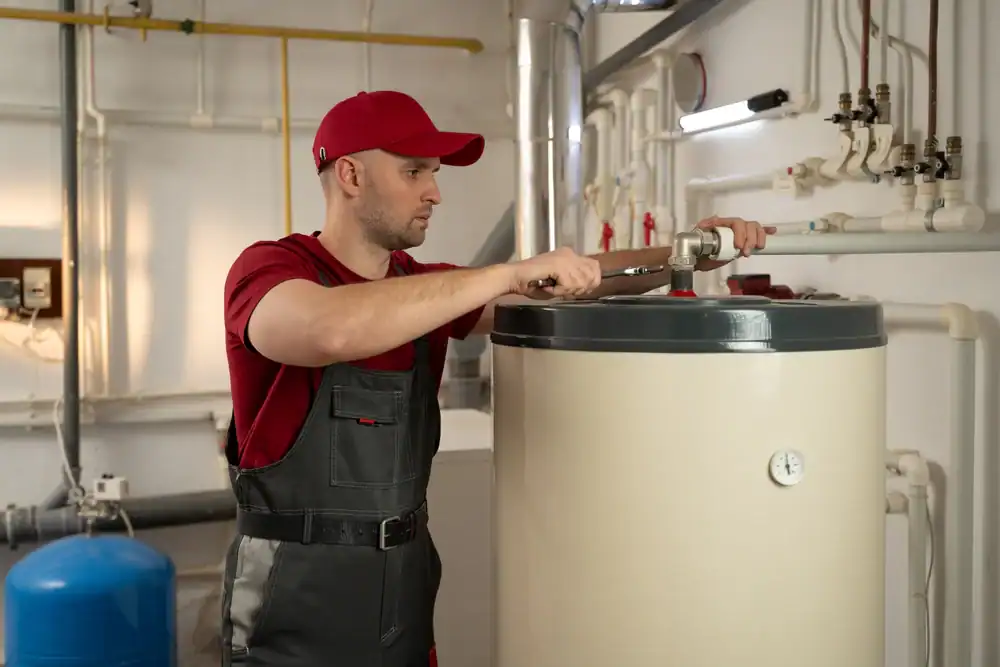
Here in Brevard County, FL, sediment buildup is the number one reason hot water heaters lose pressure. Our water supply is loaded with minerals—calcium, magnesium, and other dissolved solids that separate from water when it’s heated. Over time, these minerals sink to the bottom of your tank and form a thick layer of sediment.
Think of it like snow accumulating on the ground. A little bit doesn’t matter. But after months and years without clearing it out, that layer gets thick enough to cause real problems. Sediment clogs the outlet pipe where hot water exits the tank. It blocks the dip tube that brings cold water in. Eventually, there’s so much buildup that water can barely squeeze through.
The result? Weak hot water pressure throughout your entire house. You’ll notice it at every hot water fixture—showers, sinks, dishwasher, washing machine. And because Brevard County’s water is particularly hard, this happens faster here than in many other parts of the country.
You might also hear strange noises. Popping, rumbling, or banging sounds mean sediment is being heated and creating steam bubbles that rumble around inside the tank. If your water looks discolored or rusty, that’s another red flag. Sediment doesn’t just restrict flow—it also traps heat, forcing your water heater to work harder and use more energy.
Flushing your tank clears out the sediment. It’s a straightforward maintenance task that should happen at least once a year, especially in areas with hard water. We drain the tank, stir up the settled minerals, and flush them out through a hose until the water runs clear. For severe buildup, the process might need to be repeated several times.
If you’ve never flushed your water heater and it’s been in service for years, expect a significant amount of sediment to come out. Regular flushing prevents the problem from building up in the first place and extends the life of your hot water heaters.
Florida’s water supply is notoriously hard. That means it contains high concentrations of dissolved minerals that wreak havoc on plumbing systems. When you heat hard water, those minerals don’t stay dissolved—they precipitate out and form scale deposits inside your water heater tank and pipes.
This is a bigger issue here in Brevard County, FL than in many other states. The mineral content in our water accelerates sediment accumulation, meaning your water heater fills up with sludge faster than it would in areas with softer water. You might see white, chalky buildup on your showerhead or faucet aerators. That’s the same stuff collecting inside your water heater, just visible on the outside.
Hard water doesn’t just affect pressure. It reduces your water heater’s efficiency because sediment acts as an insulator between the heating element and the water. Your heater has to run longer and hotter to get the same results, which shows up on your energy bill. It also shortens the lifespan of your tank by promoting corrosion and putting extra stress on components.
Some homeowners install whole-house water softeners or filtration systems to address hard water at the source. These systems remove or reduce minerals before they ever reach your water heater. While it’s an upfront investment, it protects your entire plumbing system—not just your water heater—and can save you money long-term by reducing maintenance needs and extending appliance life.
If you’re noticing sediment-related issues frequently, it’s worth having your water tested. Knowing the mineral content helps you understand how often you’ll need to flush your tank and whether a water softener makes sense for your situation. In the meantime, annual flushing is your best defense against sediment buildup and the pressure loss that comes with it.
Want live answers?
Connect with a Drain Wizard Plumbing expert for fast, friendly support.
Sometimes the simplest explanation is the right one. A partially closed plumbing shut-off valve can drastically reduce hot water pressure without you realizing it. Every water heater has a shut-off valve on the cold water supply line that feeds it. If this valve isn’t fully open, it restricts water flow into the tank, which then limits how much hot water can flow out to your fixtures.
This happens more often than you’d think. Maybe someone partially closed the valve during maintenance and forgot to open it all the way. Maybe it got bumped or turned accidentally. Or maybe sediment and corrosion inside the valve are preventing it from opening completely, even when the handle looks like it’s in the open position.
Checking your shut-off valves is one of the easiest troubleshooting steps you can take. Locate the valve on the cold water line leading into your water heater—it usually has a round handle or a lever. Make sure it’s turned completely open. For a round handle, turn it counterclockwise as far as it will go. For a lever, it should be parallel to the pipe.
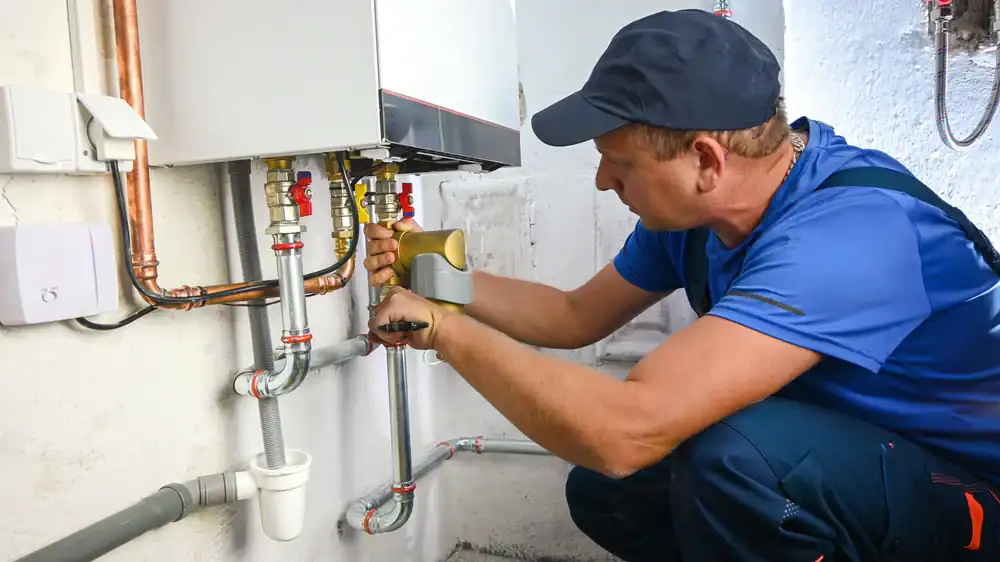
Start by locating the shut-off valve on your water heater. It’s typically on the cold water supply line, which is usually the pipe with blue markings or located on the right side when you’re facing the unit. The valve might be a gate valve (round handle) or a ball valve (lever handle).
If it’s a gate valve, turn the handle counterclockwise until it stops. Count how many turns it takes. If it only takes a quarter turn or half turn, the valve wasn’t fully open. Gate valves are notorious for getting stuck partially closed due to sediment buildup, especially in areas with hard water like Brevard County, FL. Even if the handle feels like it’s fully open, sediment between the gate and valve body can restrict flow.
Ball valves are simpler and more reliable. The lever should be parallel to the pipe for full flow. If it’s at any angle, even slightly, it’s restricting water. Turn it so it’s completely in line with the pipe.
After adjusting the valve, test your hot water pressure at a few fixtures. If flow improves immediately, you’ve found your problem. If the valve was stuck or difficult to turn, it might be corroded or have sediment buildup inside. In that case, you might need to replace the valve entirely to restore full flow.
Shut-off valves don’t last forever. Over time, internal components wear out, seals deteriorate, and sediment accumulates. If your valve is old, leaking, or won’t open fully even after you’ve tried to adjust it, replacement is the safest option. We can install a new valve quickly, and it’s a relatively inexpensive fix that can make a huge difference in your hot water pressure.
Don’t force a stuck valve. Applying too much pressure can break the stem, crack the valve body, or cause a leak. If it won’t budge with reasonable effort, give us a call. Trying to force it can turn a simple fix into a bigger problem.
A water pressure regulator controls the pressure of water entering your home from the municipal supply. It’s usually installed near your main water shutoff valve and keeps pressure at a safe, consistent level—typically around 50 to 60 PSI. When a water pressure regulator fails or gets clogged, it can cause all kinds of problems, including low hot water pressure.
Regulators don’t last forever. Most have a lifespan of 10 to 15 years, though that can be shorter in areas with hard water or high sediment levels. Over time, internal components wear out, sediment builds up inside the valve, or the diaphragm that controls pressure fails. When this happens, the regulator might not maintain proper pressure, leading to weak flow throughout your system.
A thermal expansion tank is equally important. This small tank installed near your water heater absorbs the extra pressure created when water heats up and expands. When water is heated, it increases in volume. In a closed plumbing system—one with a pressure regulator, backflow preventer, or check valve—that expanded water has nowhere to go. Without a properly functioning thermal expansion tank, pressure builds up inside your water heaters and plumbing system.
Expansion tanks have a rubber diaphragm inside that separates air from water. As water expands, it pushes into the tank, compressing the air cushion and preventing pressure spikes. But when a thermal expansion tank fails, you can experience pressure problems that affect hot water flow. A failed tank might be waterlogged, meaning the diaphragm has ruptured and the tank is full of water instead of having an air cushion.
If your expansion tank is too small for your water heater, or if it’s not properly pressurized, it won’t absorb thermal expansion effectively. This can cause pressure to spike when your water heater runs, leading to dripping relief valves, water hammer, and inconsistent pressure. Over time, it also puts stress on your plumbing system and can shorten the life of your hot water heaters.
Losing hot water pressure is frustrating, but it’s almost always fixable. Whether it’s sediment buildup clogging your tank, a partially closed plumbing shut-off valve, a faulty water pressure regulator, or a failed thermal expansion tank, identifying the cause is the first step toward a solution. Most of these issues don’t require replacing your entire water heater—just targeted repairs or maintenance.
If you’re dealing with weak hot water flow in Brevard County, FL, don’t ignore it. The problem won’t fix itself, and waiting usually makes it worse and more expensive to repair. Regular hot water system troubleshooting and maintenance like annual tank flushing, checking your shut-off valves, and testing your pressure regulator can prevent many of these issues before they start.
When you need expert help diagnosing and fixing hot water heaters losing pressure, we’re here for you at Drain Wizard Plumbing & Rooter Service. We understand the unique challenges Brevard County homeowners face with hard water and aging plumbing systems, and we’ll give you honest answers and fair pricing.
Article details:
Share:
Continue learning: