You’re tired of running out of hot water halfway through your morning routine. You’ve heard tankless is the answer, but now you’re staring at dozens of brands, conflicting reviews, and specs that read like a foreign language. GPM. BTU. UEF. Temperature rise. It’s enough to make you stick with that aging 40-gallon tank for another year.
The best tankless water heater isn’t the one with the most five-star reviews or the sleekest marketing. It’s the one that’s properly sized for your home, built to handle Brevard County, FL water conditions, and installed by someone who knows what they’re doing.
After 45+ years installing tankless systems across Central Florida, we’ve seen which models actually perform and which ones leave homeowners frustrated. Let’s cut through the noise and talk about what really matters when you’re comparing the top rated tankless water heaters.
What Makes a Tankless Water Heater Actually Worth the Investment
The appeal is obvious—endless hot water, lower energy bills, and a unit that takes up about as much space as a carry-on suitcase. But the brochures don’t tell you this: a tankless water heater is only as good as the installation behind it and the sizing that went into selecting it.
Florida gives you a real advantage. Your incoming groundwater runs around 70 to 75 degrees, which means your tankless unit doesn’t have to work nearly as hard as it would up north. That translates to better flow rates, lower energy consumption, and the ability to get away with a smaller (read: less expensive) unit than a homeowner in Minnesota would need for the same household.
That advantage disappears fast if you choose the wrong model or let someone talk you into a unit that’s undersized for your actual usage. You need to know what you’re looking for before you start comparing brands.
Best Natural Gas Tankless Water Heater Options for Florida Homes
If your home already has natural gas, you’re looking at the most powerful and cost-effective option for whole-home tankless systems. Gas models dominate in Brevard County, FL for good reason—they deliver higher flow rates, cost less to operate than electric, and can handle multiple fixtures running simultaneously without breaking a sweat.
Rinnai consistently ranks as one of the top rated tankless water heaters among professional plumbers. Their RU180iN and RU199iN models offer 10 to 11 gallons per minute, which is enough to run three showers, a dishwasher, and a washing machine at the same time. These units feature condensing technology that captures exhaust heat, pushing efficiency ratings up to 96%. They’re WiFi-capable, assembled in the USA, and backed by Rinnai’s 60+ years in the tankless business. The downside? They’re not cheap, typically running $1,500 to $2,000 just for the unit.
Navien has become the number one selling condensing tankless brand in North America. There’s a reason pros keep recommending them. Their NPE-2 series uses stainless steel heat exchangers instead of copper, which means better durability in Florida’s hard water conditions. The built-in ComfortFlow recirculation system eliminates that annoying cold water sandwich effect you get with some tankless models. Efficiency tops out at 0.96 UEF, and the internal buffer tank helps maintain consistent temperature even when demand fluctuates. Plumbers report fewer service calls with Navien compared to other brands, which matters when you’re thinking about long-term reliability.
Rheem offers a solid middle ground with their RTG series. You’re looking at 7 to 9.8 GPM flow rates depending on the model, hot-start technology that prevents temperature drops, and strong warranty coverage. They’re generally a few hundred dollars less than Rinnai or Navien, which makes them popular with homeowners who want quality without the premium price tag. The trade-off is copper heat exchangers instead of stainless steel, which means you’ll want to stay on top of annual descaling maintenance in Brevard County’s mineral-heavy water.
Noritz brings 60+ years of tankless experience to the table. Their EZ models are designed for straightforward installation, feature dual stainless steel heat exchangers for corrosion resistance, and include WiFi connectivity for remote monitoring. They’re built to last 20+ years when properly maintained. Pricing sits between Rheem and Rinnai, and they’re a smart choice if you’re working with a plumber who’s familiar with the brand.
What matters most with the best natural gas tankless water heater options: you need a unit that can deliver enough GPM at Florida’s typical temperature rise (around 45 degrees). A shower uses about 2 GPM, a dishwasher about 1.5 GPM, and a washing machine around 2 GPM. Add up what you might run simultaneously, and that’s your minimum flow rate requirement. Don’t let anyone sell you on a 5 GPM unit if your household actually needs 8 GPM during peak usage.
How Flow Rate and Sizing Determine Performance in Brevard County
Flow rate is the single most important spec you need to understand, and it’s where most homeowners get tripped up. It’s measured in gallons per minute (GPM), and it tells you how much hot water the unit can produce at a given temperature rise. Get this wrong, and you’ve just spent thousands of dollars on a system that can’t keep up with your actual needs.
Temperature rise is the difference between your incoming cold water and your desired hot water temperature. In Brevard County, FL, your cold water comes in around 70 to 75 degrees. You want your hot water at 120 degrees for most uses (140 for dishwashers without internal heaters). That means you need a temperature rise of about 45 to 50 degrees. This is where Florida homeowners have a massive advantage—northern states might need a 70-degree temperature rise, which cuts flow rate significantly.
Let me show you how it plays out in real life. Let’s say you’re looking at a gas tankless rated for 8 GPM. That sounds like plenty until you realize it’s rated at a 35-degree temperature rise. At Florida’s 45-degree rise, that same unit might only deliver 6 to 7 GPM. Now let’s say your teenager is in the shower (2 GPM), your spouse is running the dishwasher (1.5 GPM), and someone starts the washing machine (2 GPM). You’re at 5.5 GPM, which leaves you with barely any cushion. One more faucet turns on, and someone’s getting a cold surprise.
The fix isn’t complicated—you just need to size the unit correctly from the start. List out every fixture and appliance that might use hot water at the same time during your household’s peak usage period. That’s usually morning when everyone’s getting ready for work and school. Add up those GPM numbers. Then add 10 to 20 percent as a buffer. That’s your target flow rate.
Most Brevard County homes with 3 to 4 people need a unit that delivers 7 to 9 GPM at a 45-degree rise. Larger families or homes with 3+ bathrooms should be looking at 9 to 11 GPM models. Smaller households or point-of-use applications can get by with 4 to 6 GPM.
One more consideration: water pressure. Tankless units need adequate water pressure to activate and maintain consistent flow. If your home has low water pressure issues, you’ll need to address that before tankless water heater installation, or you’ll end up with a unit that constantly shuts off or delivers inconsistent temperatures. A good plumber will test your water pressure and let you know if you need a pressure booster before moving forward.
Best On Demand Water Heater: Electric vs Gas for Your Home
The electric versus gas decision usually comes down to what your home already has and what you’re willing to spend on installation. Both can deliver endless hot water, but they get there in very different ways, and each has trade-offs you need to understand before you commit.
Gas tankless models are the powerhouses. They deliver higher flow rates, cost less to operate month-to-month, and can handle whole-home demand without breaking a sweat. The catch is installation complexity. You might need to upgrade your gas line to a larger diameter to supply enough fuel. You’ll definitely need proper venting, which means cutting through walls or roofs. Professional installation by a licensed plumber who knows how to size and install gas appliances correctly isn’t optional—it’s required for safety and warranty protection.
Electric tankless models are simpler to install and don’t require venting, but they have limitations. Even the best on demand water heater models in electric top out around 5 to 7 GPM, which is fine for smaller homes or point-of-use applications but won’t cut it for a family of four with multiple bathrooms. The bigger issue is electrical demand. Whole-home electric tankless units require serious amperage—often 150 to 200 amps—which means many older homes need electrical panel upgrades that can cost $1,000 to $2,000 before you even install the water heater.
The Best Tankless Water Heater Brands for Electric Models
If you’re going electric, Stiebel Eltron sets the standard. Their Tempra series delivers 99% efficiency, German engineering, and the most consistent temperature control you’ll find in an electric tankless. The Tempra 36 can produce up to 7.5 GPM in Florida’s warm climate, which is enough for two showers running simultaneously or a shower plus kitchen and laundry. They’re compact, wall-mounted, and don’t require venting. The downside is price—Stiebel Eltron units typically run $700 to $1,200 just for the unit, plus electrical work.
EcoSmart offers a more budget-friendly electric option without sacrificing too much performance. Their ECO 27 and ECO 36 models are popular in Central Florida. The ECO 36 delivers up to 6 GPM at a 45-degree rise, self-modulates to use only the energy needed, and costs roughly half what you’d pay for a Stiebel Eltron. Build quality isn’t quite at the same level, but for homeowners who want electric tankless without the premium price, EcoSmart is a solid choice. Just make sure your electrical panel can handle the load—these units pull 27 to 36 kilowatts.
Rheem also makes electric tankless models that perform well in residential applications. Their RTEX series is modular, meaning you can replace individual heating elements if one fails rather than replacing the entire unit. That’s a nice feature for long-term cost management. Flow rates max out around 5 to 6 GPM, so they’re better suited for smaller homes or as point-of-use heaters for specific fixtures.
The reality check with electric tankless: unless you have a newer home with 200-amp service and available breaker slots, you’re probably looking at electrical upgrades before installation. That’s not a deal-breaker, but it is a cost you need to factor in. If your home doesn’t have natural gas and you’re not willing to invest in electrical upgrades, you might be better off with a high-efficiency tank heater or exploring propane options.
The other consideration is operating cost. Electricity in Florida runs higher than natural gas on a per-BTU basis. An electric tankless might be cheaper to install, but you’ll pay more monthly to operate it compared to gas. Over a 20-year lifespan, that difference adds up. Do the math based on your actual energy rates before deciding. When you’re comparing the best tankless water heater options for your specific situation, total cost of ownership matters more than upfront price.
What Professional Installation Actually Includes in Brevard County
A lot of homeowners get blindsided by installation costs. You see a tankless unit online for $1,200 and think that’s your total investment. Then you get quotes from plumbers ranging from $3,500 to $5,500, and suddenly you’re wondering where all that extra money is going. The answer is that the unit itself is just one piece of a much larger installation puzzle.
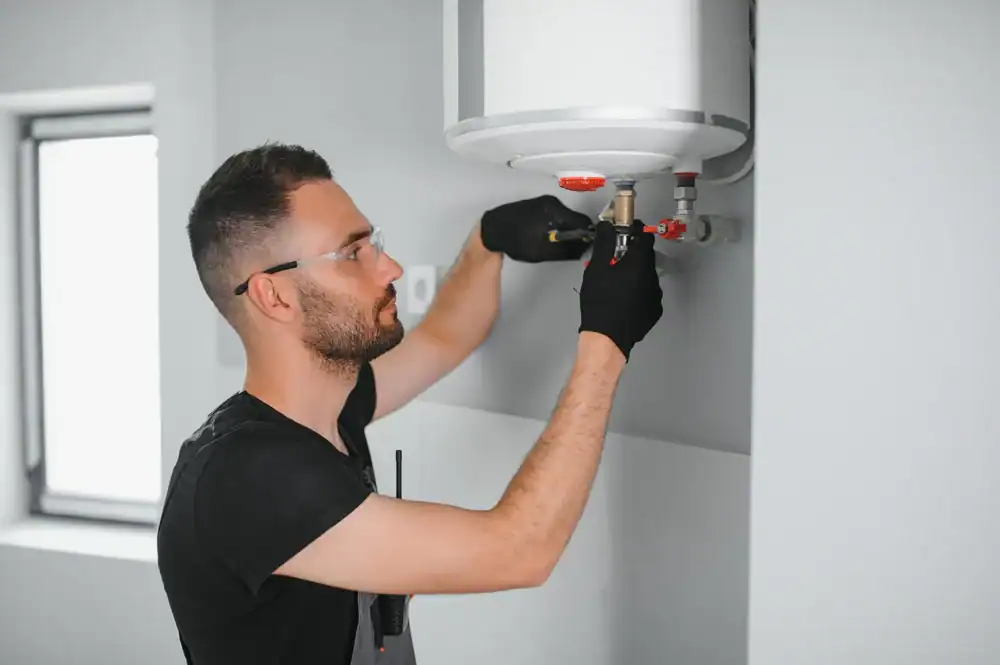
Professional tankless water heater installation in Brevard County, FL typically includes removing and disposing of your old water heater, which isn’t as simple as it sounds. That old tank weighs 150+ pounds when drained and requires proper disposal. We then mount your new tankless unit, usually on a wall, making sure it’s level, secure, and positioned for proper clearances. Gas models need venting installed or modified, which often means cutting through exterior walls and installing new termination caps. Gas lines frequently need to be upsized to deliver adequate fuel flow—that means running new pipe from your meter to the unit.
Water lines need to be connected with shutoff valves for future maintenance. Most codes require pressure relief valves and proper drainage. If you’re going from tank to tankless, we have to reconfigure your water lines since tankless units mount differently than tanks. Permits are required in Brevard County, and a licensed contractor pulls those and coordinates inspections. All of this takes time, expertise, and materials that add up fast.
Electrical work for gas models is usually minimal—just a 120V outlet for the control panel. But electric tankless installations can require running new 240V circuits from your main panel, installing multiple high-amp breakers, and upgrading your panel if it can’t handle the load. That’s electrician work, and it’s not cheap.
What separates a quality installation from a hack job: proper sizing based on your actual household demand, not just guessing. Code-compliant venting that won’t backdraft or leak combustion gases. Gas line sizing that delivers adequate pressure under full load. Electrical work that meets NEC standards. And proper testing after installation to verify performance and safety.
The contractors who charge less usually cut corners somewhere. Maybe they don’t pull permits. Maybe they undersize the gas line. Maybe they use cheaper materials that’ll fail in five years. Or maybe they’re just fast and sloppy, which means you’ll be calling someone else to fix their mistakes down the road. You’re not just paying for labor—you’re paying for expertise, accountability, and the peace of mind that comes with knowing the job was done right.
One more thing that matters: warranty protection. Most manufacturers require professional installation by a licensed contractor to honor their warranty. Try to DIY it or hire an unlicensed handyman, and you’ve just voided your warranty. When that $1,500 heat exchanger fails in year three, you’re buying a new one out of pocket.
Making the Right Choice for Your Brevard County Home
The top rated tankless water heaters all share a few things in common: they’re properly sized for the application, they’re built by manufacturers with proven track records, and they’re installed by professionals who know what they’re doing. Brand matters, but it’s not the whole story. A perfectly good Rinnai or Navien unit will underperform if it’s undersized for your household or installed incorrectly.
Start with your household’s actual hot water demand. Calculate your peak GPM needs based on simultaneous usage. Factor in Florida’s 45-degree temperature rise advantage. Then choose a unit that delivers at least that much flow rate with some cushion built in. Gas models from Rinnai, Navien, Rheem, or Noritz will handle most whole-home applications. Electric models from Stiebel Eltron or EcoSmart work well for smaller homes or point-of-use installations.
Budget for the full installation cost, not just the unit price. In Brevard County, FL, you’re typically looking at $3,200 to $5,500 all-in for a quality gas tankless installation, including permits, proper venting, gas line work, and professional labor. Electric installations can run less if your electrical panel can handle the load, but add $1,000 to $2,000 for panel upgrades if needed.
When you’re ready to move forward, we handle the entire process—from sizing recommendations based on your actual usage to installation, permitting, and any necessary electrical or gas line work. No finger-pointing between trades, no surprises on the final bill, and no cutting corners to save a few bucks. Just straightforward, professional work backed by 45+ years of experience installing tankless systems in Cocoa, FL, Rockledge, FL, Merritt Island, FL, and throughout Brevard County’s unique conditions.