Your water heater just started leaking. Water’s spreading across the floor. You need to stop it now, but you’re not sure where the shut-off valve is or how to use it without making things worse.
This isn’t the time to guess. Knowing how to shut off your heat pump water heater correctly can mean the difference between a manageable repair and thousands in water damage. It can also determine whether your insurance company covers the loss or denies your claim for failing to mitigate damage.
This guide gives you the exact steps for emergency shut-offs in Brevard County, FL homes—including the older construction common in Cocoa, Rockledge, and Merritt Island. Let’s start with understanding why your main water line matters most.
How to Find a Water Main in Older Brevard County Homes
Your main water shut-off valve controls all water entering your home. When a heat pump water heater fails, this valve becomes your first line of defense.
In Brevard County, where many homes were built before 1975, finding this valve isn’t always straightforward. Older Florida construction didn’t follow today’s standardized layouts. Your valve could be in the garage near where the water line enters, in a utility closet alongside your water heater, or even outside in a ground-level box near your property line.
Start by checking your garage or utility room. Look for a pipe coming through the wall—usually near the front of your house facing the street. The shut-off valve sits where that pipe enters or just above it. It’ll either look like a round wheel (gate valve) or a lever handle (ball valve).
Finding Hidden Main Valves in Coastal Florida Properties
Coastal properties in Merritt Island and Rockledge often have main shut-off valves buried underground. This was common practice decades ago and it makes emergency access frustrating when you need it most.
Look for a small rectangular or round metal cover in your yard, usually between your house and the street. It might be partially covered by grass or landscaping. These covers are often marked “water” but not always. If you find one, you’ll need a long screwdriver or a meter key (available at hardware stores) to lift the lid.
Inside, you’ll see your water meter and one or two valves. The valve on your side of the meter is yours to operate. Turn it clockwise until it stops. Never touch the valve on the street side of the meter—that belongs to the utility company and tampering with it is illegal.
Some older Brevard County homes have valves that haven’t been turned in decades. If yours is stuck, don’t force it with pliers or wrenches. You could crack the valve body and create a worse leak. Call a plumber instead. Forcing a corroded valve often causes more damage than the original problem.
Here’s what makes this challenging: Florida’s humidity and salty coastal air corrode metal valves faster than in drier climates. A valve that worked fine ten years ago might be seized now. That’s why you should test your main shut-off annually, just to make sure it still turns when you need it.
Shower Shut Off Valve Location and Why It Matters During Bathroom Emergencies
Most people assume every plumbing fixture has its own shut-off valve. Toilets do. Sinks do. But showers and tubs? Not usually—especially in older homes.
Building codes don’t require individual shut-off valves for showers because the plumbing runs inside walls where valves would be difficult to access. In newer construction, you might find them behind a removable access panel in an adjacent room or closet. In homes with basements or crawl spaces, the valves could be on the pipes below the bathroom, attached to the ceiling joists.
But if your Brevard County home was built before the mid-1970s, there’s a good chance your shower has no dedicated shut-off at all. That means a shower valve failure forces you to shut off the main water line to your entire house.
Why does this matter during a heat pump water heater emergency? Because many older Florida bathrooms share plumbing branches. If your water heater is in or near a bathroom, understanding which valves control which fixtures helps you isolate the problem faster. You might be able to shut off just the hot water supply instead of killing water to your whole house.
Check for access panels near your shower. They’re usually small doors or removable sections of drywall in the wall behind the shower controls or in a closet on the other side of that wall. If you find valves there, label them now so you don’t waste time searching during an emergency.
No access panel? Your shower likely ties directly into the main supply lines with no individual shut-off. In that case, knowing exactly where your main valve is becomes even more critical. You can’t afford to spend ten minutes searching for it while water floods your bathroom.
Emergency Shut-Off Steps for Heat Pump Water Heaters
Heat pump water heaters work differently than traditional tank systems. They use electricity to transfer heat from surrounding air to warm your water, which means the shut-off procedure has an extra step you can’t skip.
Before you touch any valves, cut the power. Heat pump systems can’t run dry without damaging the compressor. If you drain the tank while power’s still on, you risk burning out expensive components. Go to your electrical panel and flip the breaker labeled “Water Heater” to OFF. If it’s not labeled, shut off the main breaker to be safe.
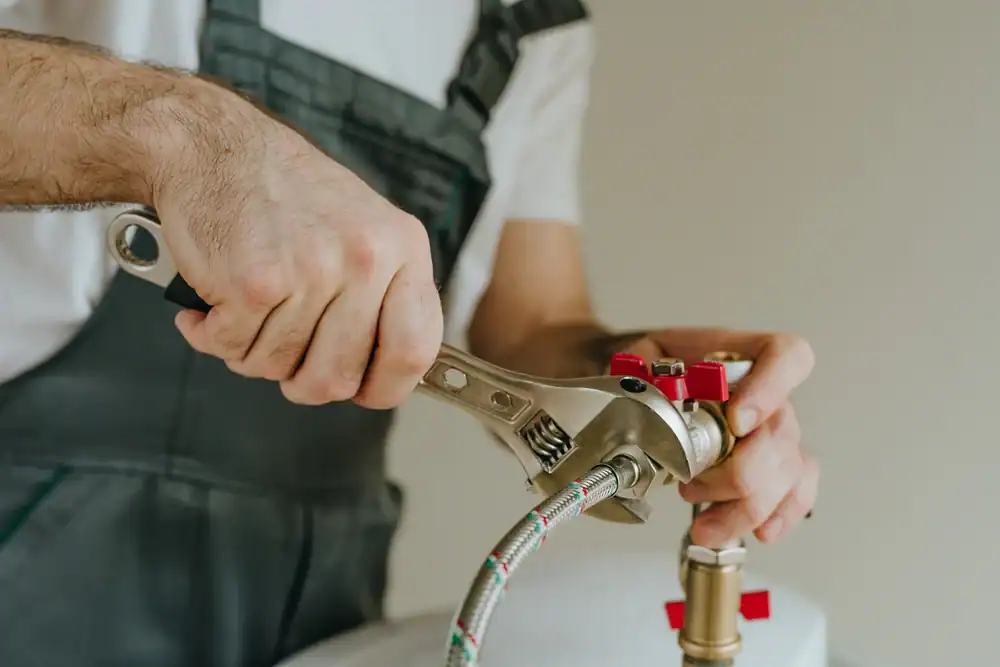
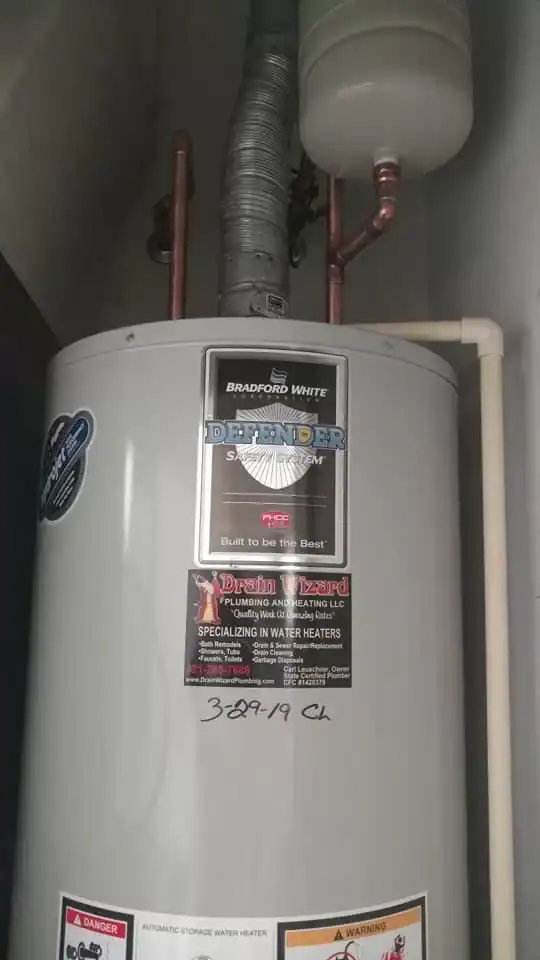
Now you can address the water supply. Look at the top of your heat pump water heater. You’ll see two pipes—one cold (usually on the right) and one hot (usually on the left). The cold water pipe should have a shut-off valve. Turn it clockwise until it stops. If it’s a lever-style ball valve, rotate it 90 degrees until the handle is perpendicular to the pipe.
What to Do When Your Heat Pump Water Heater Is Actively Leaking
An active leak changes your priorities. Your first job isn’t to diagnose the problem—it’s to stop water from destroying your property.
Cut the power at the breaker first. Water and electricity don’t mix, and you don’t want to risk shock while working around a leaking appliance. Once the power’s off, shut the cold water supply valve at the top of the unit. This stops new water from entering the tank.
But here’s the problem: if the tank itself has failed, you’ve still got 40 to 50 gallons of water inside that needs to go somewhere. If the leak is at the bottom of the tank, that water will continue draining onto your floor until the tank empties.
Grab a garden hose if you have one nearby. Attach it to the drain valve at the bottom of the water heater. Run the other end outside or to a floor drain if you have one. Open the drain valve by turning it counterclockwise. This lets you control where the water goes instead of letting it flood your utility room.
You’ll also need to break the vacuum inside the tank to get water flowing freely. Turn on a hot water faucet somewhere in your house—any sink or tub will work. This allows air into the system and speeds up the draining process.
Watch the water coming out. If it’s rusty or has sediment, your tank’s been deteriorating for a while. That’s common in Brevard County homes with older water heaters, especially if you have hard water or if the tank hasn’t been flushed regularly.
Don’t try to move a leaking water heater while it’s still full. Forty gallons of water weighs over 300 pounds. You could injure yourself or cause more damage. Drain it first, then assess whether you need professional help with removal.
Why Cast Iron Pipes in Pre-1975 Homes Complicate Emergency Shut-Offs
If your Brevard County home was built before 1975, you’re almost certainly dealing with cast iron plumbing. This matters more than you might think during a water heater emergency.
Cast iron pipes corrode from the inside out. Florida’s coastal humidity and salty air accelerate this process. After 40 or 50 years, the interior walls become rough and jagged. Shut-off valves connected to these pipes can seize up or break when you try to turn them after years of disuse.
Here’s what happens: you locate your main shut-off valve, try to turn it, and it won’t budge. Or worse, it turns partway and then cracks, creating a new leak at the valve itself. This is incredibly common in older Cocoa, Rockledge, and Merritt Island homes.
The corrosion also means your plumbing system might not be configured the way you expect. Renovations over the decades often added new fixtures without updating the shut-off valve locations. You might have a bathroom addition from the 1980s that ties into original 1960s cast iron pipes with no individual shut-offs anywhere.
This is why knowing your main water line location is non-negotiable. When individual fixture valves fail or don’t exist, the main shut-off becomes your only option. Test it now, before an emergency. Turn it all the way off, then back on. If it’s stuck or difficult to move, call a plumber to replace it before you’re standing in a flooded room trying to make it work.
Cast iron replacement is one of the most common plumbing projects in older Brevard County homes. If you’re dealing with frequent plumbing issues, corroded pipes might be the root cause. But during an active emergency, your only goal is stopping the water. Pipe replacement can wait until after you’ve contained the damage.
Protecting Your Home and Your Insurance Coverage
Knowing how to shut off your heat pump water heater quickly does more than prevent property damage. It protects your insurance coverage.
Water damage claims get denied when insurance companies determine you failed to mitigate the loss. If you can’t show that you shut off the water supply promptly, they might argue the damage was preventable and refuse to pay. That’s why documenting your shut-off valve locations now—before an emergency—matters.
Take photos of your main water shut-off, your water heater valves, and any other shut-offs you locate. Note their positions in a document you can access quickly. Share this information with everyone in your household. During an emergency, you might not be home, and someone else might need to stop the water.
If you’re dealing with an active water heater failure right now, or if you’ve just shut off your water and need professional help, we serve all of Brevard County. We handle everything from emergency shut-offs to complete water heater replacement, plus all the tile, drywall, and paint work that water damage requires. No coordinating multiple contractors. No finger-pointing about who’s responsible for what. Just one call to handle the entire problem from start to finish.