Most homeowners don’t think about what’s running under their floors until something goes wrong. A slow drain here, a smell you can’t quite locate, a backup that the plumber snaked and called fixed — until it happened again. If your home in Cocoa, FL, Merritt Island, FL, Melbourne, FL, or anywhere else on the Space Coast was built before 1975, there’s a good chance your original cast iron drain pipes are still down there. And there’s an equally good chance they’re failing in ways you can’t see.
Here’s what’s actually happening, why Brevard County homes are especially vulnerable, and what replacing cast iron pipe with PVC actually involves.
How to Change Cast Iron Pipe to PVC: What the Process Actually Looks Like
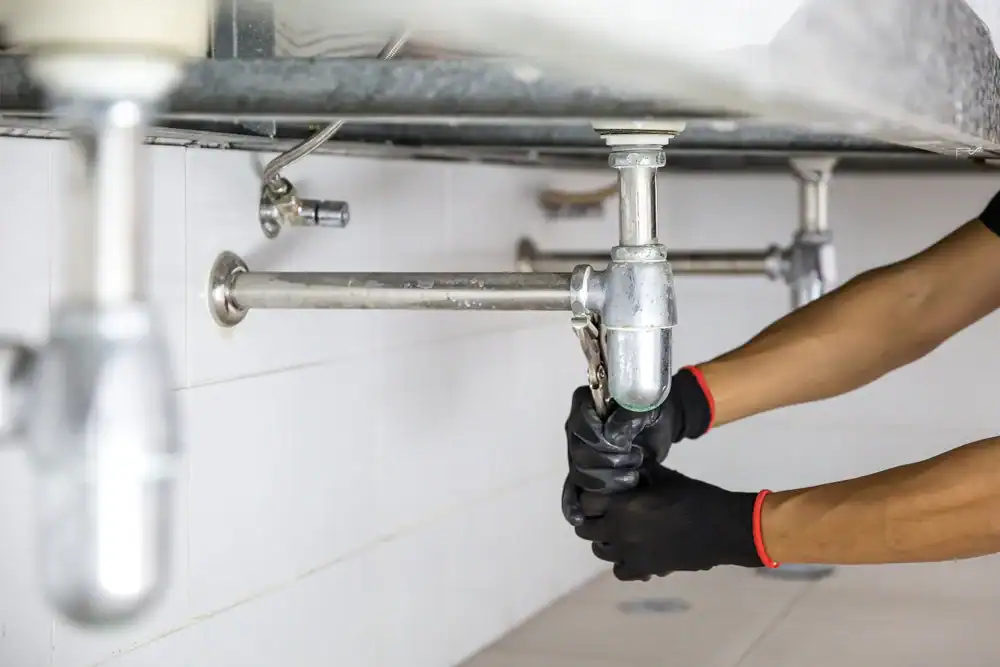
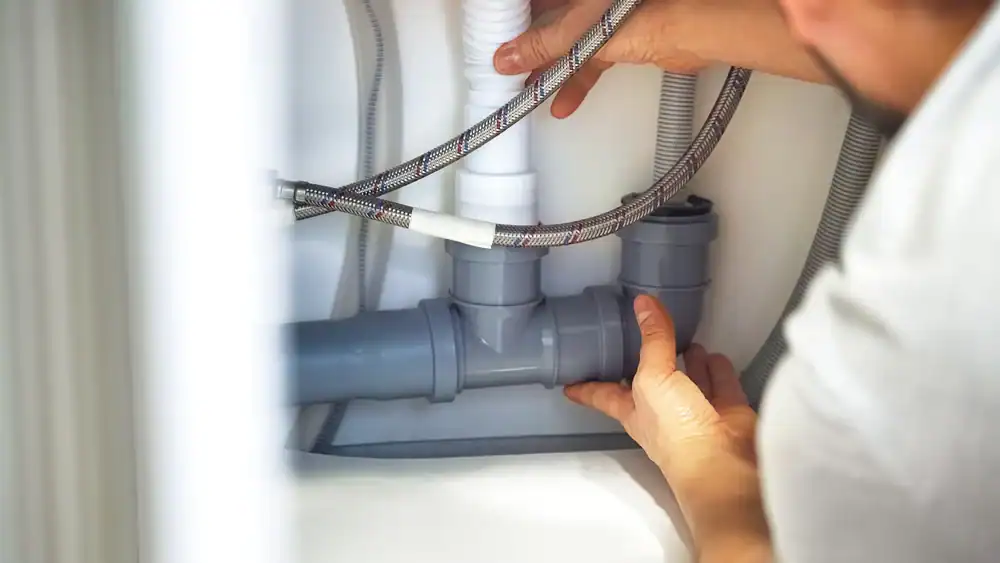
The process starts with a licensed plumber inspecting your existing drain system with a camera, mapping out which sections need replacement, pulling the required Brevard County permit, removing the cast iron, and installing Schedule 40 PVC — the industry standard for residential drain lines in Florida.
Where new PVC connects to any remaining cast iron, we use rubber couplings with stainless steel clamps (called Fernco fittings) to make the transition watertight and code-compliant.
What most homeowners don’t realize is how much the camera inspection shapes the entire project. Without it, a contractor is guessing. With it, you know exactly which sections are compromised, which ones can wait, and whether a targeted repair makes more sense than full replacement. That distinction matters — both for your budget and for your peace of mind.
Cast Iron Piping Replacement: Why Brevard County’s Environment Changes the Math
In a dry climate, cast iron drain pipes can last close to 100 years. That’s the number the manufacturers cite, and in the right conditions, it holds up. Brevard County is not the right conditions.
The problem is a chemical process called microbially induced corrosion, or MIC. Inside your drain pipes, organic waste produces hydrogen sulfide gas. That gas reacts with moisture — and Brevard County has plenty of it — to form sulfuric acid, which then eats away at the interior lining of the pipe. The damage starts at the top of the pipe and works its way down. From the outside, the pipe looks completely intact. From the inside, it’s being hollowed out.
This is why a standard home inspection won’t catch it — the inspector can see the pipe, but not what’s happening inside it.
In Brevard County, this process runs faster than the Florida average. Homes along the Indian River Lagoon and the Atlantic coast deal with salt-laden air that accelerates external corrosion on top of the internal MIC process. The sandy coastal soil shifts more than inland clay, putting additional stress on pipe joints that are already weakened. And the county’s humidity — averaging above 70% year-round — keeps the conditions inside the pipe consistently wet, which is exactly what the corrosion process needs to keep going.
The result: cast iron pipes in Brevard County homes that were supposed to last 75 to 100 years have been failing in 25 to 40. An estimated 2.5 million Florida homes are dealing with this. And a large share of them are right here on the Space Coast, because of a very specific chapter in Brevard County’s history.
When NASA’s Apollo program drove a construction boom across the county in the 1960s, thousands of homes went up in Cocoa, FL, Rockledge, FL, Merritt Island, FL, Melbourne, FL, and Titusville, FL to house aerospace workers and their families. Those homes were built fast, built well for their era, and built with cast iron drain pipes — because that was the standard until 1975, when the industry switched to PVC.
That cohort of homes is now 50 to 65 years old. The pipes are at or past the end of their service life in Brevard County’s conditions, and many are in active failure right now.
Cast Iron Drain Replacement: Repair vs. Full Replacement — How to Know Which One You Need
This is the question we get most often, and it deserves a straight answer. If the damage is limited to one section of pipe and the rest of the system is in reasonable shape, a targeted repair can absolutely make sense. Cutting out a two-foot section of compromised pipe and replacing it with PVC is a legitimate fix when the problem is genuinely localized.
But here’s the reality for most Brevard County homes built before 1975: the damage is rarely just in one spot. MIC doesn’t attack a single section and stop — it progresses throughout the system wherever the conditions are right, which in Brevard County means most of it. A camera inspection typically reveals that what looked like one problem area is actually several, spread across the drain, waste, and vent system running under the slab.
The other factor is what happens when you repair a section of a failing system. You’ve fixed the spot you could see. The rest of the pipe continues corroding. Six months later, you’re calling again — and the cost of multiple repairs over two or three years often ends up exceeding what full replacement would have cost upfront, without the disruption and frustration that comes with repeated service calls.
Full cast iron drain replacement also has documentation value that a patch repair doesn’t. When we complete a full replacement, you get the camera inspection report showing what we found and what we replaced, plus the permit close-out documentation from Brevard County. That paperwork matters when you sell your home, when you refinance, and if you ever need to file an insurance claim related to plumbing.
A repair receipt for a single section doesn’t tell the next buyer — or your insurance carrier — nearly as much.
For homes in Cocoa Beach, FL, Cape Canaveral, FL, or anywhere along the barrier island where salt air exposure is highest, we lean toward recommending full replacement more often than not. The environmental conditions there are aggressive enough that a partial fix tends to buy less time than it would in a less corrosive environment.
Cast Iron Pipe Inspection: What We Look For and Why It Comes First
Every cast iron job we take on starts with a camera inspection — no exceptions. A plumber who quotes a cast iron replacement without one is either guessing at the scope or defaulting to full replacement regardless of what the pipe actually looks like. Neither approach serves you well.
The camera goes into the drain line and gives us a live view of what’s happening inside the pipe. We’re looking for channeling — where the bottom of the pipe has been eaten away by corrosive buildup — as well as cracks, joint separations, root intrusion, and sections where the pipe has collapsed or shifted. What we find determines the scope of the project, and we show you the footage so you’re not just taking our word for it.
What Does a Cast Iron Pipe Inspection Actually Show?
The most common finding in Brevard County homes is channeling along the bottom of the pipe — a smooth, worn groove where decades of corrosive waste flow have eaten through the cast iron. In moderate cases, the pipe is still structurally present but significantly thinner than it should be. In advanced cases, the bottom of the pipe is gone entirely, and waste is flowing directly onto the soil beneath your slab.
Cracks and joint failures are the next most common finding. Cast iron pipe sections are connected at joints, and those joints are often the first place corrosion takes hold. A failed joint doesn’t just leak — it allows soil to infiltrate the pipe, which causes blockages and can accelerate the collapse of the surrounding section.
Root intrusion shows up frequently in older Brevard County neighborhoods where mature trees have had decades to grow toward the moisture around drain lines. Roots don’t care that the pipe is cast iron — they find the joints and work their way in, and once they’re established, snaking provides temporary relief at best.
The camera also helps us identify where the cast iron ends and newer pipe materials begin — because many homes have had partial repairs over the years that left a patchwork of materials under the slab. Knowing exactly what’s down there before we start means we can give you an accurate written estimate with no surprises when the job is done.
After the inspection, you get a copy of the report. Not a verbal summary — the actual documentation. If you’re planning to sell your home in Palm Bay, FL, Viera, FL, or anywhere else in Brevard County, that report is something a buyer’s agent will ask about, and having it ready builds confidence in the transaction.
Do I Need a Permit to Replace Cast Iron Pipes in Brevard County?
Yes — and your contractor should be the one pulling it, not you. Brevard County requires a plumbing permit for cast iron pipe replacement, and the county’s BASS system (Brevard’s Advanced Service Site) allows licensed contractors to apply online, upload documents, schedule inspections, and pay fees around the clock.
If a contractor asks you to pull your own permit as an owner-builder, that’s a red flag. It shifts the legal responsibility for code compliance onto you, and it means the work won’t be covered under a licensed contractor’s accountability.
We hold Florida State Certified Master Plumber license CFC1428379 — a statewide certification that allows us to work anywhere in Florida, not just in a single jurisdiction. Every cast iron replacement we do in Brevard County goes through the proper permit process, gets inspected, and closes out with documentation you can keep on file.
This matters more than most homeowners realize. Florida’s property insurance market has been in significant upheaval, with carriers non-renewing policies or excluding coverage specifically for homes with cast iron pipes. If you replace your pipes without a permit and something goes wrong later, your insurance carrier has grounds to deny the claim. Permitted, inspected work protects you — at the time of the repair and long after.
Some lenders have also started scrutinizing cast iron pipe issues during home purchase transactions. A home with documented, permitted cast iron replacement is a cleaner asset than one with a question mark under the slab. If you’re thinking about selling your home in Rockledge, FL, Titusville, FL, Melbourne, FL, or elsewhere in Brevard County in the next few years, getting the work done now — with the paperwork to show for it — is worth considering before a buyer’s inspector raises the issue at the negotiating table.
Should You Replace Your Cast Iron Pipes? Here’s the Honest Answer
If your Brevard County home was built before 1975 and still has original cast iron drain pipes, the question isn’t really whether they’ll fail — it’s whether you’ll know about it before they do. The corrosion process that’s been running under your slab for decades doesn’t announce itself until the damage is significant enough to cause a backup, a leak, or worse.
The good news is that a camera inspection gives you an actual answer instead of a guess. You see what’s there. You understand the scope. And you make the call from a position of information, not anxiety.
If you’re in Cocoa, FL, Merritt Island, FL, Rockledge, FL, Melbourne, FL, or anywhere else on the Space Coast and you’ve been wondering whether your pipes are a problem, Drain Wizard Plumbing & Rooter Service is the place to start. We’ve been doing this work in Brevard County since 2007, and we’ll tell you what you actually need — not what makes the biggest job.