You’re planning a bathroom remodel. Maybe it’s long overdue. Maybe a slow drain finally pushed you over the edge. Either way, you’ve got a vision for what the finished space should look like — and a budget you’re trying to protect.
Here’s what a lot of Brevard County homeowners don’t find out until demo day: the plumbing behind the walls and under the floor has a story of its own. In a home built before 1985, that story often involves cast iron pipes that are well past their prime.
This isn’t meant to scare you off the project. It’s meant to help you walk in prepared — so nothing that gets uncovered comes as a surprise.
What a Clogged Bathroom Drain Is Really Telling You
A slow or clogged bathroom drain feels like a minor annoyance. Snake it, clear it, move on. But if the problem keeps coming back — if no amount of drain cleaning seems to stick — that’s usually not a maintenance issue. That’s a diagnostic signal.
In older Brevard County homes, recurring drain problems often trace back to cast iron pipe that’s corroding from the inside out. Florida’s soil is high in moisture and acidity, and hydrogen sulfide gas generated by organic matter in the ground reacts with moisture inside the pipe to form sulfuric acid. Over time, that eats through cast iron in ways you can’t see from the outside and can’t fix with a drain snake.
How Do You Know If Your Cast Iron Pipes Are Failing?
Cast iron comes in varying grades, and its deteriorated condition isn’t always obvious from the surface. A pipe can look intact and still be severely compromised inside — scaled with buildup, cracked along joints, or partially collapsed in sections you’d never see without looking directly into it.
The only reliable way to know what you’re actually dealing with is a camera inspection. Running a camera through the drain line before any remodel work begins gives you a clear picture of exactly where the problems are, how far they’ve spread, and whether you’re looking at a targeted repair or a full replacement.
This matters especially in Brevard County, where the Space Coast construction boom of the late 1950s through the 1980s produced tens of thousands of slab-foundation homes with original cast iron drain-waste-vent systems. Those systems are now 40 to 65 years old. Many of them are on borrowed time. If your home is in Cocoa, Merritt Island, Rockledge, Titusville, or Melbourne, there’s a reasonable chance your cast iron is already showing signs of failure, whether or not you’ve noticed symptoms yet.
A camera inspection before demo day is the single most effective thing you can do to protect your remodel budget. When we know what’s behind the walls before the first tile comes off, we can give you an honest scope and a real number. No mid-project surprises, no pressure to make fast decisions with a contractor already on-site.
Skipping the inspection and hoping for the best is how homeowners end up getting hit with unexpected change orders after the floor is already open and they have no leverage left to push back.
When Is the Right Time to Replace Cast Iron Drain Pipe With PVC?
The short answer: during the remodel, if the pipe warrants it. Not after.
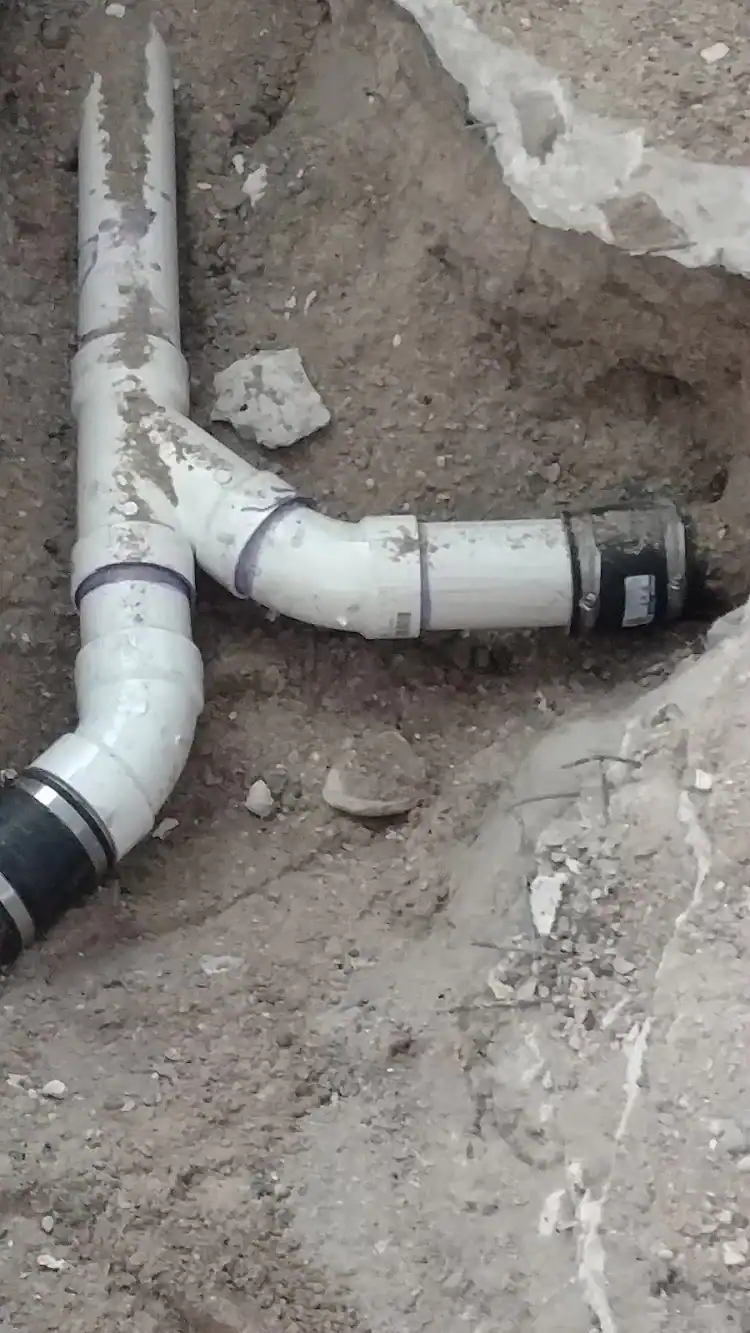
Replacing cast iron drain pipe with PVC as a standalone project — once your bathroom is already finished — means tearing out tile, cutting through the slab, and refinishing everything you just paid to have done. Doing the same work while the floor is already open and the walls are already exposed is a fundamentally different job. The access is there. The disruption is already built into the timeline. The cost difference is significant.
PVC has become the modern standard for drain and waste lines for good reason. It doesn’t corrode. Its smooth interior walls don’t accumulate the buildup that cast iron does. It handles Florida’s humidity and soil conditions without degrading the way cast iron does over decades. And it’s built to last — not a patch on a failing system, but a clean replacement that ends the problem rather than delaying it.
For supply lines, we use PEX tubing, which is now the go-to material. It’s flexible, runs through walls with fewer fittings and joints than rigid copper, resists the corrosion that Florida’s mineral-heavy water causes in older copper systems, and is color-coded — red for hot, blue for cold — which makes future serviceability straightforward.
The conversation about whether to replace cast iron pipe during a remodel isn’t really about whether the pipe is failing right now. It’s about whether you want to pay for access once or twice. If the camera inspection shows deterioration — and in pre-1985 Brevard County homes, it often does — replacing the drain system while the floor is open is almost always the more cost-effective decision. Waiting until a failure forces the issue is how a planned remodel turns into an emergency repair.
Replace Cast Iron Drain Pipe With PVC: What the Process Looks Like
Understanding what actually happens during a cast iron drain replacement helps set realistic expectations for the remodel timeline and scope.
After the camera inspection confirms the extent of the problem, we remove the old cast iron section by section. In a slab-foundation home — which describes the vast majority of Brevard County properties — that means cutting through the concrete to access the drain lines running underneath. We then set new PVC pipe at the correct slope, connect it to the existing drain network, and patch the slab before the floor finish goes down. The work is done before tile, before fixtures, before any of the finish elements that make a bathroom look finished.
Pipe Bursting for Sewer Line Replacement: Is It Right for Your Home?
When the problem extends beyond the bathroom drain and into the main sewer line, homeowners in Brevard County have options beyond traditional open-cut excavation. Pipe bursting is one of them — and for many slab-foundation homes, it’s the most practical choice.
Here’s how it works: a specialized head is pulled through the deteriorated pipe, fracturing the old pipe outward into the surrounding soil while simultaneously pulling a new pipe into position behind it. The result is a fully replaced sewer line with minimal surface disruption. No trenching across the yard, no destroyed landscaping, no tearing up a driveway or walkway to access the line.
For Brevard County homeowners specifically, this matters. Slab foundations mean sewer lines run under concrete. Coastal properties near the Indian River Lagoon have high groundwater tables that complicate traditional excavation. And many homes in Cocoa, Merritt Island, and Rockledge have mature landscaping and established yards that homeowners understandably don’t want torn apart for a sewer repair.
Pipe bursting isn’t the right solution in every situation — if the existing pipe has already collapsed completely or shifted significantly out of alignment, traditional replacement methods may be necessary. But for a deteriorated sewer line that’s still structurally present, it’s worth having the conversation before defaulting to a full dig.
We assess the sewer line the same way we assess the drain: with a camera. Running the camera through the sewer line before recommending any repair or replacement approach is standard practice, and it’s the only way to make an informed recommendation rather than a guess.
Why One Contractor for Both Plumbing and Remodeling Changes the Whole Project
The typical approach to a bathroom remodel is to hire a general contractor for the overall project and bring in a separate plumber for the rough-in work. It’s common. It also creates more problems than most homeowners anticipate.
When two contractors are working the same job, scheduling gaps open up. The plumber can’t start until the general contractor has finished demo. The general contractor can’t finish until the plumber is done. If something goes wrong after the tile is down — a leak, a drain that wasn’t pitched correctly, a vent that wasn’t properly run — both contractors have someone else to point at. The homeowner ends up in the middle of an accountability dispute on a job they’ve already paid for.
Working with us for both the plumbing and the remodel eliminates that dynamic entirely. There’s one scope, one timeline, one person responsible for the finished result. When we assess the pipe condition before demo and handle the replacement ourselves, we know exactly what went in, how it was installed, and what it’s connected to. That continuity matters — especially in older Brevard County homes where what’s behind the walls isn’t always what the original plans say it should be.
There’s also a practical advantage during the planning phase. We can tell you during the initial walkthrough whether your planned fixture locations are going to require significant drain relocation, whether your existing vent stack can support the new layout, and whether the tile you’re planning to use is compatible with the drain configuration you want. That kind of integrated thinking at the front end of a project prevents expensive changes in the middle of it.
Florida law requires a licensed plumbing contractor to perform and permit all plumbing work — a general contractor’s license doesn’t cover it. We hold Florida Certified Plumbing Contractor License #CFC1428379, which is publicly verifiable through the state’s DBPR database. Every plumbing modification we make is permitted and inspected to Florida Building Code standards.
Getting Started With Plumbing Repair Services for Your Brevard County Bathroom Remodel
If you’re planning a bathroom remodel in Brevard County — especially in a home built before 1985 — the most useful thing you can do before committing to any contractor is get a camera inspection of your drain system. Not after the floor comes up. Before. It costs far less than a mid-project surprise, and it gives you the information you need to plan the job honestly.
The plumbing repair services that come up during a remodel aren’t always predictable, but they’re rarely undetectable. Cast iron pipe failure in Florida follows a pattern, and the homes most at risk are the ones that have been here the longest — which describes a significant portion of Cocoa, Merritt Island, Rockledge, and the surrounding Space Coast communities we’ve been working in since 2007.
If you want to talk through what a bathroom remodel might involve for your specific home, we’re happy to take a look before you commit to anything. We’ll tell you what we find, explain your options clearly, and give you a straight answer — not a sales pitch.