If you’ve started researching repipe costs online, you’ve probably noticed that the numbers don’t quite add up. National averages sound manageable — until you get an actual quote and realize the gap between what you read and what you’re being charged is significant. That’s not a coincidence, and it’s not a contractor trying to take advantage of you. Brevard County has specific conditions that affect what repiping costs here, and most cost guides don’t account for any of them.
We’ll walk through what drives repipe pricing in this market, what cast iron replacement actually involves, and what sewer line work costs when that’s part of the picture too. By the end, you’ll have a realistic sense of what your home needs and what it should cost.
What Does It Cost to Repipe a House in Brevard County?
For a standard two-bathroom home in Melbourne, Palm Bay, or Cocoa, repiping with PEX typically runs between $6,000 and $9,000. Choose copper instead, and that range climbs to $10,000–$15,000 or more. Those figures reflect local market conditions — not the $7,500 national average you’ll find on Angi or HomeAdvisor, which doesn’t account for what it actually takes to do this work in Brevard County.
The biggest local cost driver is something most homeowners don’t think about until they get a quote: the slab. The vast majority of homes in this county sit on concrete slab foundations — no crawl space, no basement. When pipes run under that slab, rerouting them through walls, ceilings, and attics adds roughly 35% to the total project cost. That’s not padding — it’s the reality of how these homes were built.
Labor consistently accounts for about 70% of any repipe project. Materials matter, but the skill, time, and coordination involved in doing the job cleanly — without unnecessary damage to your walls or floors — is where the real cost lives.
Why Brevard County Repipe Costs Run Higher Than the National Average
Brevard County’s environment is genuinely hard on plumbing. The combination of coastal salt air, high humidity, acidic groundwater, and hydrogen sulfide produced by organic waste creates a four-way attack on cast iron pipes that accelerates corrosion well beyond what you’d see in a drier, inland climate. Cast iron was the standard for homes built before 1975, and under ideal conditions, it can last 75 years. In Brevard County, it often fails in 25 to 40.
That matters for cost because it changes the scope of the job. A home in Rockledge or Merritt Island that was built during the space program’s residential building boom — the 1950s through the early 1970s — may have original cast iron that looks structurally intact from the outside but is actively corroding from within. Hydrogen sulfide from waste converts to sulfuric acid inside the pipe, and it eats the metal quietly, invisibly, until something gives. By the time you’re seeing symptoms — slow drains, foul odors, backups — the damage is usually widespread.
Merritt Island sits between the Banana River and the Indian River Lagoon, which means groundwater salinity there runs even higher than in other parts of the county. Homes along US-1 through Cocoa and Rockledge face similar conditions. If your home is in one of these communities and was built before 1975, the cast iron question isn’t really “if” — it’s “when.”
We always recommend a camera inspection before recommending any scope of work. There’s no reason to quote a full repipe if targeted repairs are still viable, and there’s no reason to do targeted repairs on a system that’s failing across the board. The camera tells us what’s actually there, and that drives the honest recommendation — not a default toward the more expensive option.
Florida’s permitting requirements add another layer that national cost guides ignore entirely. Brevard County requires permits for all residential plumbing pipe installation and replacement work, reviewed through the county’s permitting system. Pulling permits, coordinating with county staff, and scheduling inspections takes time and expertise. We handle all of that — you don’t have to manage it — but it’s real work that affects project timelines and is part of what separates a properly documented job from one that creates problems at resale.
PEX vs. Copper: Which Makes More Sense for Your Brevard County Home?
The material you choose for a repipe affects both the upfront cost and the long-term outcome. PEX is the most common choice for whole-house repiping in Florida, and for good reason. It’s flexible, which makes it easier to route through walls and around the structural realities of slab-foundation homes. It resists corrosion — including the kind of salt and acid exposure that destroys cast iron in Brevard County’s environment. And it costs significantly less than copper: a comparable PEX repipe typically runs 40–60% less than the same job done in copper.
Copper has a longer proven track record and some homeowners prefer it, particularly in higher-end properties where resale value is a priority. But in a coastal Florida environment, copper isn’t immune to corrosion either — especially in areas with high groundwater salinity. PEX, when properly installed, carries a lifespan of 40–50 years and holds up well in Brevard County’s conditions.
In the Florida real estate market, a certified PEX repipe with proper permits and inspections is a documented selling point. If you’re planning to sell in the next few years, a completed repipe can ease the inspection process and make it easier for buyers to secure homeowners insurance — which has become a real issue in this state. Some Florida insurers have started canceling or declining to write policies on homes with aging cast iron or galvanized pipes. If you’ve received a non-renewal notice tied to your plumbing, a repipe isn’t just a maintenance decision anymore — it’s a coverage decision.
The right material choice depends on your home, your timeline, and your goals. That’s a conversation worth having before anyone starts cutting into walls.
Cast Iron Plumbing Replacement Cost in Brevard County
Replacing cast iron plumbing is a different conversation from repiping the water supply system. Cast iron handles the drain and waste side — what goes out of your home — and it fails differently than supply pipes. The corrosion mechanism is internal: sulfuric acid from waste gases eats the pipe from the inside, leaving the outer shell looking intact while the interior deteriorates. You often won’t know how bad it is until you run a camera through it.
For a 30-foot run of cast iron with labor, replacement typically costs between $375 and $900. Full under-slab cast iron sewer pipe replacement — the kind that requires excavation or rerouting — can run $10,000 to $30,000 or more depending on access, scope, and the specific conditions under your foundation. Trenchless pipe lining, where a new liner is inserted and cured inside the existing pipe without excavation, runs $125–$175 per linear foot and is often a viable alternative when the pipe structure is still sound enough to hold a liner.
Average Cost of Sewer Line Replacement in Brevard County
Sewer line replacement and repiping are two different projects, and it’s worth being clear about the distinction. Repiping addresses your water supply system — the clean water coming into your home. Sewer line replacement addresses the drain and waste system — the wastewater leaving it. In a pre-1975 home in Brevard County, both systems may be original, and both may need attention. But they’re separate scopes with separate costs.
Nationally, the average cost to replace a sewer line runs around $3,320, with most homeowners paying somewhere between $1,390 and $5,320. The national average for a complete replacement is approximately $150 per linear foot. Trenchless replacement, which avoids excavation by pulling a new pipe through the old one or relining the existing pipe, runs $60–$250 per linear foot depending on method and conditions. Traditional excavation runs $50–$200 per linear foot. The method that makes sense depends on what the camera inspection reveals about pipe condition, depth, and access.
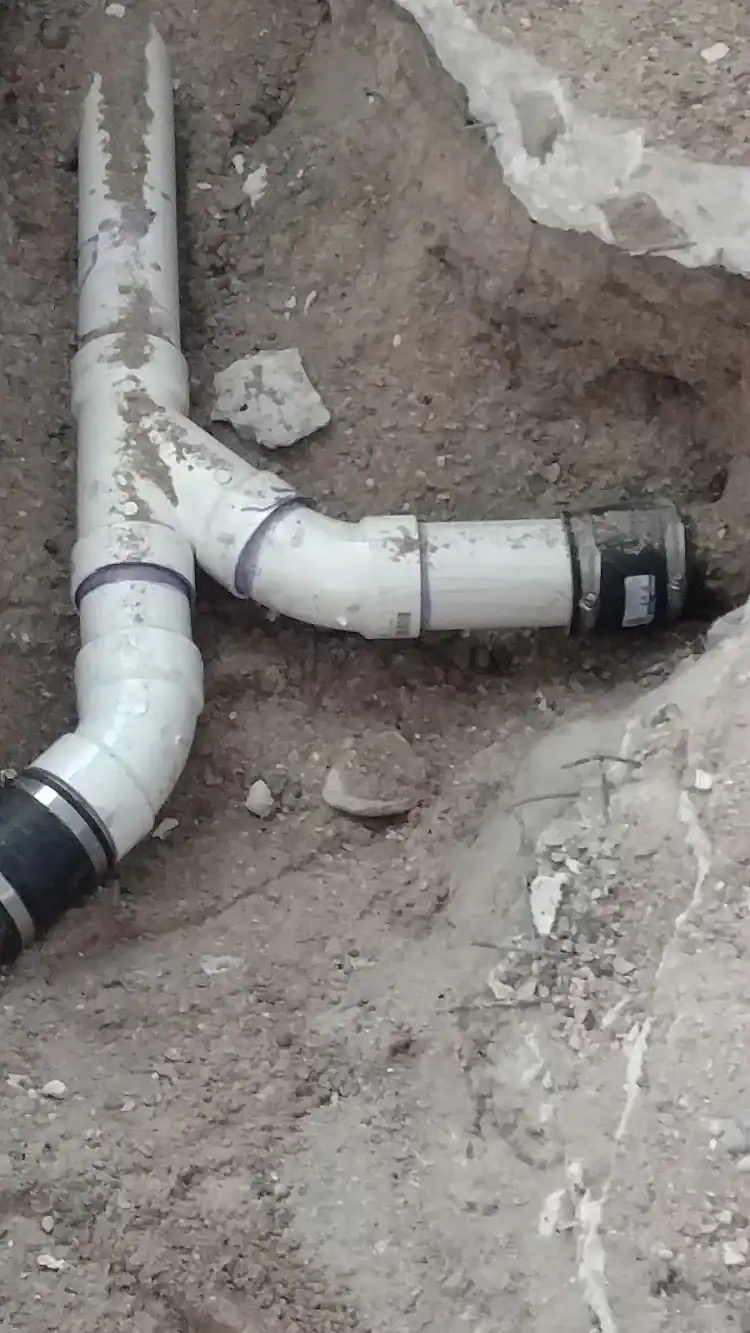
In Brevard County specifically, slab foundations complicate sewer line access in the same way they complicate supply repiping. Getting to pipes that run under a concrete slab requires either excavation — which means cutting into the slab and digging — or rerouting the line overhead through walls and the attic. Both add cost and time compared to homes with crawl spaces or basements. The right approach depends on the specific layout of your home and the condition of the existing pipe, which is exactly why a camera inspection matters before any scope is committed to.
PVC is the standard replacement material for sewer lines today. At approximately $4.50 per linear foot for material, it’s dramatically less expensive than cast iron at $50 per linear foot — and it doesn’t corrode. A properly installed PVC sewer line in a Brevard County home should last 50 years or more without the internal corrosion issues that make cast iron a recurring problem in this environment.
Sewer Lateral Repair Cost: Who Owns It and What It Costs to Fix
One of the most common misconceptions we run into is the assumption that the city or county is responsible for the sewer line. The city owns the main sewer line that runs under the street. The pipe that connects your home to that main — called the sewer lateral — is yours. You own it, you’re responsible for it, and you pay to repair or replace it. That’s true even if the lateral runs under a public sidewalk or partially beneath the street before it connects to the main.
This surprises a lot of homeowners, especially when they’re dealing with a backup or a slow drain and assume the problem is on the city’s side of the connection. In most cases, it isn’t. The lateral is private property, and its condition is entirely the homeowner’s responsibility.
For minor spot repairs on a sewer lateral — a targeted fix at a specific point of failure — costs can be relatively contained. But full lateral replacement for an average 50-foot line runs $4,000 to $10,000 or more, depending on depth, access, and the method used. In communities like Cocoa, Rockledge, and Titusville, where homes were built during the space program era and laterals have been in the ground for 50–70 years, full replacement is more common than a simple repair. The pipe has simply reached the end of its service life.
The value of catching lateral problems early — before a full failure — is significant. A camera inspection can identify cracks, root intrusion, and internal corrosion at a stage when trenchless repair or lining may still be an option. Once the pipe collapses or a major blockage causes sewage to back up into the home, the scope and cost of the repair expands considerably. Florida’s vegetation, particularly the root systems of mature trees common in older Brevard County neighborhoods, is a frequent contributor to lateral failure — roots find their way into joints and cracks and accelerate the damage over time.
If you’re in a pre-1975 home anywhere along the US-1 corridor through Cocoa and Rockledge, or in the older neighborhoods of Merritt Island or Titusville, the lateral is worth inspecting even if you haven’t seen symptoms yet. The time to find a problem is before it becomes an emergency.
Getting an Honest Repipe Estimate in Brevard County
The cost to repipe a house in Brevard County depends on factors that national averages simply don’t capture — your foundation type, your pipe material, the scope of what’s actually failing, and what the camera inspection reveals before anyone starts the work. A fair, accurate estimate starts with an honest look at what’s there.
What you should expect from any repipe contractor worth hiring: a camera inspection before a recommendation, an itemized quote that breaks down materials, labor, and permits separately, and a clear explanation of why the scope is what it is. If a plumber is recommending full replacement without looking first, or quoting a lump sum with no breakdown, those are signals worth paying attention to.
We’ve been working in Brevard County since 2007, and our owner is on every job — not a subcontracted crew, not a call center dispatch. If you’re trying to figure out what your home actually needs and what it’s going to cost, reach out to Drain Wizard Plumbing & Rooter Service and we’ll start with the inspection, not the invoice.