Most homeowners don’t think about their sewer line until something goes wrong. Then the drain backs up, or there’s an unexplained wet spot in the yard, or a plumber runs a camera and shows you footage that makes your stomach drop. Suddenly you’re researching options you’ve never heard of, trying to figure out if trenchless sewer replacement is real, if it applies to your situation, and whether the quote you’re looking at is reasonable.
We give you straight answers. What trenchless actually means, how the two methods differ, what disqualifies a pipe, and what Brevard County homeowners specifically need to know before making any decisions.
Trenchless Sewer Pipe Repair: The Two Methods Explained
“Trenchless” isn’t a single technique — it’s a category. There are two distinct methods, and which one we recommend should depend on what the camera inspection actually shows, not on what’s easier to sell.
The first method is CIPP lining, short for cured-in-place pipe. The second is pipe bursting. They solve similar problems through very different means, and understanding the difference helps you ask better questions when you’re getting estimates.
What Is CIPP Lining and How Does It Work?
CIPP lining works by inserting a resin-saturated liner into your existing pipe and then curing it in place — either with hot water, steam, or UV light, depending on the equipment being used. Once cured, that liner hardens into a new pipe inside your old one. The host pipe stays in the ground. You’re essentially creating a smooth, sealed tube within the deteriorated original.
This method works well when the existing pipe is cracked, corroded, or suffering from root intrusion but still has enough structural integrity to hold the liner during installation. The entry and exit points are small — usually just a cleanout access or a minimal dig at each end. There’s no trench running the length of your yard.
The finished liner is rated for a minimum 50-year service life under NASSCO standards, assuming it’s properly designed, installed, and tested. That’s not a patch — that’s a new pipe. The smooth interior surface actually improves flow compared to a corroded cast iron line that’s been accumulating buildup for decades.
One thing worth understanding: the liner slightly reduces the internal diameter of the pipe. In most residential applications, this doesn’t affect function. But it’s worth knowing, especially on older lines where diameter is already a factor.
What Is Pipe Bursting and When Is It Used Instead?
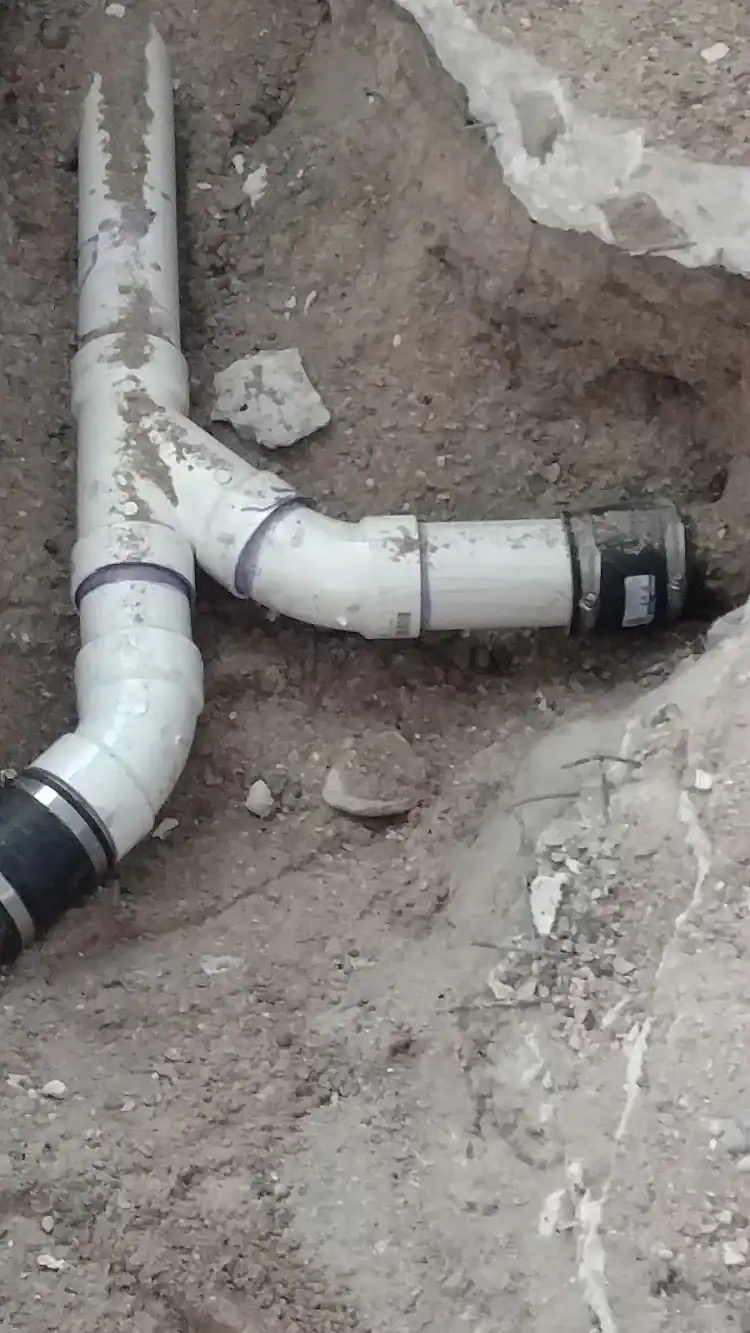
Pipe bursting takes a different approach. Instead of lining the inside of the old pipe, it destroys the old pipe entirely and pulls a new one through in the same motion. A bursting head is fed through the existing line and pulled forward, fracturing the old pipe outward into the surrounding soil while simultaneously drawing a new pipe in behind it.
The replacement pipe used in pipe bursting is HDPE — high-density polyethylene — heat-fused into one continuous length with no joints. No joints means no weak points where roots can find their way back in later. HDPE is engineered to resist corrosion for 50 years or more, which makes it a strong long-term solution for the kind of deteriorated cast iron lines common in Brevard County’s older neighborhoods.
Pipe bursting is typically chosen when the existing pipe is too far deteriorated to support a liner, or when the pipe material itself needs to be fully replaced rather than rehabilitated. It requires small access pits at each end of the run — not a full trench, but more excavation than CIPP in most cases.
The key distinction between the two methods comes down to what the camera shows. If the pipe has structural integrity but is cracked or corroded, lining is often the right call. If the pipe is collapsing or the material is compromised beyond rehabilitation, bursting replaces it entirely. A plumber who recommends one method without running a camera first is guessing — and that’s worth paying attention to.
When Should You Replace a Sewer Line — and Does Your Pipe Qualify for Trenchless?
This is the question most homeowners actually need answered, and it’s the one that gets glossed over most often. Trenchless methods are genuinely effective — but they’re not a universal solution, and a contractor who tells you otherwise isn’t being straight with you.
The honest answer is that whether your pipe qualifies depends entirely on what a camera inspection reveals. No camera, no honest recommendation. If you’re getting quotes without anyone offering to look at the pipe first, that’s a problem.
Sewage Line Replacement: When Trenchless Won’t Work
There are situations where trenchless methods simply aren’t viable. A pipe that has completely collapsed has no interior channel to work with — there’s nothing to line and nothing to pull a bursting head through. Severe misalignment, where pipe sections have shifted significantly out of position, can also rule out trenchless depending on the degree of offset. And certain soil conditions can affect whether pipe bursting is feasible without causing collateral damage to surrounding lines or structures.
We’re direct with homeowners about this. If the camera shows a pipe that won’t support a trenchless method, we say so upfront — before any work starts, before any money changes hands. That’s not the most comfortable conversation, but it’s the right one to have early rather than after you’ve committed to a method that can’t be completed as planned.
What tends to happen when trenchless is ruled out is that traditional open-cut excavation becomes necessary. That means a trench along the pipe run, removal of the failed pipe, and installation of new PVC or HDPE. It’s more disruptive, but in some cases it’s the only method that actually solves the problem. The goal is a working sewer line — not a particular technique.
One thing that accelerates the decision timeline: waiting. A pipe that qualifies for trenchless today may not qualify in six months. A crack becomes a collapse. A partial blockage becomes a full one. Homeowners who delay after a camera inspection has flagged a failing line often end up with fewer options and higher costs.
Why Brevard County, FL Sewer Lines Fail Faster Than You’d Expect
Here’s something most homeowners in Brevard County don’t know until they’re staring at a repair estimate: Florida’s climate doesn’t treat cast iron pipe the way the rest of the country does.
In drier climates, cast iron sewer lines can last 75 to 100 years. In Brevard County — with its salt-rich soil, high humidity, and coastal environment — problems start showing up after just 25 to 40 years. The mechanism is straightforward but brutal: hydrogen sulfide gas from waste inside the pipe reacts with moisture to create sulfuric acid. That acid eats the metal from the inside out. The pipe looks fine from the outside until it doesn’t.
Add in Brevard County’s sandy, shifting soil — which stresses pipe joints and causes bellies and offsets over time — and tree roots seeking moisture in the warm, wet climate, and you have a set of conditions that accelerate failure in ways most homeowners aren’t prepared for. Homes in Cocoa, Merritt Island, and Rockledge that were built in the 1950s and 1960s are especially likely to have original cast iron sewer lines that are well past the point of reliable service.
There’s also a significant portion of Brevard County’s housing stock built on concrete slabs. When sewer lines run under a slab, traditional excavation means jackhammering through your floor. Trenchless methods can often address under-slab pipe problems through small access points without touching the concrete — which changes the cost and disruption calculation considerably.
Brevard County also has a grant program through the Save Our Indian River Lagoon initiative that can help offset repair costs for qualifying homeowners with documented lateral line damage. It’s worth looking into before you assume you’re covering the full cost out of pocket.
For trenchless sewer line replacement in Brevard County, the pricing range we work with runs $125 to $175 per linear foot, depending on the method and the specific conditions of the job. Full project costs vary based on the length of the line and the access requirements.
What to Do Before You Call a Trenchless Sewer Contractor
If you’ve made it this far, you’re probably dealing with a real situation — not just idle research. The most useful thing you can do right now is get a camera inspection before committing to any method or any contractor. The footage will tell you exactly what you’re working with, and it’s the only honest basis for a recommendation.
Ask any contractor you’re considering whether they run a camera before recommending a method. Ask whether they’ll show you the footage. Ask what happens if the pipe doesn’t qualify for trenchless once they’re on site. Those three questions will tell you a lot about who you’re dealing with.
We’ve been working on Brevard County sewer lines since 2007, and we’ve seen what Florida’s climate does to cast iron pipe in these neighborhoods. If you want a straight answer about what your pipe actually needs — not a sales pitch — Drain Wizard Plumbing & Rooter Service is the call to make.