Running out of hot water with a house full of people? Learn which high-capacity water heaters actually keep up with large family demands in Brevard County.
Share:
Summary:
Not all water heaters are created equal, and the one that works fine for a couple won’t keep up when you’ve got teenagers, morning routines that overlap, and a dishwasher running while someone’s in the shower. The difference comes down to three things: capacity, recovery rate, and how the system delivers hot water.
Capacity tells you how much hot water the tank holds at once. Recovery rate tells you how fast it can reheat more water after you’ve used what’s stored. And the type of system—tank or tankless—determines whether you’re working with a reservoir or heating water on demand. For large families, all three factors matter, and ignoring any one of them means you’ll still be dealing with lukewarm water halfway through the week.
In Brevard County, where humidity and hard water are part of daily life, choosing the right system also means thinking about durability. Florida’s climate accelerates wear on water heaters, so what works here needs to handle year-round use, mineral buildup, and the kind of heat that turns garages into saunas by July.
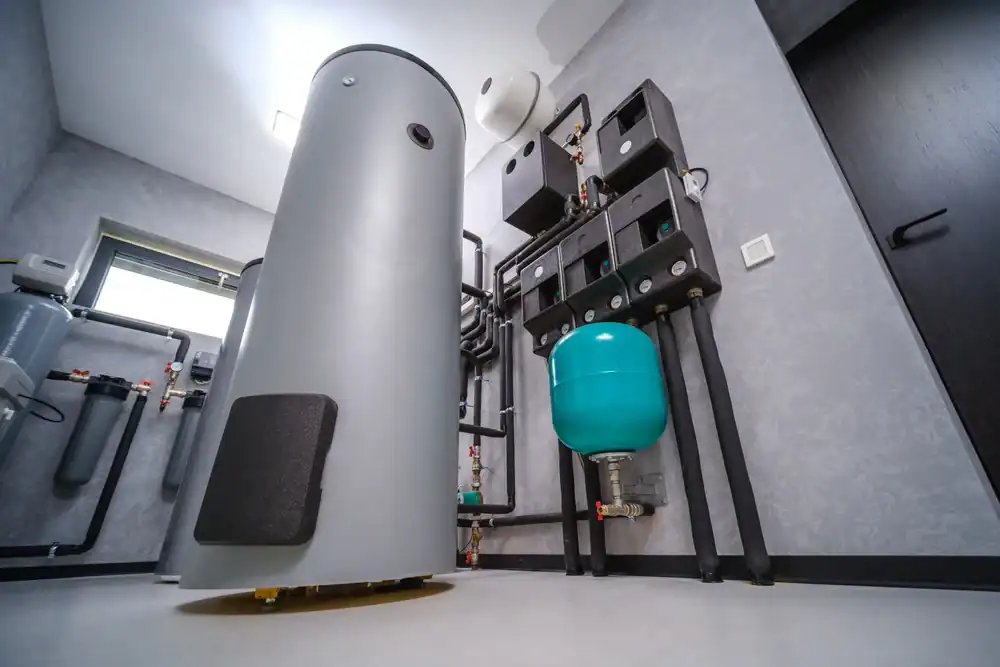
If you’ve got four or more people in your house and at least two bathrooms, a standard 40 or 50-gallon tank probably isn’t going to cut it. High-capacity tank water heaters—typically 75 to 100 gallons—are designed to store enough hot water for multiple uses at once without running dry. These systems work well for families who need to run showers, laundry, and the dishwasher simultaneously, especially during those chaotic morning hours when everyone’s trying to get out the door.
The key number to look at is the first-hour rating, or FHR. This tells you how much hot water the unit can deliver in the first hour of use, starting with a full tank. It’s calculated by taking 70% of the tank’s capacity and adding the recovery rate. For a family of four to six people, you’ll want an FHR of at least 60 to 80 gallons to avoid running out during peak times.
Recovery rate is just as important as tank size. A 75-gallon tank with a slow recovery rate won’t help much if it takes an hour to reheat after the first two showers. Gas water heaters typically recover faster than electric models—around 40 to 70 gallons per hour compared to 20 to 21 gallons per hour for electric. That means a gas unit can reheat a full tank in 30 to 40 minutes, while an electric model might take over an hour.
In Brevard County, where hard water is common, sediment buildup happens faster than in other parts of the country. That sediment sits at the bottom of the tank and acts like insulation between the heating element and the water, which slows down recovery and makes your system work harder. Annual flushing is pretty much non-negotiable if you want your high-capacity tank to actually perform like one. A well-maintained 75 to 100-gallon gas water heater can handle a household of six or more without anyone getting stuck with cold water, as long as the recovery rate and FHR match your actual usage.
Tankless water heaters heat water on demand instead of storing it in a tank, which means you’re not limited by how many gallons are sitting ready to go. For large families, that sounds like the perfect solution—and in many cases, it is. But tankless systems work differently than tanks, and understanding how they deliver hot water helps you figure out if one will actually keep up with your household.
Instead of gallons, tankless units are rated by flow rate, measured in gallons per minute, or GPM. A whole-house tankless water heater for a large family typically needs a flow rate of 8 to 11 GPM to handle multiple fixtures running at once. For example, if you’ve got two showers going at the same time (each using about 2.5 GPM), plus a dishwasher (1.5 GPM), you’re looking at around 6.5 GPM of demand. Add in a washing machine or another faucet, and you can see how the numbers add up quickly.
Gas tankless water heaters generally offer higher flow rates than electric models, which makes them a better fit for larger households. Electric tankless units work well for point-of-use applications—like a single bathroom or kitchen sink—but they often can’t deliver the volume needed for a whole house with multiple bathrooms. In some cases, families install two tankless units to cover high-demand periods, though that obviously increases the upfront cost.
One thing to keep in mind is that tankless systems work best when hot water use is staggered rather than simultaneous. If everyone in the house is showering, doing laundry, and running the dishwasher at the exact same time, even a high-capacity tankless unit can struggle to maintain consistent temperature. That doesn’t mean they’re not a good option—it just means you need to size the system correctly and understand how your family actually uses hot water.
Tankless water heaters also last longer than traditional tanks—often 20 years or more with proper maintenance—and they take up a fraction of the space. In Florida’s humid climate, the lack of a storage tank means no standby heat loss and no risk of a 50-gallon leak in your garage. But they do require annual descaling, especially in areas with hard water like Brevard County, to prevent mineral buildup in the heat exchanger. Skipping that maintenance can reduce efficiency and shorten the unit’s lifespan, so factor that into your decision if you’re considering going tankless.
Want live answers?
Connect with a Drain Wizard Plumbing expert for fast, friendly support.
Recovery rate is one of those specs that doesn’t get much attention until you’re standing in a cold shower wondering why the hot water ran out so fast. It’s the number of gallons a water heater can heat in one hour, and for large families, it’s often more important than the size of the tank itself. A 50-gallon tank with a high recovery rate can outperform a 75-gallon tank with a slow one, especially if your household uses hot water in waves throughout the day.
Gas water heaters recover faster than electric models because gas burners produce more heat at once. A typical gas unit recovers 30 to 40 gallons per hour, while high-efficiency models can hit 50 to 70 gallons per hour. Electric water heaters, on the other hand, usually recover around 20 gallons per hour, which is why they’re not always the best choice for families with high hot water demand. If you’re replacing an old electric tank and constantly running out of hot water, switching to a gas model with a higher recovery rate might solve the problem without needing a bigger tank.
Your household’s hot water demand depends on how many people live in the home, how many bathrooms you have, and how you use water during peak times. A family of four might use 80 to 100 gallons of hot water per day—enough for three or four showers, a load of laundry, running the dishwasher, and some general faucet use. If you’ve got five or six people, that number climbs closer to 120 gallons or more, especially if you’ve got teenagers who treat the shower like a spa.
Figuring out how much hot water your family actually needs starts with looking at your busiest hour of the day—usually the morning rush. Add up everything that uses hot water during that time: showers, sinks, dishwasher, washing machine. Each shower uses about 15 to 25 gallons depending on how long it runs and the flow rate of your showerhead. A dishwasher cycle uses 10 to 15 gallons. A load of laundry uses another 15 to 20 gallons if you’re washing in hot water.
If your peak hour demand is 60 gallons, you’ll want a water heater with a first-hour rating of at least 60 gallons to keep up. If it’s closer to 80 gallons, you’ll need a system that can deliver that much in the first hour without running cold. This is where the combination of tank capacity and recovery rate comes into play. A 50-gallon tank with a recovery rate of 40 gallons per hour gives you a first-hour rating of around 75 gallons, which works for most families of four or five. A 75-gallon tank with the same recovery rate pushes that number over 90 gallons, which handles larger households with ease.
In Brevard County, where the incoming water temperature averages warmer than in northern climates, your water heater doesn’t have to work as hard to reach the set temperature. That’s actually a good thing—it means faster recovery times and slightly better efficiency. But it also means you’re using hot water year-round, which puts more wear on the system compared to homes in colder regions where hot water use drops in the summer.
One thing people don’t always think about is how their habits affect demand. If your family tends to shower back-to-back in the morning, the water heater has to recover quickly between uses. If showers are more spread out throughout the day, a lower recovery rate might be fine. The same goes for laundry and dishes—if you’re running those appliances during peak shower times, you’re stacking demand on top of demand, and a standard water heater won’t keep up.
Energy efficiency isn’t just about saving the planet—it’s about not watching your utility bill climb every month because your water heater is working overtime. Older water heaters, especially those over 10 years old, waste a lot of energy through standby heat loss, poor insulation, and inefficient burners or heating elements. Modern energy-efficient models are designed to minimize that waste, and for large families using a lot of hot water, the savings add up quickly.
Tankless water heaters are among the most energy-efficient options available because they only heat water when you need it. There’s no tank sitting in your garage keeping 50 gallons hot around the clock, which eliminates standby heat loss entirely. For homes that use 41 gallons or less of hot water per day, tankless systems can be 24 to 34% more energy efficient than conventional storage tanks. For households using more than that—like most large families—the efficiency gain drops to around 8 to 14%, but that’s still a noticeable difference over time.
Heat pump water heaters are another high-efficiency option, especially if you’re on an all-electric home. These units pull heat from the surrounding air and use it to warm the water, which uses up to three times less electricity than a standard electric resistance water heater. For a family of four, that can translate to around $600 per year in savings compared to a conventional electric model. The catch is that heat pump water heaters need a decent amount of space—at least 450 cubic feet—and they work best in warmer environments, which makes them a solid fit for Florida.
High-efficiency gas water heaters with condensing technology capture heat from exhaust gases and use it to preheat incoming water, which boosts efficiency to 90% or higher. These models cost more upfront than standard gas tanks, but they deliver more hot water per unit of fuel, which lowers operating costs. For large families in Brevard County, where hot water is in constant demand, a high-efficiency gas model with a strong recovery rate can handle the load without driving up the gas bill.
When you’re comparing models, look for the Uniform Energy Factor, or UEF. The higher the UEF, the more efficient the unit. Most modern water heaters fall somewhere between 0.80 and 0.95 for gas models, and closer to 0.90 to 0.99 for electric and tankless units. Energy Star certified models meet stricter efficiency standards and may qualify for rebates or tax credits, which can offset some of the upfront cost. In 2026, federal tax credits cover up to 30% of the cost for heat pump water heaters, up to $2,000, which makes them a more affordable option than they used to be.
At the end of the day, the best water heater for your large family is the one that matches your actual hot water demand, fits your home’s setup, and holds up to Florida’s climate without constant repairs. High-capacity tanks work well if you need a lot of hot water available at once and don’t mind waiting for recovery between uses. Tankless systems give you endless hot water as long as the flow rate can handle simultaneous demand. And energy-efficient models—whether tankless, heat pump, or high-efficiency gas—save money over time while keeping up with the load.
If you’re in Brevard County and tired of running out of hot water, we can help you figure out what size and type of system actually makes sense for your household. With over 40 years of combined experience and a deep understanding of how Florida’s climate affects water heaters, we’ll walk you through your options without the sales pitch. Whether you’re replacing an aging unit or upgrading to handle a growing family, getting it right the first time means no more cold showers and no more scheduling your day around who gets to use hot water when.
Article details:
Share:
Continue learning: