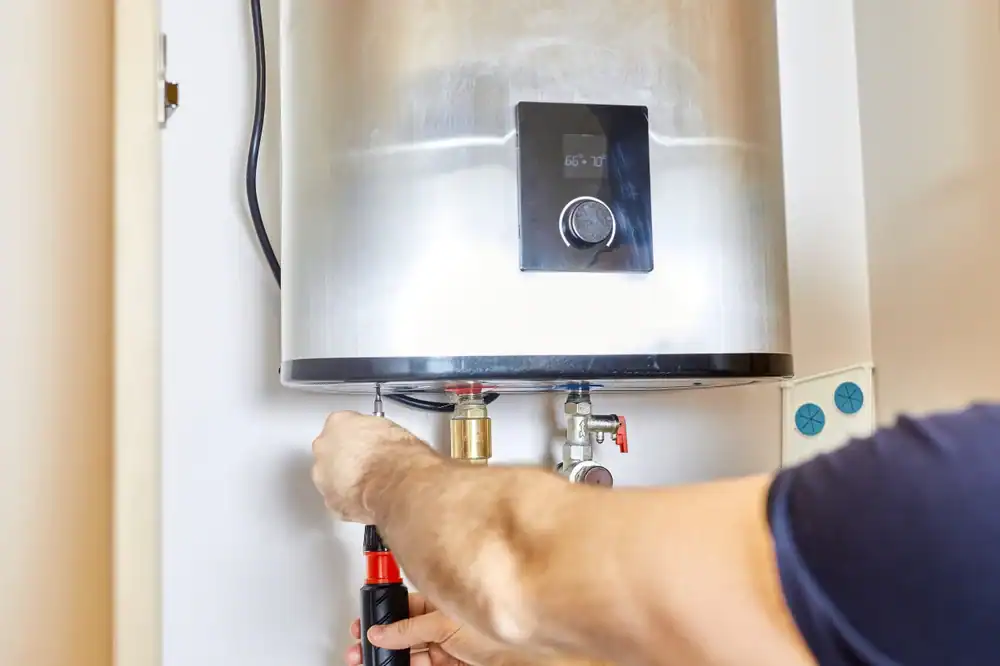
You’ve probably heard the pitch: endless hot water, lower energy bills, more space in your utility room. Electric tankless water heaters sound great on paper. But here’s what most homeowners don’t find out until they’re already committed: your home’s electrical system might not be ready for one. And if it’s not, the upgrades aren’t cheap.
The good news? Once you understand what these units actually need to run, the decision becomes a lot clearer. You’ll know whether your current setup can handle it, what upgrades might cost, and whether the long-term benefits justify the upfront investment. Let’s start with how these systems actually work.
How Electric Tankless Water Heaters Work
An electric tankless water heater doesn’t store hot water. Instead, it heats water instantly as it flows through the unit. When you turn on a hot water tap, cold water enters the heater and passes over powerful electrical heating elements that raise the temperature in seconds.
This on-demand approach means you’re not keeping 40 or 50 gallons of water hot all day and night. You only use energy when you actually need hot water. That’s where the efficiency comes from.
But here’s the catch: heating water that quickly requires a massive burst of electrical power. We’re talking 18,000 to 36,000 watts for a whole-house unit. For context, that’s roughly the same power draw as running four or five central air conditioning units at once. The difference is your AC cycles on and off throughout the day. A tankless water heater only runs when someone’s using hot water, usually just one to three hours total per day in most homes.
Electric On Demand Water Heater Power Draw Explained
When we talk about power requirements for an electric on demand water heater, two numbers matter: kilowatts and amps. Kilowatts tell you how much power the unit uses when it’s running. Amps tell you how much current it draws from your electrical panel.
A typical whole-house electric tankless water heater pulls between 18 and 36 kilowatts. That translates to roughly 75 to 150 amps at 240 volts. To put that in perspective, your entire home might only have a 100 or 200-amp electrical service feeding everything from your lights to your appliances to your HVAC system.
Most units need multiple dedicated circuits. A mid-sized 24-kilowatt model, for example, typically requires two 60-amp double-pole breakers. Larger units might need three separate 50 or 60-amp breakers. Each of those circuits needs its own heavy-gauge wiring running from your electrical panel to the water heater location.
If your home was built in the last 20 years and has 200-amp service, you might have enough capacity. But if you’re in an older home with 100-amp service, or if your panel is already close to maxed out with existing loads, you’re looking at an electrical service upgrade before you can even think about installing the water heater.
That’s not a small job. Upgrading from 100 to 200-amp service typically runs between $1,500 and $3,000 in Brevard County, depending on how far your meter is from the panel and whether any utility company transformer upgrades are needed. Some homes in older neighborhoods might even need the utility company to upgrade the transformer serving the house, which adds time and cost to the project.
Here’s what makes this tricky: you won’t know for sure until a licensed electrician does a load calculation for your home. That calculation factors in all your existing electrical loads plus the new water heater demand to determine whether your current service can handle it. Skipping this step is how homeowners end up with breakers that trip constantly or, worse, electrical hazards that put their home at risk.
Sizing an Electric Tankless Water Heater for Your Home
Getting the size right matters more with tankless systems than it ever did with tank heaters. Too small, and you’ll get lukewarm water when someone’s doing laundry while you’re in the shower. Too large, and you’ve spent thousands on capacity you’ll never use.
Sizing comes down to two factors: flow rate and temperature rise. Flow rate is measured in gallons per minute, or GPM. It’s the total amount of hot water your household uses at peak times. A standard showerhead uses about 2.5 GPM. A bathroom sink uses around 1.5 GPM. A dishwasher or washing machine adds another 1 to 2 GPM.
Add up the GPM for every fixture you might run at the same time during your busiest hour, usually mornings when everyone’s getting ready. For most families, that’s somewhere between 5 and 8 GPM. A single person or couple might only need 3 to 4 GPM. A larger household with teenagers and multiple bathrooms could hit 10 GPM or more during peak use.
Temperature rise is the difference between your incoming cold water temperature and your desired hot water temperature. In Brevard County, groundwater comes in around 72 to 77 degrees year-round. If you want 120-degree water at the tap, that’s only a 43 to 48-degree temperature rise. Compare that to northern states where groundwater might be 45 degrees in winter, requiring a 75-degree rise. Florida’s warm groundwater is actually an advantage here because it means you can get by with a smaller, less expensive unit.
Once you know your required GPM and temperature rise, you can match that to a unit’s specifications. Manufacturers publish charts showing how many GPM each model can deliver at different temperature rises. A unit rated for 6 GPM at a 50-degree rise might only deliver 4 GPM at a 70-degree rise.
Most Brevard County homes with three or four people and two bathrooms do well with a unit in the 18 to 24-kilowatt range. That typically provides 4 to 6 GPM, enough for one shower and a sink running simultaneously, or a shower and a dishwasher. Larger families or homes with high simultaneous demand might need a 27 or 36-kilowatt unit, but those come with correspondingly higher electrical requirements and costs.
Here’s something most homeowners don’t consider: you can also install multiple smaller units instead of one large one. Point-of-use models that serve a single bathroom or the kitchen typically need only 8 to 13 kilowatts and can run on a single 40 to 60-amp circuit. If your electrical panel can’t handle a whole-house unit, strategically placed point-of-use heaters might be a workaround that doesn’t require a service upgrade. The trade-off is higher total equipment cost and slightly less efficiency, but it can make the project feasible when a panel upgrade isn’t in the budget.
Waterless Tank Heater Installation Requirements
Installing a waterless tank heater isn’t a simple swap like replacing an old tank with a new one. The electrical work alone puts this firmly in professional territory, and in Florida, it requires permits and inspections.
Your electrician needs to run new dedicated circuits from your panel to the heater location. That means pulling heavy-gauge wire, typically 6 or 8 AWG copper, through walls or attic spaces. The wire size depends on the amperage and the distance from the panel. Longer runs require larger wire to prevent voltage drop.
Each circuit needs its own breaker rated for the load. Most units require double-pole breakers because they run on 240 volts. If your panel doesn’t have enough open slots for the required breakers, you might need a subpanel, which adds to the installation cost. If your panel is outdated or doesn’t meet current code, you could be looking at a full panel replacement on top of the service upgrade.
Electrical Panel Upgrades and What They Cost
This is where the numbers start to add up, and it’s the part that catches most homeowners off guard. The water heater itself might cost $600 to $1,000 for the unit. Professional installation adds another $800 to $1,500 for the plumbing and electrical labor. But if your electrical service can’t handle the load, you’re looking at $1,500 to $3,000 more for a panel upgrade or service increase.
A load calculation comes first. An electrician measures your home’s current electrical demand and compares it to your service capacity. If you’ve got 200-amp service and you’re only using 120 amps during peak load, you might have room for the water heater without any upgrades. But if you’re already pushing 180 amps, or if you only have 100-amp service to begin with, an upgrade isn’t optional.
Upgrading from 100 to 200 amps means replacing your main electrical panel, upgrading the service entrance cable from the utility connection to your panel, and often replacing the meter base. In some cases, especially in older neighborhoods, the utility company’s transformer might not have enough capacity to supply 200 amps to your home, which means they’ll need to upgrade their equipment before your electrician can even start. That can add weeks to the timeline and sometimes additional costs, though the utility company usually covers their own equipment upgrades.
Here’s what that looks like in real terms for a Brevard County homeowner: If your home has adequate electrical capacity, you’re looking at a total project cost of around $2,000 to $3,000 for a mid-sized electric tankless water heater, installed and permitted. If you need a panel upgrade, that number climbs to $3,500 to $5,500. If you need a full service upgrade from 100 to 200 amps, you could be at $4,000 to $6,000 all-in.
Those aren’t small numbers, but they need context. A traditional 50-gallon electric tank water heater costs $800 to $1,500 installed. It’ll last 8 to 12 years and costs roughly $400 to $500 per year to operate. An electric tankless water heater lasts 15 to 20 years and costs about $200 to $350 per year to operate, depending on your usage. Over a 20-year period, you’re looking at potential savings of $2,000 to $4,000 in energy costs alone, plus you avoid at least one additional tank replacement.
The math works better for some homes than others. If you’re already planning other electrical work or a major renovation, rolling the panel upgrade into that project makes more sense. If your current tank is failing and you need a replacement now, and your electrical system isn’t ready, a new tank water heater might be the more practical choice in the short term.
Continuous Water Heater Permits and Code Requirements in Florida
Florida requires permits for water heater installations, and that includes electric tankless systems. The permit process isn’t just bureaucratic red tape. It ensures the installation meets electrical and plumbing codes designed to keep your home safe.
For a continuous water heater installation, you’ll typically need both a plumbing permit and an electrical permit. The plumbing permit covers the water connections, pressure relief valve, drain pan if required, and proper venting if you’re installing the unit indoors. The electrical permit covers all the circuit work, panel modifications, and final connections to the heater.
Inspections happen after the rough-in work is complete and again after the final installation. The inspector checks wire sizing, breaker ratings, proper grounding, correct water connections, and that everything meets the current National Electrical Code and Florida Building Code. If something’s not right, you’ll need to fix it before the permit gets signed off.
Working with a licensed plumber and electrician who pull permits regularly makes this process straightforward. They know what inspectors look for and how to get the work approved the first time. Trying to do this yourself or hiring an unlicensed contractor creates headaches. Unpermitted work can cause problems when you sell your home, and it voids both your homeowner’s insurance coverage and the manufacturer’s warranty if something goes wrong.
Here’s something that matters specifically in Brevard County: coastal conditions mean salt air and high humidity. Code requirements for outdoor installations include proper weatherproofing and corrosion-resistant materials. An inspector will verify that outdoor units are mounted correctly, protected from the elements, and that all electrical connections are rated for wet or damp locations depending on the installation. Cutting corners here leads to premature failure and safety hazards.
The permit fees themselves are usually $100 to $300 depending on your municipality. Most professional installers include permit costs in their quote, and they handle pulling the permits and scheduling inspections. That’s worth something because coordinating inspections and making sure you’re available when the inspector shows up adds complexity to a DIY project that most homeowners underestimate.
Making the Right Decision for Your Brevard County Home
Electric tankless water heaters deliver real benefits: endless hot water, lower energy bills, longer lifespan, and space savings. But they’re not plug-and-play, and the electrical requirements are non-negotiable. Your home either has the capacity or it doesn’t.
Start with a professional assessment. A qualified electrician can do a load calculation and tell you exactly what your home needs. A plumber experienced with tankless installations can help you size the unit correctly based on your actual usage patterns. Getting both perspectives before you commit prevents expensive surprises.
If your home has 200-amp service and available panel capacity, an electric tankless water heater makes a lot of sense, especially in Florida where warm groundwater temperatures work in your favor. If you’re looking at a major electrical upgrade, run the numbers carefully. The long-term savings are real, but the upfront investment needs to fit your budget and your plans for the home.
When you’re ready to move forward, working with a plumbing company that handles both the plumbing and electrical sides eliminates the finger-pointing that happens when multiple contractors are involved. We serve Brevard County homeowners with exactly that kind of comprehensive approach, handling everything from load calculations to final inspections so you don’t have to coordinate between trades or worry about whether the work is getting done right.