Water doesn’t wait. When a pipe bursts or your water heater starts leaking, every second you spend searching for a shut-off valve adds to the damage. Most Brevard County homeowners don’t think about valve locations until they’re standing in a growing puddle, frantically trying to stop the flow.
Here’s the thing: finding these valves takes five minutes when you’re calm. It feels impossible when you’re in crisis mode. This guide shows you exactly where to look for your gas water heater shut-off valve, your main water shut-off, and the individual fixture valves that can save you from turning off water to your entire home. Let’s start with the basics.
Where Is the Main Water Shut Off in a House
Your main water shut-off valve controls every drop of water entering your home. Turn it off, and you stop all water flow—to every sink, toilet, shower, and appliance. It’s your emergency brake for the entire plumbing system.
In most Brevard County homes, you’ll find this valve in one of three spots. If your home sits on a slab foundation, which is common throughout Cocoa, Rockledge, and Merritt Island, check near your water heater first. The valve is often in the same utility closet or garage where the heater lives, usually within a few feet of where the main water line enters your home.
Homes built before 1975 might throw you a curveball. Older Florida construction sometimes placed the main shut-off outside, near the water meter or along an exterior wall. Look for a valve box in your front yard, typically between the street and your home. Some older properties have the valve inside a covered panel on an exterior wall.
Where Is the Water Shut Off Valve in My House
The exact location depends on how your home was built and when. Florida’s warm climate means we don’t worry about frozen pipes like northern states do, so outdoor valve locations are perfectly normal here. That said, newer construction tends to place shut-offs indoors for convenience.
Start your search in the garage or utility room if you have either. The main shut-off is typically on or near the wall facing the street, close to where the municipal water line connects to your home’s plumbing. You’re looking for a valve on a pipe that’s usually three-quarters of an inch to one inch in diameter—bigger than the pipes running to individual fixtures.
The valve itself might be a ball valve with a lever handle or a gate valve with a round wheel. Ball valves are newer and more reliable. You turn the lever a quarter turn so it’s perpendicular to the pipe, and the water stops. Gate valves require multiple full rotations clockwise to close completely. If you have a gate valve and it’s been sitting unused for years, it might be stiff or corroded.
Can’t find it indoors? Head outside and look for your water meter. In Brevard County, meters are usually in the front yard in a concrete or plastic box at ground level. Open the cover and you’ll see the meter. There should be a valve on the house side of the meter—that’s your main shut-off. You might need a special meter key to turn it, which you can pick up at any hardware store for a few dollars.
One more spot to check: crawl spaces. If your home has a crawl space rather than a slab foundation, the main shut-off might be down there, near where the water line enters. Grab a flashlight and look along the front wall of the crawl space. The valve should be fairly obvious once you’re in the right area.
Why does this matter so much? Because knowing this location before you need it means you can stop a catastrophic leak in seconds instead of minutes. Water damage compounds fast. A burst pipe can release hundreds of gallons in an hour, soaking floors, ruining drywall, and creating the perfect conditions for mold. Finding the main shut-off quickly is the difference between a manageable repair and a renovation project.
Water Shut Off Valve Location in Older Florida Homes
Homes built in Brevard County before 1975 follow different plumbing conventions than modern construction. If you’re living in one of these older properties, your valve hunt might take a few extra minutes, but the valves are there.
Many pre-1975 Florida homes have the main water shut-off in an outdoor meter box or on an exterior wall. Builders back then weren’t thinking about convenience—they were thinking about access for the water company. Check the perimeter of your home, especially on the side facing the street. Look for a small access panel, a valve box in the ground, or even a valve directly mounted to an exterior wall near the foundation.
Inside, older homes often have fewer individual fixture shut-offs. You might find shut-off valves for toilets but not for sinks or the washing machine. This means if you have a leak at a bathroom sink, you might need to shut off the main water to the whole house to stop it. It’s not ideal, but it’s how things were done. The good news: adding individual shut-off valves is a straightforward upgrade that gives you much more control during repairs.
Another quirk of older Florida homes is the valve type. You’re more likely to encounter gate valves, which are the round-handled variety that require multiple turns to open or close. These valves can corrode or get stuck if they haven’t been operated in years. If you try to turn yours and it won’t budge, don’t force it—you could break it and create a bigger problem. That’s when you call in someone with experience working on older systems.
Location-wise, utility closets are your friend in older Florida construction. Many homes from this era have a dedicated utility closet where the water heater, electrical panel, and sometimes the AC handler all live together. The main shut-off is often in that same closet, on the wall where plumbing enters from outside. If your home has this setup, you’re in luck—everything’s centralized.
One more thing about older homes: documentation is often nonexistent. The original builder didn’t leave you a map of your plumbing system. If you’re struggling to locate your main shut-off, it’s worth having a plumber who knows older Brevard County construction come out and show you. We’ve seen hundreds of these homes and can spot valve locations in minutes. It’s a small investment that pays off the first time you need to act fast.
Water Shut Off Valve Location for Gas Water Heaters
Your gas water heater has two critical shut-off valves: one for water and one for gas. Both matter during emergencies, but they serve different purposes. The water shut-off controls the cold water flowing into the tank. The gas shut-off controls the fuel that heats that water. Knowing where both are and how they work gives you complete control over your water heater in any situation.
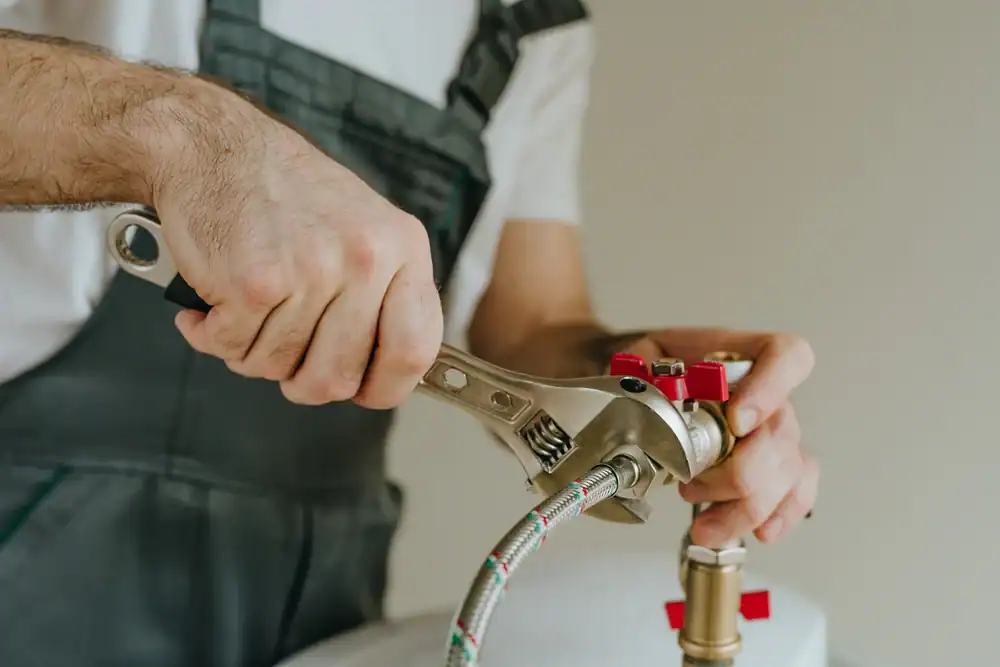
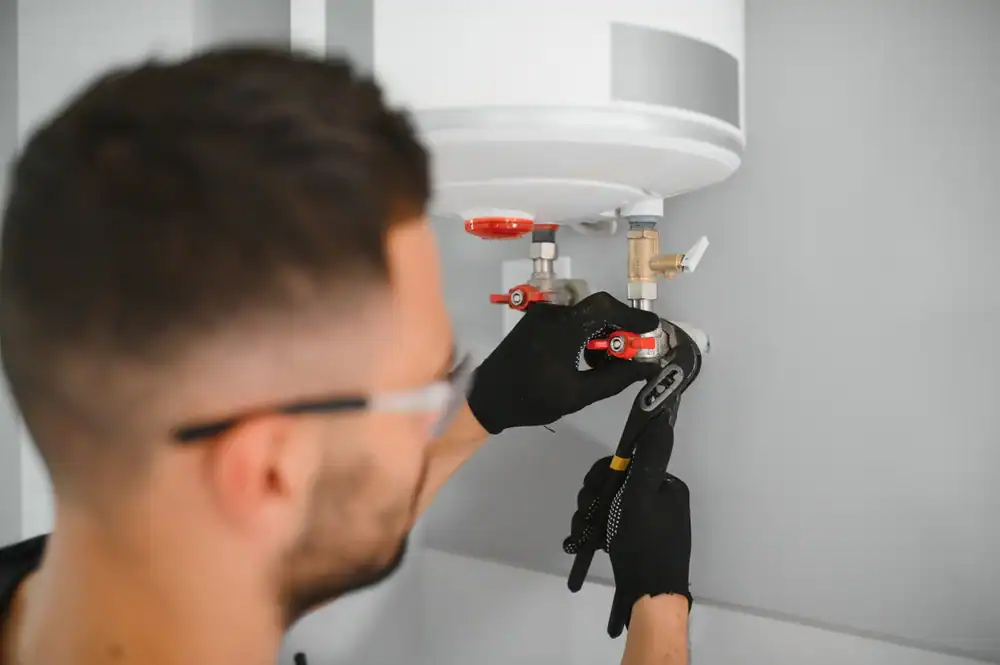
The cold water shut-off valve is almost always located on the pipe entering the top of your water heater. Look for a valve on the cold water line—it’s usually marked or it’s the pipe without insulation. This valve lets you stop water from entering the tank without shutting off water to your entire home. If your water heater is leaking, this is the valve you want.
The gas shut-off valve is typically within a foot or two of the water heater, on the gas supply line. It’s usually a ball valve with a small lever handle. When the handle is parallel to the gas pipe, gas is flowing. Turn it perpendicular, and you’ve shut off the gas supply. If you smell gas or suspect a gas leak, turn this valve immediately, leave the area, and call for help. Don’t turn lights on or off, don’t use your phone inside, and don’t try to investigate further.
Water Heater Shut Off Valve Location in Different Home Types
Where you find your water heater shut-off valves depends entirely on where your water heater lives. In Brevard County, that varies based on home design and age.
Slab foundation homes—which make up the majority of construction in Cocoa, Rockledge, and Merritt Island—typically have water heaters in the garage or a dedicated utility closet. In these setups, the cold water shut-off valve is right there on top of the heater, easy to reach. The gas shut-off is usually on the gas line within arm’s reach. Both valves should be accessible without moving anything or climbing over obstacles. If you have to move boxes or squeeze into a tight space to reach them, consider rearranging your storage. Emergencies don’t wait for you to clear a path.
Older homes with different layouts might have water heaters in less convenient spots. Some are tucked into interior closets with limited space. Others are in outdoor enclosures, which is less common but not unheard of in Florida. If your water heater is outside, make sure you know how to access the enclosure quickly. Locked doors and emergencies don’t mix well.
Homes with crawl spaces sometimes have water heaters installed in those spaces to save interior room. If this is your situation, you need to know how to get into the crawl space and where the shut-offs are once you’re down there. It’s not fun to crawl around under your house, but it’s better to do it once during a calm moment than to figure it out while water is spraying everywhere.
Here’s a practical tip: once you locate your water heater shut-off valves, mark them. Use a piece of tape, a label, or even a permanent marker. Write “WATER SHUT-OFF” and “GAS SHUT-OFF” right on the wall or pipe. It sounds simple, but when you’re stressed or someone else in your household needs to find these valves, clear labels make all the difference. Take a photo with your phone too. Store it in a folder you can access quickly. Better yet, share it with everyone who lives in your home.
You should also test these valves once a year. Turn them off and back on to make sure they’re not stuck. A valve that hasn’t been operated in a decade might seize up. Finding out it’s stuck during an emergency is the worst possible timing. If you test it now and discover it’s difficult to turn, you can have it replaced before you actually need it.
Individual Fixture Shut-Offs vs Main Water Shut-Off
Understanding the difference between your main water shut-off and individual fixture shut-offs changes how you handle plumbing problems. The main shut-off is your nuclear option—it stops all water to your home. Individual fixture shut-offs let you isolate a problem without affecting the rest of your plumbing.
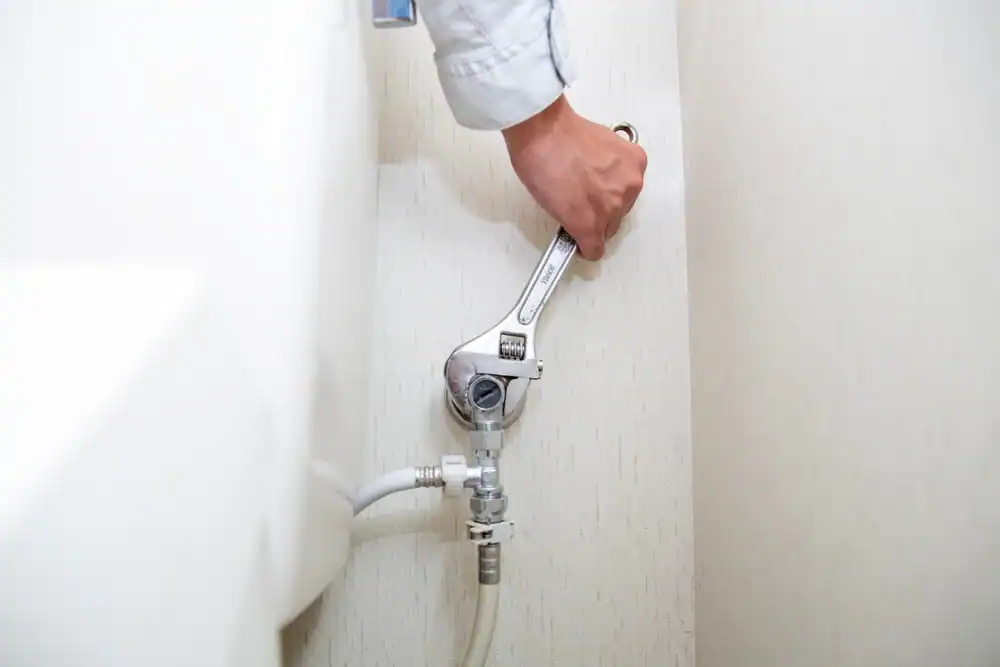
Most modern plumbing includes shut-off valves for toilets, sinks, washing machines, dishwashers, and water heaters. These small valves are usually located right where the water supply line connects to the fixture. For a toilet, look behind the tank near the floor. For a sink, check inside the cabinet underneath. These valves are typically oval-handled or small lever-style valves that turn clockwise to shut off water to just that one fixture.
Why does this matter? Imagine your bathroom sink starts leaking. If you shut off the individual valve under that sink, you stop the leak but still have water everywhere else in your home. You can use other bathrooms, run the dishwasher, and take showers while you wait for a repair. If you shut off the main water instead, your entire household is without water until the problem is fixed.
Individual shut-offs also make repairs faster and less disruptive. A plumber can work on one fixture without affecting your whole day. You don’t have to worry about forgetting the water is off and trying to wash your hands or flush a toilet. The rest of your plumbing works normally.
Here’s the catch: not all homes have individual shut-offs for every fixture. Older Florida homes, especially those built before modern plumbing codes became standard, might only have shut-offs for toilets or might not have any at all. If your home is missing these valves, it’s worth adding them. It’s not an expensive upgrade, and it gives you so much more control during repairs or emergencies.
There’s also the question of which valve to use when. If you have a leak at a specific fixture and that fixture has its own shut-off, use it. If the leak is in a pipe inside a wall or ceiling, or if you’re not sure where the water is coming from, go straight to the main shut-off. Don’t waste time trying to figure out which individual valve might help. Stop all the water, contain the damage, and then investigate.
Gas water heaters add another layer to this. You have the cold water shut-off specific to the heater, the gas shut-off, and the main water shut-off. If your water heater is leaking water, you want the cold water shut-off to the heater. If you smell gas or suspect a gas problem, you want the gas shut-off. If there’s a major plumbing failure and water is flooding from multiple sources, you want the main water shut-off. Knowing which valve to reach for in which situation comes from understanding your system before you’re in crisis mode.
One final point: make sure everyone in your household knows this distinction. Walk through it with them. Show them where the main shut-off is and explain when to use it. Show them individual fixture shut-offs and explain those too. Five minutes of education now prevent confusion and additional damage later.
What to Do After You Find Your Shut-Off Valves
Now that you know where to find your shut-off valves, you’re already ahead of most homeowners. But finding them is just the first step. Test them to make sure they work. Label them so anyone can find them quickly. Take photos and keep that information somewhere accessible.
If you discover your valves are corroded, stuck, or missing entirely, that’s not a problem you want to ignore. The time to fix those issues is now, not when water is actively flooding your home. And if you’re ever unsure about your plumbing system or you run into an emergency you can’t handle, that’s exactly what we’re here for. With 45 years of experience serving Brevard County homes, we’ve seen every valve configuration and every emergency situation. We return calls within an hour and can walk you through immediate steps while we’re on the way to help.
Your plumbing system works for you every day without asking for much attention. Knowing where your shut-off valves are is the bare minimum of attention it deserves in return.