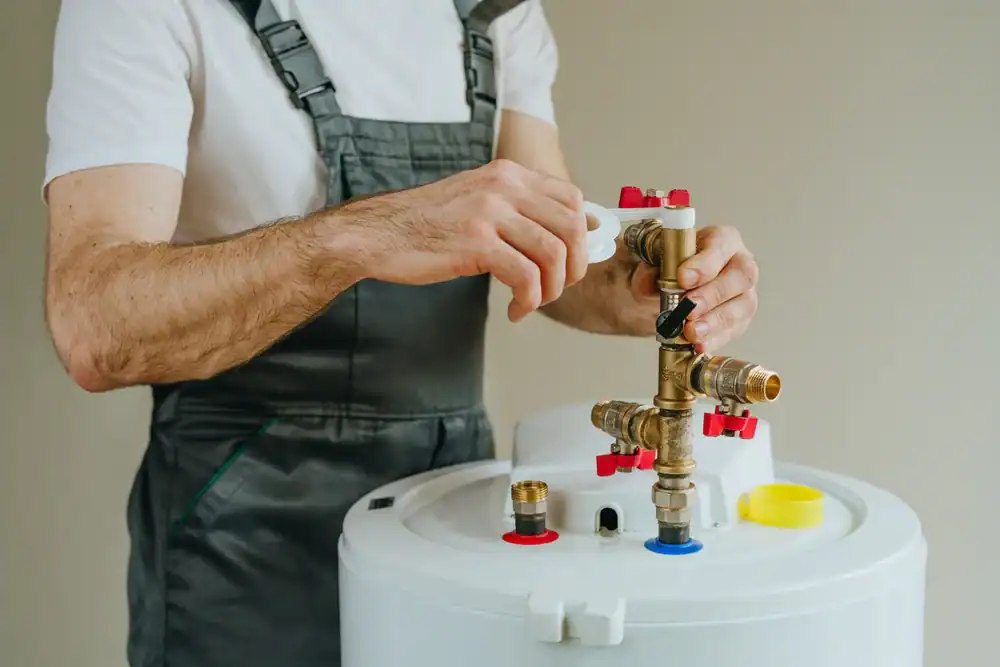
If you’re thinking about switching to a tankless water heater in Cocoa, Rockledge, or Merritt Island, you’ve probably already done some research on the benefits—endless hot water, energy savings, longer lifespan. But here’s what most homeowners don’t realize until they’re knee-deep in the project: tankless installations aren’t just plumbing jobs. They’re gas plumbing jobs, and there’s a significant difference. Your existing gas lines probably can’t handle the demand. Your permits need to be pulled correctly. Your venting has to meet Florida code. And if any of it’s done wrong, you’re looking at dangerous conditions, failed inspections, or insurance headaches down the road. This is where working with a licensed gas plumber in Brevard County who actually specializes in tankless conversions makes all the difference.
Why Tankless Water Heater Installation Requires a Licensed Gas Plumber
Not every plumber is qualified to handle gas work. In Florida, working on natural gas lines requires specific licensing, training, and certification that goes beyond standard plumbing credentials. A licensed gas plumber understands the technical requirements for sizing gas lines, conducting pressure tests, and ensuring your system operates safely under Florida Building Code standards.
Tankless water heaters demand significantly more gas than traditional tank heaters. Where your old 40-gallon tank might have needed 40,000 BTUs, a whole-home tankless unit typically requires 150,000 to 200,000 BTUs. That’s not a small jump. It means your existing half-inch gas line—perfectly adequate for your old tank—is now dangerously undersized.
We evaluate your entire gas supply system from the meter forward, calculate the BTU load for all your appliances, and determine whether your current infrastructure can support the upgrade. If it can’t, we’ll design and install the proper gas line sizing, typically three-quarter inch to one inch diameter, to deliver the fuel your tankless system needs without starving your other gas appliances or creating pressure drops that cause equipment failure.
Gas Line Sizing and Pressure Requirements for Tankless Systems
Here’s where things get technical, but it matters for your wallet and safety. Gas line sizing isn’t guesswork. It’s a calculation based on the appliance’s BTU rating, the length of the gas run from your meter, the number of fittings and elbows in the line, and the type of fuel you’re using.
Most residential tankless water heaters fall in the 150,000 to 200,000 BTU range. According to the National Fuel Gas Code and Florida Building Code requirements, a line serving that kind of load needs to maintain minimum inlet pressure—typically 4 to 5 inches of water column at the appliance—even when the system is running at full capacity. If your gas line is too small or too long without proper sizing, you’ll experience pressure drops that cause the unit to underperform, cycle on and off, or fail to ignite properly.
In Brevard County, many homes were built with half-inch gas lines running to the water heater location. That’s fine for a tank heater pulling 36,000 to 40,000 BTUs. But when you swap in a tankless unit, that same half-inch line can’t deliver enough gas. You end up with a brand-new tankless heater that runs like it’s choking, never reaching full temperature, and leaving you frustrated with an expensive system that doesn’t work as promised.
We size the line correctly from the start. We measure the distance from your gas meter to the installation location, account for every elbow and tee fitting, and use code-approved sizing charts to determine the minimum pipe diameter. In most cases, you’re looking at three-quarter inch or one-inch black iron pipe or CSST. We also verify that your gas meter and regulator can handle the increased load. If they can’t, you’ll need to coordinate with your gas utility to upgrade those components before the tankless installation can proceed.
Pressure testing is another non-negotiable step. Florida code requires that all new or modified gas lines pass a pressure test—typically at 3 psi or higher, held for at least 10 minutes with no measurable pressure drop—before the system can be energized. This test confirms there are no leaks, no weak joints, and no safety hazards lurking in your gas supply. Only a licensed gas plumber has the training, tools, and accountability to perform and document this testing correctly.
Florida Licensing and Code Compliance for Gas Plumbing Work
Florida doesn’t mess around when it comes to gas work. State law requires that anyone installing, modifying, or repairing natural gas lines hold the appropriate plumbing contractor license. That license isn’t easy to get. It requires years of documented experience, passing a comprehensive trade knowledge exam that covers gas piping and safety, and maintaining insurance and bonding to protect consumers.
Why does this matter to you? Because unlicensed handymen and general contractors who dabble in plumbing don’t have the training to size gas lines correctly, don’t understand combustion air requirements, and often skip critical steps like pressure testing and permit applications. When something goes wrong—a gas leak, a carbon monoxide issue, a failed inspection—you’re the one left holding the bag. Your homeowner’s insurance may deny claims for work done without proper permits. You could face fines from Brevard County. And worst case, you’re dealing with a dangerous situation that puts your family at risk.
Permitted work isn’t just red tape. It’s a safety checkpoint. When you hire a licensed gas plumber, we pull the necessary permits with Brevard County, schedule inspections, and ensure the installation meets all current code requirements. The inspector verifies that gas lines are sized correctly, that pressure testing was performed, that venting is adequate, and that the installation follows manufacturer specifications. Once the inspection passes, you have documented proof that the work was done right—proof that protects you if you ever sell your home or file an insurance claim.
Florida Building Code also mandates specific safety measures for gas water heaters. Venting must be designed to safely exhaust combustion gases outside the home. Clearances around the unit must meet minimum distances to prevent fire hazards. Temperature and pressure relief valves must be installed and piped correctly. A licensed gas plumber knows these requirements inside and out because we’re tested on them, inspected on them, and held accountable for them. A handyman doesn’t.
We’ve been navigating Brevard County’s permitting and inspection process for years. We hold Florida contractor license #CFC1428379, carry full insurance, and have the experience to handle complex gas plumbing installations without surprises or shortcuts. When the inspector shows up, the work passes—because it was done right the first time.
Natural Gas Hot Water Tank Conversion to Tankless Systems
Converting from a traditional natural gas hot water tank to a tankless system is one of the most common upgrades homeowners in Cocoa, Rockledge, and Merritt Island are making. The benefits are real—lower energy bills, endless hot water, and a unit that lasts twice as long as a tank. But the conversion process is more involved than most people expect.
You’re not just swapping one appliance for another. You’re fundamentally changing how your home heats water, and that means changes to gas lines, venting, electrical, water piping, and sometimes even structural elements like drywall and tile. A licensed gas plumber who offers turnkey service can handle all of these elements in-house, eliminating the headache of coordinating multiple contractors and the finger-pointing that happens when something goes wrong.
The first step is evaluating your current setup. Where is your tank located? How far is it from the gas meter? What size is the existing gas line? What other gas appliances are on the same branch? We answer these questions during the initial consultation and give you an honest assessment of what the conversion will require.
What’s Involved in Converting Your Tank Water Heater to Tankless
The conversion process starts with removing your old tank water heater. That sounds simple, but depending on where it’s located—garage, attic, closet, exterior wall—access and disposal can be tricky. Once the old unit is out, the real work begins.
Gas line upgrades are almost always necessary. As discussed earlier, your existing half-inch line won’t cut it. We run a new, properly sized gas line from your meter or manifold to the tankless installation location. This might involve running pipe through walls, attics, or crawl spaces. It requires cutting, threading, fitting, and securing black iron pipe or installing CSST with the correct supports and protection. Every joint has to be tight. Every connection has to be tested.
Water line modifications come next. Tankless units are typically wall-mounted and much smaller than tank heaters, so the water inlet and outlet connections are in different locations. We reroute your hot and cold water lines to match the new unit’s configuration, install shut-off valves for future maintenance, and may add a recirculation line if you want instant hot water at distant fixtures.
Venting is another major consideration. Traditional tank water heaters often use metal flue pipes that vent through the roof. Many tankless units—especially high-efficiency condensing models—require PVC or stainless steel concentric venting that can vent horizontally through an exterior wall. This simplifies installation in some cases, but it also means cutting a new hole in your wall, installing the vent termination, and sealing everything to prevent water intrusion and pest entry. In Brevard County’s coastal environment, proper sealing and corrosion-resistant materials are critical.
Electrical connections are required even for gas tankless heaters. The unit’s control board, ignition system, and digital display need 120-volt power. If there’s no outlet near the installation location, an electrician needs to run a dedicated circuit. Some installations also require upgrades to accommodate the unit’s power draw, especially if you’re in an older home with limited electrical capacity.
Condensate drainage is necessary for high-efficiency tankless models. These units extract so much heat from combustion gases that they produce acidic condensate that must be drained properly. This might require running a drain line to a floor drain, a condensate pump, or an exterior termination point. It’s another detail that inexperienced installers often overlook, leading to water damage or code violations.
Finally, there’s the finish work. If we had to cut into drywall to run gas lines, we patch, tape, and paint it. If the old tank was in a tiled area, you might need tile repair or replacement. We handle all of this in-house—plumbing, gas work, drywall, tile, paint, even lighting adjustments if needed. That’s the advantage of working with a company that offers true turnkey service instead of a plumber who hands you a list of other contractors to call.
Costs, Timelines, and What to Expect During Installation in Brevard County
Let’s talk numbers. Tankless water heater installations in Florida typically range from $1,800 to $5,500, depending on the complexity of the job. A straightforward replacement where the gas line is already adequate, the venting is simple, and the location doesn’t change might land on the lower end. A full conversion requiring gas line upgrades, new venting, electrical work, and structural repairs will cost more.
Here’s what drives the cost. The tankless unit itself runs anywhere from $700 to $2,200 depending on whether you choose a standard or high-efficiency condensing model. Labor for a basic installation adds $400 to $900. Gas line upgrades can add another $300 to $800 depending on distance and complexity. Venting materials and labor add $150 to $500. Permits and inspections in Brevard County typically run $75 to $200. If you need electrical upgrades, that’s additional.
The good news? Tankless systems pay for themselves over time. Energy savings of 20 to 40 percent on your water heating costs add up quickly, especially in a state where you’re using hot water year-round. The units also last 20 to 25 years with proper maintenance, compared to 7 to 12 years for traditional tanks. You may also qualify for federal tax credits and utility rebates that reduce your upfront investment.
Timeline-wise, most tankless installations take one to two days depending on scope. A simple swap might be done in a day. A full conversion with gas line work, venting, and finish repairs might stretch into a second day. You’ll know upfront what to expect, and we send progress photos throughout the job so you’re never left wondering what’s happening.
Expect some disruption. Your water will be shut off during installation. There may be noise from cutting, drilling, and fitting pipes. If we’re working in an attic or crawl space, we’ll need access to those areas. But we minimize the mess, protect your floors and belongings, and clean up thoroughly before we leave.
You should also expect clear communication. We explain what we’re doing and why, walk you through any unexpected issues that come up, and give you options rather than making decisions for you. That’s the level of service you should demand, especially when you’re investing thousands of dollars in a major home upgrade.
Choosing the Right Licensed Gas Plumber for Your Tankless Installation in Brevard County
Switching to a tankless water heater is a smart investment, but only if the installation is done right. That means hiring a licensed gas plumber who understands line sizing, code compliance, and the unique challenges of working in Brevard County’s coastal environment. It means getting permits, passing inspections, and having documentation that protects you down the road.
Don’t settle for a handyman who promises to save you money by skipping steps. Don’t hire a general plumber who’s never handled a tankless conversion. And don’t try to coordinate five different contractors when one experienced company can handle the entire job from start to finish.
We’ve been serving Cocoa, Rockledge, Merritt Island, and all of Brevard County since 2007 with 45-plus years of plumbing experience, veteran-owned integrity, and a commitment to doing things right the first time. If you’re ready to make the switch to tankless, or if you just want honest answers about what your project will actually require, reach out to us and talk to someone who knows this work inside and out.