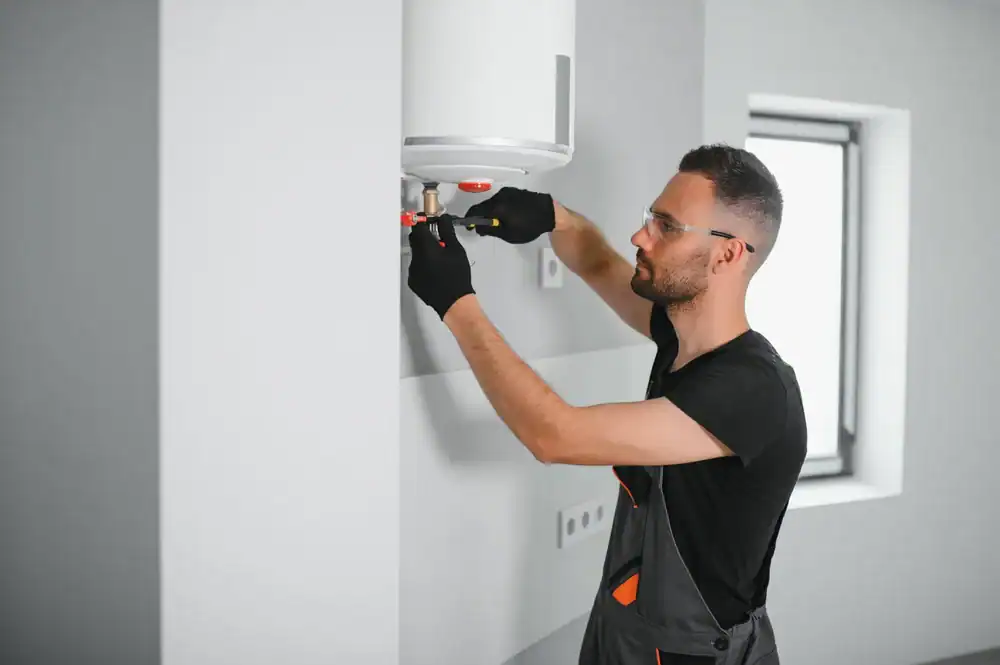
If you’ve ever had someone hop in the shower right after you finish, only to hear complaints about lukewarm water, you already know the main problem with traditional tank water heaters. They run out. And in a busy household, that’s more than an inconvenience—it’s a daily frustration that affects everyone’s schedule.
Tankless water heaters promise to solve that problem by heating water on demand, delivering hot water whenever you need it, for as long as you need it. But before you make the switch, there’s more to consider than just endless showers. Installation costs vary widely. Sizing matters more than you think. And Florida’s climate—both the benefits and the challenges—plays a bigger role than most homeowners realize.
This guide covers what actually matters: how these systems work in Brevard County’s conditions, what you’ll pay, how to size one correctly, and what maintenance looks like when you’re dealing with our hard water.
How Tankless Water Heaters Work
A tankless water heater doesn’t store hot water. Instead, when you turn on a faucet, cold water flows through the unit and gets heated instantly by either electric coils or a gas burner. The water goes in cold, passes through a heat exchanger, and comes out hot—right when you need it.
That’s the fundamental difference. Traditional tank heaters keep 30 to 50 gallons of water hot all day, whether you’re using it or not. Tankless systems only heat water when there’s demand. No tank. No standby heat loss. No waiting for a reservoir to refill and reheat after someone takes a long shower.
The tradeoff is that tankless units have a maximum flow rate, measured in gallons per minute. If you’re running two showers, a dishwasher, and a washing machine all at once, the system has to keep up with that combined demand in real time. Size it wrong, and you’ll notice.
Electric On Demand Water Heater vs Gas Tankless Systems
The choice between electric and gas isn’t just about preference. It affects upfront cost, operating cost, installation complexity, and how much hot water you can actually get when you need it.
Electric tankless water heaters are simpler to install. They don’t need venting or gas lines, and they’re compact enough to mount under sinks or in closets. Installation costs typically run between $1,200 and $2,500, and they convert nearly 99% of the energy they use into heat. But they have lower flow rates—usually between 2 and 5 gallons per minute—which makes them better suited for smaller homes, point-of-use applications, or households that don’t run multiple hot water fixtures simultaneously.
They also draw significant electrical power. A whole-house electric tankless unit can require 100 to 150 amps, which means older homes in Cocoa, Rockledge, and Merritt Island might need a panel upgrade. That’s an added cost that can push the total investment higher than expected.
Gas tankless water heaters deliver higher flow rates, typically between 5 and 10 gallons per minute, making them the better choice for larger families or homes with multiple bathrooms. They heat water faster and handle simultaneous demand better than electric models. Installation costs range from $2,000 to $3,800, and while gas is often cheaper than electricity per BTU, these units require proper venting, gas line sizing, and sometimes upgrades to existing gas supply lines.
In Brevard County, where groundwater temperatures average between 72 and 77 degrees, both types perform well. The warmer incoming water means less energy is needed to reach your desired temperature compared to colder climates. But gas units still dominate in homes where multiple people need hot water at the same time, while electric units work well for smaller households or as dedicated units for specific fixtures.
The decision often comes down to what’s already in your home. If you have natural gas service and adequate venting options, gas makes sense for whole-house use. If you’re in an all-electric home or only need to serve one or two fixtures, electric is the simpler, more affordable route.
Condensing Tankless Water Heater vs Non-Condensing Options
If you’re going with a gas tankless system, you’ll also need to choose between condensing and non-condensing models. The difference comes down to efficiency and venting requirements.
Non-condensing tankless water heaters are less expensive upfront, typically costing about 25% less than condensing models. They vent hot exhaust gases directly outside through stainless steel pipes, which means they lose some energy in the process. Efficiency ratings usually fall around 80 to 85%, which is still better than most traditional tank heaters but not as efficient as condensing units.
Condensing tankless water heaters use a secondary heat exchanger to capture heat from the exhaust gases before venting them. This boosts efficiency ratings above 90%, and in some cases over 95%. The captured heat gets redirected back into the system, which means less wasted energy and lower operating costs over time. The tradeoff is a higher upfront cost and slightly more complex installation, including condensate drainage and the ability to use less expensive PVC venting instead of stainless steel.
For Florida homeowners, condensing models often qualify for federal tax credits—up to 30% of the project cost, capped at $600 to $2,000 depending on the year and program. That can offset a significant portion of the price difference. Over a 20-year lifespan, the energy savings can add up to hundreds of dollars, especially if you’re using a lot of hot water daily.
If budget is tight and you’re replacing an existing gas system with compatible venting, a non-condensing unit can still deliver solid performance. But if you’re installing new or want maximum efficiency, condensing models are worth the extra investment, particularly when tax credits are in play.
Water Heater Cost: Tankless Installation Pricing
The upfront cost is usually the first question homeowners ask, and the answer depends on the type of system, the complexity of the installation, and what your home already has in place.
Electric tankless water heaters typically cost between $1,200 and $2,500 installed. Gas systems run higher, usually between $2,000 and $3,800. Those ranges include the unit, labor, and basic installation, but they don’t always account for the upgrades many homes need to support a tankless system.
Older homes often require electrical panel upgrades to handle the amperage draw of an electric unit, which can add $1,000 to $2,500. Gas systems might need larger diameter gas lines, which can cost $200 to $800 depending on the distance from the meter. Venting adds another $500 to $1,500 if your home doesn’t already have compatible exhaust routing. Permits and inspections can tack on another $50 to $200.
What you’re really paying for is the complexity of making sure the system works correctly from day one. A tankless water heater isn’t a plug-and-play appliance. It requires precise sizing, proper electrical or gas connections, code-compliant venting, and often coordination between plumbers, electricians, and inspectors.
Electric Tankless Water Heater Installation Cost vs Gas
Installation costs vary based on fuel type, but the real difference isn’t just the sticker price—it’s what your home needs to support the system.
Electric tankless installations are generally simpler if your electrical panel can handle the load. A straightforward installation in a home with adequate amperage and a clear location for the unit might cost as little as $700 in labor. But if your panel is already maxed out or you’re adding a whole-house unit that requires 40 to 60 amps of dedicated power, you’re looking at panel upgrades that can double the total cost.
Gas installations are more involved. You need proper venting, which often means cutting through walls or roofs to install vent pipes. Gas line sizing is critical—many tankless units require a 3/4-inch line, but older homes often have 1/2-inch lines that need upgrading. Labor costs for gas installations typically range from $1,800 to $3,500, depending on how much modification the existing system needs.
In Brevard County, where many homes were built decades ago, it’s common to need at least some upgrades. Coastal homes with cast iron plumbing might also benefit from repiping work done at the same time, which can streamline the project and reduce overall costs by bundling services.
The key is getting an accurate assessment upfront. We inspect your electrical panel, gas lines, venting options, and water supply before quoting a price. That prevents surprises halfway through the job when someone discovers your panel can’t support the unit or your gas line is undersized.
Water Heater Installation Cost Factors in Brevard County, FL
Brevard County’s coastal location and climate add a few specific considerations that can affect installation costs and long-term performance.
Hard water is common throughout the Space Coast. The high mineral content in our water supply accelerates scale buildup inside tankless units, which means more frequent descaling and maintenance. Some homeowners opt to install a whole-home water softener at the same time, which adds $1,000 to $2,500 to the upfront cost but extends the life of the tankless system and reduces maintenance frequency. If you’re already dealing with scale buildup on shower doors and faucets, it’s worth considering.
Humidity and salt air can also affect outdoor installations. While tankless units can be mounted outside to save interior space, coastal conditions require corrosion-resistant materials and protective enclosures. Gas units need proper venting that won’t be obstructed by debris, nests, or storm damage. Indoor installations avoid these issues but require adequate ventilation and clearance.
Permitting requirements in Brevard County are strict, particularly for gas work and electrical upgrades. We handle this as part of the installation, but it’s another reason to avoid unlicensed or out-of-area installers who may not be familiar with local codes. Inspections are required, and work that doesn’t pass can delay the project and add costs.
Hurricane season is another factor. Power outages can last for days after major storms. Gas tankless units will continue to operate as long as the gas supply is active, even without electricity. Electric units won’t. For some homeowners, that reliability during outages is worth the higher installation cost of a gas system.
Our one-stop service model—where we handle plumbing, electrical, gas, venting, and permits—eliminates the finger-pointing that happens when multiple trades are involved. It also speeds up the timeline and reduces the risk of miscommunication between electricians, plumbers, and inspectors.
Tankless Water Heater Sizing: How to Calculate GPM
Sizing a tankless water heater correctly is the difference between endless hot water and frustrating temperature drops when someone flushes a toilet. The calculation is straightforward, but it requires honest assessment of your household’s peak demand.
You need two numbers: flow rate and temperature rise. Flow rate is measured in gallons per minute, or GPM. It’s the total amount of hot water your household uses when everything that might run simultaneously is actually running. Temperature rise is the difference between your incoming groundwater temperature and your desired hot water temperature.
In Brevard County, groundwater comes in around 72 to 77 degrees. If you want 120-degree water at your faucets, you’re looking at a temperature rise of about 43 to 48 degrees. That’s easier on the system than in northern states where groundwater might be 45 degrees, requiring a 75-degree rise.
To calculate flow rate, add up the GPM for each fixture you expect to use at the same time. A standard shower uses about 2.5 GPM. A bathroom faucet uses 1 to 1.5 GPM. A dishwasher uses around 1.5 GPM. A washing machine uses 2 GPM. If your morning routine involves two people showering while the dishwasher runs, that’s 6.5 GPM minimum.
Whole House Instant Hot Water Heater Sizing
For a whole-house system, you need to think about your family’s peak usage times—usually mornings when everyone’s getting ready for work or school, or evenings when showers, laundry, and dishes all happen at once.
A family of four in a typical three-bedroom, two-bathroom home might need 7 to 9 GPM to handle two showers, a kitchen faucet, and an appliance running simultaneously. Larger families or homes with more bathrooms might need 10 GPM or higher. Undersizing the unit means someone gets a cold surprise when too many fixtures are running. Oversizing wastes money on capacity you’ll never use.
Gas tankless units generally handle higher flow rates better than electric models. A quality gas unit can deliver 8 to 10 GPM even with Florida’s moderate temperature rise requirements. Electric whole-house units typically max out around 5 to 8 GPM, which works fine for smaller households but struggles when demand spikes.
Some homeowners install multiple tankless units—one for the main bathrooms and another for the kitchen and laundry area. This approach, sometimes called a cascading system, ensures consistent hot water even during peak demand. It costs more upfront but eliminates the risk of running out of capacity.
The sizing conversation should happen before you buy a unit, not after it’s installed. We walk through your home, count fixtures, ask about usage patterns, and calculate the right size based on your actual needs—not just what’s cheapest or easiest to install.
Tankless Water Heater Cleaning and Descaling
Tankless water heaters require less maintenance than traditional tanks, but they’re not maintenance-free. The biggest task is descaling, which removes mineral buildup from the heat exchanger.
In Florida, where hard water is common, descaling should happen every 6 to 12 months. Skip it, and scale accumulates inside the unit, restricting water flow, reducing efficiency, and forcing the system to work harder than it should. Over time, that leads to overheating, component failure, and a shorter lifespan.
Professional descaling costs between $100 and $200 and takes about an hour. The process involves isolating the unit, circulating a descaling solution through the system for 45 minutes, and flushing it with clean water. Some homeowners do it themselves using a descaling kit and white vinegar, but improper technique can damage the unit and void the warranty.
Descaling Tankless Water Heater in Hard Water Areas
Brevard County’s water supply contains elevated levels of calcium and magnesium, which means scale builds up faster here than in areas with softer water. If you’ve ever noticed white, chalky deposits on shower heads or faucets, that’s the same mineral buildup happening inside your tankless unit.
Scale acts as an insulator, forcing the heat exchanger to work harder to reach the desired temperature. That wastes energy and increases wear on internal components. Left unchecked, it can cause the unit to overheat, trigger error codes, or shut down completely.
Regular descaling prevents these problems. If you have particularly hard water—above 10 grains per gallon—you might need to descale every 4 to 6 months instead of annually. Installing a whole-home water softener reduces the frequency to once a year, even in hard water areas, and protects other appliances and fixtures at the same time.
Filter cleaning is another routine task. Most tankless units have an inlet filter that catches sediment before it enters the system. Checking and cleaning that filter every few months takes five minutes and prevents clogs that can reduce water flow and pressure.
Venting inspections are important for gas units. Blockages from debris, nests, or corrosion can interfere with combustion and create safety hazards. Annual inspections catch these issues early, before they become expensive repairs.
With proper maintenance, a tankless water heater can last 20 years or more. Without it, you might only get 10 to 12 years—no better than a traditional tank. The difference is a few hundred dollars in maintenance spread over two decades versus replacing the entire system years earlier than necessary.
Best Electric Tankless Water Heater for Florida Homes
Choosing the best electric tankless water heater depends on your household size, usage patterns, and whether you’re looking for a whole-house solution or a point-of-use unit.
For whole-house applications in smaller homes or condos, models rated for 5 to 8 GPM at a 45-degree temperature rise work well in Florida’s climate. These units typically require 100 to 150 amps of electrical service, so panel capacity is the first thing to check. Brands like EcoSmart, Stiebel Eltron, and Rheem offer reliable models with solid warranties and good efficiency ratings.
Point-of-use electric units are ideal for dedicated applications—a bathroom sink far from the main water heater, a garage utility sink, or a guest bathroom that doesn’t get heavy use. These smaller units cost $150 to $500 and use much less power, often running on standard 120-volt circuits. They’re not meant to replace a whole-house system, but they eliminate the wait for hot water at distant fixtures and reduce water waste.
Mini Tankless Water Heater and Point-of-Use Options
Mini tankless water heaters fill a specific niche. They’re not designed to handle multiple fixtures or high-demand applications, but they excel at providing instant hot water to a single faucet or shower.
A mini unit installed under a kitchen sink delivers hot water in seconds, eliminating the 30 to 60 seconds of cold water you’d otherwise run down the drain while waiting for hot water to travel from a distant tank. Over time, that saves thousands of gallons of water and reduces the wait that frustrates anyone trying to quickly wash hands or rinse dishes.
In homes with long pipe runs—common in larger or older Florida homes—point-of-use units can be more efficient than running hot water through 50 feet of pipe every time someone turns on a faucet. The energy lost to heat dissipation in those long runs adds up, and a mini tankless unit eliminates it entirely.
Installation is straightforward. Most mini units mount on the wall beneath the sink, connect to the cold water supply, and plug into a standard outlet. No venting. No gas lines. No panel upgrades. Total cost, including installation, typically runs $300 to $700.
They’re also a good solution for additions or renovations where extending the main water heater’s capacity isn’t practical. A detached workshop, pool house, or converted garage can have its own dedicated hot water source without the expense of running new lines from the main house.
The key is understanding what these units can and can’t do. They’re not replacements for whole-house systems. But for targeted applications where instant hot water matters and demand is low, they’re cost-effective and reliable.
Tankless Gas Water Heater Installation and Performance
Gas tankless water heaters deliver higher flow rates and faster heating than electric models, making them the preferred choice for larger families and homes with multiple bathrooms.
A quality gas unit can supply 8 to 10 gallons per minute even during peak demand, which means two showers, a dishwasher, and a washing machine can all run simultaneously without anyone noticing a temperature drop. That kind of performance requires a properly sized gas line, adequate venting, and a unit matched to your household’s actual usage.
Installation complexity is higher than electric systems. Gas units need combustion air, exhaust venting, and gas supply lines that meet the unit’s BTU requirements. Many tankless models need 140,000 to 199,000 BTU per hour, compared to the 40,000 BTU of a typical tank water heater. That often means upgrading the gas line from 1/2-inch to 3/4-inch diameter, especially if the distance from the meter is significant.
Natural Gas Tankless Water Heater vs Propane Options
If your home has natural gas service, that’s usually the most cost-effective fuel source for a tankless system. Natural gas prices tend to be stable, and the infrastructure is already in place. Conversion kits allow most tankless models to run on either natural gas or propane, but the unit needs to be configured correctly for the fuel type you’re using.
Propane tankless water heaters are the go-to option for homes without natural gas access. Propane delivers the same high flow rates and fast heating as natural gas, but fuel costs can be higher depending on local pricing and delivery fees. Outdoor propane tankless units are common in rural areas or homes where running a gas line isn’t feasible.
Propane systems require a properly sized tank and regular refills. For whole-house use, a 250 to 500-gallon tank is typical. The tankless unit itself performs identically to a natural gas model once it’s set up with the correct orifice and pressure settings.
One advantage of propane is that it’s not dependent on utility infrastructure. If natural gas service is interrupted or unavailable, propane keeps working as long as the tank has fuel. For some homeowners, that independence is worth the slightly higher operating cost.
Whether you choose natural gas or propane, venting requirements are the same. Direct-vent systems pull combustion air from outside and exhaust directly through a wall or roof. Power-vent systems use a fan to push exhaust gases out, which allows more flexibility in placement but requires electricity to operate.
The choice between natural gas and propane usually comes down to availability and cost. If natural gas is already piped to your home, it’s the simpler and often cheaper option. If not, propane provides the same performance without the need to extend utility lines.
Hot Water Heater Replacement: When to Upgrade
Knowing when to replace your water heater—before it fails—can save you from emergency situations, water damage, and the premium prices that come with urgent replacements.
Traditional tank water heaters last 8 to 12 years in Florida’s conditions. If yours is approaching that age and you’re starting to notice inconsistent temperatures, strange noises, or rust-colored water, it’s time to start planning. Waiting until it leaks or fails completely leaves you without hot water and often leads to rushed decisions and higher costs.
Tankless systems last 15 to 20 years or more with proper maintenance, but they’re not immune to wear. If you’re dealing with frequent error codes, declining flow rates, or rising energy bills, it might be time to evaluate whether repair or replacement makes more sense.
Tankless Water Heater Replacement vs Repair
Deciding between repair and replacement depends on the age of the unit, the cost of the repair, and how much longer you can reasonably expect the system to last.
If your tankless water heater is less than 10 years old and the repair is minor—a faulty sensor, a clogged filter, or a worn valve—repair usually makes sense. Parts are typically available, and the cost is a fraction of a new installation.
If the unit is 15 years old and needs a major component replacement—a heat exchanger, circuit board, or gas valve—the math changes. You’re investing several hundred dollars in a system that’s already exceeded its expected lifespan. A new unit comes with a warranty, better efficiency, and the peace of mind that you won’t be dealing with another failure in a year or two.
Scale damage from neglected maintenance is a common reason for premature failure. If the heat exchanger is severely corroded or clogged beyond cleaning, replacement is usually the only option. That’s why regular descaling matters—it’s far cheaper than replacing the entire unit years ahead of schedule.
For traditional tank water heaters, the decision is simpler. Once a tank starts leaking, it’s done. There’s no repairing a corroded tank. The only question is whether to replace it with another tank or upgrade to a tankless system.
If you’re replacing a tank, it’s worth considering the long-term benefits of going tankless. Yes, the upfront cost is higher. But over 20 years, the energy savings, longer lifespan, and elimination of tank failure risks often make it the smarter investment—especially if you’re planning to stay in the home for the next decade or more.
Emergency Water Heater Repair and 24 Hour Hot Water Heater Repair
Water heater failures don’t wait for business hours. A tank that starts leaking at 2 a.m. can dump gallons of water onto your floor before you even notice. A tankless unit that stops working in the middle of winter—or during a houseful of guests—creates immediate problems.
Emergency water heater repair services exist for these situations, but they come at a premium. After-hours service calls often cost 1.5 to 2 times the normal rate, and availability isn’t guaranteed. Having a relationship with a local plumber who offers same-day or 24 hour hot water heater repair can make the difference between a quick fix and days without hot water.
For tankless systems, many issues can be diagnosed remotely using error codes displayed on the unit. We can often walk you through basic troubleshooting over the phone and schedule a service call if needed. That saves time and sometimes avoids an emergency call entirely.
Water Heater Repair Cost and What to Expect
Repair costs vary based on the type of system, the nature of the problem, and whether it’s an emergency call or scheduled service.
For tankless units, common repairs include replacing sensors, cleaning or replacing heat exchangers, fixing gas valves, or addressing electrical issues. Parts and labor for these repairs typically run $150 to $500. Descaling to remove heavy scale buildup might cost $100 to $200. More complex repairs involving circuit boards or major components can reach $500 to $800.
Traditional tank water heaters have different failure points. Heating elements, thermostats, and pressure relief valves are common repairs, usually costing $150 to $400. Anode rod replacement—which extends the tank’s life—runs $100 to $300. But if the tank itself is leaking, no repair will fix it. Replacement is the only option.
Emergency calls add to the cost. A service call during normal business hours might have a $75 to $150 trip charge, while after-hours or weekend calls can double or triple that. If parts need to be ordered, you might be without hot water for days, which is why some homeowners opt for replacement rather than waiting on repairs for an aging system.
The best way to avoid emergency repairs is preventive maintenance. Annual inspections catch small problems before they become big ones. For tankless systems, regular descaling prevents the scale buildup that causes most failures. For tank systems, checking the anode rod and flushing sediment can add years to the tank’s life.
When you do need repairs, working with a licensed, local plumber ensures the work is done correctly and meets code requirements. It also means faster response times and familiarity with your system if future issues arise.
New Water Heater Installation: What Brevard County Homeowners Should Know
Installing a new water heater—whether you’re replacing an old tank or upgrading to tankless—involves more than just swapping out equipment. Permits, inspections, code compliance, and proper sizing all factor into a successful installation.
Brevard County requires permits for water heater installations, particularly when gas lines, electrical work, or venting modifications are involved. We handle the permitting process as part of the installation, but it’s worth knowing that inspections are required and the work must meet current codes.
For tankless installations, the complexity depends on what your home already has. If you’re replacing an existing tankless unit with a similar model, the installation is straightforward. If you’re converting from a tank to tankless, expect modifications to electrical, gas, or venting systems.
Water Heater Replacement and Installation Process
A typical tankless installation in Brevard County takes one to two days, depending on the scope of work. Here’s what the process usually involves.
First, the old water heater is disconnected and removed. If it’s a tank, that includes draining the unit and hauling it away. We include disposal in our pricing, so there are no surprises.
Next, the installation site is prepared. For tankless units, this means mounting the unit on the wall, ensuring proper clearance for ventilation, and confirming the location has access to water, gas or electricity, and venting. Wall-mounted units save floor space but require solid backing—drywall alone won’t support the weight.
Gas line work comes next if you’re installing a gas unit. The existing line is inspected, and if it’s undersized, a new line is run from the meter to the unit. This is one of the most common upgrades in older homes, and it’s critical for proper performance. Undersized gas lines starve the unit of fuel, causing it to underperform or shut down.
Electrical work follows for electric units. A dedicated circuit is installed, breakers are added, and wiring is run to the unit. If the panel doesn’t have capacity, an upgrade is required before the tankless unit can be installed.
Venting is next for gas systems. Direct-vent units require a path to the outside, either through a wall or roof. The vent must be properly sealed, sloped for condensate drainage (on condensing models), and positioned to meet code requirements for clearance from windows, doors, and property lines.
Water connections are made, including shut-off valves, pressure relief valves, and isolation valves for future maintenance. The system is tested for leaks, proper flow, and correct temperature output.
Finally, the unit is programmed, tested under load, and inspected. We walk you through the controls, explain maintenance requirements, and answer any questions about operation.
The entire process requires coordination between plumbing, electrical, and gas work. That’s why our one-stop service—where we handle everything—eliminates delays and miscommunication between trades.
Continuous Hot Water System Benefits for Florida Families
The biggest selling point of a tankless system is right in the name: continuous hot water. No more timing showers. No more running out of hot water halfway through doing dishes. No more cold water surprises when someone flushes a toilet.
For families with multiple people getting ready in the morning, that’s a game-changer. Two or three people can shower back-to-back without anyone getting stuck with lukewarm water. You can run the dishwasher and washing machine while someone’s in the shower without affecting water temperature.
That convenience is hard to quantify, but anyone who’s lived with a traditional tank knows the frustration of waiting 30 to 60 minutes for the tank to reheat after it’s been drained. Tankless systems eliminate that wait entirely.
Instant Gas Hot Water System Performance in Florida
Gas tankless systems deliver hot water faster and in higher volumes than electric models, which makes them especially well-suited for Florida’s larger homes and active families.
Because gas burners ignite instantly when hot water is called for, there’s almost no lag between turning on the tap and getting hot water. The only delay is the time it takes for water to travel through the pipes from the unit to the fixture—the same delay you’d experience with a tank system.
Florida’s warm groundwater temperature gives gas tankless units a performance advantage. In colder climates, incoming water might be 40 to 50 degrees, requiring a 70 to 80-degree temperature rise to reach 120 degrees. In Brevard County, groundwater comes in around 75 degrees, so the unit only needs to raise the temperature by 45 degrees. That’s less work, which means the unit can deliver higher flow rates or use less energy to achieve the same output.
For families that use a lot of hot water—morning showers, evening baths, frequent laundry, and dishwasher cycles—a gas tankless system handles the demand without breaking a sweat. Properly sized, it can supply 8 to 10 gallons per minute continuously, which covers most residential peak demand scenarios.
The trade-off is installation complexity and cost, but for many homeowners, the performance and reliability justify the investment. Once it’s in, you’re not thinking about it. You’re just using hot water whenever you need it, without worrying whether there’s enough in the tank.
Choosing the Right Tankless Water Heater for Your Home
Switching to a tankless water heater makes sense for a lot of Florida homeowners, but it’s not a one-size-fits-all decision. The right system depends on your household size, usage patterns, budget, and what your home can support.
If you’re tired of running out of hot water, dealing with an aging tank that’s on borrowed time, or looking to reduce energy bills and free up space, tankless is worth serious consideration. The upfront cost is higher, but the long-term benefits—energy savings, longer lifespan, and endless hot water—often outweigh the initial investment.
The key is getting the sizing right, understanding what your home needs in terms of electrical or gas upgrades, and working with someone who knows how these systems perform in Brevard County’s climate and water conditions. Proper installation and regular maintenance make all the difference between a system that lasts 20 years and one that underperforms or fails early.
If you’re ready to explore your options or need an honest assessment of what makes sense for your home, we can walk you through the process. No pressure. No upselling. Just straightforward guidance based on 45 years of plumbing experience and a commitment to doing the job right the first time.