Your water heater doesn’t demand attention until something goes wrong. Then it demands all of it. Maybe you’re dealing with lukewarm showers that never quite get hot enough. Maybe you walked into your garage and found a puddle spreading from the base of your tank. Or maybe you’re just trying to get ahead of the problem because that 10-year-old water heater isn’t going to last forever. Whatever brought you here, you’re asking the right questions. This guide walks you through how water heaters actually work, what makes them fail faster in Brevard County’s humid coastal climate, what repairs cost versus replacement, and how to make decisions that protect your home and your wallet. You’ll also learn exactly where to find your water shut-off valve when seconds count.
How Water Heaters Work: Traditional Tank Systems Explained
A traditional tank water heater stores and heats water in a large insulated cylinder, typically holding between 30 and 80 gallons. Cold water enters through the cold water inlet at the top of the tank, travels down through a dip tube to the bottom, and gets heated by either a gas burner underneath the tank or electric heating elements inside it. As the water heats, it naturally rises to the top where it’s drawn out through the hot water outlet whenever you turn on a faucet, start the dishwasher, or take a shower.
The system maintains this reserve of hot water at a preset temperature, usually between 120 and 140 degrees Fahrenheit. A thermostat monitors the water temperature and signals the heating system to kick on when it drops below the set point. This happens constantly throughout the day as hot water is used and replaced with cold water, and also from standby heat loss as the tank gradually cools even when you’re not using any water.
Inside every tank water heater, there’s an anode rod, sometimes called a sacrificial rod. This metal rod attracts corrosive elements in the water, essentially corroding itself instead of the steel tank. It’s designed to be replaced every few years, but most homeowners don’t know it exists until a plumber points it out. When the anode rod is completely corroded, the tank itself starts to rust from the inside out.
Natural Gas Hot Water Tank: How Gas Systems Heat Water
A natural gas hot water tank uses a burner assembly at the bottom of the tank. When the thermostat detects that water temperature has dropped, it opens the gas control valve and ignites the burner. The flame heats the bottom of the tank, and that heat transfers to the water. Hot water rises naturally through the tank, creating circulation that helps distribute the heat.
Gas water heaters need proper venting because combustion produces carbon monoxide and other gases that must be safely exhausted outside your home. You’ll see a flue pipe or vent stack running from the top of the unit through the roof or to an exterior wall. Older models use a pilot light that burns continuously, while newer models use electronic ignition that only fires up when needed, saving gas and eliminating the pilot light that can blow out.
One advantage of gas water heaters is faster recovery time. If you drain most of the hot water in the tank by running multiple showers or filling a bathtub, a gas unit will reheat that water quicker than an electric model. This makes gas systems popular in larger households with high hot water demand. The tradeoff is complexity. Gas water heaters have more components that can fail: the burner assembly, gas valve, thermocouple or flame sensor, and the venting system all require maintenance and can develop problems, especially in Florida’s humid coastal environment where moisture and salt air accelerate corrosion on metal parts.
Gas water heaters generally cost less to operate month-to-month compared to electric models in most areas, but the unit itself and professional installation tend to be more expensive upfront. If your home already has natural gas service, sticking with gas when you replace your water heater usually makes the most sense. Switching from gas to electric or vice versa requires additional work like running new gas lines or upgrading electrical circuits, which adds significantly to the cost.
How Electric Water Heaters Work
Electric water heaters use heating elements submerged in the water instead of a gas burner underneath the tank. These elements work like an electric stove coil. When the thermostat signals that water temperature has dropped below the set point, electricity flows through the element, which heats up and transfers that heat directly to the surrounding water.
Most residential electric water heaters have two elements: an upper element near the top of the tank and a lower element near the bottom. They don’t typically run simultaneously. The upper element heats first to provide hot water quickly at the top of the tank where it’s drawn from when you turn on a faucet. Once the upper portion reaches the set temperature, the lower element takes over to heat the rest of the tank. This sequential heating balances energy consumption with the need for available hot water throughout the day.
Electric water heaters are mechanically simpler than gas models. There’s no combustion, no pilot light or ignition system, no venting requirements, and fewer components overall. This simplicity makes installation more straightforward, which often translates to lower labor costs. Electric models can be installed in locations where gas units can’t, like tight closets or small utility rooms, because they don’t need the clearances and ventilation that combustion requires.
The downsides are slower recovery time and potentially higher operating costs depending on local electricity rates. If you drain the tank with back-to-back showers, an electric water heater takes longer to reheat that water compared to gas. In Brevard County, where many homes are built on concrete slabs without basements, electric water heaters are common in garages, utility closets, and mechanical rooms. The heating elements can burn out over time, especially when sediment accumulates at the bottom of the tank and buries the lower element, but replacing an element is a relatively affordable repair compared to a full water heater replacement.
Tankless Water Heater Repair: How On-Demand Systems Work
Tankless water heaters, also called on-demand or instantaneous water heaters, don’t store hot water. Instead, they heat water as it flows through the unit. When you turn on a hot water tap anywhere in your home, cold water enters the tankless heater and passes through a heat exchanger where either a powerful gas burner or electric element heats it to your desired temperature within seconds. The heated water flows directly to your faucet or shower without ever sitting in a storage tank.
This design means you theoretically never run out of hot water, as long as the system can keep up with the flow rate you’re demanding. There’s no standby heat loss from maintaining a tank full of hot water 24 hours a day. That’s why tankless water heaters are significantly more energy efficient, typically 24 to 34 percent better than traditional tank systems for households that use moderate amounts of hot water daily.
The limitation is flow rate. A tankless water heater can only heat so many gallons per minute, usually between 2 and 5 gallons depending on the model, fuel type, and incoming water temperature. If you’re simultaneously running the dishwasher, washing machine, and two showers, you might exceed the unit’s capacity and experience reduced water temperature. Gas-fired tankless models generally deliver higher flow rates than electric ones, making them better suited for larger households with high simultaneous hot water demand.
Tankless Water Heater Maintenance in Hard Water Areas
Tankless water heaters require regular maintenance to perform efficiently, especially in areas with hard water like most of Brevard County. The primary concern is mineral buildup inside the heat exchanger. When hard water passes through the system, dissolved minerals like calcium and magnesium precipitate out and form scale deposits on the heating surfaces. Over time, this scale acts as insulation, reducing heat transfer efficiency and forcing the system to work harder. Eventually, it can restrict water flow, cause the unit to overheat, trigger error codes, or lead to complete failure.
Manufacturers recommend annual descaling, which involves circulating a descaling solution through the heat exchanger to dissolve mineral deposits. This process requires a pump, hoses, and either white vinegar or a commercial descaling product. Some homeowners handle this themselves, but many prefer to have it done during a professional maintenance visit to ensure it’s done correctly and to have the technician inspect other components at the same time.
Beyond descaling, routine maintenance includes cleaning the inlet filter screen that catches debris before it enters the heat exchanger, checking gas or electrical connections for safety and proper operation, verifying that venting is clear and functioning correctly on gas models, and confirming temperature settings are appropriate and consistent. In coastal areas of Brevard County like Cocoa Beach, Merritt Island, or Satellite Beach, salt air poses an additional threat. Tankless units installed outdoors or in garages with poor ventilation can experience accelerated corrosion of metal components and electronic controls.
Choosing a tankless water heater with corrosion-resistant materials and installing it in a protected location extends its lifespan significantly. With proper annual maintenance, tankless systems routinely last 20 years or more, nearly double the 8 to 12 year lifespan you can expect from a traditional tank water heater in Florida’s harsh environment.
When Tankless Water Heater Repair Makes Financial Sense
Tankless water heaters have more sophisticated components than traditional tanks, which means there are more potential failure points. Common problems include ignition system failures, faulty flow sensors, error codes triggered by scale buildup or venting issues, temperature fluctuations, and electronic control board malfunctions. The good news is that many of these issues can be repaired without replacing the entire unit, especially if caught early.
If your tankless water heater is displaying an error code, the first step is proper diagnosis. Flow sensor problems, for example, are often caused by sediment or debris in the system and can be resolved by cleaning the sensor and thoroughly flushing the heat exchanger. Ignition problems on gas models might stem from a dirty or failed flame sensor, a faulty gas valve, or venting issues that prevent proper combustion. These components can be cleaned or replaced individually.
Temperature fluctuations, where water alternates between hot and cold, usually indicate either scale buildup restricting flow through the heat exchanger or a problem with the temperature control system. A thorough descaling often resolves the issue. If the unit continues having problems after descaling, the issue might be a failing temperature sensor or control board.
Here’s a practical guideline for the repair versus replace decision: if the repair costs less than half the price of a new tankless water heater and your current unit is less than 10 years old, repair typically makes financial sense. If you’re facing expensive component replacements, high diagnostic and labor costs, and the system is already 12 to 15 years old, replacement might be the smarter long-term investment. An experienced plumber can provide an honest assessment based on what they find during diagnosis, the availability and cost of parts, and the overall condition of the unit.
Water Heater Leaking: Common Causes and What They Mean
Finding water pooling around your water heater is never a good sign, but not all leaks mean you need an immediate replacement. The location of the leak and what’s causing it determine whether you’re looking at a simple repair or a new water heater. The first step is identifying exactly where the water is coming from, which isn’t always obvious because water can drip from one area and run down the outside of the tank before pooling somewhere else entirely.
Check the cold water inlet and hot water outlet connections at the top of the tank first. These threaded connections can loosen over time from thermal expansion and contraction as the tank heats and cools. A slow drip from a loose connection might be nearly invisible as it runs down the side of the tank, but it will eventually create a puddle at the base. Tightening the connection or replacing a worn washer often solves the problem.
The temperature and pressure relief valve, usually located on the side or top of the tank, is designed to release water if temperature or pressure inside the tank gets too high. If you see water dripping from this valve or from the overflow pipe connected to it, it could mean the temperature setting is too high, the water pressure in your home exceeds safe limits, or the valve itself has failed. Sometimes lowering the temperature setting or having a pressure-reducing valve installed on your main water line solves the issue. Other times, the T&P valve needs replacement.
Water Heater Leaking from Bottom: When Replacement Is Necessary
If water is leaking from the bottom of the tank itself, not from a valve or connection, you’re almost certainly looking at internal tank corrosion. This is the one type of water heater leak that can’t be repaired. Once the steel tank has rusted through, the structural integrity is compromised and the unit must be replaced.
Internal tank leaks typically result from years of sediment accumulation at the bottom of the tank. In Brevard County’s hard water, minerals settle out and form a layer of sediment that traps moisture against the steel. Even with an anode rod doing its job, this constant contact with corrosive minerals eventually eats through the tank bottom. You might see water seeping from the seams at the base of the tank, or it might appear to be coming from underneath the tank itself.
The drain valve at the bottom of the tank can also leak. This valve is used for maintenance to drain and flush the tank. If it’s dripping, try gently tightening it. If that doesn’t stop the leak, the valve itself might be corroded or have a failed washer and need replacement. This is a repairable issue. But if you see moisture or rust around the tank body itself, separate from the drain valve, that’s the internal tank leaking and it means replacement.
Don’t ignore a water heater leak, even a small one. What starts as a few drops can quickly escalate. Water heaters operate under pressure, and a small crack or pinhole leak in a corroded tank can suddenly rupture, releasing 40 to 80 gallons of water into your home in minutes. That kind of water damage to floors, walls, and belongings far exceeds the cost of proactively replacing a failing water heater.
Where Is the Main Water Shut Off in a House: Finding Your Emergency Valve
Knowing where your main water shut-off valve is located can save you thousands of dollars in water damage when a pipe bursts, a water heater fails, or any plumbing emergency strikes. The main shut-off valve controls water flow to your entire home. Closing it stops water from entering your plumbing system, which stops the leak or flood from getting worse while you wait for help.
The location varies depending on your home’s construction and age, but there are common places to check. In homes with basements, the shut-off valve is typically near the front foundation wall, close to where the main water line enters the building. Look within three to five feet of where you see the water meter or where pipes come through the concrete. In some cases, especially in homes with mechanical rooms, the valve might be near the water heater or furnace instead of at the front wall.
For homes built on concrete slabs, which is common throughout Brevard County, the main shut-off valve is usually located near the water heater, under the kitchen sink, or in a utility closet. Since there’s no basement, the main water line typically enters through the floor or an exterior wall, and the shut-off valve is installed close to that entry point. If your home has a crawl space, the valve might be located inside the crawl space itself or in the living space near where the main line comes up through the floor.
Where Is the Water Shut Off Valve in My House: Step-by-Step Search
If you’re having trouble locating your main water shut-off valve, here’s a systematic approach. Start by walking the interior perimeter of your home and looking for where plumbing enters the house. Follow the path of the main water line. If you can see your water meter, which is often installed near the front of the property, trace the pipe from the meter toward your house. The main shut-off valve should be on that line, either just inside the foundation wall or within a few feet of where the pipe enters.
Check common locations based on your home’s layout. In homes with garages, especially in Florida, the main shut-off is often in the garage near the wall closest to the street. In homes without garages or basements, check under the kitchen sink first, then near the water heater, then in any utility room or closet. The valve might be behind an access panel if it’s in a wall.
In warmer climates like Brevard County, some homes have the main shut-off valve on an exterior wall because there’s no risk of freezing. Look along outside walls, particularly near outdoor faucets or where you’d expect the water line to enter from the street. If you still can’t find it, check your property inspection report from when you purchased the home. It should identify the location of the main water shut-off valve and might include photos or diagrams.
As a last resort, look for a utility box in your yard near the street or property line. This box, sometimes called a meter box or curb box, contains the water meter and often has a curb stop valve that can shut off water to your home. You might need a special key or tool to operate this valve, and in some jurisdictions, only licensed plumbers or water utility workers are allowed to operate it.
Water Heater Shut Off Valve Location: Fixture-Specific Shut-Offs
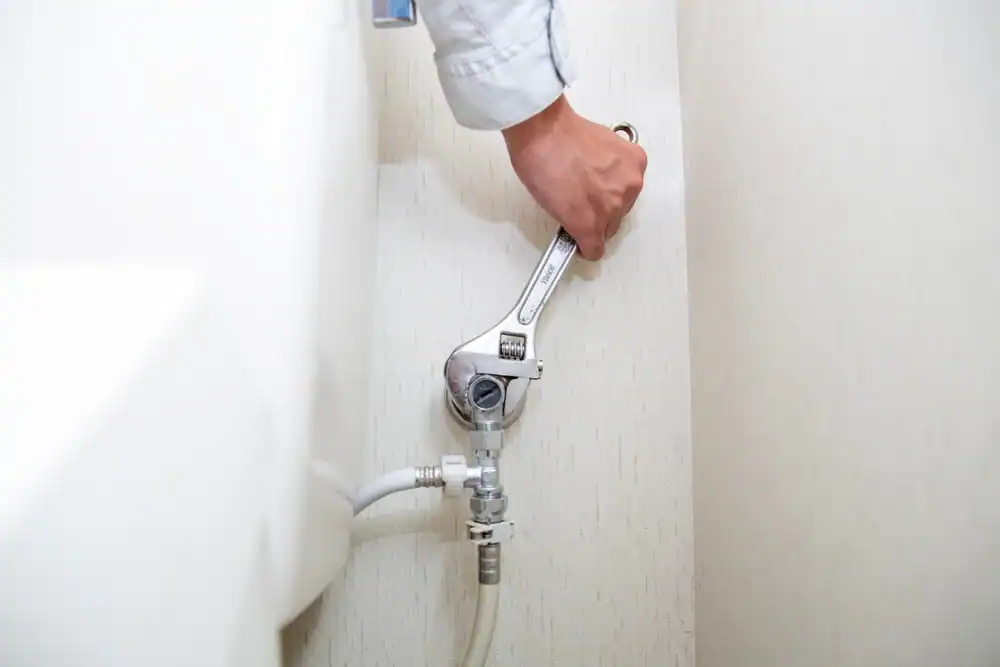
In addition to the main water shut-off valve for your entire home, individual plumbing fixtures and appliances have their own shut-off valves. Your water heater has a dedicated shut-off valve on the cold water inlet pipe that supplies water to the tank. This valve is usually located at the top of the water heater where the cold water pipe connects. It might have a round wheel handle or a lever-style ball valve handle.
If you’re dealing with a water heater leak or need to perform maintenance, shutting off just the water heater valve is often sufficient. This stops water from entering the tank while leaving the rest of your home’s plumbing functional. To shut off the valve, turn a wheel-style handle clockwise until it stops, or rotate a lever handle a quarter turn so it’s perpendicular to the pipe.
Other fixture-specific shut-off valves you should know about: Under every sink, you’ll typically find small shut-off valves on the hot and cold water supply lines. For toilets, there’s usually a shut-off valve on the wall behind the toilet. Washing machines have shut-off valves, often both hot and cold, on the wall behind the machine. Dishwashers typically have a shut-off valve under the kitchen sink where the supply line connects.
Knowing where these individual shut-off valves are located means you can quickly stop water flow to a specific fixture during an emergency without shutting off water to your entire home. If you have an old valve that hasn’t been operated in years, it might be stuck or difficult to turn. Don’t force it. Applying too much pressure can break the valve or the pipe, making the problem worse. If a valve won’t budge, shut off the main water supply instead and call a plumber.
Water Heater Repair Cost: What to Expect in Brevard County
Water heater repair costs in Brevard County typically range from $150 to $700 depending on what’s wrong and what parts are needed. Simple repairs like replacing a thermostat, heating element, or pressure relief valve usually fall on the lower end of that range. More complex repairs involving multiple components, gas valve replacement, or extensive labor fall on the higher end.
A thermostat replacement might cost $150 to $300 including the part and labor. Replacing a heating element on an electric water heater runs $200 to $400. A new temperature and pressure relief valve costs $100 to $250 installed. If you need a new anode rod, expect to pay $200 to $400 depending on accessibility. Gas water heater repairs tend to cost more than electric because gas components are more expensive and the work requires additional safety precautions.
Plumber hourly rates in Florida average between $27 and $32 per hour for standard service, though licensed master plumbers and emergency after-hours service typically command higher rates. Many plumbing companies charge a diagnostic or service call fee, usually $75 to $150, which covers the cost of coming to your home, diagnosing the problem, and providing a repair estimate. This fee is often applied toward the repair cost if you proceed with the work.
Plumber Cost Per Hour and How to Avoid Price Gouging
Understanding what plumbers actually charge helps you recognize when you’re being quoted a fair price versus being taken advantage of during an emergency. In Florida, licensed plumbers earn an average of $26 to $29 per hour according to 2026 salary data, though what plumbing companies charge customers is higher to cover overhead, insurance, licensing, equipment, and business operating costs.
Residential plumbing service rates in Brevard County typically range from $75 to $150 per hour for standard work during business hours. Emergency service, after-hours calls, weekends, and holidays often carry a premium of 20 to 50 percent above standard rates. That’s industry standard, not price gouging. What you want to watch out for is dramatically inflated quotes during emergencies, unnecessary upselling, or bait-and-switch pricing where the quoted price bears no resemblance to the final bill.
Reputable plumbing companies provide upfront pricing before starting work. We diagnose the problem, explain what needs to be done, tell you how much it will cost, and get your approval before proceeding. If we discover additional problems during the repair, we stop and discuss it with you before doing extra work. You should never be surprised by the final bill.
Red flags include pressure to make immediate decisions, refusal to provide written estimates, vague explanations of what work is needed, or insistence that you need a full replacement when a repair might be possible. If something feels off, get a second opinion. A few hours without hot water is inconvenient, but it’s better than paying thousands of dollars more than necessary because you felt rushed into a decision.
Emergency Water Heater Repair: When You Need Same-Day Service
Some water heater problems can wait a day or two for a scheduled repair. Others can’t. Knowing the difference helps you decide whether you need emergency service or if you can schedule a standard appointment. If your water heater is actively leaking and causing water damage, that’s an emergency. Every minute that water flows means more damage to floors, walls, and belongings. Shut off the water supply to the heater if possible, shut off the power or gas, and call for immediate service.
If you have no hot water at all and it’s affecting your ability to function, whether that’s an emergency depends on your situation. A household with young children, elderly family members, or someone with health conditions might genuinely need same-day service. A single person who can shower at the gym for a day probably doesn’t. Be honest about your situation, and most plumbing companies will work with you to prioritize accordingly.
Gas water heater issues that involve the smell of gas are always emergencies. If you smell gas near your water heater, don’t try to diagnose or fix it yourself. Don’t light anything, don’t use electrical switches, and don’t create any sparks. Leave the area, shut off the gas supply if you can do so safely, and call your gas company’s emergency line and a plumber immediately. Gas leaks can cause explosions and fires. They’re not something to mess with.
Emergency Hot Water Heater Service: What It Costs and What to Expect
Emergency plumbing service costs more than scheduled service, and that’s true everywhere, not just in Brevard County. When you call a plumber at 9 PM on a Saturday because your water heater is flooding your garage, you’re asking someone to drop what they’re doing, possibly leave their family, and come fix your problem right now. That urgency and inconvenience comes with a premium.
Emergency service rates are typically 1.5 to 2 times the standard hourly rate. If a company normally charges $100 per hour for plumbing service during business hours, emergency after-hours service might be $150 to $200 per hour. Some companies charge a flat emergency service call fee of $200 to $400 just to come out, then charge their regular hourly rate for the actual work. Others build the emergency premium into their hourly rate and skip the separate service call fee.
What you should get for that premium is fast response. A true emergency plumber should be able to get to you within a few hours, not the next day. They should have common parts on their truck so repairs can be completed during the first visit when possible. And they should be able to at least stabilize the situation, stop active leaks, and prevent further damage even if a complete repair requires parts that need to be ordered.
If you’re calling for emergency service, be clear about what’s actually happening. “My water heater is leaking and there’s water spreading across my garage floor” gets a faster response than “My water heater isn’t working right.” Give the plumber the information they need to bring the right tools and parts. Ask for an estimate of when they can arrive and what the service will cost before they come out. Reputable companies will give you that information upfront.
Hot Water Heater Maintenance: Extending Your System’s Lifespan
Regular maintenance is the single most effective way to extend your water heater’s lifespan and prevent unexpected failures. In Brevard County’s harsh environment, an unmaintained water heater might last 6 to 8 years while a properly maintained one can reach 12 years or more. That’s a significant difference, especially when you’re talking about a $1,500 to $3,000 replacement cost.
The most important maintenance task is annual tank flushing to remove sediment. Over time, minerals in the water settle to the bottom of the tank and form a layer of sediment. This sediment reduces efficiency by insulating the bottom of the tank from the heating element or burner, forces the system to work harder, and accelerates corrosion. Flushing involves draining water from the tank through the drain valve until it runs clear, which removes the accumulated sediment.
Checking and replacing the anode rod every 3 to 5 years is equally important but often overlooked. The anode rod is designed to corrode so the tank doesn’t. Once it’s completely corroded, the tank itself starts to rust. Most homeowners never think about the anode rod until a plumber mentions it during a service call. By then, it’s often too late and the tank has already started to corrode internally.
Hot Water Heater Maintenance Tasks You Can Do Yourself
Some water heater maintenance tasks are straightforward enough for homeowners to handle. Testing the temperature and pressure relief valve takes about two minutes. Lift the lever on the valve and let it snap back. You should hear a gurgling sound as water is released into the overflow pipe. If nothing happens, the valve might be stuck or failed and should be replaced by a plumber. This valve is a critical safety device that prevents dangerous pressure buildup, so it needs to work correctly.
Checking the temperature setting is simple. Most water heaters have a thermostat dial on the front. The recommended setting is 120 degrees Fahrenheit. This temperature is hot enough to kill bacteria and provide comfortable hot water, but not so hot that it poses a serious scalding risk or wastes energy. If your thermostat is set higher, turning it down can save energy and reduce wear on the system.
Visually inspecting your water heater every few months helps catch problems early. Look for signs of rust or corrosion on the tank body, moisture around connections or valves, unusual sounds during operation, or changes in how the system performs. If you notice any of these warning signs, call a plumber for a professional inspection before a small problem becomes a major failure.
Flushing the tank yourself is possible if you’re comfortable with basic plumbing tasks, but many homeowners prefer to have it done professionally. It involves connecting a garden hose to the drain valve, running the hose to a drain or outside, shutting off the cold water supply, and draining water from the tank until it runs clear. If you haven’t done this before or you’re not confident in your ability to do it correctly, having a plumber handle it during an annual maintenance visit is worth the cost.
Choosing Between Repair and Replacement: Making the Right Decision
The repair versus replacement decision comes down to three factors: the age of your water heater, the cost of the repair, and the nature of the problem. If your water heater is less than 6 years old and the repair costs less than half the price of a new unit, repair almost always makes sense. You’re getting several more years of life out of a relatively young system for a fraction of replacement cost.
If your water heater is 10 years old or older and you’re looking at a repair that costs more than half the price of a new unit, replacement is usually the smarter financial decision. You’re putting significant money into a system that’s near the end of its expected lifespan anyway. That repair might buy you another year or two, but you’ll likely face replacement soon regardless.
The nature of the problem matters too. A failed heating element, bad thermostat, or leaking pressure relief valve are all straightforward repairs on an otherwise healthy system. A leaking tank is not repairable and always requires replacement. Multiple simultaneous failures, like a bad heating element plus a corroded anode rod plus visible rust on the tank, suggest the entire system is deteriorating and replacement makes more sense than trying to patch it together.
Getting Reliable Water Heater Service in Brevard County
Your water heater works harder in Florida than it would almost anywhere else. The hard water, humidity, salt air, and constant demand all take their toll. Understanding how these systems work, what causes them to fail, and when repair makes sense versus replacement puts you in control when something goes wrong.
You don’t have to be at the mercy of the first contractor who shows up and tells you what you need. You can ask informed questions, recognize when you’re getting a straight answer, and make decisions that protect your home and your budget. That’s what this guide is for.
If you’re dealing with a water heater issue in Brevard County or you want an honest assessment of what you’re working with, we can help. Straightforward pricing, fast response when you need it, and 45 years of experience dealing with exactly these problems in exactly this climate.