Not sure if tankless hot water heaters are worth the investment in 2026? This guide breaks down real costs, energy savings, and what actually matters for Brevard County homeowners.
Share:
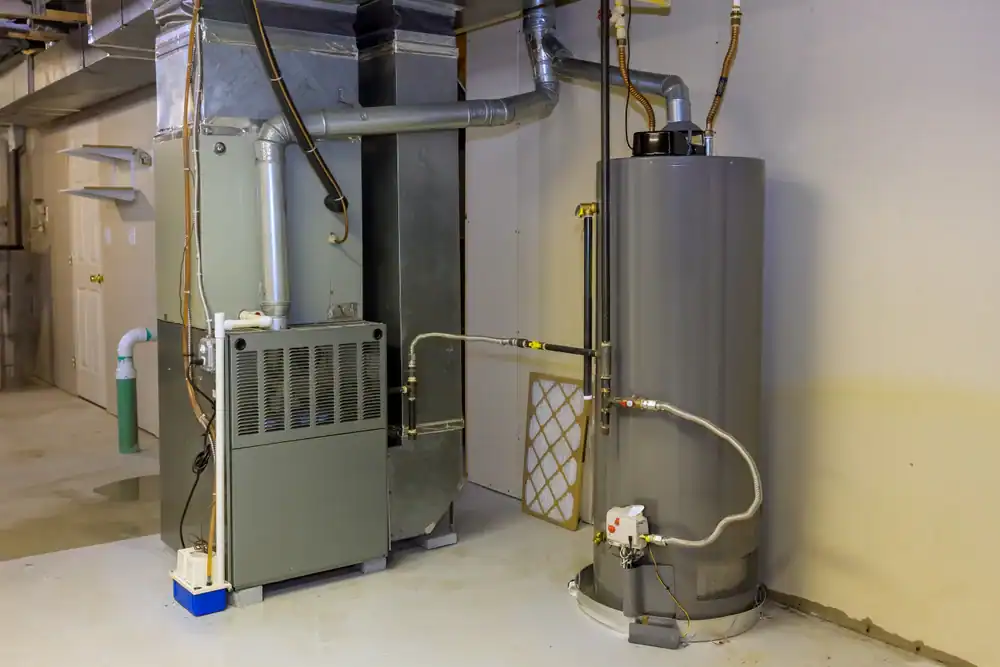
Traditional tank water heaters store 40 to 80 gallons of water in an insulated cylinder. Cold water enters the bottom, heating elements or burners warm it to your preset temperature (typically 120-140°F), and hot water gets drawn from the top when you turn on a faucet. The system continuously maintains that temperature, even when you’re asleep or away from home.
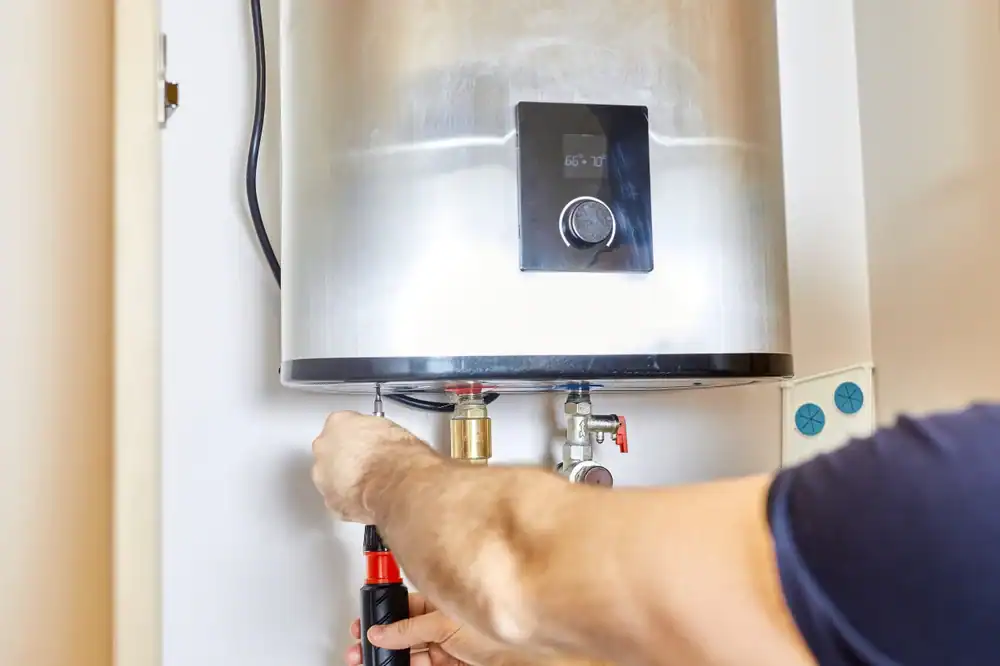
Tankless systems take a completely different approach. When you turn on hot water, cold water flows through the unit and passes over powerful heating elements or gas burners that heat it instantly. No storage tank. No standby heating. The water gets heated only when you need it, which is where the efficiency gains come from.
Here’s what that means for you: tank systems give you a reservoir of hot water ready to go, but they’re constantly using energy to keep that water hot. Tankless units only heat water on demand, but they’re limited by how much water they can heat per minute—measured in gallons per minute, or GPM.
Energy efficiency gets measured by something called Uniform Energy Factor, or UEF. The higher the number, the more efficient the system. But here’s what most articles won’t tell you: you can only compare UEF ratings between water heaters in the same usage category.
The Department of Energy separates water heaters into four “bins” based on daily hot water usage. A high-UEF tankless unit in one bin doesn’t perform the same as a tank system with the same UEF in a different bin. That’s why comparing raw numbers without context can be misleading.
For Brevard County homeowners, there’s another factor that matters more than national averages: Florida’s incoming water temperature. Because our groundwater sits around 72-77°F year-round, tankless systems don’t have to work as hard to reach your desired temperature. A unit that produces 9.8 gallons per minute in Florida might only deliver 5.6 GPM in Vermont, where incoming water is much colder.
That temperature advantage means tankless systems perform better here than in colder climates. But it also means traditional tanks aren’t working quite as hard either. The efficiency gap exists, but it’s not as dramatic as some manufacturers suggest.
What about actual energy savings? Studies show tankless water heaters can be 24% to 34% more energy efficient for households using 41 gallons or less of hot water daily. For homes using around 86 gallons per day, that efficiency advantage drops to 8% to 14%. Your household size and hot water habits directly impact how much you’ll actually save.
Tank water heaters lose energy through what’s called standby heat loss—the energy spent keeping stored water hot even when you’re not using it. Modern tanks have better insulation than older models, but physics still applies. That constant reheating accounts for 10% to 20% of your water heating costs.
So yes, tankless systems are more efficient. But the real question is whether that efficiency translates into enough savings to justify the higher upfront cost—which brings us to the numbers that actually matter.
Let’s talk about what you’ll actually pay, not what manufacturer websites suggest. For a standard 50-gallon tank water heater in Brevard County, you’re looking at $1,600 to $2,400 installed for gas units, or $1,600 to $2,200 for electric. That includes the unit, labor, removal of your old heater, and any required permits.
Tankless installations run significantly higher. The units themselves cost $1,000 to $4,250 depending on capacity and features. Installation adds another $1,500 to $3,000 because the job is more complex. You might need electrical panel upgrades, new gas lines, or different venting configurations. All of that costs money.
Here’s where it gets interesting: if you’re replacing a tank with another tank, installation is usually straightforward. Same connections, same location, similar setup. But switching from tank to tankless often requires modifications that can push your total cost even higher.
Electric tankless units need serious power—often 100 to 150 amps. If your electrical panel can’t handle that load, you’re adding an upgrade to the bill. Gas tankless systems need proper venting to prevent carbon monoxide buildup, which might mean running new vent pipes through your walls or roof.
Location matters too. If your current water heater sits in an easily accessible garage or utility room, installation costs stay reasonable. But if it’s tucked in a closet, under a stairway, or—worst case—in an attic, labor costs go up. Way up. Moving a water heater in and out of tight spaces takes time, and time costs money.
One thing many homeowners miss: the payback period. Even with energy savings, it can take 12 to 27 years to recoup the higher upfront cost of a tankless system through lower utility bills. If you’re planning to sell your home in five years, that math doesn’t work in your favor. But if you’re staying put for the long haul, the investment makes more sense.
Tank systems win on upfront affordability. Tankless systems win on long-term efficiency and lifespan. Your decision should align with your budget, your timeline, and how long you plan to stay in your home.
Want live answers?
Connect with a Drain Wizard Plumbing expert for fast, friendly support.
Energy efficiency matters, but it’s not the only factor. The system that works for a retired couple won’t necessarily work for a family of five with teenagers who take 20-minute showers.
Flow rate determines how much hot water a tankless system can deliver at once. Most tankless units provide 2 to 5 gallons per minute. A typical shower uses about 2.5 GPM. A dishwasher needs 1 to 2 GPM. A washing machine uses 2 to 3 GPM.
Do the math: if someone’s showering while the dishwasher runs, you’re at 3.5 to 4.5 GPM. That’s pushing the limits of many tankless systems, which means you might experience temperature drops or reduced flow. For larger households with high simultaneous usage, you might need multiple tankless units—which obviously increases costs.
Tank systems don’t have that limitation. You’ve got 40 to 80 gallons of hot water ready to go. Multiple people can shower, run the dishwasher, and do laundry without worrying about running out—until the tank empties. Then you wait for it to refill and reheat, which can take 30 minutes to an hour.
Traditional tank water heaters typically last 8 to 12 years. Tankless systems can go 20 to 30 years with proper maintenance. That’s a significant difference, especially when you factor in replacement costs over time.
But here’s the catch: tankless systems require more frequent maintenance to hit that 20-year mark. In Brevard County, where we deal with mineral-rich water, tankless units need annual descaling to prevent buildup that reduces efficiency and damages components. Skip that maintenance, and you’re looking at premature failure and expensive repairs.
Tank systems need maintenance too—flushing sediment, checking the anode rod, inspecting for leaks. But homeowners tend to be more familiar with tank maintenance, and the consequences of skipping it aren’t quite as immediate.
Mineral buildup is a real concern here. Hard water accelerates wear on both types of systems, but it affects tankless units more severely because water flows through tighter passages and heating elements. Many Brevard County homeowners install water softeners to extend equipment life, which adds another upfront cost to consider.
Repairs tell a different story. When a tank system fails—usually due to a rusted-through tank—you’re replacing the entire unit. When a tankless system has issues, individual components can often be replaced. That modular design means repairs can extend the system’s life, but those repairs aren’t cheap.
One advantage of tankless systems that doesn’t get enough attention: no risk of catastrophic tank leaks. A failed tank can dump 40 to 80 gallons of water into your home before you even notice. Tankless systems don’t store water, so that particular disaster isn’t on the table. For homeowners who’ve dealt with water damage before, that peace of mind has real value.
New Department of Energy regulations that took effect in 2026 have changed the water heater landscape. These standards require higher efficiency across the board, which affects both tank and tankless systems—but in different ways.
For traditional gas tank water heaters, meeting the new standards often means adding features like dampers or switching to condensing technology. That pushes costs up slightly, but not dramatically. Electric tank systems face stricter requirements too, with larger units (over 35 gallons) now required to use heat pump technology in many cases.
Tankless systems already meet most of the new efficiency requirements, which is one reason they’re getting more attention in 2026. But the regulations also mean that the efficiency gap between tank and tankless systems is narrowing. Newer tank models are significantly more efficient than units from even five years ago.
What does this mean for your decision? If you’re comparing a brand-new tank system to a tankless system, the efficiency difference isn’t as stark as it used to be. You’re still looking at measurable savings with tankless, but the gap has closed enough that other factors—upfront cost, flow rate, household size—carry more weight.
The regulations also impact availability. Some older tank models are being phased out, and certain sizes are harder to find. That’s pushing some homeowners toward tankless simply because it’s what’s readily available. But availability shouldn’t be the only factor driving your decision.
Florida’s climate gives us another advantage: outdoor installation. Tankless units can be mounted on exterior walls, which saves indoor space and simplifies venting for gas models. That’s not an option in colder states where freezing temperatures would damage the equipment. It’s one more reason tankless systems make more sense here than in other parts of the country.
The bottom line: 2026’s efficiency standards have raised the baseline for all water heaters. Both tank and tankless systems are better than they were a few years ago. Your choice should be based on your specific situation, not just on efficiency numbers.
There’s no universal “best” water heater. The right system depends on your household size, your hot water usage patterns, your budget, and how long you plan to stay in your home.
Tankless systems make sense if you’re staying put for at least 10 to 15 years, if you want to eliminate the risk of tank leaks, and if your household doesn’t need massive amounts of hot water all at once. They also work well if you’re tight on space or if you value the environmental benefits of lower energy consumption.
Traditional tank systems make sense if you need reliable hot water for multiple simultaneous uses, if upfront cost is your primary concern, or if you’re planning to sell within the next few years. They’re also the simpler choice if your existing setup doesn’t need modifications.
Either way, proper installation matters more than the system you choose. A poorly installed tankless system will underperform and cost you money. A correctly installed tank system will deliver years of reliable service without drama.
If you’re ready to make a decision or if you want a professional assessment of what makes sense for your specific situation, we can help you sort through the options without the sales pressure.
Article details:
Share:
Continue learning: