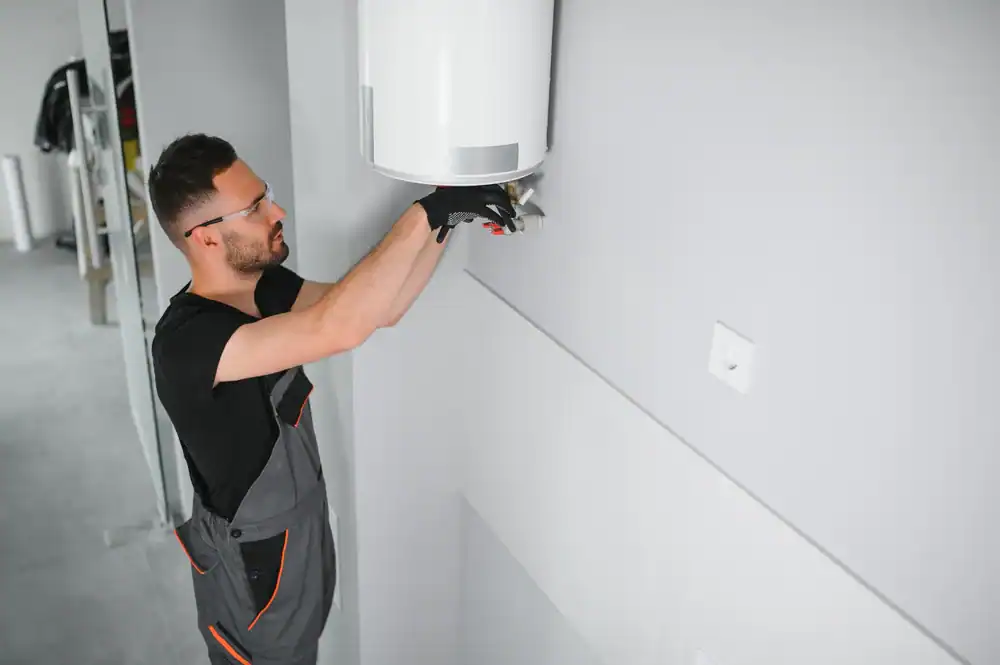
You’re standing in a lukewarm shower, waiting for the water to heat up. Again. Or maybe you’re researching inline water heaters because your current tank is on its last leg and you want to make a smarter choice this time. Either way, you’re here because you need to know how to size a tankless system that actually works for your household—not just what a sales brochure promises. Getting the size right means understanding your peak demand, how Florida’s warm groundwater changes the equation, and what happens when you get it wrong. Let’s start with what actually determines the right capacity for your home.
How Tankless Water Heater Sizing Actually Works
Tankless water heaters—also called inline water heaters or on-demand systems—don’t store hot water. They heat it as it flows through the unit. That’s why sizing isn’t about gallon capacity like a traditional tank. It’s about flow rate and temperature rise.
Flow rate measures how many gallons per minute your household uses during peak demand. Temperature rise is the difference between your incoming water temperature and the hot water temperature you want at the tap. In Brevard County, your groundwater comes in around 72-77°F. If you want 120°F at the showerhead, you need a 43-48°F rise. That’s a lot easier than the 70-75°F rise needed in colder states, which means smaller units can handle more demand here.
The formula is simple: add up the flow rates of every fixture you might use at the same time, then match that to a unit that can handle your required temperature rise. Miss either number and you’ll either run out of hot water or waste money on a unit that’s too big.
Calculating Your Peak Flow Rate in Gallons Per Minute
Peak flow rate is where most people get tankless water heater sizing wrong. You’re not calculating average use. You’re calculating the worst-case scenario—when two people are showering, someone’s running the dishwasher, and the washing machine kicks on.
Start by listing your fixtures and their flow rates. A standard showerhead uses about 2.5 gallons per minute. A bathroom faucet runs 1.5 GPM. Kitchen faucets hit 2.0-2.2 GPM. Dishwashers pull around 2 GPM, and washing machines use 1.5-2 GPM depending on the model.
Now think about your morning routine. If two people shower at the same time while the dishwasher is running, that’s 7-8 GPM right there. Add a bathroom faucet and you’re at 9 GPM. That’s your target flow rate—the minimum your inline water heater needs to deliver without the water going cold.
Here’s the catch: most homeowners underestimate this number. They assume they’ll never run multiple fixtures at once, then holiday guests arrive and the system can’t keep up. Size for reality, not wishful thinking. If you have teenagers or a busy household, add 20-30% to your calculated peak demand as a buffer.
Don’t forget about future needs either. Planning a bathroom remodel? Adding a second shower? Factor that in now. Upgrading later means buying a whole new unit.
Why Florida’s Groundwater Temperature Changes Everything
This is where living in Brevard County actually saves you money. Groundwater temperature has a massive impact on tankless water heater performance, and Florida’s warm climate is a huge advantage.
In northern states, groundwater temperatures drop to 40-50°F in winter. That means a tankless unit has to work much harder to raise the water temperature to 120°F. A unit rated for 7 GPM in cold climates might only deliver 4-5 GPM when the incoming water is that cold. But in Brevard County, your groundwater stays between 72-77°F year-round. The temperature rise you need is only 43-48°F instead of 70-75°F.
What does that mean for you? A smaller, less expensive unit can handle the same household demand here that would require a larger, pricier unit up north. A tankless water heater that produces 9.8 GPM in Florida might only manage 5.6 GPM in Vermont with the same BTU input. You’re getting better performance for less money simply because of where you live.
This also means your energy bills stay lower. Less temperature rise means less fuel or electricity needed to heat each gallon. The efficiency ratings you see on Energy Star labels aren’t just marketing—they’re easier to achieve in Florida’s climate, and your real-world savings often exceed manufacturer estimates.
The warm groundwater also reduces wear on the unit. The heating elements or burners don’t have to work as hard, which can extend the lifespan of your system. Just make sure whoever sizes your unit actually uses Brevard County’s groundwater temperature in their calculations, not some national average that doesn’t apply here.
Electric Tankless Water Heater Installation Cost
Electric tankless water heaters are the more affordable option upfront, but the total cost depends on your home’s existing electrical infrastructure. If you’re starting from scratch or your electrical panel is already maxed out, those savings shrink quickly.
The unit itself typically costs $500-$2,000 depending on capacity. Installation labor runs $600-$1,500 for a straightforward replacement. But here’s where hidden costs show up: electric tankless units pull serious power—often 15,000 to 36,000 watts. That means you need a dedicated 40-60 amp circuit, and if your electrical panel doesn’t have the capacity, you’re looking at a panel upgrade.
Upgrading an electrical panel costs $850-$1,700 in Brevard County. Add the cost of running new wiring if the unit is far from the panel, and your “affordable” electric tankless install can hit $3,000-$4,000 total. That’s not a dealbreaker, but it’s something you need to know before you commit.
When Electric Makes Sense for Your Home
Electric tankless water heaters work best in specific situations. If you have a small household—one or two people—and your peak demand is under 4 GPM, an electric unit can handle it without issue. They’re also ideal for point-of-use applications, like a single bathroom or kitchen sink far from your main water heater.
Installation is simpler because there’s no venting required. You’re not dealing with combustion gases, so you don’t need to run exhaust pipes through walls or roofs. That cuts down on labor costs and means you can install the unit in tighter spaces—under a sink, in a closet, wherever you have access to electrical and plumbing.
Electric units are also quieter. There’s no burner firing up, no exhaust fan running. If the unit is installed near living spaces, that’s worth considering. Maintenance is straightforward too—no burners to clean, no combustion chambers to inspect. You’re mainly dealing with descaling to prevent mineral buildup, which is necessary for any tankless system in an area with hard water like Brevard County.
The downside is flow rate. Electric tankless heaters max out around 6-8 GPM even with high-capacity units, and that’s assuming you’ve got the electrical service to support them. If your household regularly uses 8+ GPM during peak times, electric won’t cut it. You’ll end up with lukewarm water or the system shutting down to protect itself from overload.
Energy costs are another factor. Electricity rates in Florida vary, but running a high-wattage electric tankless unit during peak demand can spike your bill. Gas units typically cost less to operate over time, even though they’re more expensive to install. Run the numbers based on your actual usage and local utility rates before deciding.
Hidden Costs That Catch Homeowners Off Guard
The sticker price on an electric tankless water heater doesn’t tell the whole story. You need to account for electrical upgrades, permits, and any modifications to your plumbing system.
If your home was built more than 20 years ago, chances are your electrical panel wasn’t designed to handle a tankless water heater’s load. A 200-amp panel can usually accommodate it, but if you’re running a 100-amp or 150-amp panel that’s already near capacity, you’ll need an upgrade. That’s a separate project that requires a licensed electrician and a permit from Brevard County.
Permits themselves cost $100-$300 depending on the scope of work. Some jurisdictions require separate permits for plumbing and electrical work. If you’re converting from a tank to a tankless system, you’ll also need to modify your plumbing connections. Tankless units have different inlet and outlet sizes, and the old tank’s water lines might not line up. That’s additional labor and materials.
Then there’s the question of water pressure. If your home has low water pressure to begin with, a tankless system can make it worse. The unit needs adequate flow to activate, and if your incoming pressure is below 30-40 PSI, you might need a booster pump. That’s another $300-$800 installed.
Finally, consider the cost of removing and disposing of your old water heater. Some installers include this in their quote, others charge $50-$150 extra. A 50-gallon tank weighs 100-150 pounds when empty, and it’s not something you can just leave on the curb. Make sure you know what’s included in the installation price before you sign anything.
Gas Tankless Water Heater Installation Cost
Gas tankless water heaters cost more upfront but deliver higher flow rates and lower operating costs over time. The units themselves run $1,000-$2,600 depending on capacity and whether you choose a condensing or non-condensing model. Installation is more complex than electric, which drives up labor costs.
Expect to pay $2,100-$5,600 total for a gas tankless installation in Brevard County. That includes the unit, labor, venting, and any necessary gas line modifications. The wide price range comes down to your home’s existing infrastructure. If you already have a gas line with adequate diameter and your venting is straightforward, you’ll land on the lower end. If you need to upgrade your gas line, run new venting, or relocate the unit, you’ll hit the higher end.
Gas Line and Venting Requirements
Most gas tankless water heaters need a ¾-inch gas line to deliver enough fuel for peak demand. Older homes often have ½-inch lines, which means you’ll need to upgrade. Running a new gas line costs $500-$1,200 depending on the distance from your gas meter to the unit. That’s one of the most commonly overlooked expenses when planning a tankless water heater replacement.
Venting is the other big cost. Gas tankless units produce combustion gases that need to be safely exhausted outside. You have two options: direct vent (through an exterior wall) or power vent (through the roof). Direct vent is simpler and cheaper if the unit is on an exterior wall. Power vent gives you more flexibility on placement but costs more because you need a fan to push the exhaust gases out.
Condensing units can use PVC venting, which is cheaper and easier to work with. Non-condensing units produce hotter exhaust gases and require stainless steel venting, which costs more. If you’re replacing an old tank water heater, you can’t reuse the existing vent—tankless systems have different requirements. Budget $300-$800 for new venting materials and labor.
Permits are required for gas work in Brevard County. Your installer should pull the permit, but make sure that’s included in the quote. Some contractors lowball the estimate and then hit you with permit fees later. We handle permitting as part of the job, and we make sure the installation meets Florida’s building codes and manufacturer specifications.
Condensing vs Non-Condensing: Which One You Need
Condensing tankless water heaters are more efficient and more expensive. They use a second heat exchanger to capture heat from the exhaust gases, which boosts efficiency to 95-96% compared to 80-85% for non-condensing models. That efficiency translates to lower monthly operating costs, and condensing units often qualify for federal tax credits and utility rebates.
The trade-off is complexity. Condensing units produce acidic condensate that needs to be drained, so you’ll need a condensate drain line and possibly a neutralizer kit. Installation is more involved, and the units themselves cost 20-30% more than non-condensing models. But if you’re running the unit frequently—large household, high demand—the energy savings pay back the difference in 5-8 years.
Non-condensing units are simpler and cheaper upfront. They vent hot exhaust gases without capturing that extra heat, which means they’re less efficient but also less complicated to install. If your household demand is moderate and you’re prioritizing lower installation costs, a non-condensing unit might make sense. Just know that you’re giving up long-term savings for short-term affordability.
In Brevard County, where groundwater is already warm, the efficiency difference between condensing and non-condensing units is less dramatic than it would be in a cold climate. You’re not asking the system to work as hard, so the fuel savings are smaller. Run the numbers based on your actual usage and see if the extra upfront cost for a condensing unit makes financial sense for your situation.
Tankless Water Heater Sizing Mistakes to Avoid
The biggest mistake is undersizing. Homeowners calculate their average usage instead of peak demand, then wonder why the water goes cold when everyone’s getting ready for work in the morning. You need to size for the worst-case scenario, not the typical Tuesday afternoon when no one’s home.
Another common mistake is ignoring future needs. You’re not just sizing for today—you’re sizing for the next 15-20 years. If you’re planning a bathroom addition, adding a second shower, or expecting your household to grow, factor that in now. Upgrading later means replacing the entire unit.
Oversizing is less common but still a waste of money. If you buy a unit with way more capacity than you need, you’re paying for performance you’ll never use. The system will short-cycle, never reaching efficient operating temperatures, which wastes fuel and shortens the unit’s lifespan. Match the unit to your actual demand, not some theoretical maximum.
How to Calculate Your Household’s Actual Demand
Start by mapping out your peak usage scenario. Think about the busiest time in your house—usually mornings or evenings. How many showers run at once? Is the dishwasher or washing machine running? Is anyone washing their hands or filling the tub?
Write down every fixture and its flow rate. Add them up. That’s your baseline. Now add 20-30% as a buffer because real-world usage is always higher than you think. If you calculated 7 GPM, plan for 8.5-9 GPM. That buffer protects you from the days when everything’s running at once and you’re glad you have the extra capacity.
Next, check your groundwater temperature. In Brevard County, it’s safe to use 72-75°F as your incoming water temperature. Decide on your target hot water temperature—120°F is standard and prevents scalding. Subtract your incoming temp from your target temp to get your required temperature rise. In this case, that’s about 45-48°F.
Now you have two numbers: your peak flow rate (8.5-9 GPM) and your required temperature rise (45-48°F). Find a tankless unit that can deliver that flow rate at that temperature rise. Manufacturers publish performance charts that show GPM output at different temperature rises. Don’t just look at the maximum GPM rating—that’s usually based on a much smaller temperature rise than you actually need.
If you’re between sizes, go up. It’s better to have a little extra capacity than to run out of hot water. And if your calculations show you need more than 10-12 GPM, consider installing two smaller units instead of one massive unit. It gives you redundancy and better coverage if you have fixtures far apart in the house.
What Happens When You Get It Wrong
An undersized tankless water heater will struggle to keep up with demand. You’ll get lukewarm water when multiple fixtures are running, or the system will shut down entirely to protect itself from overload. That’s frustrating when you’re trying to shower, and it’s hard on the unit. Constant overloading shortens the lifespan and voids most manufacturer warranties.
An oversized unit wastes money upfront and costs more to operate. The system will cycle on and off frequently because it’s heating more water than you’re using. Gas units won’t reach efficient combustion temperatures, which means you’re burning more fuel than necessary. Electric units will draw power in short bursts, which can be less efficient than steady operation.
Oversized units also cost more to maintain. Larger heat exchangers have more surface area for mineral buildup, which means more frequent descaling. And if you’re in an area with hard water like Brevard County, that buildup happens fast. You’ll spend more on maintenance to keep an oversized unit running efficiently than you would on a properly sized system.
The fix for poor sizing is expensive. You can’t just swap out a component—you need a whole new unit. That’s why getting it right the first time matters. Work with a plumber who takes the time to calculate your actual demand, understands Florida’s climate advantages, and won’t just sell you the biggest unit on the shelf because it has the highest profit margin.
Tankless Water Heater Replacement: What to Expect
Replacing a tankless water heater is simpler than converting from a tank, but it’s not a drop-in swap. Even if you’re replacing an existing tankless unit, there are updates to codes, improvements in technology, and wear on your plumbing connections that need attention.
A straightforward tankless-to-tankless replacement takes 3-5 hours. We shut off water and gas or electricity, disconnect the old unit, check the supply lines and venting, install the new unit, and test everything. If your gas line, electrical circuit, and venting are all up to code and in good shape, the job is quick.
Converting from a tank to tankless takes longer—6-10 hours or 1-2 days depending on complexity. You’re modifying plumbing connections, running new venting, possibly upgrading gas lines or electrical service, and pulling permits. The old tank needs to be drained, disconnected, and hauled away. The new tankless unit mounts on the wall, so you’ll need blocking in the studs if it’s not already there.
Permits and Code Compliance in Brevard County
Any water heater replacement in Brevard County requires a permit. We pull the permit as part of the installation, and the work needs to be inspected before it’s considered complete. This isn’t red tape—it’s your protection. Permitted work ensures the installation meets Florida’s building codes, manufacturer specs, and safety standards.
Gas work requires a licensed contractor with a plumbing or gas fitting license. Electrical work needs a licensed electrician if you’re modifying circuits or upgrading your panel. We have both capabilities in-house, which streamlines the job and eliminates coordination issues between separate contractors.
Venting has specific requirements based on the unit type and your home’s layout. Direct vent systems need to terminate a certain distance from windows, doors, and air intakes. Power vent systems need proper clearances from roof edges and other structures. The inspector will check all of this, and if it’s not right, you’ll need to redo it before the permit closes.
Water heaters also need earthquake straps in some areas of Florida, proper clearances from combustible materials, and accessible shutoff valves. We know these requirements and build them into the job from the start. DIY installations or unlicensed work almost always fail inspection, and fixing it after the fact costs more than doing it right the first time.
Maintenance Requirements You Should Know About
Tankless water heaters need annual maintenance, especially in areas with hard water like Brevard County. Mineral buildup—primarily calcium and magnesium—accumulates on the heat exchanger and restricts water flow. Left unchecked, it reduces efficiency, lowers flow rate, and eventually causes the unit to fail.
Descaling involves flushing the system with a vinegar solution or commercial descaler to dissolve the mineral deposits. Most manufacturers recommend doing this once a year, but if your water is particularly hard, you might need to do it every six months. The process takes about an hour and costs $100-200 if you hire a plumber. You can also buy a descaling kit and do it yourself if you’re comfortable with basic plumbing.
Check the air intake and exhaust vents regularly. Debris, insect nests, or corrosion can block airflow, which affects combustion and can cause the unit to shut down. A quick visual inspection every few months catches most issues before they become problems.
Inspect the inline water filter if your unit has one. Some tankless systems include a filter to catch sediment before it reaches the heat exchanger. These filters need to be cleaned or replaced periodically. Check your owner’s manual for the recommended interval—it’s usually every 3-6 months depending on water quality.
Finally, keep an eye on error codes. Modern tankless units have diagnostic systems that alert you to problems. If you see an error code on the display, don’t ignore it. Some codes indicate minor issues like a dirty flame sensor that you can clean yourself. Others signal serious problems that need professional attention. Catching issues early prevents expensive repairs down the line.
Getting Your Inline Water Heater Sized Right
Sizing an inline water heater comes down to understanding your peak demand, knowing how Florida’s warm groundwater works in your favor, and avoiding the common mistakes that lead to undersized or oversized systems. Calculate your flow rate honestly, factor in future needs, and work with someone who takes the time to get it right instead of just selling you a unit.
The upfront cost—whether you choose electric or gas—is only part of the equation. Installation quality, proper sizing, and regular maintenance determine whether your tankless system delivers 20 years of reliable service or becomes a source of frustration. In Brevard County’s coastal climate with hard water and warm groundwater, those details matter even more.
If you’re ready to move forward with a tankless water heater installation or replacement, we handle everything from sizing and permits to installation and finishing work. No coordination headaches, no finger-pointing between trades—just straightforward service backed by 45 years of plumbing experience and a commitment to getting it done right.